

URL to Video AI Generator: Turn Any Product or Landing Page URL into High‑Converting Videos at Enterprise Scale
Estimated reading time: ~9 minutes
Key Takeaways
- Automate from URL to video to transform PDPs and landing pages into on-brand, high-impact videos in minutes.
- Enterprise-scale production cuts costs by 70–90% and lifts conversions by 15–40% with multichannel deployment.
- Deep semantic crawling pulls schemas, metadata, images, and reviews to build accurate, current video narratives.
- Governed personalization uses brand kits, RBAC, and audit logs while localizing across 175+ languages.
- API-first integration enables thousands of videos per hour, real-time updates, and CDN delivery.
The digital landscape of 2026 has rendered static product detail pages (PDPs) and stagnant landing pages obsolete in the face of hyper-personalized, video-first consumer expectations. Modern enterprises are no longer asking if they should use video, but how they can generate it at a scale that matches their sprawling SKU counts and global market footprints. A URL to video AI generator represents the pinnacle of this evolution, offering a programmatic bridge between existing web assets and high-impact visual storytelling. Platforms like TrueFan AI enable organizations to ingest live webpage URLs and output on-brand, personalized videos in minutes, ready for immediate deployment across PDP galleries, hero sections, and performance marketing channels with WhatsApp catalog video marketing strategies.
This shift toward web content video automation is driven by a critical necessity: the traditional video production model is too slow, too expensive, and too rigid for the speed of modern e-commerce. By leveraging automated video creation from URL workflows, growth teams are realizing 70–90% reductions in production costs while simultaneously driving 15–40% lifts in conversion rates. As we navigate the complexities of 175+ language rollouts for quick commerce video personalization in India and enterprise-grade governance, the ability to transform a simple link into a multi-format video asset has become the ultimate competitive advantage for market leaders.
What is a URL to video AI generator?
A URL to video AI generator is an enterprise-grade orchestration layer that converts a live webpage—be it a product page, a long-form blog post, or a technical landing page—into a fully rendered video asset. Unlike basic AI video from text content tools that require manual copy-pasting and prompt engineering, these advanced systems perform deep semantic crawling of the target URL. They extract structured data such as JSON-LD product schemas, OpenGraph metadata, and H1/H2 hierarchies to understand the core value proposition, pricing, and visual assets of the page.
The technical sophistication of web content video automation lies in its ability to synthesize disparate data points into a cohesive narrative. The AI identifies primary product images, harvests customer reviews for social proof, and analyzes color palettes to ensure the output aligns with the brand’s visual identity. This process moves beyond simple "text-to-video" by incorporating real-time web data, ensuring that if a price changes or a product goes out of stock on the URL, the video generation logic can adapt accordingly.
For the enterprise, this technology includes a robust layer of administrative controls, including SSO integration, RBAC (Role-Based Access Control), and comprehensive audit logs. It is designed to function as a core piece of the martech stack, offering APIs and SDKs that allow for automated video creation from URL at a throughput of thousands of assets per hour. This ensures that content moderation and brand safety are maintained even as the volume of video production scales exponentially across different regions and product categories.
Sources:
Why enterprises need web content video automation now
The urgency for web content video automation is underscored by the massive shift in how global platforms like Meta and Google are prioritizing AI-generated creative. By 2026, industry forecasts suggest that the vast majority of ad creative will be handled by autonomous AI systems that require high-quality video inputs to function effectively. Enterprises that rely on manual video editing will find themselves unable to compete with the sheer volume of creative testing required to maintain low Customer Acquisition Costs (CAC) in an AI-driven bidding environment.
Market signals from 2026 indicate that consumer-facing brand activations have fully embraced AI-powered features as a standard expectation. For instance, major Valentine's Day 2026 campaigns in India utilized AI to create thousands of personalized video messages, signaling that the "one-size-fits-all" video approach is no longer sufficient for high-tier brands. Automated video production allows companies to launch new SKUs or seasonal campaigns in a fraction of the time, ensuring that every product in a 10,000-item catalog has a dedicated video explainer.
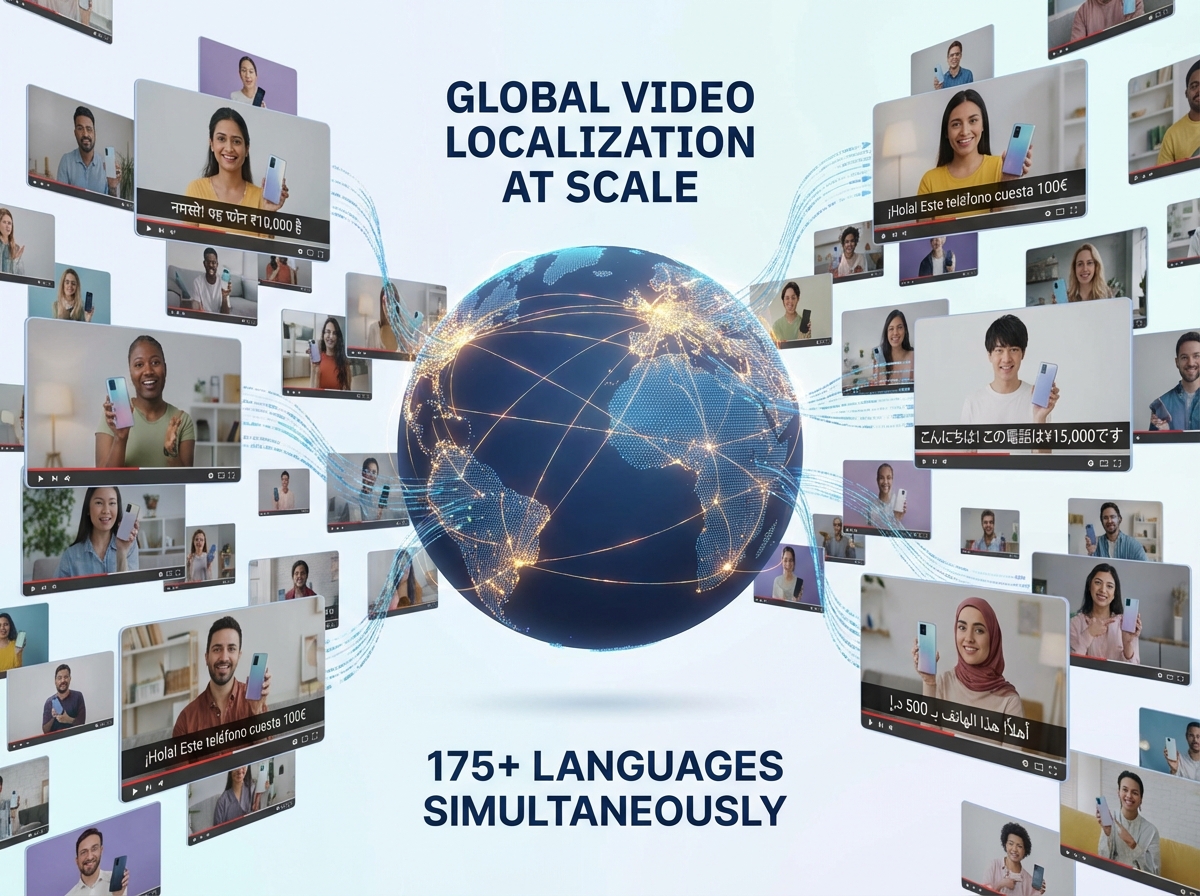
Furthermore, the demand for dynamic content video generation is fueled by the need for hyper-localization. A global enterprise cannot afford the lead time required to manually translate and dub videos for 50 different markets. The integration of a URL to video AI generator allows for the simultaneous creation of localized variants that respect regional nuances, dialects, and visual preferences. This level of agility is no longer a luxury but a foundational requirement for maintaining market share in a fragmented digital economy.
Sources:
How it works: From a page URL to dynamic video in minutes
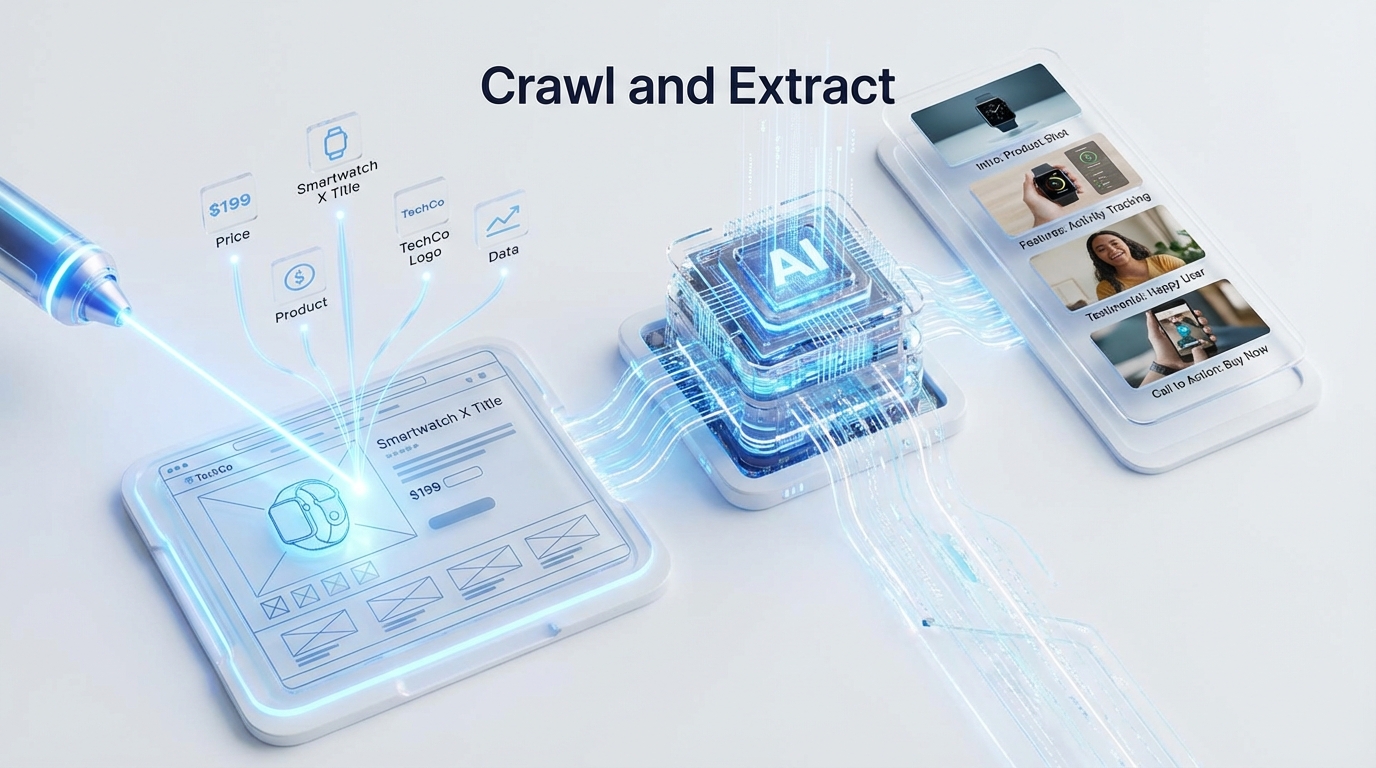
The journey from a raw URL to a high-converting video involves several layers of AI content transformation that work in parallel to ensure accuracy and brand alignment. The first stage is the "Crawl and Extract" phase, where the AI parses the DOM (Document Object Model) of the webpage. It identifies critical attributes such as product dimensions, material specifications, and promotional offers, while filtering out irrelevant navigation links or footer text to create a "clean" content map for the video script.
Once the data is structured, the script to video automation engine takes over to draft a narrative that follows proven conversion frameworks. This typically includes a high-impact hook in the first three seconds, followed by a problem-solution framing and a clear Call to Action (CTA). The system automatically storyboards these elements into scenes, selecting the most relevant images or video snippets from the URL to visualize each point, while generating synchronized captions and subtitles for "sound-off" mobile viewing environments.
The final stages involve the application of enterprise brand kits and sophisticated personalization rules. The webpage video personalization engine can inject dynamic tokens—such as the viewer's name, their city, or a specific discount code—directly into the video frames. Finally, the video is rendered using high-performance cloud GPUs, often in under 30 seconds, and delivered via CDN. This allows for automated video production that is not only fast but also highly tailored to the specific context of the user's journey, whether they are on a mobile device in Mumbai or a desktop in New York.
Sources:
Enterprise use cases and quick wins
One of the most immediate applications for this technology is the product page video generator. By converting existing PDP URLs into 15-second or 30-second explainers, e-commerce brands can significantly enhance their "above-the-fold" experience. These videos can highlight key features, display real-time price drops via predictive inventory marketing, and showcase star ratings, providing a much richer information density than static images alone. TrueFan AI's 175+ language support and Personalised Celebrity Videos further elevate these PDPs by adding a layer of localized authority and engagement that was previously impossible to achieve at scale.
Another high-impact use case is landing page video conversion optimization. Performance marketing teams often struggle with high bounce rates on landing pages that feel text-heavy or generic. By deploying a URL to video AI generator, teams can create custom hero videos for every UTM parameter or audience segment. For example, a visitor arriving from a "sustainability" focused ad can see a video that emphasizes the eco-friendly aspects of the product, while a visitor from a "price-sensitive" ad sees a video focused on value and durability.
Beyond direct sales, content repurposing automation allows enterprises to breathe new life into their archival content. High-traffic blog posts, whitepapers, and FAQ sections can be automatically transformed into snackable video content for YouTube Shorts, Instagram Reels, or LinkedIn. This ensures that the intellectual property locked within text-based assets is distributed across the platforms where modern audiences spend the majority of their time, maximizing the ROI of every piece of content created.
Sources:
TrueFan’s Enterprise Capabilities and Implementation
The TrueFan URL converter is engineered specifically for the rigors of enterprise content operations, moving beyond simple automation to provide a comprehensive governance framework. Solutions like TrueFan AI demonstrate ROI through their ability to handle massive throughput—such as generating over 354,000 personalized videos in a single day for Zomato or 2.4 million festive greetings for Hero MotoCorp. This scale is supported by ISO 27001 and SOC 2 certifications, ensuring that data privacy and security are never compromised during the automated video production process.
Implementation of a web content video automation strategy typically follows a structured 30-day pilot program. In the first week, organizations identify high-impact URLs and integrate their existing PIM (Product Information Management) or CMS systems with the TrueFan API. By the second week, brand kits and script to video automation rules are established, ensuring that every generated video adheres to strict typography, color, and motion guidelines. This phase also includes the setup of personalization logic, allowing the system to pull real-time data from CRMs or CDPs to tailor the video content to individual user profiles.
As the pilot moves into the third and fourth weeks, the focus shifts to multivariate testing and global scaling. Brands can A/B test different video hooks or CTAs directly on their landing pages to measure the impact on landing page video conversion rates. The final stage involves operationalizing the workflow so that every new product launch automatically triggers the creation of a suite of video assets in multiple aspect ratios and languages. This seamless integration ensures that the enterprise remains "video-first" without adding significant overhead to their creative or marketing teams.
Sources:
Strategic Conclusion
The transition to a URL to video AI generator is a fundamental shift in how enterprises communicate with their customers. By automating the transformation of static web content into dynamic, personalized video, brands can finally achieve the scale and relevance required in the 2026 digital economy. Whether it is through enhancing e-commerce product videos or driving landing page video conversion, the ROI of automation is undeniable. To see how your own URLs can be transformed, book an enterprise demo to try the TrueFan URL converter on your top-performing pages and launch a 30-day pilot to experience the future of content operations.
Frequently Asked Questions
What is "automated video creation from URL" and how is it different from "AI video from text content"?
Automated video creation from URL is a specialized workflow that uses a live webpage as the primary data source. While basic AI video from text content requires a user to manually input a script or prompt, a URL-based generator automatically crawls the page to harvest images, pricing, structured metadata, and brand styles. This ensures the video is perfectly synced with the current state of the webpage without manual intervention, making it far more suitable for e-commerce and dynamic landing pages.
How does "webpage video personalization" work with CRM data and what safeguards apply?
Webpage video personalization works by connecting the video generation engine to an enterprise's CRM or CDP via API—see this guide on B2B sales video personalization. When a known user visits a page, the system injects their specific data (like name, past purchase history, or loyalty tier) into the video template in real-time. To ensure security, platforms like TrueFan AI utilize PII encryption, data minimization practices, and are compliant with ISO 27001 standards, ensuring that personal data is only used for the intended rendering process and never stored insecurely.
Will "landing page video conversion" efforts impact my site's loading speed?
No, when implemented correctly, adding video does not degrade site performance. Modern enterprise solutions use lazy-loading techniques, high-performance CDNs, and optimized formats like WebM or HLS to ensure videos only load when they enter the viewport. Additionally, videos are often set to muted autoplay with captions, which significantly boosts landing page video conversion rates without the heavy bandwidth tax of traditional unoptimized video files.
Can we scale e-commerce product videos across 1,000+ SKUs and 10+ languages?
Yes, this is the primary strength of web content video automation. By using a feed-based approach, the system can batch-process thousands of URLs simultaneously. For each SKU, the AI can generate localized versions in 175+ languages with perfect lip-sync and voice retention. This allows an enterprise to maintain a consistent global brand voice while providing a deeply localized shopping experience for every customer, regardless of their region.
What governance and approvals exist for brand and legal review?
Enterprise platforms provide robust Role-Based Access Control (RBAC) and approval queues—see vendor selection video presentations. Before a video goes live, it can be routed through automated content moderation filters that block disallowed terms or claims. Legal and brand teams can then use a centralized dashboard to review, comment on, or approve batches of videos. This ensures that automated video production remains within the "guardrails" of the brand's identity and legal requirements at all times.



