Predictive CLV Modeling Videos 2026: Enterprise Playbook for Value-Based Video Personalization in India
Estimated reading time: 11 minutes
Key Takeaways
- Predictive CLV modeling enables hyper-personalized video experiences aligned to long-term profitability and retention.
- Value-based segmentation (Elite/Gold/Silver) gates premium assets like celebrity-led videos for high-ROI cohorts.
- India-first execution requires vernacular templates, WhatsApp-centric delivery, and low-bandwidth variants.
- Operational automation connects model scores to CDP journeys, with experimentation and budget shifts to maximize incremental CLV.
- Measurement and governance focus on CLV delta, ARPU by tier, fair personalization, and DPDP-compliant consent.
Predictive CLV modeling videos 2026 represents the frontier of data-driven engagement, where enterprise teams utilize advanced machine learning to forecast customer worth and deliver hyper-personalized video content. By integrating predictive lifetime value (CLV) scores into automated video rendering pipelines, brands in India can now prioritize premium experiences for high-value segments while systematically nurturing mid-tier cohorts. This LTV-driven content strategy India ensures that marketing spend is mathematically aligned with long-term profitability and customer retention. Explore post-purchase loyalty automation in India.
In the current landscape, customer lifetime value (CLV) is defined as the discounted sum of all expected future gross margins from a customer, net of the cost to serve, over a specific temporal horizon. Value-based segmentation then groups these individuals into distinct bands—such as Elite, Gold, and Silver—to tailor entitlements and creative assets. For the Indian market, this execution must navigate a complex ecosystem defined by vernacular diversity, WhatsApp-centric outreach, and a mobile-first consumer base. Learn more about the WhatsApp catalog video marketing approach.
From CLV theory to video action in India
The transition from theoretical data science to active video deployment requires a precise understanding of customer economics personalization. To calculate CLV effectively for the Indian enterprise, the formula must account for the discounted margin: CLV = Σ_t (Expected Gross Margin_t − Cost_to_Serve_t) / (1 + discount_rate)^t. In fast-moving consumer sectors, a 12-to-24-month horizon is typically utilized to capture rapid shifts in brand loyalty and purchase frequency.
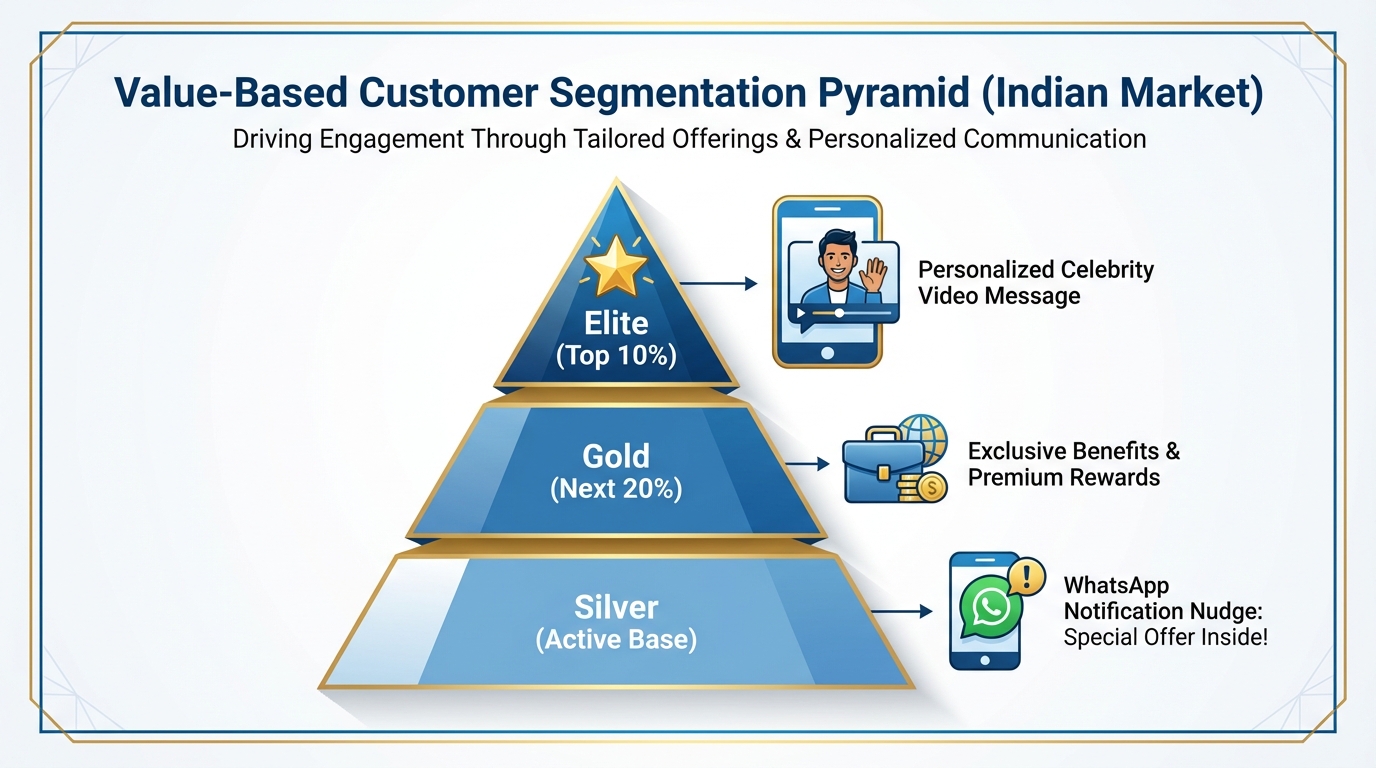
Revenue-based personalization tiers serve as the bridge between these calculations and the customer experience. By dividing the database into deciles, such as the Top 10% (Elite) and the Next 20% (Gold), organizations can gate premium customer journey videos and exclusive offers. This ensures that the highest-cost assets, such as celebrity-led personalized greetings, are allocated where the predicted return on investment (ROI) is most significant.
India-first execution demands that these tiers are sensitive to the local context, including the massive festival calendar and regional language preferences. During the OND (October, November, December) festive burst, predictive models must adjust for seasonal spikes in spending while delivering content in vernacular templates. Using low-bandwidth video variants ensures that even customers in Tier 2 and Tier 3 cities receive a seamless experience, maintaining equitable reach across the subcontinent. See Q1 2026 festival retention strategies.
Source: MoEngage – Customer Engagement Metrics including CLV
Source: WebEngage – CLV Calculator
Building customer value prediction AI models for video
Selecting the right customer value prediction AI models is the technical foundation of any predictive CLV modeling videos 2026 strategy. For non-contractual retail environments, “Buy-till-you-die” models like BG/NBD (Beta-Geometric/Negative Binomial Distribution) are essential for predicting purchase frequency. When combined with Gamma-Gamma models for monetary value, these provide a robust forecast of future revenue trajectories based on historical transaction signals.
In subscription-based or OTT contexts, survival and hazard models such as Cox Proportional Hazards or DeepSurv are superior for predicting churn timing. See guidance on predictive churn prevention videos. For more complex, heterogeneous behaviors in e-commerce or BFSI, gradient-boosted trees like XGBoost, LightGBM, or CatBoost allow for non-linear interactions between features. Furthermore, sequence models like LSTMs or Transformers can analyze watch-time sequences and completion rate trajectories to forecast engagement-driven monetization.
AI-powered value forecasting must also incorporate feature sets tailored to the Indian video landscape. This includes behavioral data like session recency, completion percentages, and WhatsApp interaction rates, alongside contextual data like device class and regional bandwidth proxies. By applying uplift modeling (T-learner or X-learner), data scientists can isolate the incremental CLV specifically attributable to the delivery of premium video content, ensuring that every rendering cost is justified by a predicted lift in margin. Explore predictive analytics for customer retention.
Source: LatentView – Leveraging Predictive Analytics to Boost CLV
Source: Express Analytics – Nvidia’s 2026 Strategy for Predictive Modeling
Source: TechnologyCounter – How ML and Predictive Analytics Will Make CRM Smarter by 2026
Operationalizing value-based segmentation campaigns
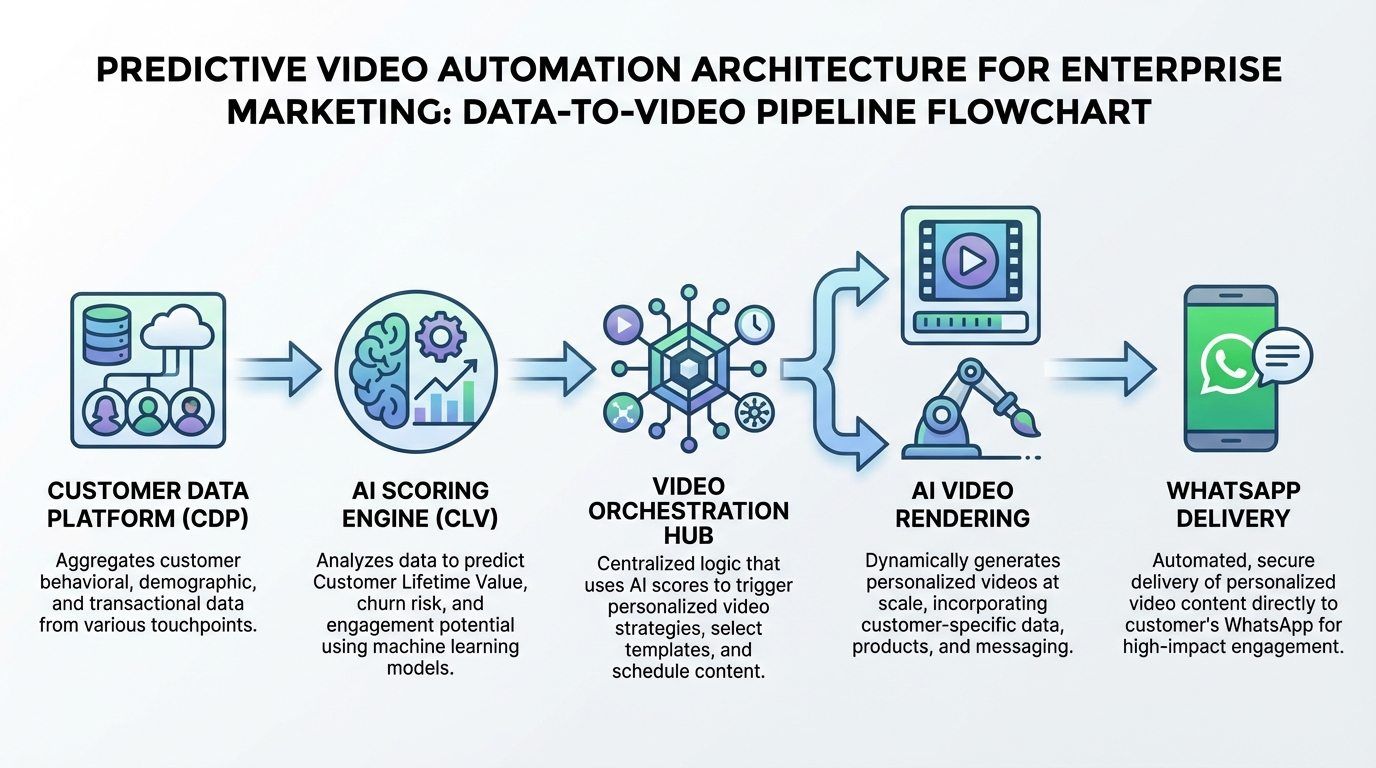
Operationalizing these models requires predictive customer scoring automation that bridges the gap between the data warehouse and the engagement layer. Scoring cadences should move toward near-real-time updates, where high-velocity signals—such as a cart abandonment or a sudden spike in app usage—trigger an immediate recalculation of the customer’s predicted value. These scores are then piped directly into a Customer Data Platform (CDP) to refresh segment memberships and entitlements.
Value-based segmentation campaigns rely on strict governance and tier logic to maintain profitability. For example, an “Elite” tier might be eligible for celebrity-led video messages and concierge support, while a “Silver” tier receives automated educational nudges. As a customer’s predicted value crosses a predefined threshold, the system should automatically unlock new tiers of content, logging the reason for the migration to ensure transparency in the customer journey.
In 2026, the integration of AI and experimentation allows for the constant optimization of these campaigns. Predictive profitability marketing involves using automated budget allocation to shift resources toward the segments and creative variants that demonstrate the highest uplift. This ensures that the enterprise is not just personalizing for the sake of engagement, but is actively managing the customer base as a financial portfolio, maximizing the total equity of the brand, as highlighted in 2026 digital transformation budget planning.
Source: TechnologyCounter – ML + Predictive CRM 2026
Source: MoEngage – Customer Segmentation Analysis
Source: VisionaryVogues – Big Data 2026: Predictive Models, Ethics & Business Value
Designing premium customer journey videos by segment
The design of high-value customer video experiences must prioritize immediate recognition and exclusive utility. For the top decile of customers, the first five seconds of a video should include dynamic elements like the viewer’s name, city, and a reference to their most recent milestone. Platforms like TrueFan AI enable brands to scale these premium experiences by utilizing advanced AI to synthesize personalized celebrity addresses in the viewer's preferred language.
Nurturing the middle of the pyramid requires effective value segment migration campaigns. These playbooks use milestone recognition and progressive offers to encourage customers to move from “Silver” to “Gold” status. For instance, a customer might receive a teaser video featuring a celebrity, with a promise that a full personalized message will be unlocked upon their next purchase. This creates a “nudge” effect, leveraging social proof and exclusive access to drive behavioral change. Dive deeper into Nudge Theory video implementation.
TrueFan AI's 175+ language support and Personalised Celebrity Videos allow for a level of localization that was previously impossible at scale. By using virtual reshoots and low-latency rendering, enterprises can deliver these videos across WhatsApp and in-app channels in under 30 seconds. This speed is critical for maintaining the relevance of the message, especially when responding to real-time triggers like a birthday or a successful high-value transaction. See regional language video SEO strategies.
Source: TrueFan AI – Homepage
Source: TrueFan AI – Nudge Theory Video Implementation
Source: TrueFan AI – Indomie Case Study
Predictive analytics marketing automation architecture
A robust predictive analytics marketing automation architecture follows a clear data-to-video flow. It begins with event collection and identity resolution in the CDP, followed by the model scoring service which generates the predicted CLV. These scores trigger the orchestration engine, which selects the appropriate video template and sends the metadata to the rendering engine. The final personalized video is then delivered via the customer's preferred channel, such as WhatsApp Business API or an in-app notification. Refer to the WhatsApp catalog video marketing guide.
Solutions like TrueFan AI demonstrate ROI through their ability to handle both massive batch processing and real-time triggers. For example, during a major festival like Diwali, an enterprise might need to render millions of personalized greetings simultaneously. The architecture must include frequency capping and fatigue rules to ensure that customers are not overwhelmed, while maintaining strict compliance with consent management and data protection regulations like India's DPDP Act 2023.
CLV optimization video strategies also incorporate multi-armed bandit testing to refine creative variants. By automatically pausing underperforming workflows and scaling those that drive the highest incremental CLV, the system ensures that the marketing budget is always optimized. This level of automation reduces the manual overhead of campaign management, allowing marketing teams to focus on high-level strategy and creative direction rather than technical execution.
Source: TrueFan AI – AI Video Batch Processing Tools
Source: TrueFan AI – Video Personalization ROI
Source: TrueFan AI – 2026 Digital Transformation Budget Planning
Measurement, governance, and India execution playbook
The success of predictive profitability marketing is measured through a specific set of KPIs that go beyond simple click-through rates. Enterprises must track the CLV delta between the treatment group (those receiving personalized videos) and the control group. Other critical metrics include the Average Revenue Per User (ARPU) by tier, CAC payback periods, and the migration rate of customers moving from lower to higher value segments.
Governance is equally vital, particularly regarding customer economics personalization and fairness. In 2026, ethical AI practices require that essential services are never withheld based on predicted value, and that all personalization is transparent and consent-first. In India, this means ensuring that language-based personalization does not lead to regional bias and that all celebrity content is used with explicit, verified rights and moderation-by-design principles.
To execute this over a 90-day period, brands should follow a structured plan:
- Weeks 0–2: Audit data, define CLV horizons, and map required features.
- Weeks 3–5: Train and validate AI models, running backtests to ensure calibration.
- Weeks 6–8: Integrate scores with the CDP and build vernacular video templates.
- Weeks 9–12: Launch a pilot to 10–20% of the base, measuring the CLV lift before scaling.
Real-world examples in India demonstrate the power of this approach. Brands like Zomato and Hero MotoCorp have successfully deployed millions of personalized videos to drive massive engagement during peak seasons. By following this playbook, any Indian enterprise can transform their customer data into a high-impact, revenue-generating video strategy that stands the test of 2026's competitive landscape.
Source: VisionaryVogues – Big Data 2026: Predictive Models, Ethics & Business Value
Source: MoEngage – Customer Engagement Metrics
Source: TrueFan AI – Homepage
Frequently Asked Questions
How do customer value prediction AI models power premium customer journey videos?
Customer value prediction AI models analyze historical and behavioral data to assign a predicted CLV score to every user. This score acts as a trigger within the CRM or CDP; when a user is identified as “High Value,” the system automatically calls an API—such as the one provided by TrueFan AI—to render a premium, personalized video. This ensures that the most engaging and costly content is reserved for the segments most likely to drive significant long-term revenue.
What are revenue-based personalization tiers in India and how do they work?
Revenue-based personalization tiers are segments created by dividing a customer base according to their predicted financial contribution. In India, these tiers often include “Elite” (top 10%), “Gold” (next 20%), and “Silver” (the remaining active base). Each tier is granted different entitlements, such as early access to sales or personalized celebrity greetings, ensuring that marketing resources are allocated proportionally to the expected return from each group.
How to build predictive customer scoring automation with CDP/CRM in 2026?
Building this automation involves setting up a real-time data pipeline where customer actions (like purchases or app opens) are fed into a machine learning model. The model updates the customer's CLV score, which is then synced to the CDP. The CDP then triggers specific journeys based on these scores, such as sending a “thank you” video to a customer who has just migrated into a higher value tier.
How to measure predictive profitability marketing and CLV lift from premium videos?
Measurement is conducted by comparing a treatment group that receives personalized videos against a control group that does not. Key metrics include the “CLV Delta” (the difference in predicted future value between the two groups), uplift in ARPU, and the rate of “Value Segment Migration.” High-authority tools and dashboards are used to monitor these metrics in real-time to ensure the campaign meets its ROI thresholds.
Can predictive CLV modeling videos 2026 work for small-ticket e-commerce?
Yes, by focusing on purchase frequency and retention rather than just high individual margins. In small-ticket e-commerce, the goal is to increase the number of transactions over time. Predictive models identify which customers have the highest “propensity to repeat,” and personalized videos are used to reinforce brand loyalty and reduce churn, ultimately increasing the cumulative lifetime value of the segment.