Q1 2026 employee wellness campaigns: performance review anxiety solutions that protect retention
Estimated reading time: ~8 minutes
Key Takeaways
- Q1 2026 wellness campaigns should proactively address appraisal-season stress to protect engagement and retention.
- Use hyper-personalized micro-videos and behavioral nudges to demystify reviews and deliver timely support.
- Scale workplace mental health support by clarifying EAP access and promoting national helplines like Tele-MANAS.
- Leverage data-triggered automation to identify at-risk cohorts and deploy just-in-time interventions.
- Combine gamification and retention incentive personalization with manager enablement for sustained impact.
The arrival of the first quarter signifies more than just a new fiscal chapter for Indian enterprises; it marks the onset of the high-stakes appraisal season. Launching effective Q1 2026 employee wellness campaigns is no longer a peripheral HR activity but a core strategic necessity to mitigate the predictable spike in workplace tension. As organizations navigate the complexities of hybrid work and evolving employee expectations, providing robust performance review anxiety solutions has become the primary lever for maintaining operational stability.
The current landscape suggests that an employee retention crisis prevention strategy must be proactive rather than reactive to be successful. Without dedicated workplace mental health support, the uncertainty of the review cycle can rapidly transform into a catalyst for widespread disengagement and attrition. Leaders who prioritize psychological safety during this window are better positioned to protect their talent assets and foster a culture of high performance and long-term loyalty.
The Critical Need for Q1 2026 Employee Wellness Campaigns
The 2026 review window represents a predictable stress peak that, if left unmanaged, can severely depress organizational engagement and trigger a spike in voluntary turnover. In the Indian context, the stakes are particularly high as the workforce continues to grapple with the "Great Contradiction"—the tension between increasing instrumentalization of the employee and the growing demand for a humanized workplace.
Recent data indicates that Indian workplaces are reporting burnout levels that are significantly higher than global benchmarks, often cited as triple the global average in recent workforce trend analyses. Furthermore, while approximately 53% of Indian companies have successfully transitioned to hybrid models, nearly 41% of these organizations still report significant challenges with employee disengagement. This disconnect underscores the urgency for wellness initiatives that bridge the gap between corporate objectives and individual well-being.
Deploying Appraisal Stress Management Videos for Immediate Impact
One of the most effective ways to demystify the review process is through the strategic use of appraisal stress management videos. These hyper-personalized micro-videos, typically ranging from 30 to 90 seconds, are designed to set clear expectations and teach essential coping skills at critical milestones throughout the review journey. Platforms like TrueFan AI enable HR teams to scale this level of personalization across thousands of employees, ensuring that every individual feels seen and supported by the organization.
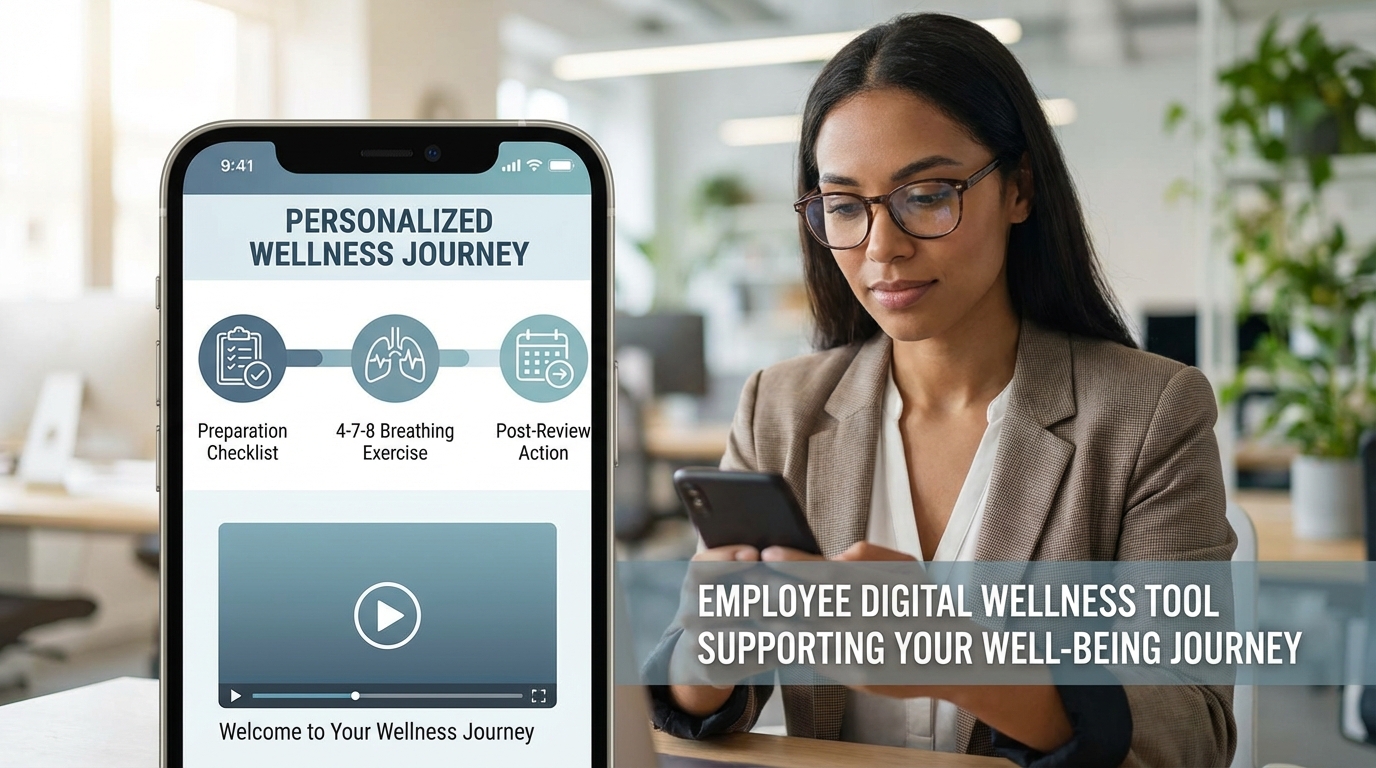
A successful video sequence should begin at least 14 days before the review starts, focusing on "Knowing Your Review Journey." This initial touchpoint should normalize anxiety, provide a preparation checklist, and encourage employees to block out dedicated reflection time. By the time the review is three days away, the content should shift toward "Calm and Clarity," incorporating short meditation mindfulness programs and 4-7-8 breathing demonstrations to help employees reframe feedback as a growth opportunity.
On the day of the appraisal, a "Center Before Your Conversation" video can provide a final 60-second box-breathing exercise and positive self-talk prompts. The journey doesn't end with the meeting; a "Post-Review Action" video sent two days later can help employees summarize agreed goals and navigate the next steps for coaching or mentorship. This continuous loop of communication ensures that stress reduction techniques are integrated into the flow of work, rather than being treated as an isolated event.
To maximize impact, these videos should be distributed via the channels employees use most, such as WhatsApp Business API, email, or internal HR portals. By leveraging API-triggered sends based on HRIS timelines, organizations can ensure that the right message reaches the right person at the exact moment they need it. Tracking metrics such as view-through rates and completion percentages allows HR to refine their messaging and identify cohorts that may require additional intervention.
Scaling Workplace Mental Health Support Through Behavioral Nudges
Comprehensive workplace mental health support requires more than just offering an Employee Assistance Program (EAP); it requires active amplification and the removal of barriers to access. Many employees hesitate to use EAP resources due to concerns about confidentiality or a lack of clarity on how the process works. Creating employee assistance video content that features real booking flows and clear explainers can significantly increase utilization rates during high-stress periods.
In addition to internal resources, Indian enterprises should leverage national mental health infrastructure to complement their offerings. The Tele-MANAS 24x7 helpline, a Ministry of Health & Family Welfare initiative, provides a critical safety net for employees who may need clinical support beyond what an EAP can provide. Highlighting these resources through role-based videos ensures that both employees and managers know exactly where to turn when stress signals become overwhelming.
Implementing Burnout Prevention Automation via Data-Triggered Journeys
The most sophisticated Q1 2026 employee wellness campaigns utilize burnout prevention automation to deliver just-in-time support based on real-time data signals. By integrating HRIS and engagement tool data, organizations can identify at-risk cohorts—such as those working consecutive overtime weeks or those with low pulse survey scores—and trigger automated support sequences. TrueFan AI's 175+ language support and Personalised Celebrity Videos allow these automated messages to be delivered with a level of warmth and cultural relevance that standard automated emails simply cannot match.
A data-triggered journey might begin two weeks before an appraisal for an employee identified as "high-risk." The sequence could include personalized videos teaching stress reduction techniques, automated calendar holds for "recovery blocks," and a prompt for their manager to review their current workload. If the employee does not engage with the initial content, the system can branch to a different approach, perhaps sending a text-based CTA or a shorter video focusing specifically on EAP confidentiality.
This level of automation ensures that no employee falls through the cracks during the busy Q1 period. It also provides HR teams with a wealth of data to analyze, from cohort-specific engagement heatmaps to the direct impact of wellness interventions on absenteeism. By moving away from a "one-size-fits-all" wellness strategy, enterprises can allocate their resources more effectively, focusing their highest-touch interventions on the individuals who need them most.
Driving Engagement with Wellness Challenge Gamification
To foster community and boost morale during the review month, organizations should consider a 21-day wellness challenge gamification program. This light-lift initiative is designed to be inclusive of both remote and onsite teams, focusing on small, sustainable habits rather than intense physical feats. A well-structured challenge might dedicate the first week to micro-habits like five-minute walks, the second week to meditation mindfulness programs, and the final week to building peer connections and setting work-life boundaries.
Gamification mechanics, such as team leaderboards and streak badges, can drive consistent participation and create a sense of shared purpose. However, the rewards for these challenges should be carefully aligned with retention incentive personalization. Instead of generic cash prizes, consider offering rewards that reflect the employee's values, such as additional flex days, wellness stipends, or credits for professional development. This approach ensures that the challenge feels like a meaningful investment in the employee's future, rather than a fleeting distraction.
Optimizing Retention Incentive Personalization and Manager Enablement
The final piece of the Q1 wellness puzzle involves retention incentive personalization and deep manager enablement. Every employee has a unique set of drivers that influence their decision to stay with an organization. For an early-career individual, this might be mentorship and stretch projects; for a mid-level manager, it might be leadership coaching and team capacity relief. Solutions like TrueFan AI demonstrate ROI through the ability to deliver these individualized value propositions at scale, ensuring that every high-performer understands their unique path forward.
Manager enablement is the foundation upon which these personalized incentives are built. Managers need to be equipped with the skills to conduct bias-aware, empathetic, and structured appraisal conversations. Providing a micro-learning video series that covers topics such as de-escalating anxiety and supporting work-life balance initiatives can transform the manager from a "judge" into a "coach." When managers are trained to validate feelings and agree on clear next steps, the appraisal process becomes a source of motivation rather than a source of dread.
A 4-Week Roadmap for Q1 2026 Employee Wellness Campaigns
Implementing a comprehensive wellness strategy requires a disciplined, phased approach. This 4-week roadmap provides a blueprint for Indian enterprises looking to launch their Q1 2026 employee wellness campaigns with maximum impact and minimal friction.
Week 1: Discovery, Setup, and Scripting
The first week is dedicated to auditing existing assets and defining the scope of the campaign. HR teams should identify their key employee cohorts, map out the review milestones, and determine which languages (from the 175+ available) are necessary for full inclusivity.
Week 2: Production, Configuration, and Automation
With the strategy in place, the focus shifts to production. Base videos featuring company leaders or HRBPs are recorded, and the TrueFan AI engine is configured to generate the thousands of personalized variants required.
Week 3: Launch, Engagement, and Support
Week 3 marks the official rollout. The wellness challenge gamification kicks off with a high-energy personalized video, and the manager enablement series is distributed to all people leaders.
Week 4: Measurement, Iteration, and Retention
As the reviews begin, the HR team monitors the real-time analytics. View-through rates and EAP click-throughs provide immediate feedback on which messages are resonating.
Frequently Asked Questions
What are the most effective performance review anxiety solutions in 2026 for Indian enterprises?
The most effective solutions combine high-tech personalization with high-touch empathy. This includes deploying appraisal stress management videos that demystify the process, providing robust workplace mental health support through EAP and national helplines like Tele-MANAS.
How do Q1 2026 employee wellness campaigns reduce attrition risk?
These campaigns address the root causes of appraisal-season turnover: uncertainty, lack of support, and perceived unfairness. By using employee retention crisis prevention strategies like retention incentive personalization, organizations can show employees a clear, individualized future within the company.
What is burnout prevention automation and how do we implement it?
Burnout prevention automation involves using HRIS data—such as overtime hours or low engagement scores—to trigger personalized support sequences. Platforms like TrueFan AI allow HR to send automated, localized videos that offer specific wellness resources.



