Summer Vacation Early Bird Offers 2026: The Enterprise Playbook for Personalized Destination Videos and Recovery Automation
Estimated reading time: 12 minutes
Key Takeaways
- February–March is the revenue sweet spot to lock in April–May travel demand with targeted early-bird offers.
- Destination personalization videos and data-driven incentives significantly lift CTR, conversion, and ADR.
- Use tiered incentive automation and recovery playbooks to nudge early planners and rescue abandoned bookings.
- Focus on family and group segments with bundled value, localized content, and clear visual proof of benefits.
- Deploy a robust recommendation engine and loyalty activation workflows to maximize long-term value.
The travel and hospitality landscape for 2026 is defined by a significant shift in consumer behavior: the “Goldilocks” planning window has moved earlier, making the February–March period the critical battleground for capturing April–May travel demand. For enterprise CMOs and revenue managers, the success of summer vacation early bird offers 2026 hinges on the ability to transition from generic mass-marketing to hyper-personalized, data-driven engagement.
Current market intelligence indicates that summer 2026 is projected to be the largest selling season on record, accounting for approximately 50% of total annual bookings. Early planners are not just booking sooner; they are spending more, with average booking values rising by roughly 8% during early peak periods. To capture this high-intent segment, travel brands must deploy sophisticated summer holiday offer videos and automated incentive structures that resonate with the specific needs of families and group travelers.
The strategic imperative for the 2026 season is clear: enterprises must orchestrate a seamless blend of personalization, incentive automation, and recovery logic. By leveraging destination personalization videos and advanced recommendation engines, airlines, hotel chains, and OTAs can lift conversion rates, increase Average Daily Rates (ADR), and drive loyalty activation before the peak summer rush begins.
1. The 2026 Strategic Landscape: Why February–March is the Revenue Sweet Spot
The window for securing summer vacation early bird offers 2026 has become increasingly compressed, with search momentum for early-year trips rising 10% year-over-year. Data from industry leaders suggests that summer search interest is currently 9% higher than the same period in 2024, signaling a robust appetite for domestic and international travel. For domestic tourism promotion, the “Goldilocks” window is now 1–3 months, while international planning requires a 2–8 month lead time, placing the February–March booking window at the heart of the revenue cycle.
Enterprises that fail to engage during this window risk losing market share to more agile competitors who use early booking incentive automation to lock in demand. The 2026 season shows that May is emerging as the strongest month for travel, driven by a combination of school holidays and favorable weather patterns. This shift necessitates a move toward domestic tourism promotion that highlights regional hubs and value-added family packages.
Platforms like TrueFan AI enable travel enterprises to transform static search data into dynamic, high-converting visual narratives that speak directly to these early planners. By integrating real-time inventory data with personalized video delivery, brands can create a sense of urgency and exclusivity that traditional static banners cannot match. This approach is particularly effective for capturing the growing segment of travelers who prioritize experiential value over simple price discounts.
Source: Advantage Reveals Five 2026 Trends
Source: Booking Values Up in Early Peaks
Source: Summer Travel Bookings Momentum
Source: The State of Travel 2026
Source: India Domestic Tourism Buoyancy
2. Hyper-Personalization at Scale: Deploying Destination Personalization Videos
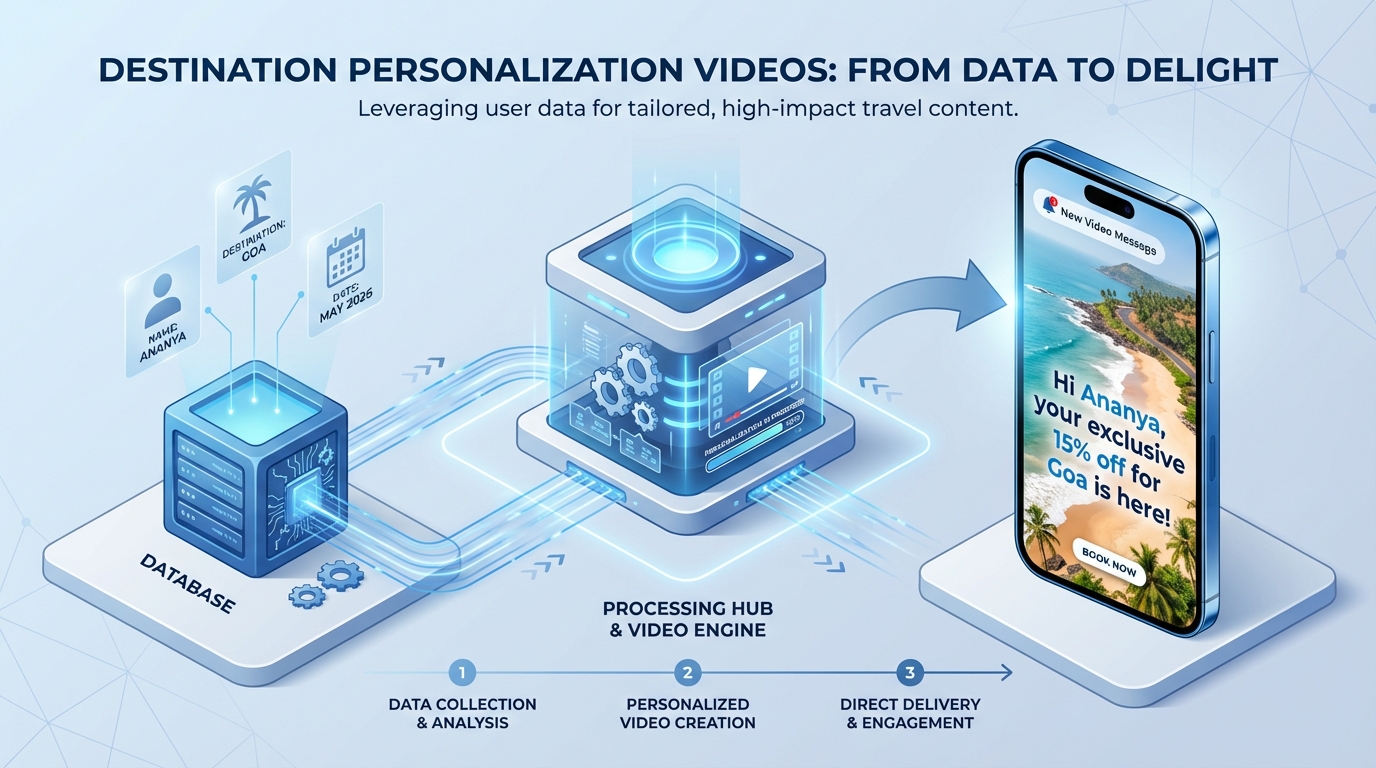
In the competitive arena of summer vacation early bird offers 2026, generic content is no longer sufficient to drive meaningful engagement. Enterprises are now turning to destination personalization videos to create a 1:1 connection with potential travelers. These videos dynamically insert variables such as the traveler’s name, origin city, searched destination, and preferred travel dates (specifically targeting the April–May window).
The creative system behind these videos must be engineered for maximum impact within the first five seconds. A successful video hook greets the user by name and immediately references their specific travel intent—for example, “Hi Ananya, Goa in May is the perfect escape for your family.” This level of relevance, combined with a clear value promise like “Kids stay free if you book by March 15,” creates a compelling reason for the user to convert immediately.
TrueFan AI’s 175+ language support and Personalised Celebrity Videos allow brands to reach diverse demographics with localized precision, ensuring that the message resonates across different regions and cultures. Whether it is flight booking personalization or group booking personalization, the ability to render high-quality video at scale with sub-30s latency is a game-changer for enterprise CRM and CDP triggers.
To maximize ROI, travel brands should utilize a multi-channel delivery mix. This includes embedding video thumbnails in email hero blocks, utilizing the WhatsApp Business API for autoplay video messages, and deploying on-site embeds for returning visitors. By personalizing at least nine distinct variables—including loyalty tier, price band, and family size—enterprises can ensure that every vacation planning video guide feels bespoke to the recipient’s unique needs.
3. Incentive Science: Early Booking Incentive Automation and Recovery Playbooks
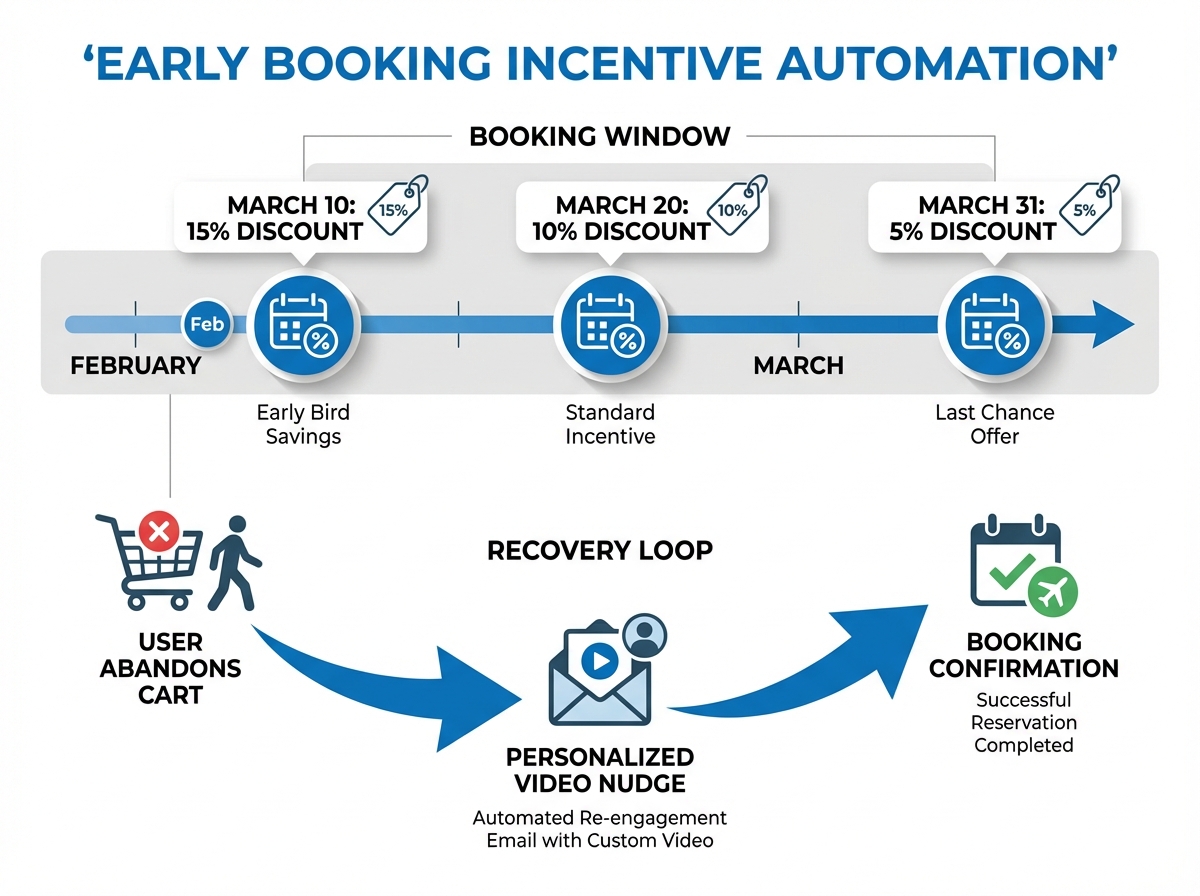
The backbone of a successful early-bird campaign is a sophisticated framework for early booking incentive automation. Rather than offering flat discounts that erode margins, enterprises should implement tiered incentive ladders. For instance, a brand might offer a 15% discount for bookings made by March 10, reducing to 10% by March 20, and 5% by March 31. This structure rewards the earliest planners while maintaining price integrity as the travel date approaches.
Propensity-driven personalization is another critical component of this strategy. By using a destination recommendation engine, brands can identify low-intent, price-sensitive segments and offer them higher discounts, while high-intent, high-ADR segments receive value-added perks like free breakfast or lounge access. This surgical approach to incentives ensures that marketing spend is optimized for incremental revenue rather than subsidizing bookings that would have happened anyway.
Travel booking recovery campaigns are equally vital for capturing revenue that would otherwise be lost to cart abandonment. When a user abandons a search or a booking flow, an automated sequence should be triggered. This sequence might begin with a helpful vacation planning video guide, followed by a personalized reminder, and finally a time-bound incentive delivered via WhatsApp catalog video marketing.
4. Maximizing Yield: Family Vacation Package Marketing and Hotel Conversion Optimization
For the 2026 summer season, family vacation package marketing represents the most significant opportunity for ADR growth. Families typically have higher booking values and longer lengths of stay, but they also require more complex decision-making support. Enterprises can address this by creating bundled offers that include “kids-stay-free” promotions, second-room discounts, and inclusive meal plans.
Hotel conversion optimization in this context involves more than just price adjustments; it requires a visual demonstration of value. Personalized videos showing child-friendly amenities, safety features, and proximity to local attractions can significantly influence a parent’s booking decision. When these videos are paired with rate-fenced offers visible on the booking calendar, the path to conversion becomes frictionless.
Group booking personalization is another lever for increasing yield. For groups of six or more, enterprises can offer incentives like free seat selection or adjoining room guarantees. Video variants that call out the specific group size and offer split-payment options can alleviate the logistical friction often associated with group travel.
5. The Intelligence Layer: Recommendation Engines and Cross-Sell Automation
A robust destination recommendation engine is the “brain” of a modern travel marketing stack. By ingesting first-party signals—such as search history, loyalty tier, and past trip behavior—alongside contextual signals like school holiday dates and origin-city weather, the engine can suggest the “best-fit” destinations for the April–May window. These outputs then feed directly into the scripting for destination personalization videos.
This intelligence layer also powers flight booking personalization. Instead of just showing the lowest fare, the system can suggest the “best week in May” to travel based on a combination of price index and historical weather patterns. This consultative approach builds trust and positions the travel brand as a partner in the planning process rather than just a commodity provider.
Travel insurance cross-sell campaigns should also be integrated into this automated journey. By tailoring insurance premiums and coverage highlights to the specific traveler profile—such as beach activity coverage for a family heading to the Maldives—brands can significantly increase their attachment rates.
6. Loyalty Activation and the India Growth Opportunity
In the context of domestic tourism promotion, the Indian market presents a unique set of opportunities for 2026. With a surge in domestic travel interest toward hubs like Goa, Coorg, Ooty, and the Andaman Islands, enterprises must tailor their summer vacation early bird offers 2026 to local preferences. This includes offering regional language support and highlighting short-haul, high-value itineraries.
Travel loyalty activation is a critical component of retaining these domestic travelers. Personalized video invites can be used to encourage non-members to enroll or to nudge existing members toward a higher tier by highlighting the bonus points available for early-bird bundles. For segments at risk of a tier downgrade, a personalized video showing the benefits they stand to lose can be a powerful retention tool—guided by post-purchase loyalty automation.
7. Implementation Checklist: A 4-Week Roadmap to Summer 2026 Success
To successfully launch a campaign for summer vacation early bird offers 2026, enterprises must follow a disciplined implementation timeline during the February–March window.
Week 1: Data Mapping and Offer Design
- Map CDP/CRM fields including name, origin, searched destination, and loyalty tier.
- Define early-bird incentive tiers and package inclusions (e.g., kids-stay-free).
- Select creative templates for top domestic and international destinations.
Week 2: Technical Integration and QA
- Build multivariable video templates and configure API/SDK triggers (see ONDC personalized video onboarding).
- Ensure 175+ language support is correctly mapped to user profiles.
- Set up analytics dashboards to track VTR, CTR, and conversion vs. control groups.
Week 3: Pilot Launch and Optimization
- Launch pilots across high-volume routes and destinations.
- Optimize video thumbnails and the first five seconds of the hook based on initial VTR.
- Activate travel booking recovery campaigns for search and cart abandoners using WhatsApp catalog video marketing.
Week 4: Scaling and Cross-Sell Integration
- Scale segments to the full database and roll out regional language variants.
- Integrate travel insurance cross-sell campaigns into the post-booking flow.
- Deploy travel loyalty activation videos to maximize long-term value.
Frequently Asked Questions
What are summer vacation early bird offers 2026?
These are time-bound, value-led incentives designed to capture early planning intent during the February–March window for travel in April–May. They typically include tiered discounts, “kids-stay-free” bundles, and loyalty point bonuses to encourage early conversion.
How do destination personalization videos increase bookings?
By using dynamic variables like the traveler’s name and searched destination, these videos create a high level of relevance. This immediate connection, especially when delivered via high-engagement channels like WhatsApp, leads to significantly higher CTR and conversion rates compared to static assets.
What is early booking incentive automation?
It is a rules-based system within a CRM or CDP that triggers specific offers based on a user’s behavior and propensity to book. This allows brands to offer the right incentive—whether a discount or a value-add—to the right person at the right time.
How can travel booking recovery campaigns reduce abandonment?
These campaigns use automated sequences to re-engage users who have left the booking funnel. By providing helpful content, such as a vacation planning video guide, and a time-sensitive incentive, brands can recover high-intent traffic that would otherwise be lost.
Can TrueFan AI be integrated with existing travel CRMs?
Yes, by integrating TrueFan AI into your CRM, you can automate the delivery of personalized videos across email, SMS, and WhatsApp. This enterprise-grade solution supports sub-30s rendering and provides detailed analytics to track the ROI of your personalization efforts.
What are the key KPIs for measuring early-bird campaign success?
Enterprises should focus on View-Through Rate (VTR), Click-Through Rate (CTR) to the booking page, Booking Conversion Rate vs. Control, Average Daily Rate (ADR) uplift, and the attach rate for ancillary services like travel insurance.



