T20 World Cup 2026 India marketing: The Enterprise Playbook for Personalised Fan Engagement
Estimated reading time: 12 minutes
Key Takeaways
- Adopt a WhatsApp-first approach with multilingual, template-approved videos to drive high-intent fan engagement at scale.
- Leverage personalized video rendering to tailor messages by name, city, team, and offer across 12+ languages for deeper affinity.
- Use real-time automation triggered by live match events to bridge stadium excitement with instant conversions.
- Build a full-funnel strategy from awareness to loyalty, and attribute impact with robust ROI measurement and compliance.
The T20 World Cup 2026 India marketing landscape represents the most significant commercial opportunity for brands in the upcoming decade. As India and Sri Lanka prepare to co-host the tournament from February 7 to March 8, 2026, the scale of audience fragmentation and digital maturity has reached a tipping point. For enterprise leaders, the challenge is no longer just reaching the 500 million+ expected viewers, but converting that attention into measurable ROI through hyper-personalized, real-time engagement.
Success in this high-stakes environment requires a shift from traditional broadcast-heavy spends to a “WhatsApp-first” strategy. By leveraging multilingual video journeys and live match triggers, brands can bridge the gap between stadium excitement and digital commerce. This playbook outlines how to master the T20 World Cup 2026 India marketing ecosystem to drive customer acquisition and long-term brand equity.
1. WhatsApp cricket video campaigns: Driving high-intent engagement at scale
In the context of T20 World Cup 2026 India marketing, WhatsApp has evolved from a simple messaging app into a full-funnel conversion engine. With India serving as WhatsApp’s largest global market, the platform offers an unparalleled 98% open rate, making it the primary channel for delivering high-impact content. Platforms like TrueFan AI enable brands to automate the delivery of these assets, ensuring that every fan receives a message that feels personally crafted for them.
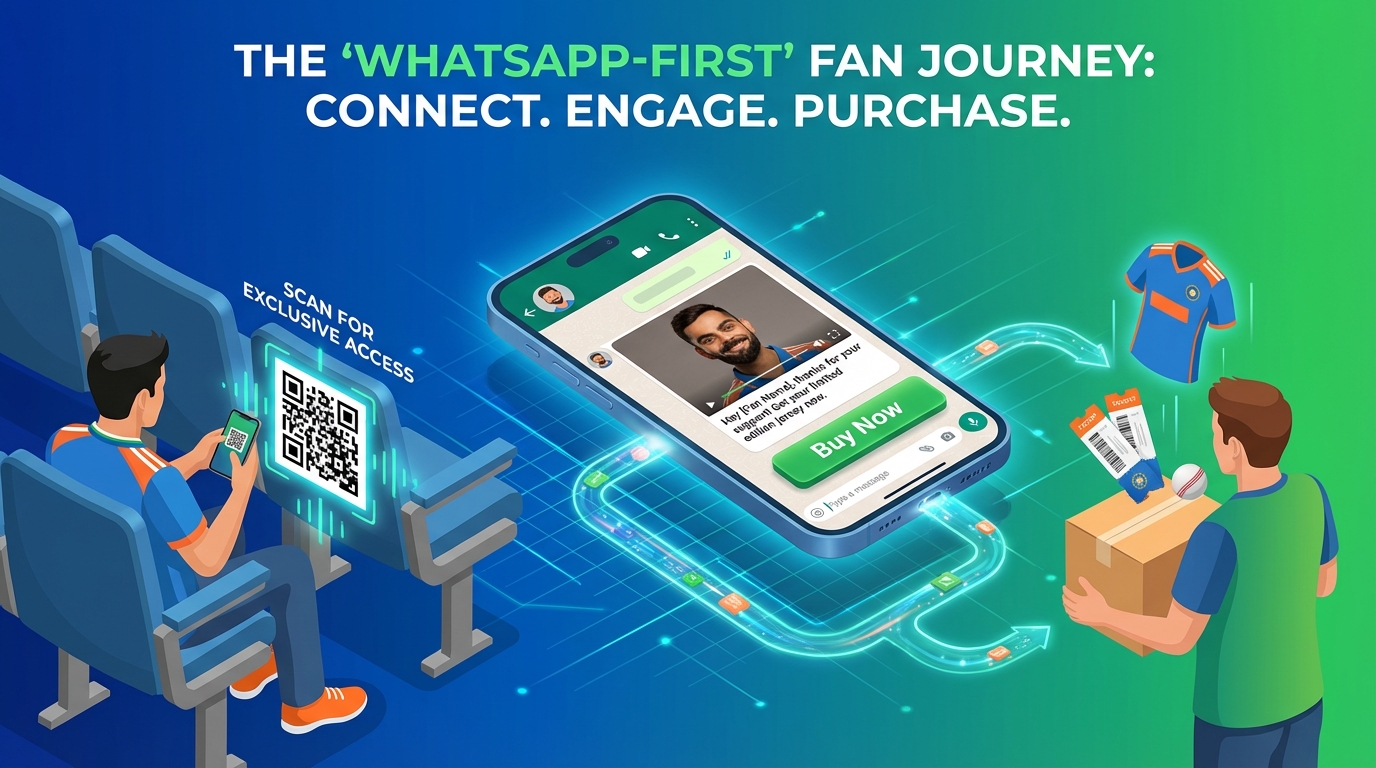
The core of a successful WhatsApp strategy lies in the deployment of WhatsApp cricket video campaigns. These are not generic broadcasts; they are template-approved, triggered flows that deliver short, interactive videos directly to a user’s chat. By integrating Click-to-WhatsApp ads with stadium-based QR codes, brands can capture high-intent opt-ins and move users into a personalized nurturing sequence. This approach bypasses the noise of social media feeds and places your brand directly in the user’s most intimate digital space.
To maintain compliance and effectiveness, enterprise marketers must utilize official WhatsApp Business APIs. This allows for the use of rich media templates that include deep links to quick commerce apps or loyalty portals. When a fan receives a personalized video from a cricket icon celebrating a boundary in real-time, the friction between engagement and purchase is virtually eliminated.
Source: AiSensy: WhatsApp Business API Benchmarks
Source: ICC Official Match Hub
Source: The Media Ant: Sports Marketing Audience Spread
2. Cricket tournament video personalization: The new standard for fan affinity
The traditional “one-size-fits-all” celebrity endorsement is no longer sufficient for the diverse Indian demographic. Cricket tournament video personalization allows brands to take a single 15-minute talent shoot and render millions of unique variants. Each video can dynamically swap variables such as the fan’s name, their city, their favorite team, and even the specific offer being presented. TrueFan AI’s 175+ language support and Personalised Celebrity Videos ensure that a fan in Chennai hears a message in Tamil, while a fan in Ahmedabad receives the same campaign in Gujarati.
A robust creative system for the 2026 World Cup should follow a three-phase content architecture. The “Pre-game Hype” phase focuses on rivalry storylines and local city pride, using player shout-outs to build anticipation. The “In-game Dynamic” phase utilizes real-time triggers—such as a powerplay surge or a crucial wicket—to send immediate, relevant video updates. Finally, the “Post-game Reward” phase delivers victory or commiseration messages, often paired with referral bonuses or limited-edition merchandise coupons.
The technical execution of these campaigns relies on AI-driven virtual reshoots. By updating script lines and lip-syncing without requiring the athlete to return to the studio, brands can stay agile as the tournament narrative evolves. This level of granularity ensures that the content remains culturally resonant and contextually accurate across all 12+ major Indian languages.
Source: Brand Equity (ET): JioStar Women Cricketers Campaign
Source: Women Entrepreneurs Review: Women-led T20 Ad Buzz
3. Real-time match marketing automation: Capitalizing on live momentum
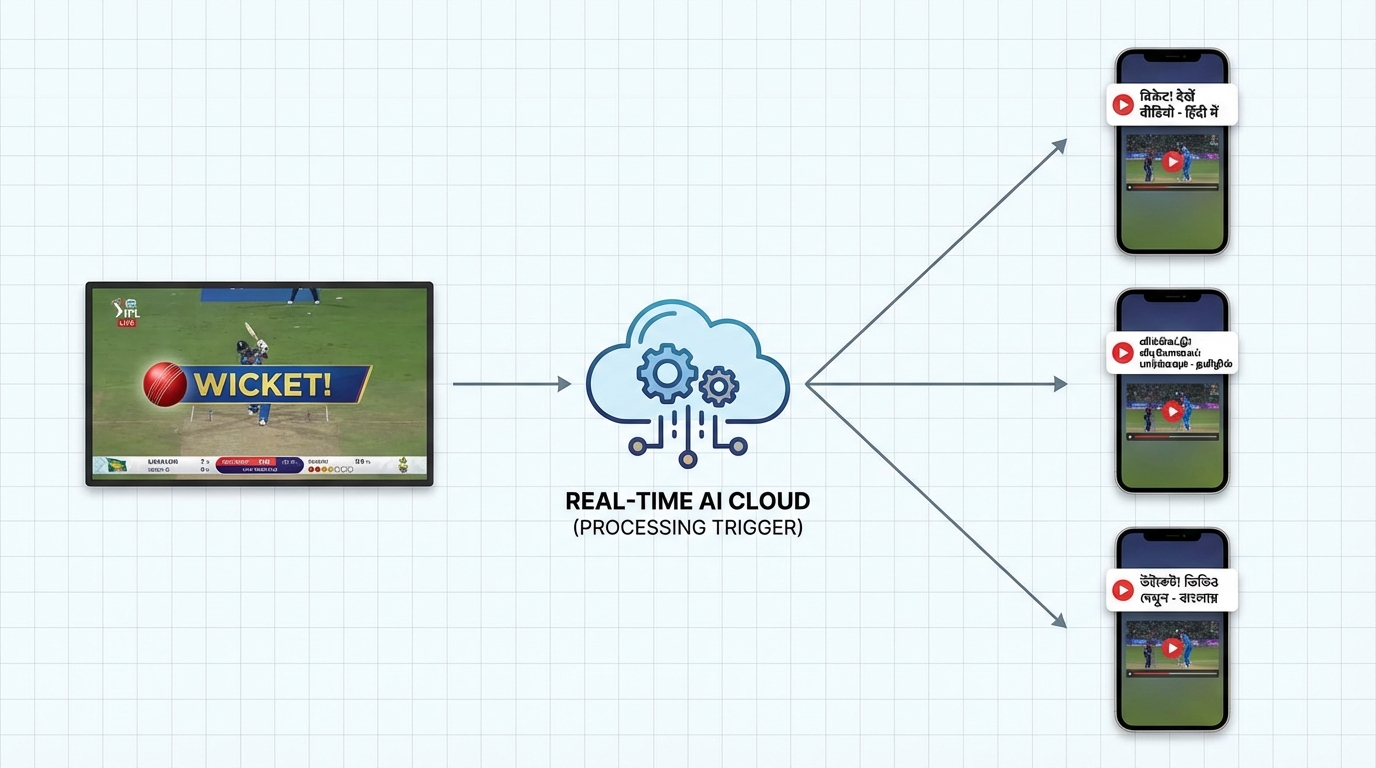
The volatility of a T20 match is its greatest marketing asset. Real-time match marketing automation involves orchestrating a system that “listens” to live match data—such as score feeds or internal tagging—and triggers video rendering in under 60 seconds. When a player hits a half-century, the automation engine identifies the event, selects the corresponding video template, populates it with the fan's data, and dispatches it via WhatsApp or push notification.
This strategy also incorporates cricket sentiment analysis marketing. By monitoring social chatter and engagement signals, brands can determine the prevailing mood of the fanbase. If the national team is facing a difficult chase, the tone of the personalized video can shift from “celebratory” to “encouraging,” maintaining brand safety and emotional resonance. This prevents the “tone-deaf” marketing errors that often occur during automated campaigns.
For enterprise brands, the integration pattern is critical. The event stream must feed directly into an orchestration engine that manages template slotting and rendering APIs. By logging every interaction with UTM parameters and pixels, marketers can measure the direct impact of a specific match event on their conversion funnel. https://truefan.ai/blogs/cricket-sponsorship-roi-optimization This level of automation ensures that your brand is part of the conversation at the exact moment fan passion is at its peak.
Source: TrueFan AI: T20 Sponsorship Activation Strategies
Source: Olympics.com: ICC T20 World Cup 2026 Schedule
4. Stadium-to-digital fan experience: Bridging the physical and virtual worlds
The 2026 tournament will see matches played across iconic venues in India and Sri Lanka, providing a massive opportunity for a stadium-to-digital fan experience. The goal is to turn every physical touchpoint—from seat-back QR codes to big-screen CTAs—into a gateway for a digital journey. A fan scanning a QR code at the Wankhede Stadium could instantly receive a personalized “Welcome to the Venue” video featuring a cricket legend, along with a time-bound offer for the stadium's merch counter.
This “phygital” approach extends to mid-innings engagement. Brands can run “Moment of the Match” voting via WhatsApp, where participation triggers an instant personalized shout-out video from a player. This not only increases fan engagement but also provides the brand with valuable first-party data. By the time the fan leaves the stadium, an exit-scan QR can provide a “Thank You” video and a coupon for a quick commerce delivery to be waiting for them when they get home.
Attribution is the key to proving the success of stadium activations. By using unique QR parameters for different stands or zones, brands can track which areas of the stadium are most engaged. This data allows for more refined regional cricket fan targeting, as brands can see how fans from different cities or backgrounds interact with various types of content and offers.
Source: Economic Times: ICC Signs Hyundai as Global Sponsor
Source: The Media Ant: Regional and Language Context
5. T20 World Cup customer acquisition: Mastering the conversion funnel
For enterprise brands, the ultimate goal of T20 World Cup 2026 India marketing is a measurable lift in the bottom line. A structured T20 World Cup customer acquisition funnel begins long before the first ball is bowled. The “Awareness” phase uses ambassador teasers and regional language hype videos to build a lead list. During the “Activation” phase, real-time triggers and match-day personalized offers drive users toward specific actions, such as app downloads or fintech KYC completions.
The “Conversion” phase is where quick commerce tie-ins become vital. By offering T20 merchandise promotion videos that feature dynamic delivery ETAs based on the fan's city, brands can drive impulse purchases during the match. For example, a “snack combo” offer delivered via WhatsApp during the innings break, featuring a personalized video from a player, can see conversion rates significantly higher than standard display ads.
Finally, the “Loyalty” phase uses series recaps and personalized “Thank You” videos to keep the brand top-of-mind after the tournament ends. Solutions like TrueFan AI demonstrate ROI through these full-funnel journeys, providing a clear framework for measuring sports sponsorship ROI India. By tracking KPIs such as CAC (Customer Acquisition Cost), AOV (Average Order Value), and uplift vs. control groups, brands can justify their significant sponsorship investments.
Source: TrueFan AI: T20 World Cup Customer Acquisition
Source: Nielsen: Global Cricket ROI Insights
6. Sports sponsorship ROI India: Scaling with technology and compliance
Achieving a high sports sponsorship ROI India during the 2026 World Cup requires a balance of massive scale and strict compliance. Enterprise brands must ensure that their use of player likenesses and tournament branding aligns with ICC guidelines and individual player contracts. This includes managing usage windows, content approvals, and data privacy standards like ISO 27001 and SOC 2. A secure, consent-first processing system is non-negotiable when handling the PII (Personally Identifiable Information) of millions of fans.
Scaling these efforts across a nation as diverse as India means mastering multilingual cricket fan videos. With Tier 2 and Tier 3 cities forming over 52% of the viewership, vernacular-first strategies are no longer optional. The ability to deliver consistent, high-quality video content in 12+ languages—complete with perfect lip-sync and voice retention—is what separates market leaders from the rest. This ensures that the brand's message is understood and embraced by every segment of the population, from urban metros to rural heartlands.
Ultimately, the success of T20 World Cup 2026 India marketing will be defined by the ability to integrate these advanced technologies into a cohesive brand narrative. By combining real-time automation, deep personalization, and a WhatsApp-first distribution model, enterprise brands can create a fan experience that is not only memorable but also highly profitable. The 2026 tournament is the stage; the technology is the enabler; the ROI is the result.
Source: AiSensy: WhatsApp Statistics for Businesses
Source: TrueFan AI: T20 Sponsorship Activation Playbook
Conclusion: Winning the 2026 Marketing World Cup
The T20 World Cup 2026 India marketing cycle will be the most competitive and technologically advanced in history. Brands that rely on static, broad-reach tactics will likely see their ROI diluted by the sheer volume of noise. Conversely, those that embrace the “Enterprise Playbook”—focusing on WhatsApp-first delivery, real-time automation, and hyper-personalized multilingual content—will build deeper connections with fans and drive significant business growth.
By integrating the physical excitement of the stadium with the precision of digital personalization, you can ensure your brand is not just a spectator, but a central player in the fan's tournament experience. The tools for this transformation are available today; the brands that implement them earliest will be the ones celebrating on March 8, 2026.
Frequently Asked Questions
How to design WhatsApp cricket video campaigns for India?
Designing effective WhatsApp cricket video campaigns requires a focus on opt-in quality and content relevance. Start by capturing leads through Click-to-WhatsApp ads or stadium QR codes. Use official APIs to send template-approved videos that are personalized with the fan's name and city. Ensure the videos are short (under 30 seconds) and include a clear, single Call-to-Action (CTA) that leads to a mobile-optimized landing page or quick commerce app.
What are best practices for match-day personalized offers?
The best match-day personalized offers are those that leverage urgency and context. Offers should be triggered by specific match events (e.g., a “Powerplay Discount”) and delivered in the fan's native language. Use dynamic expiry timers that align with the match overs to drive immediate action. Segment your audience by team affinity to ensure that a fan of the winning team receives a celebratory offer, while a fan of the losing team receives a “cheer-up” incentive.
How does real-time match marketing automation work with renders under a minute?
Real-time match marketing automation utilizes high-speed cloud rendering and pre-built video templates. When a match event occurs, the data feed sends a signal to the rendering engine, which populates the “variable slots” (like the score or player name) in the video. Platforms like TrueFan AI use optimized CDNs and low-latency APIs to ensure the final personalized video is rendered and delivered to the user's device in under 30–60 seconds, maintaining the “live” feel of the engagement.
What languages matter most for multilingual cricket fan videos in India?
While English and Hindi are essential, multilingual cricket fan videos must also cover major regional languages to maximize reach. Key languages for the 2026 World Cup include Tamil, Telugu, Bengali, Marathi, Kannada, Malayalam, Gujarati, and Punjabi. Data shows that regional language consumption is growing faster than English in India, particularly in Tier 2 and Tier 3 markets which now contribute a significant portion of total cricket viewership.
How to measure sports sponsorship ROI India during T20?
Measuring sports sponsorship ROI India requires a multi-layered approach. Beyond traditional media metrics like reach and frequency, brands should track digital engagement (CTR, video completion rates), conversion metrics (CAC, AOV, coupon redemptions), and brand health indicators (sentiment lift, talent recall). Using holdout groups and A/B testing across different regions and languages can provide a clear picture of the incremental value generated by the sponsorship.