Quick Commerce Video Personalization India 2026: The CMO’s Guide to Hyperlocal Conversion
Estimated reading time: ~9 minutes
Key Takeaways
- Shift from 10-minute promises to same-hour delivery personalization that aligns messaging with real SLAs and builds trust.
- Use hyperlocal video powered by dark-store inventory and neighborhood triggers to drive instant conversion.
- Deploy platform-exclusive video offers with 1-tap deep links for Blinkit and Zepto to minimize friction.
- Leverage WhatsApp quick commerce integration for cart recovery, restock alerts, and tier-2 expansion with vernacular content.
- Prove impact with a quick commerce ROI blueprint: incremental ROAS, geo-lift, and creative-speed metrics.
Quick commerce video personalization is now the most reliable way for CMOs and Growth leaders in India 2026 to drive neighborhood-level conversion on Blinkit and Zepto. By leveraging hyperlocal delivery marketing, dark store inventory videos, and location-based urgency marketing tied to real-time stock alerts, brands can deliver instant shopping conversion without overpromising on outdated delivery timelines.
With regulatory shifts pushing platforms to retire 10-minute promises, the winning play is same-hour delivery personalization, platform-exclusive video offers, and WhatsApp quick commerce integration for cart recovery and repeat purchase. Platforms like TrueFan AI enable brands to orchestrate these complex, data-driven creative workflows at the scale required for thousands of micro-catchments across India’s rapidly evolving retail landscape.
The shift toward instant gratification commerce has fundamentally altered the path to purchase, necessitating a move away from static assets toward dynamic, neighborhood-specific video content. This strategy ensures that marketing spend is directly tied to dark store availability, preventing the wasted impressions that occur when out-of-stock items are promoted to high-intent shoppers.
The Evolution of Instant Gratification Commerce: Why Quick Commerce Video Personalization India 2026 is Mandatory
The Indian quick commerce sector has entered its most competitive phase in 2026, with revenue projected to reach approximately US$6.94 billion. This growth is characterized by a 12.41% CAGR, reflecting a permanent shift in consumer behavior toward immediate fulfillment across categories beyond mere groceries, including beauty and electronics.
As the market matures, the regulatory environment has tightened, with authorities ordering major players to cease promoting “10-minute” delivery claims due to safety and labor concerns. Consequently, CMOs must pivot to same-hour delivery personalization, which emphasizes reliability and transparency over impossible speed, aligning creative messaging with actual platform service level agreements (SLAs).
Hyperlocal delivery marketing now requires a sophisticated integration of retail media and real-time inventory data to maintain relevance in a crowded digital shelf. Brands that fail to adopt quick commerce video personalization India 2026 risk losing market share to agile competitors who can trigger neighborhood-specific offers based on local weather, events, or stock surpluses.
The maturation of retail media, exemplified by deep partnerships between platforms and ad-tech stacks, allows for unprecedented measurement of quick commerce ROI measurement. By moving beyond top-of-funnel metrics, growth leaders can now attribute specific video views to delivered orders within a single hour, creating a highly efficient conversion loop.
Sources:
Hyperlocal Playbooks: Neighborhood Flash Sales Videos and Dark Store Inventory Videos
The cornerstone of a successful 2026 strategy involves deploying neighborhood flash sales videos that respond to immediate environmental triggers. For instance, a sudden downpour in Koramangala can trigger an automated video campaign for umbrellas and tea bundles, delivered exclusively to users within that specific pincode's dark store radius.
These videos must be short-form, typically 6 to 10 seconds, with a hook that appears within the first two seconds to capture the attention of the “scroll-heavy” consumer. By including dynamic fields such as [Neighborhood Name], [Current Price], and [Store ETA], the creative feels bespoke to the user’s immediate context, significantly increasing the likelihood of an instant shopping conversion.
Dark store inventory videos take this a step further by pulling live stock data to show real-time scarcity, such as “Only 12 units left in your Indiranagar store.” This level of location-based urgency marketing creates a powerful psychological nudge, encouraging the user to complete the purchase before the local supply is exhausted.
TrueFan AI's 175+ language support and Personalised Celebrity Videos allow brands to add a layer of cultural resonance to these hyperlocal campaigns, making them particularly effective for tier-2 quick commerce expansion. By using vernacular voiceovers and local cultural cues, brands can build trust in emerging markets where quick commerce is still gaining a foothold.
Automated suppression logic is critical in these playbooks; if a dark store runs out of a specific SKU, the video creative must automatically swap to an alternative or stop serving entirely. This prevents the negative customer experience of clicking an ad only to find the product unavailable, which is a common pitfall in traditional e-commerce marketing.
Sources:
Platform-Exclusive Video Offers and Instant Shopping Conversion on Blinkit and Zepto
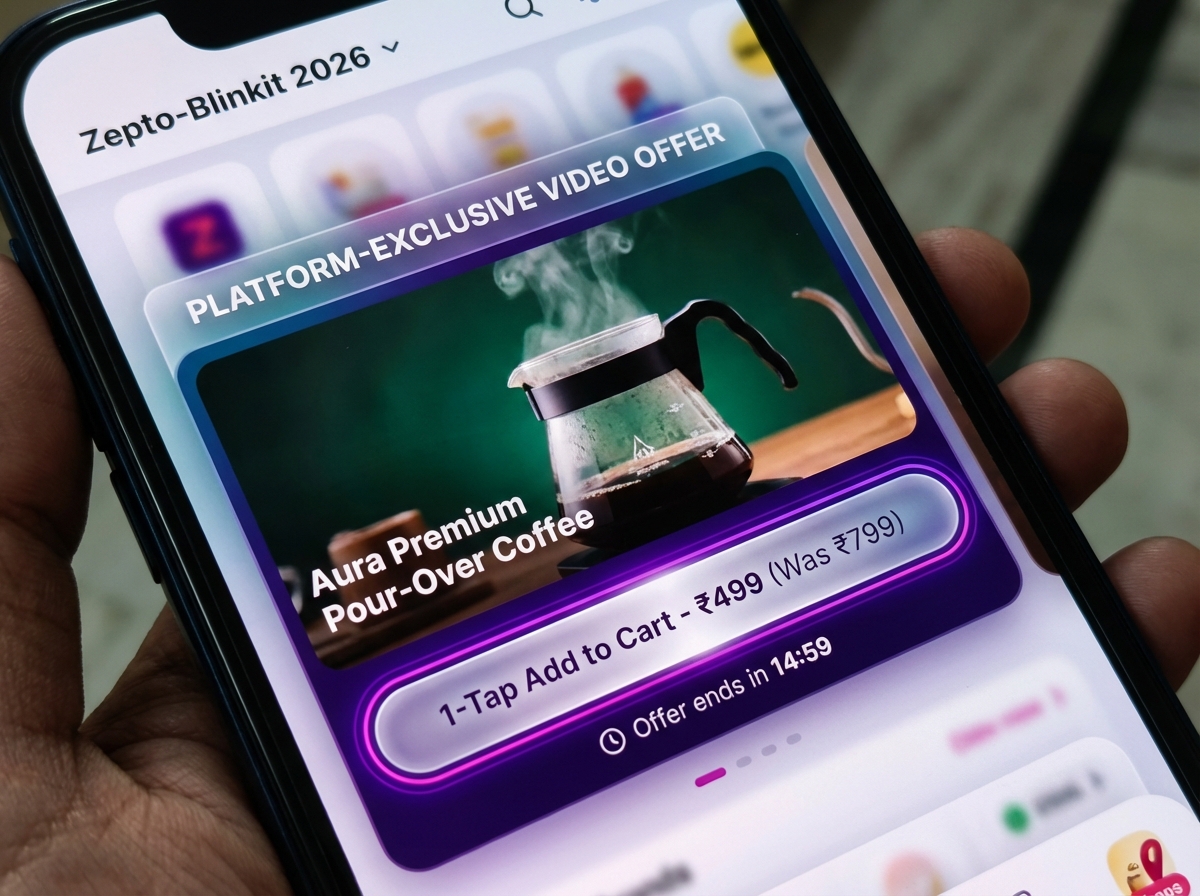
To maximize the efficiency of retail media spend, brands are increasingly utilizing platform-exclusive video offers that are gated to specific quick commerce apps. These offers often feature co-branded creative that reinforces the partnership between the brand and the platform, such as “Blinkit Exclusive: 20% off for the next 30 minutes.”
The technical execution of these offers relies on 1-tap add-to-cart deep links embedded directly within the video creative or the associated ad unit. This reduces the friction between seeing a product and owning it, which is the primary driver of instant gratification commerce in the Indian market.
Same-hour delivery personalization must be the core messaging pillar, replacing the now-regulated 10-minute commerce Blinkit Zepto claims. By promising delivery “within the hour” and providing a live ETA based on the nearest dark store, brands can manage expectations while still delivering on the promise of speed.
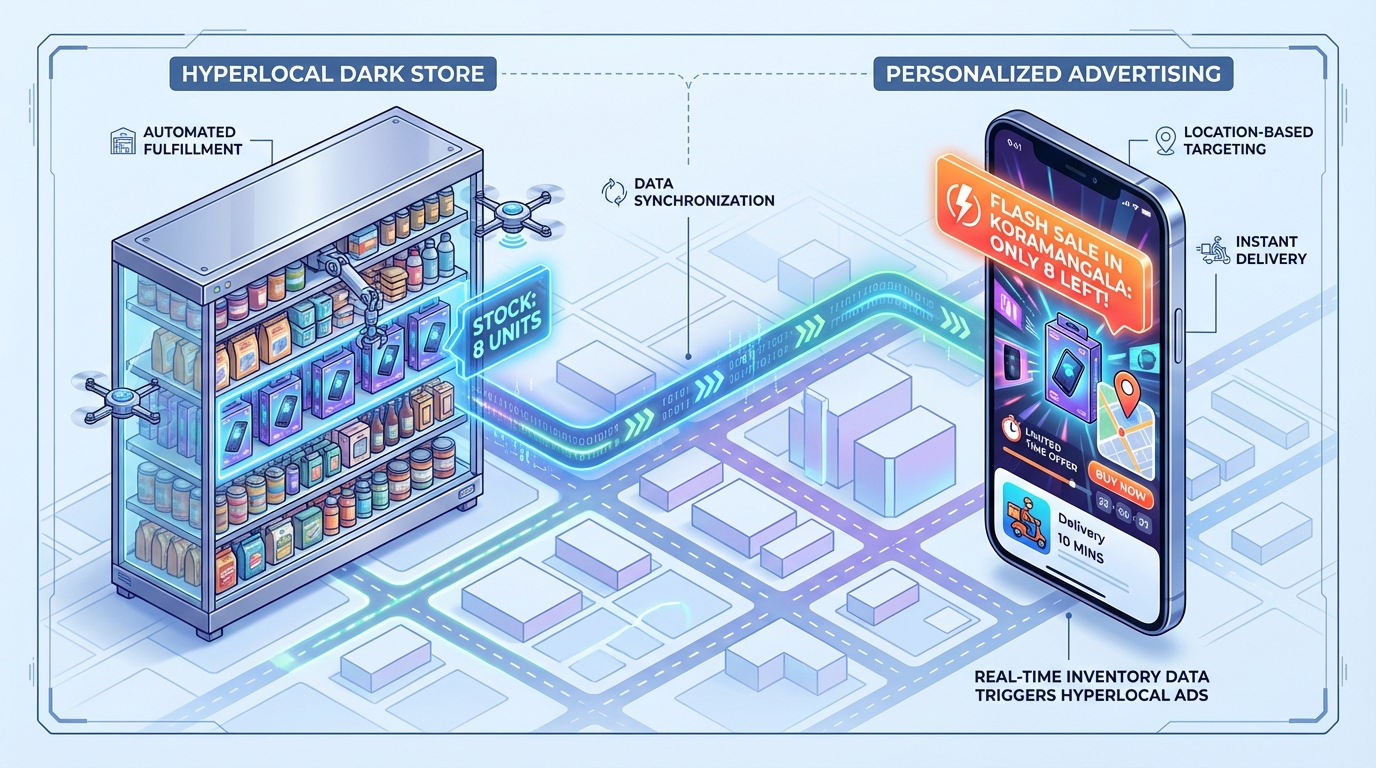
Real-time stock alerts integrated into the video feed allow for dynamic pricing strategies, where markdowns on perishables can be advertised as they approach their end-of-day window. This not only helps dark stores manage inventory waste but also provides high-value deals to price-sensitive consumers who are active during evening hours.
The integration of these videos into the platform's native UI—such as in-app stories or search result banners—ensures that the content feels like a natural part of the shopping journey. This native approach typically yields higher engagement rates than traditional display ads, as it aligns with the user's existing intent to purchase.
Sources:
WhatsApp Quick Commerce Integration and Tier-2 Quick Commerce Expansion
As quick commerce moves beyond the major metros, tier-2 quick commerce expansion has become the next frontier for growth in 2026. This requires a shift in strategy, focusing on price sensitivity, local festivals like Onam or Pongal, and the use of lighter video files optimized for varying network conditions.
WhatsApp quick commerce integration serves as a vital bridge in these markets, allowing brands to send personalized video offers and restock alerts directly to a user’s chat. This consent-first approach enables conversational commerce, where a user can ask questions about a product and receive a 1-tap link to complete the purchase on Blinkit or Zepto.
Real-time stock alerts sent via WhatsApp are particularly effective for high-demand items that frequently go out of stock, such as premium electronics or seasonal produce. When a tracked SKU returns to the local dark store, an automated video nudge can be sent to the user, significantly shortening the re-acquisition cycle.
The use of vernacular content is non-negotiable for success in tier-2 cities, where English-only marketing often fails to resonate with the broader population. Personalizing the language of the video based on the user's pincode ensures that the message is both understood and trusted, leading to higher conversion rates.
Data privacy remains a paramount concern, and brands must ensure that their WhatsApp flows are fully compliant with evolving Indian regulations regarding user data control. Providing clear opt-out paths and using approved message templates are essential steps in maintaining brand reputation and regulatory compliance.
Sources:
The Quick Commerce ROI Measurement Blueprint for Enterprise Growth
For enterprise CMOs, the ability to prove quick commerce ROI measurement is the difference between a pilot project and a permanent budget line item. This requires a framework that tracks the entire journey from a hyperlocal video view to a delivered order, including intermediate steps like add-to-cart and checkout start.
Solutions like TrueFan AI demonstrate ROI through comprehensive dashboards that provide geo-lift data, allowing brands to compare the performance of neighborhoods with personalized video versus those with generic assets. This level of granularity is essential for Marketing Mix Modeling (MMM) and for making informed decisions about where to allocate retail media spend.
Key performance indicators (KPIs) must include creative-speed metrics, such as the time-to-publish for a new video variant after a trigger event occurs. In the fast-paced world of quick commerce, being able to deploy a neighborhood flash sale in under 12 minutes is a significant competitive advantage.
Incremental ROAS (Return on Ad Spend) should be the primary metric for evaluating the success of platform-exclusive video offers. By isolating the revenue generated by these specific campaigns, brands can determine the true value of their platform partnerships and the effectiveness of their deep-linking strategies.
Reporting should be conducted on a weekly cadence to allow for rapid optimization of creative elements and targeting parameters. Monthly exports that are compatible with broader enterprise analytics tools ensure that quick commerce performance is viewed in the context of the brand’s total digital footprint.
Sources:
Governance, Compliance, and Implementation: Moving Beyond 10-Minute Commerce Blinkit Zepto
The technical implementation of quick commerce video personalization requires a robust architecture capable of handling real-time data webhooks from multiple platforms. This includes mapping pincodes to specific dark stores and ensuring that the creative engine can render thousands of unique video variants simultaneously.
Governance is equally important, particularly in the context of the regulatory shift away from 10-minute commerce Blinkit Zepto. Brands must establish clear messaging guardrails that prioritize same-hour delivery personalization and include necessary disclaimers regarding traffic and store load.
Content moderation for AI-generated video is a critical component of brand safety, ensuring that all personalized elements align with the brand’s visual identity and ethical standards. This is especially vital when using celebrity likenesses or dynamic vernacular translations that could be misinterpreted if not properly supervised.
Operational SLAs should be established to ensure that the entire pipeline—from trigger detection to video distribution—operates within the tight windows required for quick commerce. This includes automated QA checks for link validity and creative accuracy across different device types and network speeds.
Finally, a focus on consent-first marketing, particularly within WhatsApp quick commerce integration, ensures long-term sustainability. By respecting user preferences and providing high-value, personalized content, brands can build a loyal customer base that views quick commerce as a helpful service rather than an intrusive advertisement.
Sources:
Conclusion
Quick commerce video personalization is no longer an experimental tactic; it is the fundamental engine of growth for brands operating on Blinkit and Zepto in 2026. By moving beyond the limitations of 10-minute commerce Blinkit Zepto and embracing same-hour delivery personalization, CMOs can build a sustainable, high-conversion marketing machine.
The integration of dark store inventory videos and neighborhood flash sales videos ensures that every impression is backed by actual product availability, maximizing the efficiency of retail media spend. Furthermore, the expansion into tier-2 markets via WhatsApp quick commerce integration and vernacular personalization opens up massive new segments of the Indian population.
As the market continues to mature, the brands that succeed will be those that prioritize data-driven creativity and robust quick commerce ROI measurement. See a live demo of quick commerce video personalization with your Blinkit/Zepto feed—platform-exclusive video offers, real-time stock alerts, and instant shopping conversion in action.
Recommended Internal Links
- Quick Commerce Video Personalization India
- WhatsApp Business Commerce Automation 2026: Growth Playbook
- AI Celebrity Video Marketing India
- Interactive Video Data Capture: DPDP-Compliant Guide 2026
- Interactive Video Data Capture: DPDP-Compliant 2026
- AI Impact Summit 2026 TrueFan: Enterprise AI Video ROI
Frequently Asked Questions
What is the primary benefit of quick commerce video personalization for D2C brands?
The primary benefit is the ability to drive neighborhood-level conversion by aligning creative content with real-time dark store inventory and local context. This ensures that marketing spend is only directed toward products that are available for immediate delivery, significantly increasing ROAS and reducing customer friction.
How do platforms like TrueFan AI handle the scale of thousands of neighborhood-specific videos?
TrueFan AI utilizes an automated dynamic rendering engine that populates video templates with real-time data from inventory APIs and pincode mappings. This allows for the simultaneous creation and distribution of thousands of unique video variants, each tailored to a specific micro-catchment, without the need for manual creative intervention.
Is same-hour delivery personalization more effective than the old 10-minute claims?
Yes, because it is more transparent and reliable, which builds long-term consumer trust. Following regulatory curbs on 10-minute promises, same-hour delivery personalization allows brands to set realistic expectations while still capitalizing on the consumer's need for instant gratification commerce.
Can quick commerce video personalization be used for tier-2 quick commerce expansion?
Absolutely. In fact, it is essential for tier-2 markets where vernacular content and local cultural relevance are key drivers of adoption. By using localized triggers and languages, brands can effectively communicate the value of quick commerce to a broader, more diverse audience.
How does WhatsApp quick commerce integration improve cart recovery?
WhatsApp integration allows brands to send personalized video reminders to users who have abandoned their carts, often including a real-time stock alert if the item is running low. These messages include 1-tap deep links that take the user directly back to the checkout page, making it incredibly easy to complete the purchase.
What metrics should I use for quick commerce ROI measurement?
You should focus on incremental ROAS, geo-lift (comparing personalized vs. non-personalized neighborhoods), and the conversion rate from video view to delivered order. Additionally, tracking creative-speed metrics like time-to-publish is crucial for evaluating the operational efficiency of your quick commerce marketing stack.