Holi marketing campaigns India 2026: Enterprise playbook for organic colors, fashion, and FMCG
Estimated reading time: ~12 minutes
Key Takeaways
- A mid-week Holi 2026 creates an extended celebration window, demanding precise planning across e-commerce and retail touchpoints.
- Win demand spikes with quick commerce integration and deep tier-2 penetration using PIN-code personalization.
- Adopt a video-first, vernacular strategy for organic colors and festival fashion with AI-driven personalization at scale.
- Balance growth with safety, sustainability, and compliance—prove herbal claims and follow governance workflows.
- Orchestrate WhatsApp, email, and marketplaces with measurement frameworks that track localization ROI.
Holi 2026 is set to be a watershed moment for Indian retail, with the main festival falling on Wednesday, March 4, 2026, and Holika Dahan occurring on the evening of Tuesday, March 3. For enterprise brands in the organic colors, fashion, and FMCG sectors, this mid-week placement creates a unique "extended celebration" window that demands a sophisticated, data-driven approach to capture consumer intent.
The primary challenge for Holi marketing campaigns India 2026 lies in moving beyond generic festive greetings to deliver hyper-personalized, high-utility content that resonates across diverse geographies. As e-commerce penetration in Bharat reaches new heights, the focus must shift toward tier-2 city Holi penetration and seamless quick commerce Holi integration to satisfy the "instant gratification" needs of modern shoppers. Quick commerce Holi marketing 2026 strategies
Platforms like TrueFan AI enable brands to bridge the gap between mass advertising and individual connection by generating millions of personalized video greetings that address customers by name and location. By leveraging generative AI, enterprises can now execute pre-Holi flash sale campaigns and Holika Dahan brand campaigns with a level of granularity that was previously impossible, ensuring that every marketing rupee is optimized for conversion.
1. Why Holi 2026 is a growth unlock for enterprise e-commerce
The Indian retail landscape in 2026 is characterized by a massive shift toward "Value E-commerce" and hyper-local fulfillment. Recent data from Deloitte’s January 2026 outlook indicates that nearly 60% of new e-retail shoppers in India now originate from tier-2 and tier-3 cities, making tier-2 city Holi penetration the single most important growth lever for national brands.
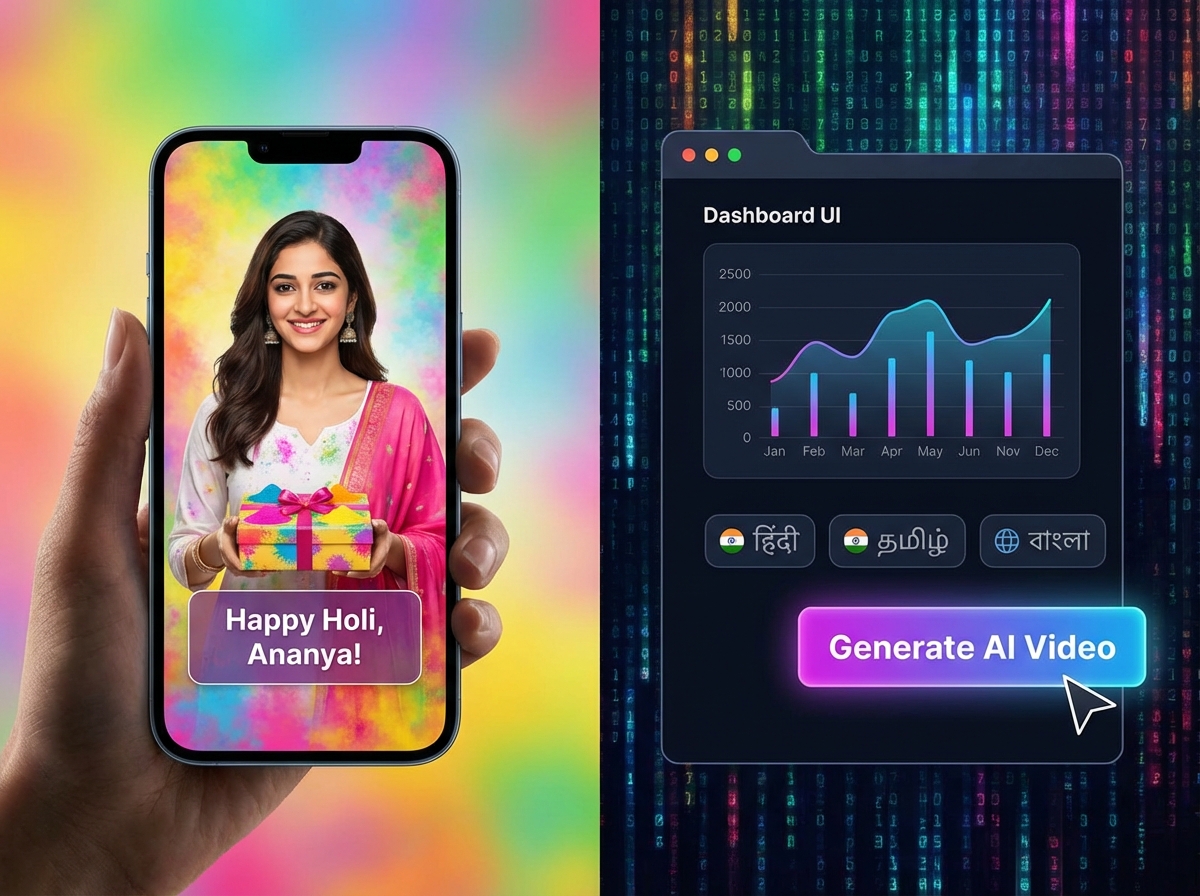
Quick commerce has evolved from a convenience for metros into a fundamental utility for the Indian middle class, with the sector maintaining a staggering 70-80% CAGR according to IBEF. During the Holi weekend, platforms like Blinkit, Zepto, and Swiggy Instamart have historically seen record-breaking surges in the sale of gulal, sweets, and snacks, often peaking in the 60–120 minute window immediately preceding local festivities. Blinkit and Zepto Holi campaigns
Enterprise brands must prioritize quick commerce Holi integration by mirroring their inventory and creative assets on these platforms. This involves deploying real-time, PIN-code-level personalization where customers receive video nudges showing exactly what is in stock at their nearest dark store, whether it is herbal pink gulal or a specific brand of thandai mix.
The success of Haldiram’s 2026 Holi campaign, which utilized F&B bundling and festival storytelling to drive cross-category sales, serves as a blueprint for FMCG leaders. By pairing traditional snacks with modern "safety-first" messaging, brands can capture the holistic needs of the 2026 consumer who values both tradition and health.
Sources:
2. Personalization pillars for enterprise scale (video-first)
In 2026, static banners are no longer sufficient to capture attention in a cluttered digital environment; the future of festive engagement lies in organic color personalization videos and festival fashion video marketing. These assets must be dynamic, allowing for the automatic generation of short-form content that recommends products based on a user’s skin sensitivity, past purchase history, and regional climate.
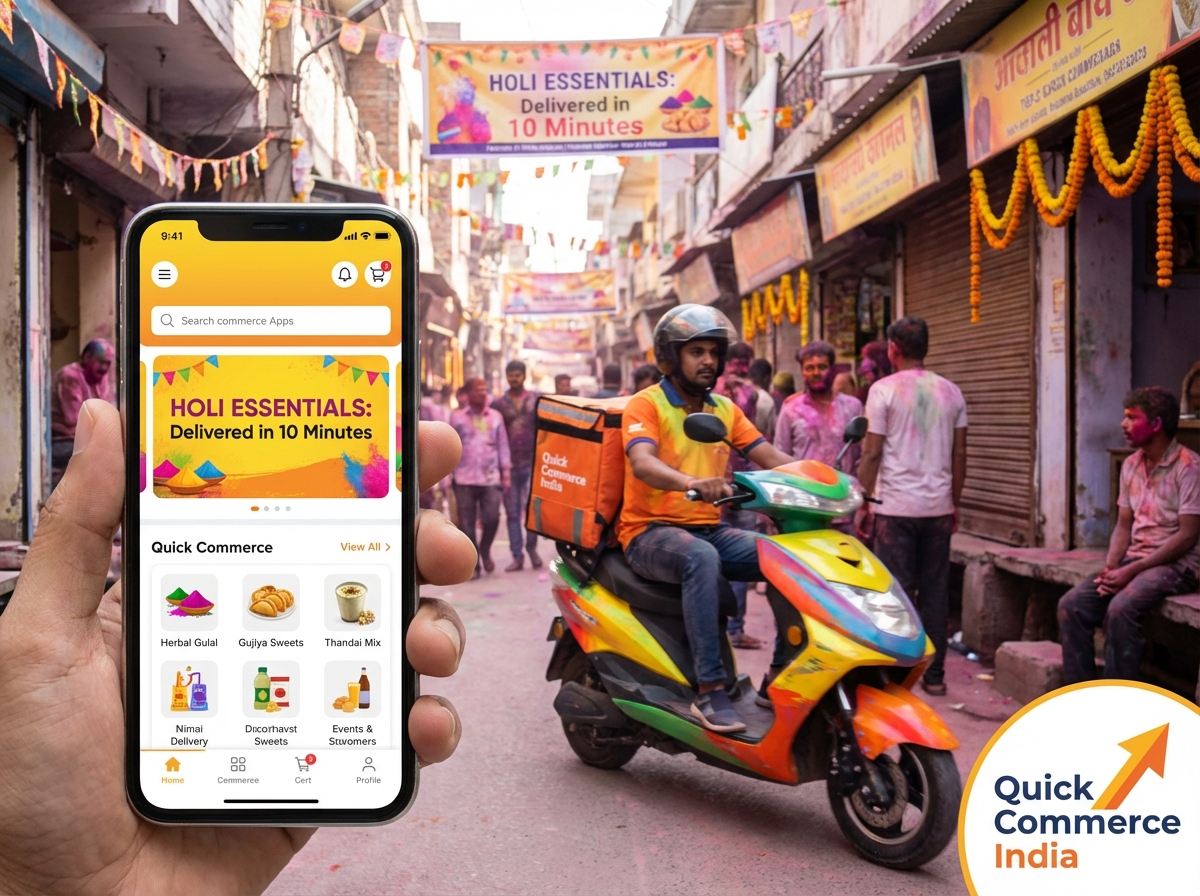
For the organic colors segment, personalization should focus on safety and transparency. Brands can auto-generate videos that feature a celebrity or brand ambassador recommending specific herbal gulal variants based on the customer's city and the local weather forecast. A script might say, "Hi Ananya, Holi in Jaipur is going to be sunny and dry. For your sensitive skin, I recommend our herbal rose gulal—it's heavy-metal free and safe for your pets too."
Festival fashion video marketing requires a different approach, focusing on 10–20 second lookbooks that adapt to regional celebration customization. A customer in Lucknow might see a video featuring traditional Chikankari kurtas with a "stain-friendly" palette, while a shopper in Mumbai might be shown breathable, quick-dry fabrics suitable for a rain dance party. These videos should integrate color-themed product bundling, offering a "Holi Survival Kit" that includes an outfit, accessories, and post-Holi skincare.
TrueFan AI's 175+ language support and Personalised Celebrity Videos allow enterprises to speak the local dialect of every customer, from the streets of Mathura to the tech hubs of Bangalore. This vernacular-first approach is critical for gulal gift recommendation automation, where AI-driven flows can suggest gift kits based on relationship tags (e.g., "Best for Neighbors" or "Corporate Holi Packs") and deliver them via WhatsApp Holi offer videos with a direct UPI deep link for frictionless checkout. WhatsApp catalog video marketing WhatsApp catalog video marketing guide
Sources:
3. The enterprise go-to-market timeline (T-21 to T+7)
A successful Holi marketing campaigns India 2026 strategy requires a staggered, multi-phase execution that aligns with the Indian retail calendar and the specific muhurat timings for Holika Dahan.
T−21 to T−10: Pre-Holi flash sale campaigns
This phase is dedicated to high-intent categories like apparel and home décor. Brands should launch staggered drops—starting with eco-friendly colors and moving to fashion—using daily countdown reels that feature vernacular scarcity cues. A/B testing percentage-based discounts against BOGO offers during this window is essential to identify the most effective conversion triggers for different regional cohorts. Quick commerce festival marketing 2026
T−9 to T−1: Holika Dahan brand campaigns
As the festival approaches, the narrative should shift toward brand values and tradition. Holika Dahan brand campaigns should focus on the "victory of good over evil" while integrating practical "shubha muhurat" nudges for puja essentials. According to Drikpanchang, the Holika Dahan muhurat varies by city, and brands should use this data to send hyperlocal delivery reminders for puja kits and sweets. This is also the prime window for Holi safety messaging videos, featuring dermatologists or safety experts providing tips on skin protection and pet safety.
T0 to T+1: Holi party planning videos and quick commerce
On the day of Holi and the day after, the focus shifts entirely to quick commerce Holi integration. Brands should deploy 30/60/90-minute party planning templates—including playlists and recipes—with embedded "Deliver in 10 mins" CTAs. Real-time inventory tracking is vital here; a video for a customer in Indiranagar should only show products that are currently available in the local Blinkit or Zepto dark store. Instant shopping video funnels
T+2 to T+7: Post-Holi retention and care
The campaign doesn't end when the colors fade. This final phase focuses on regional celebration customization through thank-you videos and UGC highlights. Brands should push "stain-care" bundles, fabric cleaners, and skin-soothing products, requesting reviews via WhatsApp with a single-tap link to improve their GMB ratings and build long-term loyalty. Rapid fulfillment personalization strategies
Sources:
4. Regional and vernacular playbook for tier-2 penetration
To achieve true tier-2 city Holi penetration, enterprise brands must move beyond a "one-size-fits-all" Hindi/English strategy. Holi is celebrated with distinct local flavors across India—from the Lathmar Holi of Barsana and Mathura to the Shigmo festival in Goa and Basant Utsav in West Bengal. Tier-2 festival commerce automation
Vernacular greeting automation is the cornerstone of this regional strategy. Brands should auto-render video content in at least 10–12 Indian languages, ensuring that the slang, music, and cultural references are tuned to the specific geography. For instance, a campaign in Punjab should reflect the energy of "Hola Mohalla," while a campaign in Maharashtra should acknowledge the local "Rang Panchami" traditions.
Payment and funnel optimization are equally critical for regional success. In tier-2 and tier-3 cities, CoD-first messaging remains a powerful trust signal, even as UPI adoption grows. Videos should feature UPI QR code overlays for instant payment, but also clearly highlight "Cash on Delivery Available" for skeptical first-time buyers. Optimizing video assets for low-bandwidth environments ensures that the message reaches users on older devices or in areas with spotty 5G coverage.
Solutions like TrueFan AI demonstrate ROI through significant uplifts in WhatsApp read rates and conversion metrics, as seen in travel and food-tech sectors where regionalized video nudges outperformed standard English text by over 17%. By automating the creation of these localized assets, enterprises can maintain brand consistency while delivering the "neighborhood feel" that drives sales in Bharat.
Sources:
5. Safety, sustainability, and compliance guardrails
In 2026, the "conscious consumer" is no longer a niche segment; sustainability is a mainstream requirement. Eco-friendly colors marketing must go beyond simple labeling to provide verifiable proof of herbal ingredients and biodegradable packaging. Sustainable festival marketing 2026
Enterprise brands should integrate Holi safety messaging videos that act as a "Do's and Don'ts" checklist for the festival. These videos should cover skin barrier protection, eye safety, and the importance of using water-saving tactics. Including a "Child-Safe" or "Pet-Friendly" badge in every creative asset builds trust with young parents and pet owners, two high-spending demographics during the festive season.
Compliance and governance are paramount when using AI-generated content at scale. Brands must ensure that all claims regarding "organic" or "herbal" products are substantiated with dermatologist quotes or lab certifications, which can be linked directly from the video description. Furthermore, enterprise-grade approval flows are necessary to ensure that every personalized video—regardless of the language or region—adheres to the brand's safety and ethical standards.
By positioning themselves as partners in a "Safe and Green Holi," brands can differentiate themselves from low-cost, unorganized competitors. This approach not only drives immediate sales of premium organic products but also enhances the brand's E-E-A-T (Experience, Expertise, Authoritativeness, and Trustworthiness) in the eyes of both consumers and search engines.
Sources:
6. Orchestration, measurement, and ROI
The final piece of the Holi marketing campaigns India 2026 puzzle is the seamless orchestration of channels and the rigorous measurement of performance. WhatsApp Holi offer videos should be the primary driver of conversational commerce, leading users through a flow of "Catalog → Personalized Video → UPI Payment → Tracking" all within the chat interface. WhatsApp business commerce automation 2026
Email marketing remains a vital backup for non-WhatsApp users, particularly for the enterprise B2B segment. Using festive subject lines and dynamic product blocks that reflect the user's past interests can significantly boost open rates. Segmentation should be based on delivery promise; for example, users in a 10-minute delivery zone should receive different creative than those in a 48-hour shipping zone.
Measurement must go beyond simple impressions to track the "Localization Multiplier." This involves comparing the performance of vernacular, personalized videos against standard English assets. Key KPIs to monitor include:
- Video View-Through Rate (VTR): Are users watching the personalized hook?
- WhatsApp Reply Rate: Is the conversational flow engaging?
- Quick Commerce Conversion: What percentage of video viewers completed a purchase on Blinkit/Zepto?
- Gift Automation Completion: How many users successfully sent a personalized gift kit?
By building a comprehensive dashboard that attributes sales across CDPs, WhatsApp, and quick commerce platforms, enterprise growth teams can optimize their budget in real-time, shifting resources to the regions and languages that show the highest lift. Quick commerce video personalization in India
Sources:
Conclusion
Holi 2026 presents a massive opportunity for enterprise brands to redefine their relationship with the Indian consumer. By moving away from static, mass-market advertising and embracing the power of hyper-personalized, vernacular-first video, brands can drive measurable growth in both metros and tier-2 cities.
The integration of quick commerce, the focus on sustainability through eco-friendly colors marketing, and the strategic use of AI-driven personalization will be the hallmarks of the winning campaigns this year. As you finalize your Holi marketing campaigns India 2026, remember that the goal is not just to sell a product, but to become a meaningful part of the customer's celebration through relevance, safety, and speed. Quick commerce festival marketing 2026
To begin your journey toward a personalized Holi, consider launching a 14-day sprint to build your organic color personalization videos and festival fashion video marketing assets. The future of festive retail is personal, and the time to build that connection is now.
Frequently Asked Questions
What are the key dates for Holi marketing in 2026?
The main festival of Holi is on Wednesday, March 4, 2026. However, marketing efforts should begin at least 21 days prior (February 11) with pre-Holi flash sale campaigns. Holika Dahan brand campaigns should peak on March 3, 2026.
How can brands improve tier-2 city Holi penetration?
Success in tier-2 cities requires vernacular greeting automation and regional celebration customization. Brands should use 10–12 local languages and ensure that payment options like CoD and UPI are prominently featured in all video content.
Why is quick commerce Holi integration essential for 2026?
Quick commerce is the fastest-growing retail segment in India, with a 70-80% CAGR. During Holi, consumers often make last-minute purchases of gulal and snacks. Integrating your brand with platforms like Blinkit and Zepto ensures you capture this high-intent "panic-buy" window.
What should be included in Holi safety messaging videos?
Safety videos should provide a checklist for skin and eye protection, emphasize the use of eco-friendly colors marketing, and offer tips for pet safety and water conservation. These videos build brand trust and authority.
How does TrueFan AI handle high-volume rendering for Holi?
TrueFan AI uses a cloud-agnostic GPU farm and real-time APIs to render millions of personalized videos in under 30 seconds. This allows enterprises to execute massive campaigns, like Zomato’s Mother's Day initiative which generated 354,000 unique videos in a single day, with perfect lip-sync and voice retention.