
Sustainable festival marketing 2026: The D2C playbook for eco-friendly Holi loyalty in India
Estimated reading time: ~9 minutes
Key Takeaways
- Target eco-conscious Gen Z with authentic, creator-led content and measurable impact.
- Design green loyalty rewards that incentivize circular behaviors like refills and recycling.
- Use carbon footprint gamification to drive streaks, badges, and community impact goals.
- Scale personalization with WhatsApp environmental impact videos localized across languages.
- Execute a 30-day Holi roadmap with climate-adaptive triggers for measurable ROI.
The landscape of sustainable festival marketing 2026 has fundamentally shifted from performative CSR to core brand strategy. For Indian D2C enterprises, Holi marketing campaigns in India 2026 represents the highest-impact cultural moment to activate green loyalty programs that reward eco-actions and drive retention through carbon footprint gamification.
As we enter 2026, the Indian market is prioritizing sustainable profits and sharper ROI discipline over vanity metrics. Circularity is no longer an afterthought but a mandatory component of product and campaign design, especially during high-consumption periods like the spring festivals.
This playbook provides an enterprise-ready blueprint to design, orchestrate, and measure climate action festival campaigns. By leveraging personalized environmental impact videos and WhatsApp-first journeys, brands can finally bridge the gap between environmental values and consumer shopping incentives.
1. Eco-conscious Gen Z targeting: Authenticity and the $2 trillion prize
In 2026, eco-conscious Gen Z targeting is the primary driver for D2C growth in India, with this demographic representing a staggering $2 trillion spending potential. These consumers demand radical transparency and authenticity, viewing sustainability as a non-negotiable factor in their purchase decisions.
Research indicates that Gen Z in India fuels the social commerce boom, favoring brands that align with their personal values and demonstrate measurable social impact. They are increasingly moving away from polished, interruptive advertisements in favor of authentic, creator-led content and regional language engagement.
To capture this audience during Holi 2026, brands must shift from one-off eco-friendly Holi campaigns to serialized challenges. Building identity through green tier progression and streaks allows brands to foster long-term loyalty rather than fleeting seasonal interest.
Strategic implementation involves using short, vernacular WhatsApp videos that greet users by name and provide specific footprint deltas for their orders. This level of personalization transforms a standard transaction into a shared commitment to environmental preservation.
Sources:
- India's Gen Z demands authenticity and sustainability
- Gen Z fuels social commerce boom in India
- Digital marketing trends for 2026 India market focus
2. Architecting green loyalty rewards India: Mechanics for circularity
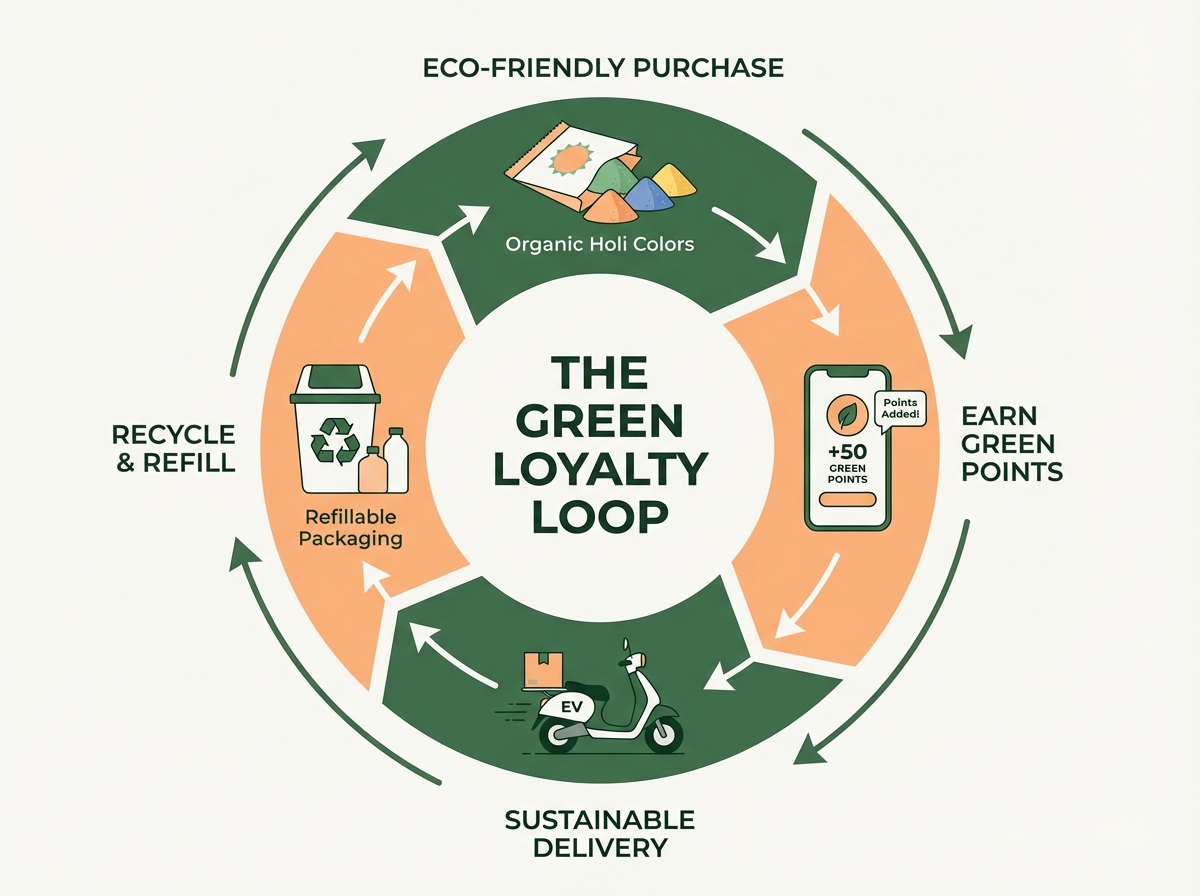
Designing effective green loyalty rewards India requires a shift toward sustainable shopping incentives that reward circular behaviors. These incentives should be tied to low-impact choices, such as organic color purchases, refillable packaging, and verified recycling drop-offs.
Reward mechanics for Holi 2026 should include point multipliers for organic colors marketing bundles and bonuses for choosing eco-friendly delivery options like bike or EV pickups. This gamified approach encourages consumers to make incremental changes that collectively result in significant environmental impact.
Circular economy rewards are a critical component of this architecture, offering store credits for participating in take-back and refill loops. By reinvesting these credits into low-impact purchases, brands create a self-sustaining ecosystem of conscious consumption.
Personalization is key to ensuring these rewards resonate; brands should use purchase history and footprint models to recommend the next-best sustainable swap. A WhatsApp environmental impact video summarizing avoided plastic and water usage can reinforce the value of these choices.
Sources:
3. Carbon footprint gamification and sustainability score marketing
Carbon footprint gamification is the process of turning personal carbon reductions into trackable goals, streaks, and social recognition. By linking these metrics to purchases and actions, brands can create a compelling narrative around individual and community impact.
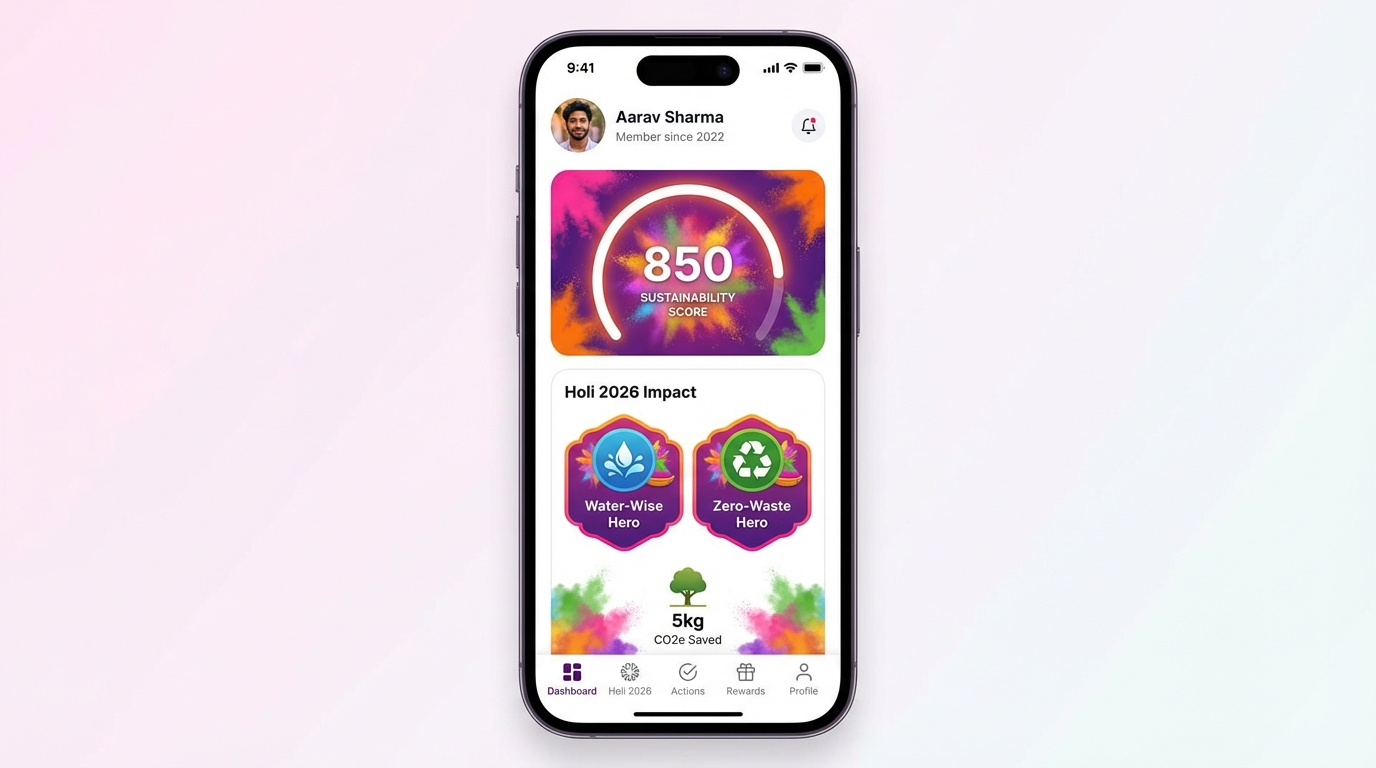
Sustainability score marketing provides a visible, cumulative score reflecting a member’s verified eco-actions over time. This score is used to unlock specific benefits, such as plastic-free festival offers, and informs the personalization of future marketing communications.
During the Holi window, brands can show per-order CO2e reductions and water saved compared to a traditional baseline. Awarding badges for “Water-Wise Holi” or “Zero-Waste Hero” creates a sense of achievement that encourages continued participation in the program.
Community goals, such as funding a local lake clean-up once a collective milestone is reached, further enhance engagement. This collective action approach aligns with the communal spirit of Indian festivals while driving measurable environmental outcomes.
Sources:
- Holi 2026 marketing guide: Eco-friendly angles
- Early 2026 marketing trends: Culture-first storytelling
4. Zero-waste festival challenges and circular economy rewards
Zero-waste festival challenges are time-bound, verifiable micro-actions designed to reduce the environmental footprint of traditional celebrations. For Holi, these challenges can include “Dry Holi” pledges, the use of organic colors, and participating in neighborhood clean-up events.
A typical Holi week challenge guide might involve scanning a QR code at a retail outlet for a “Bring Your Own Bag” credit on Day 1. Day 2 could focus on organic colors marketing, where users upload a receipt of their purchase to earn bonus loyalty points and access skin-care tutorials.
Circular economy rewards play a vital role here, providing instant credit for returning empty product containers during “Take-back Thursday.” This encourages consumers to view their relationship with the brand as a continuous loop rather than a linear transaction.
By integrating these challenges into a green tier progression system—moving from “Seed” to “Forest”—brands can maintain momentum throughout the festival. Each tier should unlock increasingly valuable sustainable shopping incentives, such as free biodegradable packaging upgrades or early access to limited eco-SKUs.
Sources:
- Eco-friendly Holi ideas: Organic colors and water-saving
- Mastering the Many Indias: Regionalization for scale
5. Environmental impact videos on WhatsApp: Scaling personalization
Environmental impact videos are personalized short-form content that summarizes a customer’s footprint impact and recommends the next-best sustainable action. These videos are highly effective at educating consumers while driving conversions through hyper-relevant offers.
Platforms like TrueFan AI enable brands to bridge the gap between high-level CSR goals and granular, individual-level engagement. By automating the creation of these videos, enterprises can deliver personalized messages to millions of customers simultaneously without sacrificing quality.
TrueFan AI's 175+ language support and Personalised Celebrity Videos allow D2C brands to communicate complex sustainability metrics in a way that feels personal and culturally relevant. This is particularly important in the “Many Indias” of 2026, where regional language content outperforms generic English ads.
Execution involves webhook-based generation that delivers a video within 30 seconds of a purchase or challenge completion. These videos can include the user's name, city, and specific impact data, such as “Your Holi kit avoided 500g of plastic,” creating a powerful emotional connection.
Sources:
- AI video webhooks for WhatsApp Business
- Batch video creation and automation for enterprises
- Nano-influencer and Tier-3 marketing in 2026
6. Climate action festival campaigns and the 30-day roadmap
Climate action festival campaigns utilize real-time environmental data, such as AQI levels or heatwave alerts, to contextually reward sustainable choices. For example, during a high-pollution day in Delhi, a brand might offer double points for choosing public transit pickup or eco-friendly delivery.
Solutions like TrueFan AI demonstrate ROI with Holi strategies through increased watch-through rates and higher conversion on sustainable product bundles compared to static ads. By triggering climate-adaptive content, brands show they are responsive to the immediate concerns of their consumers.
A successful 30-day Holi 2026 roadmap begins with finalizing the eco-actions catalog and setting up data integrations. Week 2 focuses on producing environmental impact video templates and localizing them into top regional languages to ensure broad reach.
The final weeks involve soft-launching challenges and configuring climate triggers before scaling to the full audience. This structured approach allows for real-time optimization based on cohort performance and engagement analytics, ensuring maximum impact during the peak festival window.
Sources:
Conclusion
Sustainable festival marketing 2026 is no longer a niche strategy but a requirement for D2C brands looking to capture the Indian market. By integrating green loyalty rewards India with sophisticated carbon footprint gamification, brands can drive both environmental impact and long-term retention.
The success of these campaigns depends on the ability to deliver authentic, personalized, and culturally relevant content at scale. Leveraging environmental impact videos on WhatsApp ensures that every customer feels seen and valued in their journey toward a more sustainable celebration.
As you prepare for Holi 2026, focus on building a program that rewards circularity and celebrates collective action. The brands that lead with transparency and innovation today will be the ones that define the conscious consumer landscape of tomorrow.
Ready to transform your festival engagement?
Book an Enterprise demo to launch green loyalty and environmental impact videos on WhatsApp at Holi scale. Download our Holi 2026 Sustainable Loyalty Checklist to start your journey toward climate-positive growth.
Frequently Asked Questions
What is the most effective way to prevent greenwashing in Holi campaigns?
Transparency is the antidote to greenwashing; brands must provide verifiable data for every claim made. Using a sustainability score marketing system that relies on third-party emission factors and clear methodology helps build trust with eco-conscious consumers.
How can brands scale personalized video content across multiple Indian languages?
Enterprises should utilize AI-driven platforms that support batch automation and perfect lip-sync for regional languages. TrueFan AI provides the infrastructure to localize content into 175+ languages, ensuring that the brand's sustainability message is understood across all regions.
What metrics should D2C brands track for green loyalty programs?
Key performance indicators include the opt-in rate for sustainability programs, the watch-through rate of environmental impact videos, and the refill/return rate for products. Additionally, tracking the total plastic and water saved across the customer base provides a clear measure of environmental ROI.
How do climate-adaptive triggers work in festival marketing?
Climate-adaptive triggers use real-time APIs to monitor environmental conditions like AQI or temperature. When specific thresholds are met, the system automatically triggers relevant offers or tips, such as water-saving advice during a heatwave or discounts on anti-pollution skincare during high AQI days.
Can small D2C brands implement these sustainable marketing strategies?
While this playbook is designed for enterprise scale, the core principles of transparency and value-alignment apply to all. Smaller brands can start by focusing on one or two zero-waste festival challenges and using WhatsApp to communicate impact directly to their core community.



