
Preventive healthcare subscription marketing 2026 in India: predictive monitoring, wellness journey personalization, and video automation that convert
Estimated reading time: ~9 minutes
Key Takeaways
- India is pivoting to preventive, subscription-first healthcare with ROI-linked outcomes for employers and insurers.
- Predictive monitoring plus personalized, automated video coaching boosts retention across telemedicine and wellness apps.
- Hyper-personalized journeys—from digital twin insights to 175+ language localization—drive adherence across diverse cohorts.
- Gamification and mental health automation reduce churn and enable CFO-ready ROI narratives for B2B2C scale.
- A pragmatic 3-step implementation blueprint unifies data, triggers next best actions, and scales creative automation.
From telemedicine subscription marketing to health score gamification videos—this is the definitive enterprise playbook for D2C healthcare, fitness, and corporate wellness leaders navigating the Indian market in 2026.
The Indian healthcare landscape has undergone a seismic shift, moving from reactive, episodic care to a proactive, continuous engagement model. As we enter 2026, preventive healthcare subscription marketing 2026 has become the cornerstone of growth for D2C wellness brands, digital therapeutics, and insurers alike. This evolution is driven by a sophisticated consumer base that demands hyper-personalization, data transparency, and measurable health outcomes.
For founders, CMOs, and growth leaders, the challenge is no longer just acquiring users but maintaining high-fidelity engagement in a crowded digital ecosystem. Success in this era requires a synthesis of predictive health monitoring, individualized wellness pathways, and high-impact video automation. This guide provides a strategic blueprint to de-risk your pilots and scale retention through enterprise-grade automation.
The 2026 Preventive Paradigm: Why India is Pivoting to Subscription Models
The “wellness economy personalization India” trend is no longer a peripheral concept; it is the primary driver of healthcare spending. Recent data indicates that preventive and wellness services now account for an estimated 30–35% of total healthcare expenditure in India, a massive leap from the mere 10% observed a decade ago. This shift signifies a fundamental change in consumer behavior, where habit-forming services are prioritized over traditional, reactive medical interventions.
Rising costs are further accelerating this transition. India’s 2026 medical trend is projected at 11.5%, significantly outpacing the global average and placing immense pressure on employers and insurers to find sustainable cost-containment strategies. Consequently, there is an unprecedented focus on ROI-linked benefits that prioritize prevention. Platforms like TrueFan AI enable brands to bridge the gap between complex health data and relatable, high-conversion content.
In 2026, AI-driven personalization has become the industry standard. Consumers expect their health journeys to be as intuitive and tailored as their entertainment feeds. This necessitates a move toward omnichannel engagement that respects privacy while delivering deep value. Marketing is no longer about broad-based messaging; it is about guiding an individual through a meticulously curated “wellness journey personalization” that adapts in real-time to their biometric and behavioral signals.
Source: TheMediaAnt: Healthcare Advertising in India 2026—Preventive Health Mainstreamed
Source: Aon (India): 2026 medical trend at 11.5%
Source: India Today: Healthcare to get personal, more AI-driven in 2026
Predictive Monitoring and Video Automation: The New Standard for Telemedicine Retention
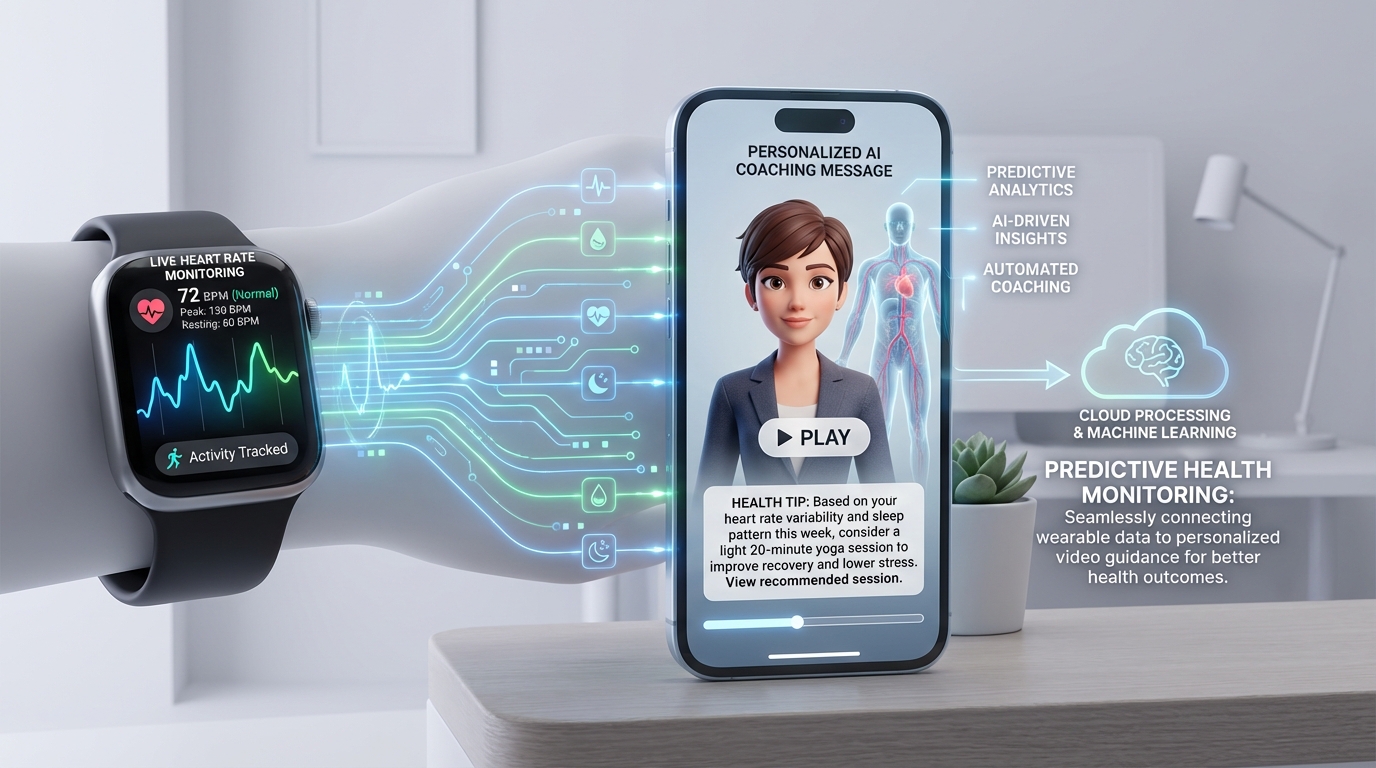
The architecture of a modern preventive subscription rests on predictive health monitoring. This involves the continuous capture of data from wearables, Remote Patient Monitoring (RPM) devices, and lab panels to forecast health risks before they manifest as clinical issues. By integrating this data into a centralized Customer Data Platform (CDP), brands can trigger “health monitoring video automation” that provides timely, actionable coaching.
Consider a scenario where a user’s wearable detects a consistent spike in resting heart rate or blood pressure. Instead of a generic push notification, the system triggers a personalized video. This video can explain the trend, suggest immediate lifestyle adjustments, and offer a direct link to book a teleconsultation. This level of telemedicine subscription marketing transforms the service from a “nice-to-have” utility into an indispensable health guardian.
To execute this at scale, a robust data pipeline is essential. Sources such as SpO2 monitors, app engagement streaks, and even PHQ-9 mental health surveys must be unified under a single user ID. This allows for “holistic health engagement automation,” where the next-best-action is determined by a rules engine and delivered through the user's preferred channel—be it WhatsApp, in-app video, or email.
Source: LeadSquared (India): 2026 healthcare marketing trends—personalization, privacy, omnichannel
Source: Express Healthcare: Indian healthcare in 2026—top 5 trends
Hyper-Personalized Wellness Journeys: From Biomarker Data to Individualized Nutrition
True “wellness journey personalization” requires moving beyond basic demographic segmentation. In 2026, leading D2C brands are utilizing personalized nutrition plans that are dynamically updated based on metabolic responses and cultural preferences. This approach addresses a significant coverage gap: the psychosocial context of health. By acknowledging a user's local cuisine, affordability, and emotional triggers, brands can achieve much higher adherence rates.
The concept of the “Digital Twin” has gained significant traction in India. Research from IIT-incubated startups has demonstrated that creating a digital replica of a user’s metabolic function can lead to superior glycemic control and weight management. When these insights are translated into weekly video updates—showing the user exactly how their choices impacted their “Digital Twin”—the psychological impact is profound, driving long-term subscription retention.
Furthermore, these journeys must be culturally and linguistically nuanced. A nutrition plan for a user in Chennai will look vastly different from one for a user in Chandigarh. TrueFan AI's 175+ language support and Personalised Celebrity Videos allow enterprises to deliver these complex health messages in the user's native tongue, using familiar faces to build trust and authority in Tier 2 and Tier 3 markets.
Source: The Hindu (India): IIT startup digital twin shows success in blood sugar control
Source: Aditya Birla Capital (India): Health trends for 2026—preventive, AI-driven
Gamification and Mental Health: Driving Long-Term Adherence via AI-Led Content
Retention in fitness and mental health subscriptions often hinges on the first 30 days. “Fitness subscription retention videos” that celebrate small wins—like a 7-day workout streak—can reduce early-stage churn by up to 30%. By integrating health score gamification videos, brands can provide a composite 0–100 score that reflects activity, recovery, and nutrition. Seeing this score move in real-time creates a powerful feedback loop that encourages continued engagement.
Mental health support has also seen a shift toward mental health support automation. This involves always-on, empathetic video sequences that normalize help-seeking and provide coping micro-skills. Crucially, these systems must include an escalation tree: if a user’s self-reported stress scores exceed a certain threshold, the automation should seamlessly transition them to a human counselor. This “holistic health engagement automation” ensures that users feel supported without overwhelming clinical resources.
A common coverage gap in this sector is the lack of “CFO-ready” ROI narratives. While engagement is a great metric, enterprise buyers want to see how these interventions reduce absenteeism and presenteeism. By using “preventive care ROI videos,” brands can present quarterly data to corporate partners, visualizing the direct correlation between app engagement and reduced healthcare claims, thereby securing contract renewals and expansions.
Source: afaqs!: Five healthcare marketing trends defining 2026 in India
Source: Kalaari Capital (India): Preventive Healthcare—market outlook to 2030
B2B2C Scale: Insurance Integration and Corporate Wellness ROI
The most efficient distribution channel for preventive subscriptions in 2026 is the B2B2C model, specifically through “health insurance integration campaigns.” Insurers are increasingly bundling D2C wellness apps into their policies to lower long-term risk. Co-branded journeys, where a celebrity explains the benefits of the preventive plan via WhatsApp, can significantly lower Customer Acquisition Costs (CAC) and improve policyholder stickiness.
Corporate wellness B2B videos are equally vital for scaling. These videos should be tailored to different stakeholders: HR leaders need to see engagement metrics, while CFOs need to see the impact on the bottom line. By automating the creation of these ROI recaps, wellness providers can demonstrate value consistently. Solutions like TrueFan AI demonstrate ROI through hyper-personalized video variants that address these specific personas with surgical precision.
Another emerging trend is “medical subscription box marketing.” These curated monthly boxes, containing items like glucometer strips or low-GI staples, serve as a physical touchpoint for a digital service. Each box can include a QR code that triggers a “how-to” video or a personalized message from a health coach, bridging the gap between the physical product and the digital care plan. This multi-sensory approach reinforces the “preventive healthcare subscription marketing 2026” strategy.
Source: Aon (India): 2026 medical trend at 11.5%
Source: Express Healthcare: Indian healthcare in 2026—top 5 trends
The Implementation Blueprint: Operationalizing Enterprise-Grade Personalization
Implementing a “preventive healthcare subscription marketing 2026” strategy requires a sophisticated tech stack and a commitment to data governance. The core of this operation is a rules-driven engagement engine that sequences content across in-app, WhatsApp, and email based on the user's risk profile and journey stage. See this WhatsApp catalog video marketing guide for orchestration patterns. For instance, a “chronic disease prevention campaign” for a pre-diabetic cohort would trigger different nudges than a general fitness program.
Privacy and security are non-negotiable. In the Indian context, this means adhering to consent-first data usage and ensuring that Protected Health Information (PHI) is minimized in marketing assets. Enterprise-grade vendors must provide ISO 27001 and SOC 2 certifications to ensure that user data is handled with the highest level of integrity. This is particularly critical for “mental health support automation,” where the sensitivity of the data is paramount.
To operationalize this, brands can follow a simple 3-step blueprint:
- Data Integration: Connect your RPM devices, lab results, and app events to a central CDP.
- Trigger Mapping: Define the specific health events or behaviors that should trigger a personalized video (e.g., a 3-day lapse in logging meals).
- Creative Automation: Use a platform like TrueFan AI to generate thousands of personalized video variants from a single celebrity shoot, delivering them in under 30 seconds via API.
Source: LeadSquared (India): 2026 healthcare marketing trends—personalization, privacy, omnichannel
Source: afaqs!: Five healthcare marketing trends defining 2026 in India
FAQs and Strategic Conclusion
What is preventive healthcare subscription marketing 2026 in India?
It is a data-driven, predictive marketing framework that uses real-time health data (biometrics, lab results) to deliver hyper-personalized content—often via automated video—to drive long-term adherence to wellness and medical subscriptions.
How do health score gamification videos improve retention?
These videos provide immediate, visual feedback on a user's health progress. By framing health as a “score” that can be improved through daily actions, brands tap into behavioral science principles like loss aversion and the “endowed progress effect,” typically seeing a 15–25% lift in D30 retention.
Can TrueFan AI support clinical-grade health communications?
Yes, TrueFan AI's platform is designed for enterprise-scale personalization, allowing brands to deliver localized, empathetic health coaching in 175+ languages while maintaining strict compliance with data privacy standards like ISO 27001.
How to maintain privacy with mental health support automation?
Privacy is maintained through explicit user consent, the use of anonymized data for content triggers, and ensuring that no sensitive clinical notes are included in the marketing video itself. All automated sequences should have a clear path to human intervention.
What are the key KPIs for preventive care ROI videos?
Key metrics include the reduction in emergency room visits, improved adherence to medication or lifestyle plans, and—for corporate partners—a measurable decrease in employee absenteeism and healthcare claim severity.
Conclusion
The future of healthcare in India is undeniably preventive, personalized, and proactive. As the medical trend continues to rise, the ability to engage users through “wellness journey personalization” and “health monitoring video automation” will separate the market leaders from the laggards. By leveraging predictive cohorts and enterprise-grade video technology, brands can finally deliver on the promise of “preventive healthcare subscription marketing 2026”—creating a healthier India while driving sustainable business growth.
The time to transition from generic health tips to hyper-personalized, data-backed engagement is now. Whether you are scaling a fitness app, a chronic disease management platform, or a corporate wellness program, the integration of AI-led video and predictive monitoring is your most potent tool for 2026 and beyond.
Recommended Internal Links
- NPS video automation 2026
- WhatsApp catalog video marketing
- WhatsApp catalog video marketing guide
- Personalized nutrition marketing 2026
- AI celebrity video marketing India
- Nudge theory video implementation
- Predictive wellness marketing 2026
Frequently Asked Questions
What is preventive healthcare subscription marketing 2026 in India?
It is a data-driven, predictive marketing framework that uses real-time health data (biometrics, lab results) and automated, personalized videos to drive adherence and retention for wellness and medical subscriptions.
How do health score gamification videos improve retention?
By giving instant, visual feedback via a 0–100 score tied to daily actions, these videos leverage behavioral science (loss aversion, endowed progress) to raise day-30 retention by 15–25%.
Can TrueFan AI support clinical-grade health communications?
Yes. The platform supports enterprise-scale personalization across 175+ languages and adheres to privacy controls such as ISO 27001, enabling localized, empathetic, and compliant health messaging.
How to maintain privacy with mental health support automation?
Use explicit consent, anonymized triggers, and exclude sensitive clinical notes from marketing assets. Always include escalation paths to human counselors when risk thresholds are met.
What are the key KPIs for preventive care ROI videos?
Track reductions in ER visits, adherence to care plans, and for corporate programs, declines in absenteeism and claim severity to demonstrate financial and clinical impact.



