Preventive Healthcare Subscription 2026: India Playbook for Predictive Monitoring and Personalized Wellness
Estimated reading time: ~12 minutes
Key Takeaways
- Preventive subscriptions are shifting India from reactive care to proactive, data-driven wellness amid rising medical inflation.
- ABDM/NHCX integration plus DPDP-compliant consent enables longitudinal records, cashless journeys, and personalized interventions.
- Video-led engagement in 175+ languages counters alert fatigue, boosts adherence, and supports mental health with crisis routing.
- Gamified health scores and insurer-linked rewards drive retention, measurable outcomes, and enterprise ROI.
- A pragmatic 90-day roadmap gets teams from compliance and data plumbing to scale and leadership-ready ROI reporting.
The landscape of Indian wellness is undergoing a seismic shift, moving from reactive treatments to a proactive, data-driven model. A preventive healthcare subscription 2026 is no longer just a luxury for the elite; it has become a strategic necessity for D2C brands, insurers, and enterprise wellness providers. As medical inflation continues to outpace general economic growth, the ability to predict risk and personalize interventions at scale will define the market leaders of the next decade.
In 2026, the convergence of the Ayushman Bharat Digital Mission (ABDM), the Digital Personal Data Protection (DPDP) Act, and generative AI has created a perfect storm for innovation. Consumers now expect a wellness economy personalization India experience that is as seamless as their favorite streaming service. This playbook provides the architectural blueprint for building a subscription model that integrates predictive monitoring, video-led engagement, and insurer-backed ROI.
Sources:
- Zocto: Subscription-based preventive health packages in India
- Aditya Birla Health: Health trends 2026
1. The 2026 Pivot: Why India is Primed for Preventive Healthcare Subscriptions
The economic rationale for preventive care has never been stronger. According to recent reports, the India medical trend rate is projected to hit 11.5% in 2026, significantly higher than the global average. This persistent inflation is forcing employers and individuals to seek alternatives to traditional “sick-care” models that only trigger spending after a diagnosis.
The preventive healthcare market in India is currently on a trajectory to reach a CAGR of approximately 22%, potentially hitting a valuation of INR 1.5 trillion by 2030. This growth is fueled by a generational shift in demand, particularly among Gen Z and Millennials. These cohorts are increasingly prioritizing mental health, frequent diagnostic check-ups, and proactive lifestyle management over traditional insurance-only products.
Furthermore, the “wellness economy personalization India” trend is being accelerated by the consumerization of health. Patients are now “health consumers” who demand convenience, digital-first interfaces, and holistic health engagement. This shift is supported by government initiatives like the National Health Claims Exchange (NHCX), which simplifies the integration between wellness providers and insurance payers.
Corporate India is also responding to these pressures. Employers are no longer satisfied with generic annual health check-ups that offer little follow-up. They are moving toward integrated preventive programs that demonstrate a clear reduction in absenteeism and long-term claim frequency. This B2B demand is a massive tailwind for subscription-based models that can prove their worth through data.
Sources:
- Aon India 2026 medical trend report
- eHealth (Elets) India market growth
- Economic Times: Employers boosting preventive healthcare
2. The Data Backbone: Medical Subscription Personalization via ABDM and DPDP
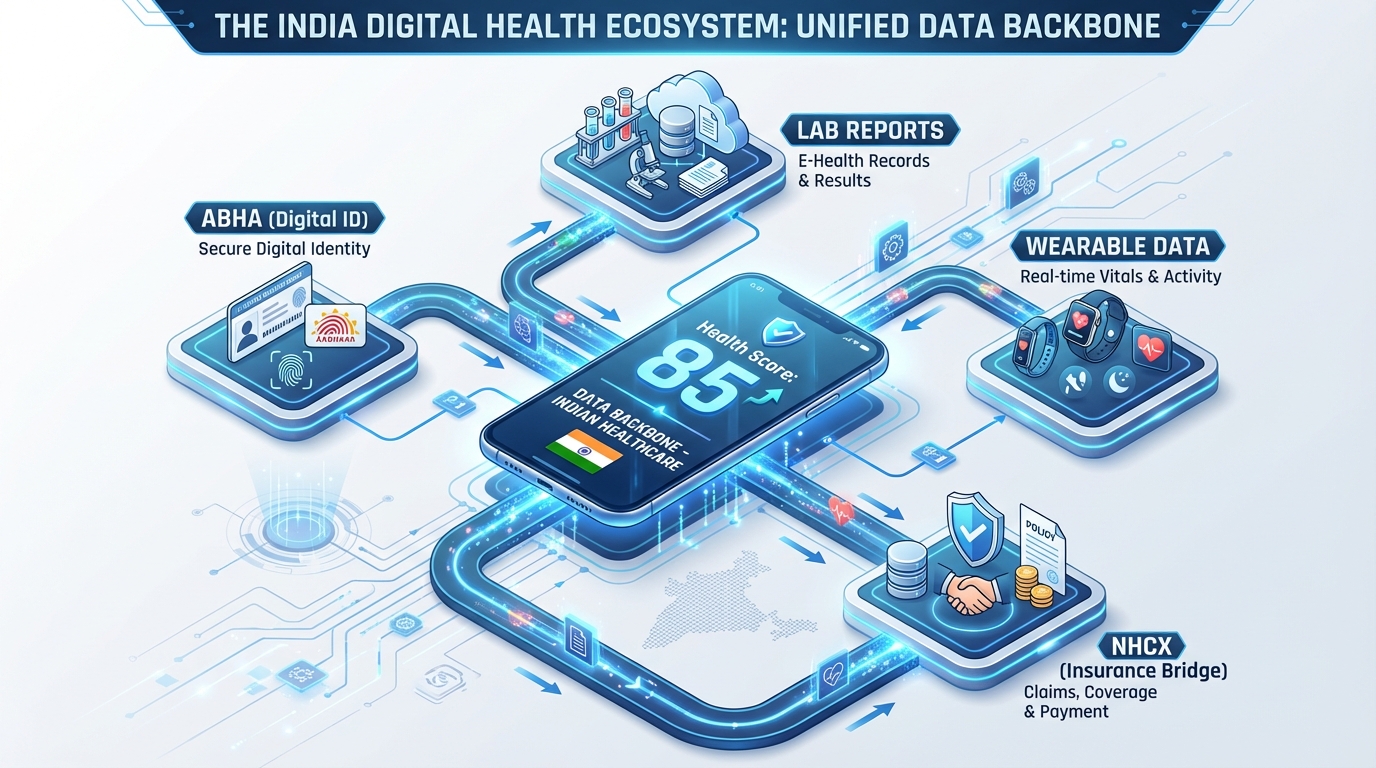
To deliver a truly effective medical subscription personalization experience, providers must build a robust data architecture. This begins with the Ayushman Bharat Health Account (ABHA), which serves as the unique identifier for every citizen. By linking to the ABHA, wellness platforms can access a longitudinal view of a patient’s health, including past lab results, prescriptions, and clinical notes.
The integration of the National Health Claims Exchange (NHCX) is equally critical. This standardized framework allows for real-time data exchange between providers and insurers. For a subscription service, this means the ability to offer “cashless” preventive services or automatically trigger insurance rewards based on verified health activities, such as completing a 10,000-step daily goal for a month.
However, handling such sensitive data requires strict adherence to the Digital Personal Data Protection (DPDP) Act. In 2026, compliance is not optional. Platforms must implement granular, purpose-based consent flows. This means a user must explicitly agree to have their wearable data used for “personalized coaching” separately from “insurance premium adjustments.”
Data minimization and “right to be forgotten” are core tenets of the DPDP framework. Wellness providers must ensure that health data is only retained for as long as necessary to fulfill the subscription’s purpose. Advanced identity matching—using deterministic ABHA links and probabilistic fallback methods—ensures that the “golden record” of a patient remains accurate across multiple touchpoints.
Risk stratification is the final layer of the data backbone. By applying machine learning models to the aggregated data—labs, vitals, and lifestyle habits—providers can categorize members into risk tiers. High-risk individuals might trigger a clinical escalation, while low-risk members receive automated wellness journey automation nudges to maintain their current health status.
Sources:
- Official ABDM-NHCX portal
- KPMG India: DPDP Act impact on healthcare
- ICLG Digital Health India 2025–2026
3. Engagement Engineering: Health Monitoring Video Automation and Vernacular Nudges
The primary challenge of any preventive healthcare subscription is long-term engagement. Traditional text-based notifications often suffer from “alert fatigue.” In 2026, the solution lies in health monitoring video automation. By delivering personalized, short-form video content triggered by real-time health data, providers can achieve significantly higher retention rates.
Platforms like TrueFan AI enable wellness providers to generate these videos at scale using generative AI. Imagine a scenario where a member’s wearable detects a drop in Heart Rate Variability (HRV) and a lack of sleep over three days. Instead of a generic push notification, the member receives a 30-second video of a trusted health coach or even a celebrity ambassador addressing them by name and suggesting a specific breathing exercise.
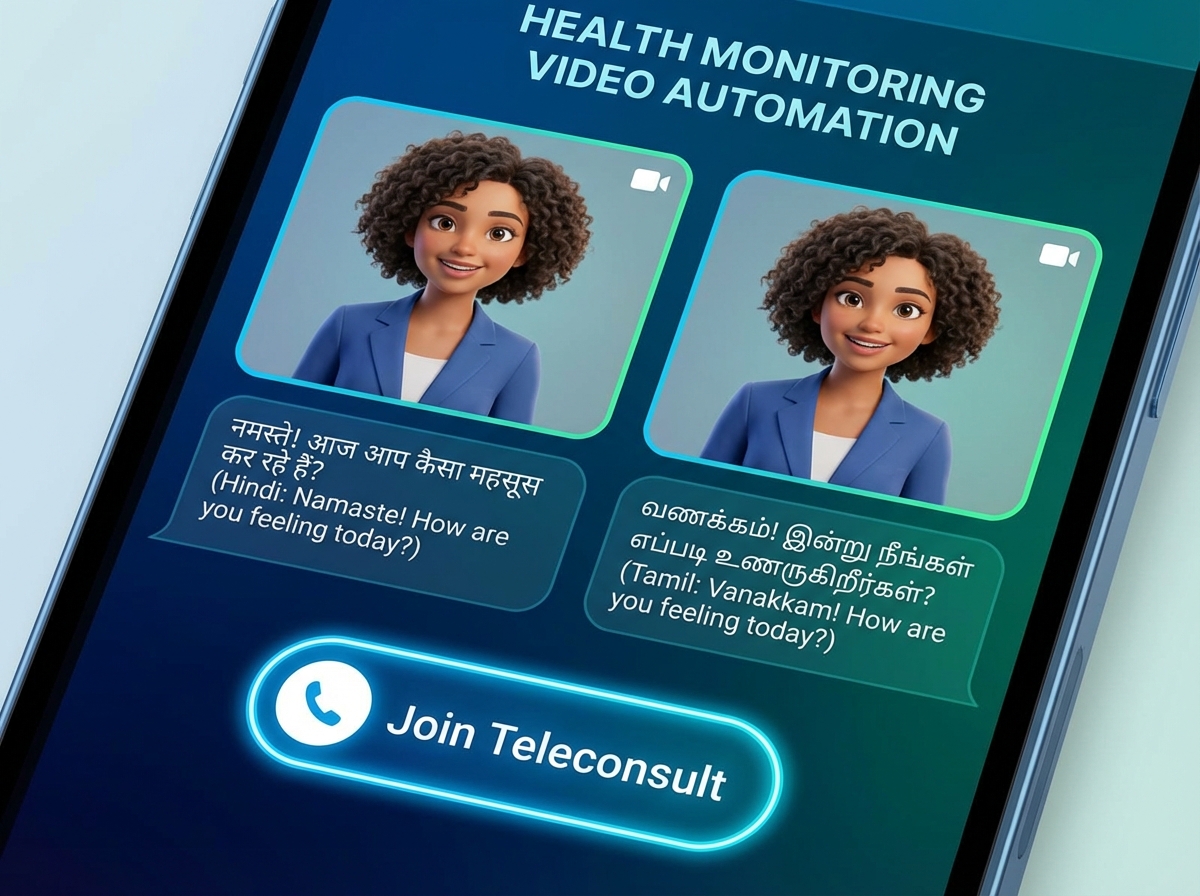
This level of personalization extends to language. India’s linguistic diversity requires a vernacular-first approach. Automated video rendering allows for the same core health message to be delivered in 175+ languages, ensuring that a user in rural Tamil Nadu receives the same quality of guidance as a user in urban Mumbai. This is essential for holistic health engagement across diverse demographics.
Triggers for these videos can be both biometric and behavioral. Biometric triggers might include a post-lab abnormal value, such as an HbA1c reading entering the pre-diabetic range. Behavioral triggers could include a member missing their last three scheduled teleconsultations. In both cases, a personalized video can provide the necessary “nudge” to bring the member back onto their care path.
Safety and crisis management are also integrated into this video strategy. For members enrolled in mental health tracks, automated mental health support videos can be deployed during high-stress periods. These videos can include empathetic tonality and clear “crisis-routing” buttons that connect the user to a live counselor within seconds if specific risk markers are met.
4. Retention Mechanics: Personalized Nutrition Plans and Fitness Gamification
Retention in a preventive healthcare subscription is built on the foundation of habit formation. Personalized nutrition plans are a key driver of this. These plans must go beyond simple calorie counting; they must be adjusted for clinical data like lipid profiles, cultural dietary preferences (e.g., Jain or regional cuisines), and even seasonal availability of produce in India.
By integrating nutrition with lab data, a subscription service can offer “dynamic meal adjustments.” If a member’s recent blood work shows a vitamin D deficiency, the AI-driven nutrition engine can automatically prioritize vitamin D-rich recipes and suggest fortified food options. This creates a tangible link between the subscription and the member’s actual health outcomes.
Fitness subscription retention is further enhanced through health score gamification. By creating a composite health score—incorporating steps, sleep quality, lab adherence, and content engagement—providers can create a “ladder” of rewards. These rewards can include teleconsult credits, discounts on healthy meal deliveries, or even lower insurance premiums through health insurance integration.
The Aditya Birla Health “Active Dayz” model is a prime example of this in the Indian market. By rewarding members for physical activity, they have successfully driven long-term engagement. A 2026 playbook takes this further by using personalized videos to celebrate milestones, such as reaching a “Platinum” health tier, which significantly boosts the emotional connection to the brand.
Content localization is critical for nutrition and fitness. A “one-size-fits-all” workout or meal plan will fail in the Indian context. Subscriptions must offer regional language support and account for local festivals and fasting periods. For instance, providing “Navratri-friendly” high-protein meal plans can significantly improve adherence during specific times of the year.
Sources:
5. Scaling Outcomes: Chronic Disease Prevention and Telemedicine Marketing
The most significant ROI for a preventive healthcare subscription 2026 comes from managing chronic conditions. Chronic disease prevention campaigns must be longitudinal and risk-tiered. For conditions like diabetes, hypertension, and PCOS, the subscription should offer an 8–12 week curriculum that combines education, behavioral nudges, and clinical oversight.
TrueFan AI’s 175+ language support and Personalised Celebrity Videos can be used to deliver these curricula. A celebrity “health buddy” can walk a member through the stages of reversing pre-diabetes, making the clinical journey feel less like a chore and more like an interactive experience. This approach has been shown to improve curriculum completion rates by over 30% in early pilots.
Telemedicine subscription marketing also plays a vital role in care continuity. Many users subscribe to health apps but fail to book their included teleconsultations. Automated video workflows can reduce “no-shows” by sending a “Doctor-Intro” video 24 hours before the appointment. This video can explain what to expect, how to prepare, and the importance of the specific consult for the member’s goals.
Post-consultation adherence is another area where video automation shines. After a doctor prescribes a new medication or lifestyle change, a personalized video can summarize the key takeaways and provide a “medication refill” nudge. This ensures that the advice given during a 15-minute teleconsultation is actually implemented in the member’s daily life.
Finally, the integration with the National Health Claims Exchange (NHCX) allows for seamless “cashless” OPD and diagnostic services. When a chronic disease campaign triggers a need for a lab test, the subscription can automatically handle the pre-authorization and booking. This removal of friction is the ultimate driver of adherence and long-term health outcomes.
Sources:
6. Corporate Wellness B2B: Turning Benefits into Measurable ROI
For B2B providers, the challenge is moving from “perceived value” to “measurable ROI.” CFOs and CHROs are increasingly demanding data that proves wellness programs are reducing the company’s 11.5% medical inflation trend. This requires corporate wellness B2B solutions to provide detailed, anonymized reporting on employee health improvements and claim reductions.
Solutions like TrueFan AI demonstrate ROI through preventive care ROI videos specifically designed for executive stakeholders. These dynamic videos can summarize a department’s health progress, highlighting metrics like “20% reduction in high-risk cardiovascular markers” or “15% improvement in mental wellbeing scores.” This makes the impact of the wellness program undeniable during budget reviews.
The architecture for corporate wellness must also respect the DPDP Act. While employers need to see aggregate trends, individual employee health data must remain strictly confidential. A “Privacy-First” dashboard allows HR leads to see participation rates and health tier migrations without ever accessing a specific employee's medical records or ABHA-linked data.
Sales enablement in the B2B space is also evolving. Using Account-Based Marketing (ABM) video outreach, wellness providers can send personalized proposals to prospective corporate clients. A video featuring a celebrity spokesperson addressing a specific CHRO by name and referencing their industry’s unique health challenges (e.g., sedentary roles in IT vs. high-stress roles in Finance) can significantly increase pilot conversion rates.
Ultimately, the goal is to create a “Wellness-as-a-Service” model that is deeply integrated into the company’s HRIS and insurance plan. By synchronizing roster data and eligibility, the subscription becomes a seamless part of the employee experience. This integration ensures that every employee, regardless of their location or language, has access to the same high-quality preventive care.
7. Implementation Strategy: A 90-Day Roadmap to Predictive Wellness
Building a preventive healthcare subscription 2026 requires a disciplined, phased approach. The following 90-day roadmap outlines the transition from a traditional wellness model to a predictive, video-powered subscription engine.
Weeks 1–2: Scope and Compliance
The first step is defining the target cohorts—such as pre-diabetics or high-stress corporate employees. Simultaneously, the legal team must finalize consent frameworks that comply with the DPDP Act. This includes setting up the “Consent Manager” architecture and ensuring that all data processing purposes are clearly defined for the user.
Weeks 3–4: Data Plumbing and Integration
During this phase, the technical team focuses on linking with the Ayushman Bharat Digital Mission (ABDM) sandbox. This involves mapping internal data structures to FHIR R4 resources and setting up the ABHA linking flows. Integration with wearable SDKs and lab partner APIs is also completed to ensure a steady stream of real-time health data.
Weeks 5–6: Content and Journey Automation
This is where the wellness journey automation logic is built. Providers must script their 12-week health curricula and create video templates for various triggers. Using generative AI, thousands of vernacular variants can be rendered. The “Health Score” algorithm is also finalized, defining how different activities contribute to a member’s overall score and reward tier.
Weeks 7–8: Soft Launch and A/B Testing
A pilot group is onboarded to test the end-to-end journey. This phase focuses on optimizing engagement—testing different video thumbnails, greeting lines, and CTA placements. For example, does a “celebrity-led” nudge perform better than a “doctor-led” nudge for medication adherence? These insights are used to refine the system before full-scale launch.
Weeks 9–12: Scale and Evaluation
The subscription is rolled out to the full user base or corporate client list. Telemedicine workflows and insurer-linked rewards are activated. By the end of day 90, the first set of preventive care ROI videos is generated for leadership, showcasing early wins in engagement, clinical adherence, and cost-saving proxies against the 11.5% medical trend baseline.
Recommended Internal Links
- AI-driven nutrition, assessment videos, and lifecycle health score tracking to power personalized diet plans
- Always-on gamification, tiers, and milestone videos to design effective health score and rewards ladders
- DPDP/IRDAI-compliant, video-first insurance journeys for renewals, onboarding, and claims; useful for health insurance integration
- Personalized ROI and feedback videos that reduce churn and quantify program impact for leadership
- Q1 appraisal-season wellness and mental health playbooks for enterprise HR and corporate wellness
- Vernacular, personalized mental health support videos and burnout prevention strategies
- Video-led anti-churn tactics and mission design relevant to preventive subscription engagement
Sources:
Frequently Asked Questions
Is a preventive healthcare subscription 2026 worth it for Indian families?
Yes, especially given the 11.5% medical inflation rate. A subscription model provides predictable costs and focuses on preventing expensive hospitalizations. Research shows that Gen Z and Millennials in India are increasingly preferring these proactive models over traditional reactive insurance.
How does the DPDP Act affect my health data in these subscriptions?
The DPDP Act ensures that you have full control over your data. Subscriptions must obtain your explicit, granular consent for every way they use your data—whether it's for personalized coaching or sharing with an insurer. You also have the right to withdraw consent and have your data deleted at any time.
Can TrueFan AI help in reducing telemedicine “no-shows”?
Absolutely. By using TrueFan AI to send personalized “Doctor-Intro” videos and WhatsApp reminders, providers can build a personal connection with the patient before the call. This humanizes the digital experience and has been shown to significantly reduce no-show rates and improve follow-up adherence.
How do ABDM and NHCX help with my health insurance?
ABDM allows your health records to follow you across different doctors and hospitals seamlessly. NHCX acts as a “digital bridge” that allows your wellness provider to talk to your insurance company in real-time. This enables features like instant rewards for healthy habits or “cashless” preventive check-ups without manual paperwork.
What is “Health Score Gamification” and how does it benefit me?
Health score gamification turns your wellness journey into a rewarding experience. By completing tasks like daily walks, sleep goals, or lab tests, you earn points that improve your Health Score. Higher scores can unlock tangible benefits, such as discounted premiums, free teleconsultations, or vouchers for healthy lifestyle products.