BNPL debt recovery automation India 2026: Empathetic, behavioral, and video-led playbook for post-festival collections
Estimated reading time: ~10 minutes
Key Takeaways
- Post-festival delinquencies in early 2026 demand empathetic, respectful collection journeys aligned with RBI guidance.
- Behavioral nudges and salary-cycle timing significantly lift Promise-to-Pay and self-cure rates.
- Personalized, multilingual video-led outreach reduces perceived threat and improves collection efficiency.
- Offering payment flexibility and EMI restructuring protects customer lifetime value and reduces roll-forward risk.
- Financial wellness and credit education turn collections into a retention engine with higher NPS.
As the Indian fintech ecosystem matures in early 2026, Buy Now, Pay Later (BNPL) providers face a critical seasonal juncture: the post-festival “spend hangover.” By February 2026, the surge in consumer credit utilized during the late 2025 festive season—spanning Diwali to New Year—begins to manifest as tightened household liquidity and heightened delinquency risks. Implementing a robust BNPL debt recovery automation India 2026 strategy is no longer just about operational efficiency; it is about maintaining customer lifetime value through empathetic debt recovery strategies and sophisticated behavioral nudge marketing.
The Indian BNPL market is projected to reach a staggering US$30.45 billion by 2026, reflecting a shift where embedded credit has become a mainstream financial tool for millions of young professionals and Tier-2 city residents. However, this growth brings the challenge of managing collection efficiency optimization without damaging the fragile trust between digital lenders and their users. Platforms like TrueFan AI enable lenders to navigate this complexity by replacing aggressive, high-friction recovery tactics with personalized, video-led outreach that respects the borrower’s financial context.
Sources:
The Feb 2026 post-festival risk pattern: Why customer financial health monitoring is vital
The period of January and February 2026 represents a unique stress test for Indian BNPL providers due to the cyclical nature of domestic spending. After the aggressive EMI-led consumption of the preceding quarter, many borrowers find their salary cycles out of sync with their debt obligations, leading to a spike in technical defaults. Effective customer financial health monitoring involves identifying these signals—such as UPI bounce codes or increased credit utilization—before they escalate into hard delinquencies.
During this window, the focus shifts from simple reminders to protecting the borrower’s long-term credit health. According to CRIF High Mark, festive spending often leads to a temporary dip in credit scores if not managed correctly, making it essential for lenders to educate users on the impact of missed payments. By deploying BNPL retention strategies that prioritize “self-cure” through automated assistance, lenders can mitigate the risk of DPD (Days Past Due) roll-forward while providing financial stress customer support that feels supportive rather than punitive.
Sources:
Empathetic debt recovery strategies: Aligning with RBI standards and behavioral science
In the 2026 regulatory landscape, the Reserve Bank of India (RBI) has doubled down on the Fair Practices Code, emphasizing that debt recovery must be conducted with dignity and transparency. We define empathetic debt recovery strategies as a framework of communication that is consent-first, respectful, and choice-rich, acknowledging temporary financial hardships while providing clear paths to resolution. This approach moves away from the “threat-based” models of the past toward a partnership-based model of repayment.
To operationalize this, lenders must integrate behavioral nudge marketing into their automated workflows. This involves using localized languages, honoring “Do Not Disturb” (DND) windows, and providing clear opt-out mechanisms in every communication. By aligning with the RBI’s Digital Lending FAQs and recovery agent guidelines, BNPL platforms ensure that their BNPL debt recovery automation India 2026 efforts are not only compliant but also brand-enhancing. TrueFan AI’s 175+ language support and Personalised Celebrity Videos allow for this level of nuanced, respectful communication at a scale previously impossible for human-led teams.
Sources:
Behavioral psychology payment reminders: Timing and framing for maximum impact
The effectiveness of a recovery journey is often determined by the psychological framing of the message. We define behavioral psychology payment reminders as strategically timed, personalized nudges that reduce cognitive friction and leverage social norms to encourage repayment. In the Indian context of 2026, this means timing nudges 24–48 hours before salary credit and again on the afternoon of salary day, when liquidity is at its peak.
Tactics such as “plan-making” prompts—asking the user “When will you make your payment?” with one-tap options—have shown to significantly increase the Promise-to-Pay (PTP) rates. Furthermore, framing the message around “gain” (protecting credit benefits) rather than “loss” (threats of legal action) fosters a more cooperative relationship. These reminders should always include deep links to UPI account activation guidance or BBPS to minimize the steps required to complete a transaction, thereby achieving collection efficiency optimization through friction reduction.
Sources:
Post-festival payment collection videos: Designing for engagement and action
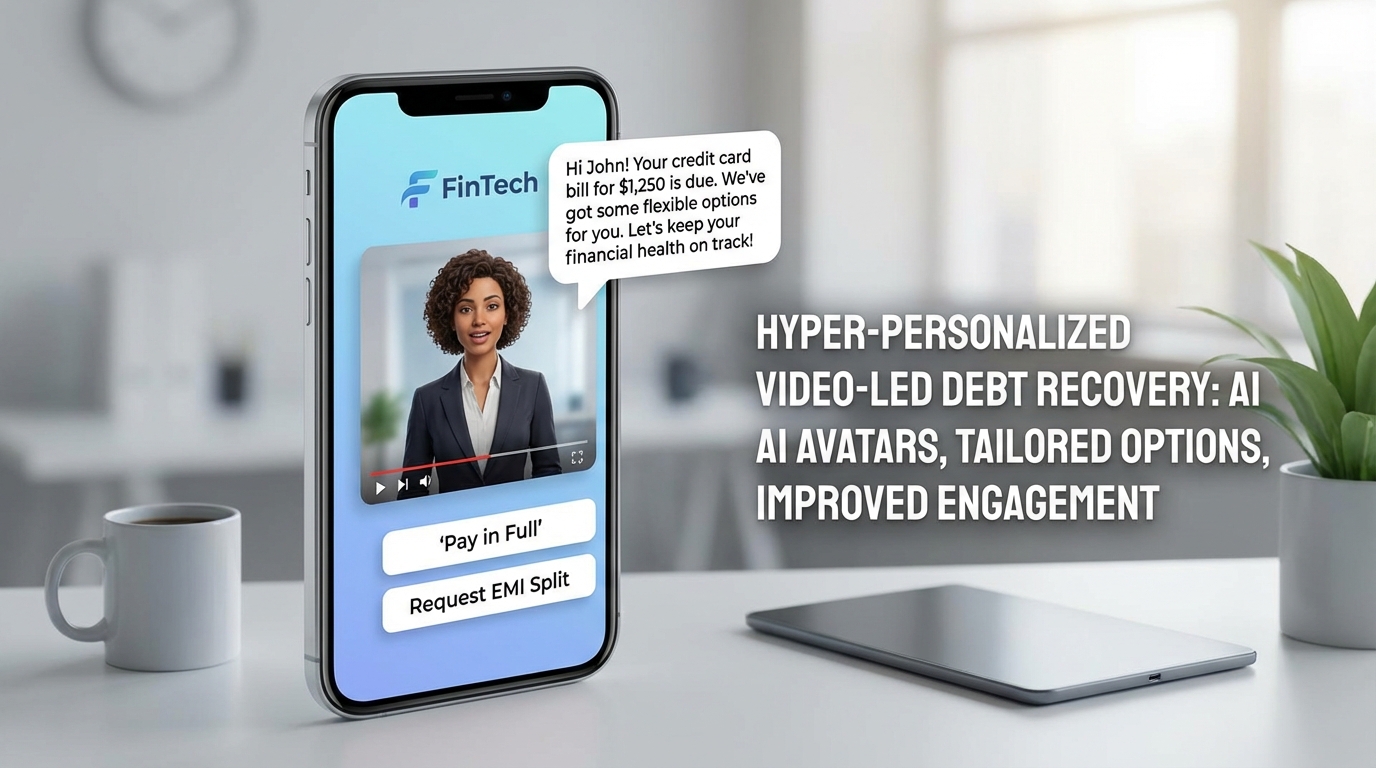
As attention spans shorten and digital literacy rises, post-festival payment collection videos have emerged as the gold standard for recovery engagement. These are hyper-personalized, multilingual video messages that greet the customer by name, acknowledge the recent festive period, and clearly present the outstanding due amount alongside flexible repayment options. Unlike static text, video can convey empathy through tone and visual cues, significantly lowering the perceived threat level of a collection notice.
A successful video blueprint for February 2026 includes a transparent breakdown of the current due, a clear explanation of the “Pay Now” vs. “Split Pay” options, and a direct escalation path to financial stress customer support if the user needs human assistance. Solutions like TrueFan AI demonstrate ROI through these interactive journeys, which can be delivered via WhatsApp Business API or SMS short links, ensuring that the recovery process feels like a personalized service rather than a generic demand.
Sources:
Payment flexibility campaigns and EMI modification personalization
When a borrower faces genuine liquidity constraints post-festival, rigid repayment schedules often lead to total default. We define payment flexibility campaigns as dynamic choice sets that offer grace periods, tenure extensions, or partial payment options based on the user’s risk profile. Complementing this is EMI modification personalization, where the lender uses data-driven insights to tailor the installment amount to the user’s current affordability signals.
For instance, a user who has historically been a good payor but missed a January payment might be offered a “Step-Up EMI” plan via payment restructuring offer videos. These videos can explain the long-term benefits of restructuring over defaulting, using interactive decision trees to let the user select a plan that fits their February budget. This not only improves collection efficiency optimization but also reinforces BNPL retention strategies by showing the customer that the lender is a partner in their financial journey.
Sources:
Financial wellness support campaigns and credit score education automation
Beyond immediate recovery, the 2026 playbook emphasizes long-term borrower health. We define financial wellness support campaigns as proactive, educational content streams that help users manage their budgets and avoid future debt traps. Similarly, credit score education automation involves sending automated, bite-sized video explainers that demystify how credit utilization and repayment timing affect the user’s bureau standing.
By integrating these educational drips into the post-recovery phase, BNPL providers can reduce the likelihood of relapse. For example, once a user completes a post-festival repayment, they could receive a “Thank You” video that includes a tip on setting up an emergency buffer or a link to a CRIF High Mark guide on credit health. This holistic approach transforms the collections department from a cost center into a retention engine, driving higher Net Promoter Scores (NPS) and long-term loyalty.
Sources:
Operationalizing BNPL debt recovery automation India 2026 with TrueFan AI
To execute this sophisticated strategy at scale, Indian BNPL providers require enterprise-grade technology that can handle the complexities of 2026's digital landscape. TrueFan AI provides the infrastructure for hyper-personalized video at scale, allowing lenders to generate millions of unique videos—each featuring the customer’s name, specific due dates, and tailored loyalty-based payment incentives—in under 30 seconds.
The platform’s capabilities include:
- Virtual Reshoots: Rapidly iterate on recovery scripts (e.g., testing a “fee waiver” vs. a “cashback” incentive) without the need for new video production.
- Multilingual Localization: Automatically translate and dub recovery videos into 175+ languages, ensuring resonance across India’s diverse linguistic regions.
- Interactive Decision Trees: Embed OTP-based consent capture directly within the video journey for payment restructuring offer videos, ensuring full RBI compliance.
- Real-time Analytics: Track view-through rates, CTA clicks, and conversion metrics to continuously refine collection efficiency optimization efforts.
By leveraging these tools, lenders can achieve a 75–90% reduction in digital collection costs compared to traditional human-led call centers, while simultaneously improving the customer experience.
Sources:
Implementation Timeline: From Strategy to Scale
Transitioning to an automated, video-led recovery model requires a structured 6–8 week implementation plan:
- Weeks 1-2: Data & Compliance: Map internal delinquency data to communication triggers. Review all scripts and consent language with legal teams to ensure alignment with RBI’s latest fair practice guidelines.
- Weeks 3-4: Creative Development: Build video templates for three core journeys: Gentle Reminders, Restructuring Offers, and Wellness Education. Configure TrueFan AI’s API for real-time personalization.
- Week 5: Pilot & A/B Testing: Launch the journeys to a 10–20% cohort. Test different behavioral nudge marketing frames (e.g., social proof vs. gain framing) and timing (e.g., 10 AM vs. 6 PM on salary day).
- Weeks 6-8: Full Scale-Up: Roll out the optimized journeys across the entire portfolio. Monitor funnel diagnostics and iterate on regional language variants to maximize engagement.
FAQ: Navigating BNPL Debt Recovery in 2026
Q1: How does BNPL debt recovery automation India 2026 ensure compliance with RBI guidelines?
Automation ensures that every interaction is logged, follows a standardized respectful script, and respects DND hours. It also automates the delivery of Key Fact Statements (KFS) and captures explicit OTP consent for any loan restructuring, as required by the RBI Digital Lending framework.
Q2: Can personalized videos really improve collection efficiency optimization?
Yes. Data from 2025–2026 shows that video-led outreach sees significantly higher open and engagement rates than text-based SMS or emails. By reducing the “threat perception” and providing a clear, one-tap path to pay, video journeys often double the self-cure rate in early-stage delinquencies.
Q3: What are loyalty-based payment incentives in the context of recovery?
These are rewards offered to borrowers who commit to a repayment plan or maintain a streak of on-time payments post-restructuring. Examples include small interest rebates, fee waivers, or “credit limit restoration” promises that encourage the borrower to prioritize your EMI over others.
Q4: How does TrueFan AI handle the security of sensitive financial data?
TrueFan AI is built on enterprise-grade security standards, including ISO 27001 and SOC 2 compliance. All data used for video personalization is encrypted, and the platform uses secure APIs to ensure that sensitive information like due amounts is only visible to the intended recipient.
Q5: What happens if a customer ignores the automated video reminders?
The system is designed with a triage logic. If a user does not engage with the post-festival payment collection videos or reminders, the case is automatically escalated to financial stress customer support (a human agent) for a more personalized, high-touch intervention, ensuring no borrower is left without a resolution path.
Conclusion: The New Standard for Indian BNPL Recovery
As we move through 2026, the winners in the Indian BNPL space will be those who view debt recovery not as a confrontation, but as a customer service opportunity. By combining BNPL debt recovery automation India 2026 with empathetic debt recovery strategies and the power of personalized video, lenders can protect their balance sheets while building deeper trust with their users.
The post-festival period doesn’t have to be a season of high losses and customer churn. With the right behavioral nudges, flexible payment options, and a commitment to financial wellness, BNPL providers can turn a period of financial stress into a demonstration of brand value. To see how your platform can implement these advanced, multilingual collection journeys, explore the enterprise solutions offered by TrueFan AI and lead the shift toward a more humane, efficient financial future.
Frequently Asked Questions
How does BNPL recovery automation in 2026 ensure RBI compliance?
Automated journeys log every interaction, enforce respectful scripts and DND windows, deliver Key Fact Statements, and capture OTP-based consent for restructuring per RBI Digital Lending FAQs.
Do personalized videos improve collection efficiency?
Yes. Multilingual, personalized videos reduce threat perception, increase engagement and PTP rates, and provide one-tap payment paths that lift self-cure in early delinquencies.
What are loyalty-based payment incentives?
They are benefits such as small interest rebates, fee waivers, or credit limit restoration offered to borrowers who commit to and sustain on-time repayment behavior.
How is customer data secured in video-led collections?
Platforms use encryption in transit and at rest, ISO 27001/SOC 2 controls, and scoped, secure APIs so sensitive fields (e.g., due amount) are visible only to intended recipients.
What if customers ignore automated reminders?
A triage logic escalates non-engagers from automated nudges to human-led financial stress support, ensuring high-touch assistance without abandoning respectful communication.



