
Pharma Doctor Engagement Automation 2026: India’s Playbook to Turn Union Budget Healthcare Allocations into Personalized HCP Video Education and Launch Impact
Estimated reading time: ~12 minutes
Key Takeaways
- Leverage automated, compliant video education to convert Union Budget 2026 investments into measurable clinical impact.
- Personalization at scale—micro-modules, adaptive playlists, and multilingual delivery—drives CME outcomes and HCP retention.
- Execute multi-phase product launches with automated journeys spanning pre-launch to post-launch RWE and adherence.
- Adhere to UCPMP 2024 via consent-first content, fair balance, authenticated access, and audit-ready metadata.
- Track ROI with watch-time, CME completions, rep conversion lifts, and retention KPIs; extend automation to clinical trial recruitment.
Pharma doctor engagement automation 2026 is India’s definitive opportunity to bridge the gap between massive fiscal allocations and measurable clinical impact. With the Union Budget 2026 healthcare allocations projected to cross ₹95,000 crore, the pharmaceutical industry must pivot toward scalable, compliant, and data-driven strategies to engage the nation’s ~1.3 million registered allopathic practitioners. By leveraging automated video-led education, brands can navigate the complexities of the National Medical Register while ensuring every touchpoint delivers high-value medical insights.
As the Indian healthcare landscape becomes increasingly digital-first, the traditional “reach and frequency” model is being replaced by “relevance and resonance.” This transition is fueled by the necessity to provide personalized medical education at scale, ensuring that healthcare professionals (HCPs) receive the right information at the right time through authenticated channels.
Source: ET Edge Insights: Union Budget 2026 Healthcare Allocations
Source: National Medical Commission – National Medical Register
Source: India Budget Official Portal
1. Defining the Framework for Pharma Doctor Engagement Automation 2026
In the context of the Indian market, pharma doctor engagement automation 2026 is defined as a governed ecosystem that integrates HCP master data, consent management, and automated content delivery. This system utilizes medical-legal approved templates to personalize and distribute video-led education across secure channels like WhatsApp Business API (ONDC personalized video onboarding), Veeva Approved Email, and gated HCP portals. Platforms like TrueFan AI enable enterprises to operationalize this at a scale previously thought impossible, transforming static data into dynamic, one-to-one clinical dialogues.
The acceleration of digital transformation in 2026 is no longer a luxury but a survival mandate. Indian pharma companies are facing mounting pressure to reduce the cost of engagement while increasing the speed of information dissemination. Automation solves this by creating “adaptive content journeys” where a doctor’s previous interaction—such as watching a mechanism-of-action (MoA) video—triggers the next logical step, such as a dosing guide or a safety update.
Core Capabilities of an Automated System:
- Dynamic Segmentation: Categorizing HCPs by specialty, city tier (1, 2, or 3), and language preference.
- Consent-First Architecture: Ensuring every video sent is backed by documented digital consent, adhering to the latest DPDP (Digital Personal Data Protection) norms.
- Audit-Ready Metadata: Every view, pause, and completion is logged for compliance and ROI analysis.
- IRB/IEC Alignment: Automated workflows for clinical trial content ensure that all investigator communications meet ethical committee standards.
Source: Economic Times Pharma: Digital Transformation in Indian Pharma
Source: Express Pharma: Pharma Trends Shaping 2026
2. The Strategic Role of HCP Video Marketing India in 2026
The modern Indian doctor is mobile-first and time-poor. HCP video marketing India has evolved to meet these consumption realities by focusing on asynchronous, evidence-led, short-form content. Whether it is a 90-second explainer on a new drug indication or a 3-minute summary of a global medical congress, video is the cornerstone of 2026 engagement strategies.
To drive meaningful impact, pharma brands must move beyond generic “corporate” videos. The 2026 playbook prioritizes localized content that respects regional language nuances. Regional language video SEO, TrueFan AI's 175+ language support and AI celebrity video marketing in India for doctor appreciation campaigns allow brands to maintain a high-touch feel even when reaching tens of thousands of practitioners simultaneously. This level of localization is critical for Tier 2 and Tier 3 cities, where doctors often prefer clinical summaries in their native tongue.
High-Impact Video Formats for 2026:
- Mechanism-of-Action (MoA) Explainers: High-fidelity 3D animations that simplify complex molecular pathways.
- Healthcare Policy Update Videos: Rapid-response summaries of Union Budget changes or National Medical Commission (NMC) guideline shifts.
- KOL Q&A Snippets: Peer-to-peer insights that address common clinical challenges or “myth-busting” sessions.
- Medical Conference Follow-up Automation: Personalized recaps sent within 48 hours of a major event like ASCO or RSSDI, tailored to the sessions the doctor expressed interest in.
Source: TrueFan AI: Orchestrating Launch Content at Scale
Source: Express Pharma: 2026 Digital and AI Momentum
3. Medical Education Personalization: Turning CME into Outcomes
The shift from general awareness to medical education personalization is the most significant trend in 2026. Continuing medical education (CME) is no longer a “one-size-fits-all” webinar. Instead, it is a series of micro-learning modules tailored to the HCP's specific practice patterns, specialty, and even the regional burden of disease.
By automating the delivery of continuing medical education videos, pharma companies can ensure that a cardiologist in Mumbai receives different content than a general practitioner in a rural district, even if they are both interested in hypertension. This personalization extends to the assessment phase, where automated quizzes and certificates are issued instantly upon completion, fostering a sense of achievement and driving healthcare professional retention.
The Anatomy of a Personalized CME Journey:
- Micro-Modules: 3–6 minute videos focusing on a single clinical pearl or guideline update.
- Adaptive Playlists: If an HCP struggles with a specific module, the system automatically suggests foundational content to bridge the knowledge gap.
- Multilingual Captions: Ensuring accessibility across India’s diverse linguistic landscape.
- UCPMP Alignment: All educational content is strictly framed within the Uniform Code of Pharmaceutical Marketing Practices (UCPMP) 2024, ensuring no inducements are offered and the focus remains purely on scientific advancement.
Source: UCPMP 2024 Portal: Education Exception Guidance
Source: Department of Pharmaceuticals: Official UCPMP Documents
4. Executing Pharmaceutical Product Launch Campaigns with Precision
In 2026, pharmaceutical product launch campaigns (medical device and pharma launch strategies) are no longer single-day events; they are multi-phase, automated journeys. The goal is to build “clinical readiness” before the product even hits the shelf. This requires a sophisticated sequencing of content that moves from disease-state awareness to specific product differentiation.
Automation allows for the seamless integration of doctor relationship management videos and medical rep enablement videos. When a medical representative finishes a call, the system can automatically trigger a personalized recap video for the doctor, summarizing the key clinical data discussed and providing a link to the full prescribing information (PI). This ensures that the message remains consistent and compliant, even after the rep has left the clinic.
The Three-Phase Launch Sequence:
- Pre-Launch (Awareness & Readiness): Automated delivery of KOL briefings and policy readiness videos. This phase focuses on the “unmet need” and secures necessary HCP consents.
- Launch (Impact & Education): Segmented journeys by specialty. This includes dosage/administration videos, safety profiles, and “how-to-prescribe” guides delivered via WhatsApp or CRM-integrated email.
- Post-Launch (Evidence & Adherence): Real-world evidence (RWE) updates and pharmacovigilance alerts. This phase uses automation to keep the product top-of-mind through continuous, value-added education.
Source: TrueFan AI: Medical Device and Pharma Launch Strategies
Source: Economic Times Pharma: The Urgency of Digital Transformation
5. Pharma Compliance Marketing India: Navigating UCPMP 2024
Compliance is the bedrock of any engagement strategy in 2026. Pharma compliance marketing India requires a rigorous adherence to the UCPMP 2024 guidelines, which prohibit gifts, hospitality, or any form of inducement to HCPs. Automation provides the perfect solution for this by ensuring that every piece of content is purely educational and transparently sponsored.
The concept of prescription influence marketing has been redefined. It is no longer about “persuasion” but about “informed decision-making.” By providing peer-reviewed, evidence-based video content, pharma brands can influence prescribing patterns through scientific merit rather than marketing gimmicks. This approach not only ensures compliance but also builds long-term trust with the medical community.
Compliance Checklist for 2026:
- Educational Framing: All content must have a clear educational objective.
- Fair Balance: Every video mentioning a product must include a balanced view of benefits and risks, with visible links to safety information.
- No Inducements: Loyalty programs must be based on “mastery milestones” (e.g., CME completion) rather than monetary rewards.
- Authenticated Access: Content must be gated to ensure it is only viewed by registered HCPs, preventing “spillover” to the general public.
- Adverse Event (AE) Reporting: Every video player should have a clear, one-click option for reporting adverse events.
Source: UCPMP 2024: Official Portal for Compliance
Source: DoP: Uniform Code of Pharmaceutical Marketing Practices
6. Driving Healthcare Professional Retention through Loyalty and ROI
The ultimate goal of any engagement strategy is healthcare professional retention. In a competitive market, doctors will gravitate toward brands that respect their time and contribute to their professional growth. Doctor loyalty program personalization in 2026 is built on the pillars of recognition and education.
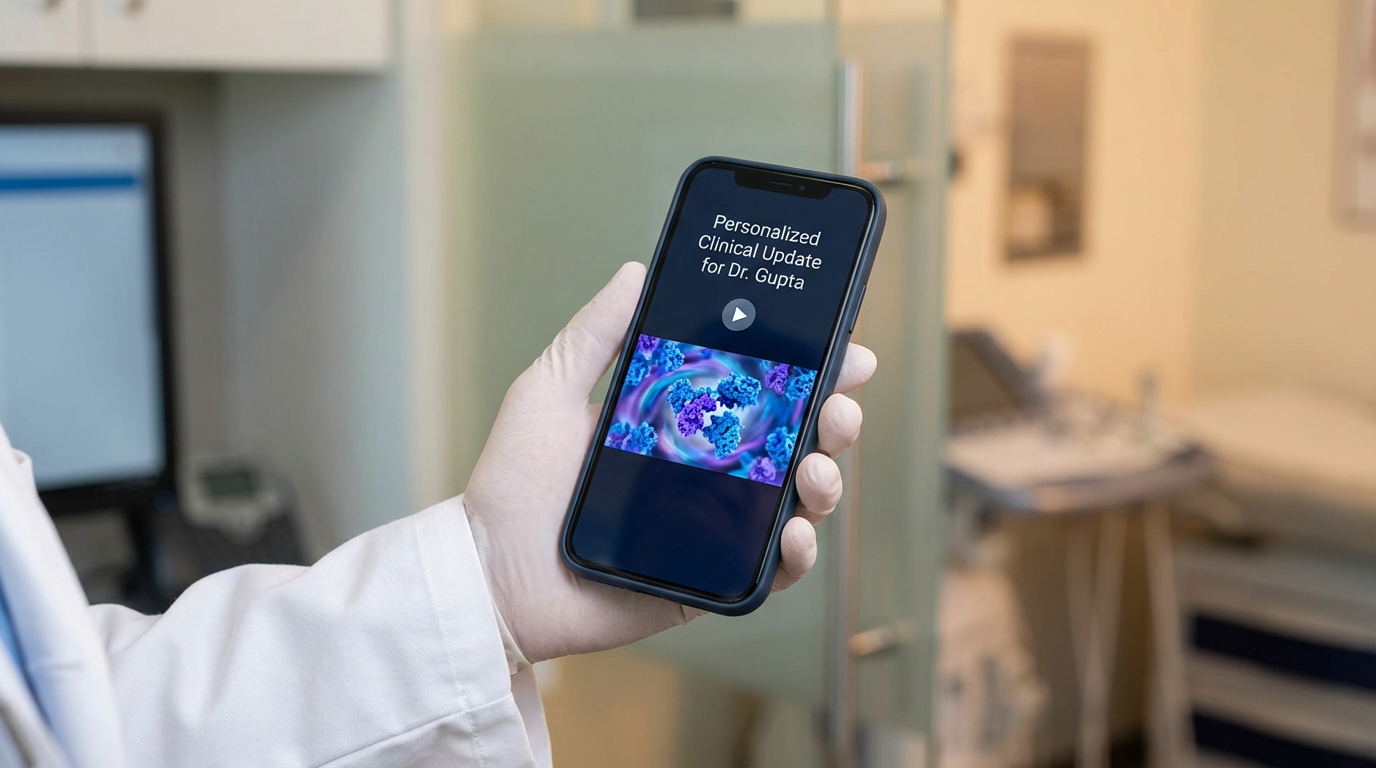
Solutions like TrueFan AI demonstrate ROI through metrics that go beyond simple “open rates.” By tracking qualified views, CME completion rates, and rep meeting conversion lifts, pharma companies can see a direct correlation between automated engagement and brand loyalty. For instance, a doctor appreciation campaign that uses personalized video (AI celebrity video marketing in India) to celebrate a practitioner’s contribution on “Doctors' Day” (cultural celebration marketing automation (Q1)) can significantly increase the likelihood of future engagement with clinical content.
Measuring Success: The 2026 KPI Model
| Metric Category | Key Performance Indicator (KPI) |
|---|---|
| Reach | Unique HCPs engaged via authenticated channels |
| Engagement | Average watch time and qualified view rate (QVR) |
| Education | CME start-to-completion ratio and assessment scores |
| Conversion | Rep meeting request rate post-video consumption |
| Retention | Month-on-month opt-in persistence and repeat engagement |
Clinical Trial Recruitment Automation: A 2026 Coverage Gap
One area often missed by competitors is clinical trial recruitment automation. By using automated video to brief investigators and referral networks, pharma companies can accelerate trial timelines. These videos explain screening criteria and protocol overviews in a compliant, IRB-approved format, ensuring that the right patients are identified faster.
7. Frequently Asked Questions (FAQs)
Q1: How does pharma doctor engagement automation 2026 ensure compliance with UCPMP 2024?
Automation ensures that every video is pre-approved by medical and legal teams, contains mandatory fair-balance disclaimers, and is delivered only to authenticated HCPs. It removes the risk of “off-script” messaging by sales reps and provides a full audit trail of all interactions.
Q2: Can video marketing really work for Tier 3 cities in India?
Yes. In fact, video is often more effective in Tier 3 cities due to the high penetration of smartphones and the preference for localized, visual content. Automation allows for the mass-production of videos in regional languages, making complex clinical data accessible to every doctor in the National Medical Register.
Q3: What is the role of TrueFan AI in this ecosystem?
TrueFan AI provides the infrastructure for personalization at scale. From generating thousands of personalized doctor relationship management videos to supporting 175+ languages with lip-sync technology, the platform allows pharma brands to deliver a “segment-of-one” experience to 1.3 million doctors.
Q4: How do you measure the ROI of personalized medical education?
ROI is measured through a combination of engagement metrics (watch time, CME completions) and behavioral shifts (increased rep meeting conversions, trial referrals, and long-term retention). By correlating these metrics with prescription data (where compliant), brands can see the incremental lift driven by education.
Q5: Is it possible to automate clinical trial investigator briefings?
Absolutely. Clinical trial recruitment automation uses video to provide protocol overviews and screening explainers to potential investigators. This ensures consistency in trial execution and speeds up the site activation process across multiple geographies.
Conclusion: The 30-Day Implementation Roadmap
Transitioning to a fully automated engagement model does not happen overnight, but it can be operationalized within 30 to 60 days. The first step is an audit of existing HCP data and consent states, followed by the creation of a content matrix that aligns with Union Budget 2026 healthcare priorities.
By day 30, brands should have their first set of continuing medical education videos and medical rep enablement videos ready for a pilot cohort. By day 60, the system can scale across all specialties, integrating medical conference follow-up automation and launch sequences. In the rapidly evolving Indian pharma landscape, those who automate their engagement today will be the ones who lead the market in 2026.
Final Sources & Citations:
Source: India Budget 2026: Healthcare Sector Analysis
Source: NMC National Medical Register Landing Page
Source: UCPMP 2024 Compliance Portal
Source: Express Pharma: Future-Ready Patient-Centric Industry
Source: TrueFan AI Enterprise Solutions
Frequently Asked Questions
How can Indian pharma implement doctor engagement automation in 30–60 days?
Start with an audit of HCP master data and consent, then define content pillars (disease state, product, safety). Build micro-learning video modules, configure consent-gated delivery via authenticated channels (e.g., WhatsApp Business API, Veeva Approved Email), and launch a pilot cohort. Scale by specialty with adaptive playlists and automated follow-ups.
What channels are best for compliant HCP video delivery in 2026?
Use authenticated and auditable channels: WhatsApp Business API with consent capture, Veeva Approved Email for fair-balance content, and gated HCP portals. Each touchpoint should log views, completions, and AE reporting to remain audit-ready under UCPMP 2024.
How does personalization affect CME outcomes?
Personalized micro-modules, adaptive learning paths, and multilingual delivery increase relevance and completion rates. Automated assessments and instant certification create mastery milestones that improve knowledge retention and ongoing engagement.
Which KPIs prove ROI from automated HCP engagement?
Track qualified view rate, average watch time, CME completion ratio, rep meeting conversion lifts, and month-on-month opt-in persistence. Tie engagement to compliant prescription trends or meeting requests to quantify commercial impact.
How does automation help clinical trial recruitment in India?
Automated, IRB-approved videos brief investigators on protocols and screening criteria, enabling faster site activation and better patient matching. Consistent messaging across sites reduces deviations and accelerates timelines.



