
MSME digital transformation 2026: The enterprise playbook to scale personalized MSME onboarding and financial inclusion
Estimated reading time: 12 minutes
Key Takeaways
- 2026 marks a pivotal shift to data-driven, hyper-personalized, video-led MSME education and onboarding.
- Enterprises can scale activation and retention through automated, multilingual journeys integrated into merchant workflows.
- UPI, QR, and GST compliance adoption accelerates with short, task-focused videos and trigger-based nudges.
- Personalized MSME credit aligned to cash flows boosts inclusion while staying within RBI guardrails.
- Lifecycle automation with benchmarking, safety, and compliance content improves retention and ARPU.
MSME digital transformation 2026 is no longer a peripheral objective; it is the definitive enterprise-led shift toward data-driven, hyper-personalized, and video-first education. This strategic evolution accelerates the adoption of UPI, QR codes, GST compliance, and credit utilization for India’s 63 million small businesses. By leveraging automated, multilingual journeys, financial institutions can now drive activation and retention at an unprecedented scale.
The urgency of this transformation is underscored by the current Indian economic landscape. With UPI enabling over 300 million individuals and 50 million merchants, the ecosystem is primed for a massive scaling phase. The recent removal of onboarding limits for platforms like WhatsApp Pay by the NPCI signals a readiness to integrate merchant ecosystems more deeply than ever before.
Furthermore, the expansion of e-invoicing mandates based on Aggregate Annual Turnover (AATO) necessitates a more sophisticated approach to merchant education. Businesses must now navigate complex IRP registrations and compliance frameworks to avoid significant penalties. In this environment, low-budget, data-backed digital marketing tactics have become essential survival tools, where content-led growth consistently outperforms traditional outreach.
Why 2026 is the pivotal year for small business growth campaigns
The convergence of payment ubiquity, regulatory tightening, and AI-driven automation makes 2026 the most critical year for small business growth campaigns. As the digital infrastructure matures, the focus has shifted from mere connectivity to deep financial integration and value-added services.
Payments scale has reached a tipping point where 50 million merchants are already part of the UPI network. Policy levers, such as the lifting of onboarding limits, indicate that the infrastructure is ready for high-velocity merchant acquisition. This is complemented by a national discourse on empowering women-owned micro-businesses through transparent and accessible onboarding experiences.
Simultaneously, the regulatory environment is demanding higher transparency. The e-invoicing mandate is expanding to include smaller turnover segments, requiring merchants to register e-invoices on the IRP. Without clear, stepwise guidance, these businesses face operational friction and legal risks. Enterprises that provide this guidance through personalized content will secure higher trust and lower churn.
Credit inclusion has also become a top priority under the RBI’s National Strategy for Financial Inclusion. Banks and fintechs are now mandated to simplify credit pathways, moving MSMEs into priority lending frameworks. This requires a shift from generic loan offers to personalized credit lines that align with a merchant's specific cash flow and seasonal needs.
Finally, the adoption of AI and cloud evolution is enabling enterprises to scale localization. Multilingual experiences are no longer a luxury but a core enabler for reaching the diverse Indian market. Analytics-led growth, paired with short-form video content, is now the benchmark for successful engagement in the MSME sector.
Source: NPCI removes UPI onboarding limits for WhatsApp Pay
Source: E-invoice mandate and compliance changes
Source: Digital marketing tactics for MSMEs
Source: RBI National Strategy for Financial Inclusion
Architecting small business digitization videos that drive engagement
To bridge the operational gap in merchant onboarding, enterprises must move away from fragmented messaging. Small business digitization videos are the most effective tool for this, ONDC Personalized Video Onboarding: 2026 Playbook Guide providing short, localized, and task-focused content that helps MSMEs adopt digital tools like UPI and GST.
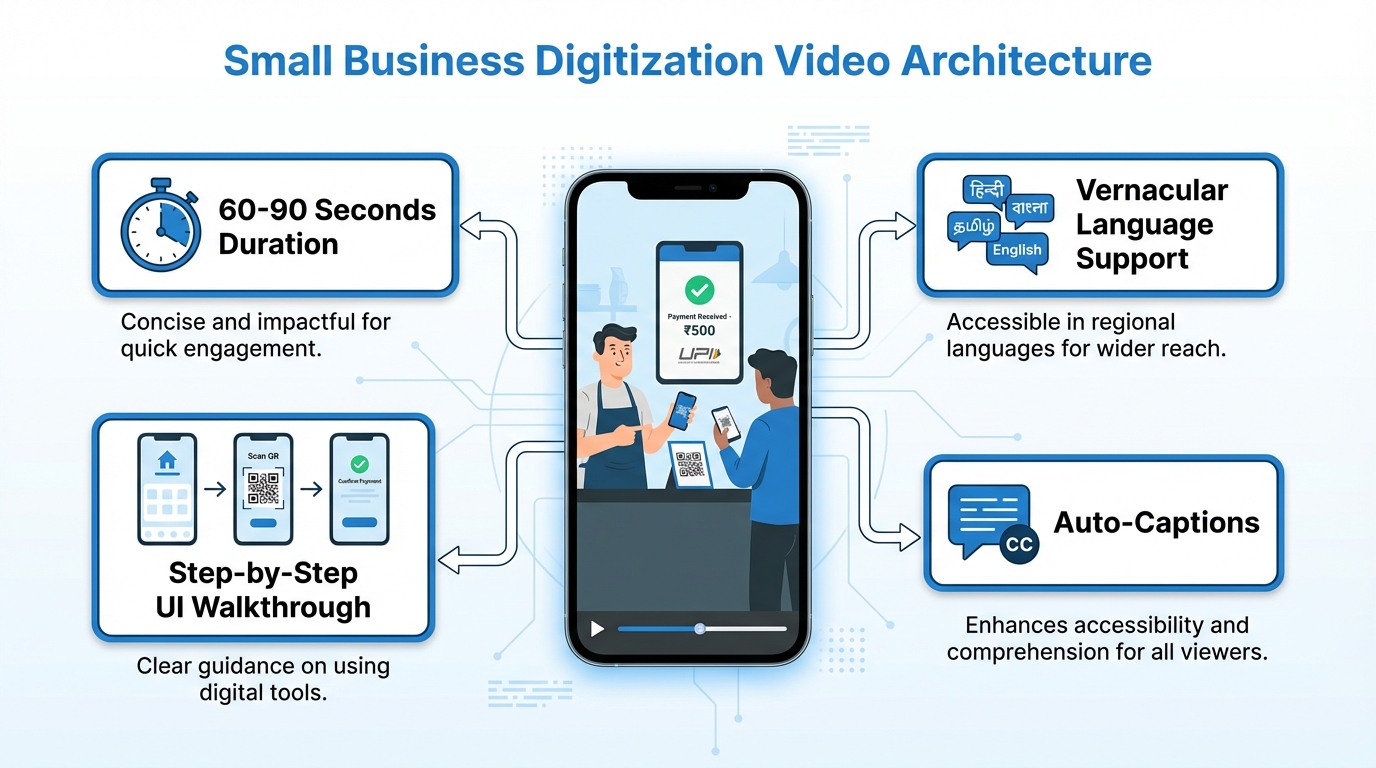
The architecture of these videos must follow strict content rules to ensure maximum impact. Each video should focus on a single task, such as “How to generate an IRN” or “Setting up your UPI PIN,” and should not exceed 60 to 90 seconds. Using on-screen UI walkthroughs with regional examples ensures the content is relatable and easy to follow.
Platforms like TrueFan AI enable enterprises to produce these high-quality, task-oriented videos at a scale that was previously impossible. By automating the creation of vernacular-first content in over 175 languages, institutions can ensure that every merchant, regardless of their location, receives guidance in their preferred tongue.
Accessibility is another critical factor in the design of these videos. Captions should be included by default, and audio variants should be available for different dialects. Providing low-data versions of these videos ensures they are accessible even in areas with limited connectivity, which is vital for reaching rural micro-businesses.
The distribution of these videos should be integrated into the merchant's daily workflow. Deep links via WhatsApp, in-app tooltips, and SMS smart links allow for contextual delivery. For instance, a video explaining settlement cycles should be triggered the moment a merchant completes their first transaction, providing immediate value and reducing support queries.
Optimizing UPI Business account activation campaigns for higher conversion
The transition from account creation to the first successful transaction is the most vulnerable stage of the merchant journey. UPI Business account activation campaigns must be designed as data-triggered sequences that nudge merchants through the final steps of onboarding.
Trigger design is essential for these campaigns. If a merchant has completed KYC but hasn't set their UPI PIN (D0), an automated nudge should be sent. Similarly, if a PIN is set but no transaction occurs within three days (D+3), a follow-up video demonstrating how to accept a payment can bridge the gap.
A standard creative pack for these campaigns should include a three-video series. The first video guides the merchant through PIN setup, the second demonstrates accepting the first payment, and the third explains reconciliation and settlement. Including fraud prevention and safety tips within these videos builds confidence in the digital system.
To further drive adoption, enterprises should implement shop digitization incentive campaigns. These campaigns offer milestone-based rewards, such as a free QR standee upgrade after the first 20 transactions or festive cashbacks for crossing a specific TPV threshold. These incentives, when paired with educational content, create a powerful motivation for merchants to stay active.
Measurement of these campaigns should focus on the activation rate, Time to First Transaction (TTFX), and the lift in TPV during the first 30 days. By aligning these metrics with ecosystem pushes for empowerment and transparency, banks can demonstrate their commitment to the merchant's long-term success.
Source: UPI for empowerment and women merchants
Source: NPCI scaling readiness
Streamlining QR code merchant onboarding through automated education
The physical placement and activation of a QR code are often overlooked friction points in the merchant journey. QR code merchant onboarding must be a guided process that ensures the merchant knows exactly how to receive, place, and safely use their QR for payments.
A video-led flow is the most effective way to handle this. A “Unbox and Place” micro-video can show the merchant the best placement near the cashier, ensuring optimal lighting and visibility. This should be followed by a video explaining the activation and linking process to their settlement account, with a clear explanation of fees and zero MDR contexts.
Safety and dispute management are also critical components of the onboarding process. Micro-videos that teach merchants how to spot scams, process refunds, and understand settlement timelines can significantly reduce anxiety. These videos should be delivered through merchant education automation, ensuring the right content is sent at the right time.
For example, if a settlement is pending or a dispute is raised, the system should automatically trigger the relevant educational video. This proactive approach reduces the burden on support teams and improves the merchant's overall experience with the platform.
The success of these initiatives can be measured by the time from QR issuance to the first scan and the percentage of merchants who complete five or more scans in their first week. With over 50 million merchants already using QR and UPI, these automated education strategies are essential for maintaining a competitive edge in the market.
Implementing GST compliance video guides to build merchant trust
As e-invoicing mandates become more stringent, MSMEs face increasing pressure to remain compliant. GST compliance video guides provide vernacular, stepwise explanations that cover GSTR timelines, input tax credit reconciliation, and IRN generation.
Digital invoice marketing automation can be used to nudge businesses to create digital invoices with integrated payment links. By teaching merchants how to generate an IRN and showing how faster reconciliation improves their working capital, enterprises can position themselves as partners in the merchant's growth.
Content should be segmented by AATO and filing behavior. For merchants in the lower turnover brackets, the focus should be on basic compliance and avoiding penalties. For larger MSMEs, the content can delve into more complex topics like reconciliation how-tos and claimable ITC accuracy.
Citing official sources within these videos, such as the IRP and mandate pages, adds a layer of authority and trust. Merchants are more likely to follow guidance that is clearly linked to official government requirements. This approach not only ensures compliance but also builds a long-term relationship based on transparency.
The key performance indicators for these campaigns include the e-invoice compliance rate, the reduction in error rates, and the improvement in Days Sales Outstanding (DSO). By automating these educational journeys, enterprises can help MSMEs navigate the complexities of the GST regime with confidence.
Source: E-invoice generation steps and penalties
Source: GST e-invoice mandate details
Scaling MSME loan personalization marketing for financial inclusion
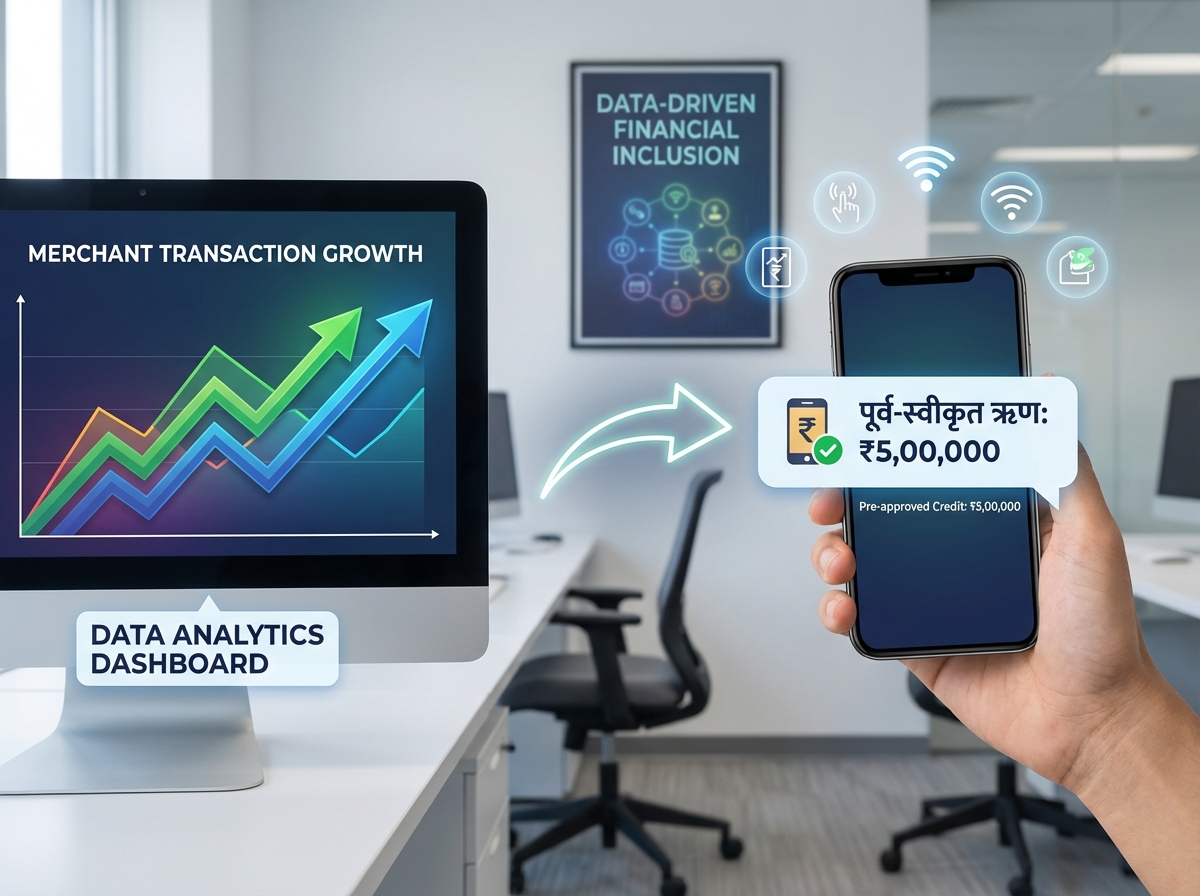
Lending to MSMEs requires a shift from mass marketing to highly tailored outreach. MSME loan personalization marketing uses data-driven insights to match loan limits, tenors, and interest rates to a merchant's specific behavior and seasonal cash flows.
One of the most effective journeys is the pre-approved line offer. After a merchant shows stable TPV over 90 days, the system can trigger a personalized video offer. These MSME credit line offers should be contextual: “Hi Rajesh, based on your average monthly receipts, you qualify for a ₹5 lakh overdraft—tap here to accept.”
Business banking personalization also involves localizing the language and referencing the nearest branch or relationship manager. Aligning repayment options to the merchant's collection cycles—such as daily or weekly sweeps—makes the credit product more attractive and easier to manage.
From a regulatory perspective, these campaigns must align with the RBI’s National Strategy for Financial Inclusion and Priority Sector Lending (PSL) norms. Explicit consent capture and clear disclosures are mandatory. Using video to explain these terms ensures that the merchant fully understands their obligations, reducing the risk of future disputes.
TrueFan AI's 175+ language support and Personalised Celebrity Videos allow banks to deliver these credit offers in a way that feels both professional and personal. By using AI to reshoot and edit offers rapidly, institutions can iterate on their messaging without the need for expensive and time-consuming video shoots.
Solutions like TrueFan AI demonstrate ROI through faster go-live times and measurable uplifts in credit line utilization. By automating the production and delivery of personalized lending content, enterprises can significantly expand their credit portfolios while maintaining high standards of governance and compliance.
Source: RBI National Strategy for Financial Inclusion
Source: RBI Priority Sector Lending FAQs
Advanced merchant retention strategies through lifecycle automation
Retaining merchants in a competitive ecosystem requires more than just a functional product; it requires continuous value delivery. Merchant retention strategies should focus on lifecycle communications and value-realization content that reduces churn and expands ARPU.
One effective tactic is the use of benchmark snapshots. Sending a video that says, “You’re in the top 20% of merchants in your area for UPI collections,” provides positive reinforcement and encourages further usage. Conversely, reactivation cadences should be triggered if a merchant shows no activity for 14 days, offering assistance or an incentive to return.
Value-added videos, such as those covering chargeback prevention or GST prep checklists, keep the merchant engaged with the platform even when they aren't processing a transaction. These videos should be delivered via merchant education automation, ensuring they reach the merchant at the most relevant time.
The orchestration of these campaigns requires a sophisticated trigger logic across CRM and core systems. Events like KYC completion, a first QR scan, or a raised dispute should all trigger specific content variants. This ensures that the merchant always feels supported and informed throughout their journey.
Measuring the ROI of these retention efforts involves tracking monthly retention rates, churn drivers, and win-back conversion rates. By using a data-led approach, enterprises can identify which content types and incentives are most effective at keeping merchants active and loyal.
Conclusion: The future of MSME digital transformation 2026
In 2026, the institutions that dominate the MSME sector will be those that successfully combine data-driven segmentation with hyper-personalized, video-led education. The shift toward merchant education automation is not just a technological upgrade; it is a fundamental change in how financial services are delivered to the backbone of the Indian economy.
By focusing on the entire lifecycle—from UPI Business account activation campaigns to complex GST compliance video guides—enterprises can drive meaningful financial inclusion. This approach ensures that MSMEs are not just connected to the digital economy but are empowered to thrive within it.
The execution of these small business growth campaigns requires a robust blueprint that includes segmentation, automated triggers, and a diverse channel mix. Leveraging advanced platforms for video personalization will be the key to achieving this at scale, ensuring that every merchant receives the guidance they need to succeed.
Source: Digital transformation trends 2026
Source: Digital marketing for every MSME
Frequently Asked Questions
What are the exact steps to activate a UPI business account?
Activating a UPI business account involves completing KYC, setting a secure UPI PIN, and performing a test transaction. Merchants should also understand settlement timelines and how to reconcile daily payments. This process is a cornerstone of financial empowerment for small businesses. Explore a stepwise guide here: UPI Business account activation.
How can I onboard a QR code quickly and safely?
Quick onboarding involves unboxing the QR, placing it in a visible, well-lit area, and linking it to your settlement account via the provider's app. Safety is paramount; always verify the transaction notification on your own device and be wary of “payment screenshots” from customers.
What is e-invoicing under GST and who must comply?
E-invoicing is the process of registering B2B invoices on the Government's Invoice Registration Portal (IRP) to generate a unique Invoice Reference Number (IRN). Compliance is mandatory for businesses crossing specific Aggregate Annual Turnover (AATO) thresholds, and failure to comply can result in heavy penalties.
How does personalization in MSME lending work within policy guardrails?
Personalization involves using transaction data to offer pre-approved credit lines that match a merchant's cash flow. This must be done within the RBI’s Priority Sector Lending (PSL) frameworks, ensuring full disclosure of terms and obtaining explicit consent from the merchant.
How do payment gateway adoption videos reduce merchant friction?
Payment gateway adoption videos provide a stepwise guide for integrating payment links into websites or apps. By demonstrating the transition from test mode to production and explaining UPI intent links, these videos help merchants go live faster and with fewer technical errors.
How does TrueFan AI help in scaling these MSME campaigns?
TrueFan AI provides an enterprise-grade platform for generating hyper-personalized video content in over 175 languages. By integrating with CRM systems, it allows for the automated delivery of onboarding, compliance, and lending videos, significantly improving activation and retention rates.



