Maha Shivratri marketing campaigns 2026: The enterprise playbook for spiritual commerce personalization in India
Key Takeaways
- Shift from generic greetings to devotion-first personalization across languages, regions, and rituals.
- Leverage devotional video marketing automation to deliver respectful “Blessing + Offer” experiences that convert.
- Build a full-funnel spiritual journey on WhatsApp and omni-channel touchpoints from T-6 weeks to post-festival.
- Activate vertical playbooks for travel, FMCG/retail, and wellness to meet distinct devotee needs.
- Implement cultural governance and an execution timeline to protect brand trust during sacred hours.
Maha Shivratri marketing campaigns 2026 represent a pivotal shift in how Indian enterprises engage with the modern devotee, moving beyond generic greetings toward sophisticated spiritual commerce personalization in India. This sacred occasion, marked by profound devotion and ritualistic rigor, offers a unique window for brands to integrate into the spiritual customer journey through devotional video marketing automation. By leveraging vernacular devotional content marketing, enterprises can achieve deep tier-2 religious market penetration, ensuring that every interaction respects the sanctity of the festival while delivering tangible commercial value.
The landscape of Indian consumerism is undergoing a radical transformation where faith and commerce intersect through digital touchpoints. As we look toward the 2026 calendar, the integration of high-tech solutions with high-touch spiritual sentiments is no longer optional for brands seeking to maintain relevance in a competitive market. Platforms like TrueFan AI enable this transition by allowing brands to deploy hyper-personalized, culturally resonant video content that speaks directly to the individual's devotional context and regional identity.
The 2026 Landscape: Dates, Data, and Devotional Trends
For the 2026 cycle, precision in timing is the first step toward a successful campaign. Most national Indian calendars and the Isha Foundation have identified Sunday, February 15, 2026, as the primary date for Maha Shivratri observances. However, enterprise leaders must note regional variations, such as those in Tamil Nadu, where certain panchangam interpretations may cite February 16, 2026. This nuance requires a localized media pacing strategy that respects state-wise observances to ensure maximum impact and cultural alignment.
The economic signals surrounding spiritual engagement in India are stronger than ever. Recent data indicates that religious tourism is driving a significant surge in residential and commercial demand in holy cities, with Prayagraj witnessing a 28% increase in interest ahead of major spiritual gatherings. This “divine rush” creates a massive spillover effect for adjacent categories, including travel, hospitality, FMCG, and wellness, as devotees seek seamless experiences during their pilgrimage or home-based rituals.
Furthermore, the rise of vernacular video consumption, particularly among Gen Z and millennial audiences in Tier-2 and Tier-3 cities, has redefined the shared vernacular of Indian digital interaction. Google’s latest insights highlight that localized, creator-led short-form video is the primary driver of trust and engagement. For Maha Shivratri 2026, the winning strategy will be “devotion-first,” utilizing automated, in-language journeys that prioritize the spiritual experience over the hard sell.
Source: Isha Foundation Maha Shivratri 2026
Source: Moneycontrol Religious Tourism Trends
Source: Google India Vernacular Trends
Defining Spiritual Commerce Personalization India for Enterprise ROI
To master the 2026 festival season, enterprises must first internalize the core pillars of spiritual commerce personalization India. This practice involves tailoring every devotional asset, offer, and communication to an individual’s specific faith context, including their preferred language, deity affinity, fasting traditions, and geographic location. It is a move away from “mass marketing” toward “mass personalization,” where first-party data is used to enhance the relevance and respect of the brand’s presence in the devotee's life.
Central to this strategy is devotional video marketing automation. This technology allows for the automated generation and delivery of personalized videos—such as customized blessings, puja explainers, or travel nudges—triggered by specific CRM events. Whether a user searches for a “Varanasi travel package” or adds a “puja thali” to their cart, the system can instantly render a high-quality video in their native tongue, featuring a familiar face or a respected spiritual guide, to guide them through the next steps of their journey.
The ultimate goal is the orchestration of spiritual customer journey automation. This involves a multi-stage communication flow that begins weeks before the festival and continues long after the final aarti. By aligning brand interactions with the ritualistic timeline of Maha Shivratri, companies can optimize for both spiritual engagement and commercial outcomes. This approach ensures that the brand is perceived as a facilitator of the devotee’s faith rather than a mere vendor of goods.
The “Blessing + Offer” Framework
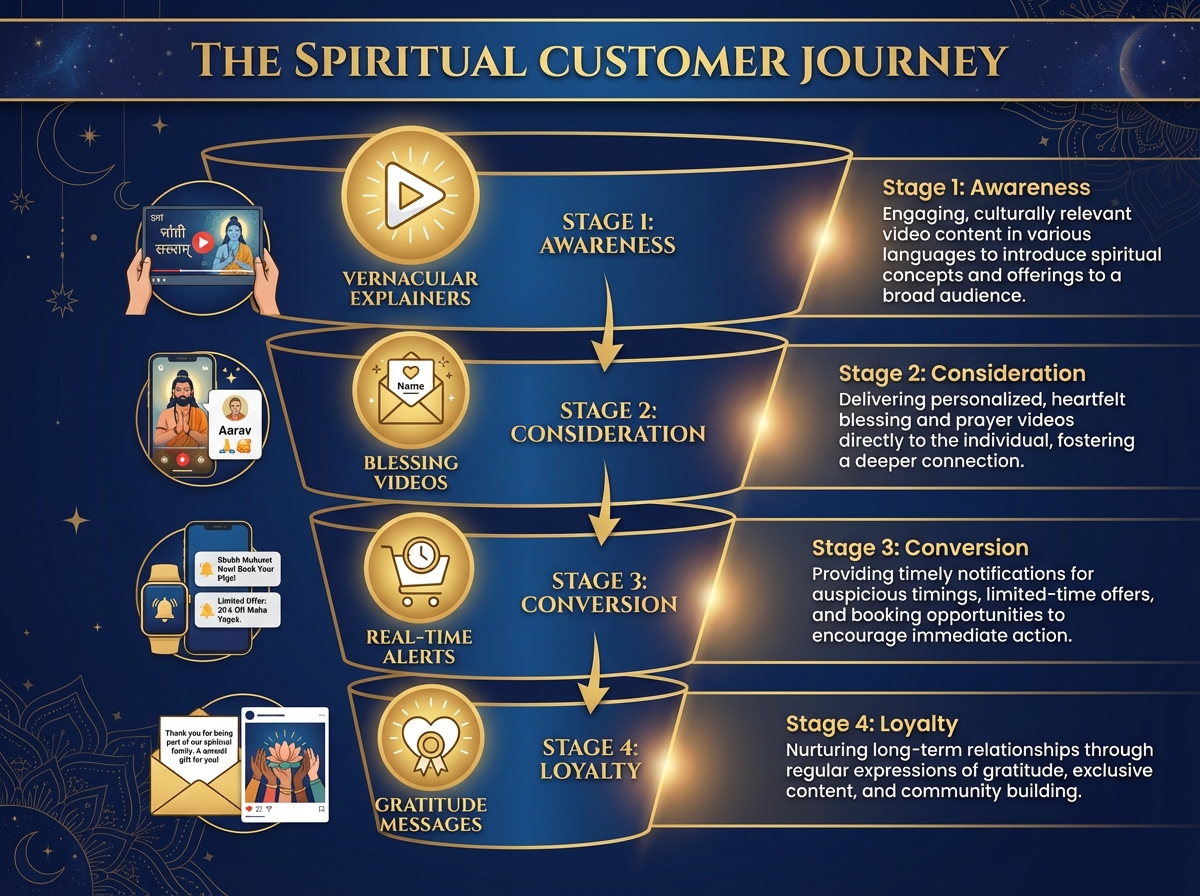
A critical component of this personalization is the “Blessing + Offer” creative format. In this model, the first five to ten seconds of any video or message are dedicated entirely to a devotional greeting or a spiritual insight. Only after the brand has established a respectful connection does it transition into a soft, value-added offer. This sequence is essential for maintaining the sanctity of the occasion and ensuring that the commercial message does not feel intrusive during a time of deep religious significance.
For example, a personalized video might begin with a celebrity or a spiritual influencer offering a heartfelt “Om Namah Shivaya” and a blessing for the user's family's well-being. This is followed by a helpful suggestion: “As you prepare for your Shivratri vrat, here is a curated list of satvik essentials available for 2-hour delivery in your area.” This transition feels like a service rather than an advertisement, significantly increasing the likelihood of conversion.
Source: TrueFan AI Enterprise Capabilities
Source: Samaaro Regional Marketing Insights
Vertical Playbooks: Scaling Tier-2 Religious Market Penetration
The success of Maha Shivratri marketing campaigns 2026 depends on vertical-specific execution that addresses the unique needs of different audience personas. From the pilgrim traveling to a Jyotirlinga to the household observer performing a fast at home, each segment requires a distinct approach to personalization and engagement.
Travel and Tourism: Temple Tourism Offer Videos
The travel sector stands to gain the most from the surge in spiritual tourism. Enterprises should deploy temple tourism offer videos that are personalized based on the user's origin city and their preferred temple destination, such as Mahakaleshwar in Ujjain or Kashi Vishwanath in Varanasi. These videos can include dynamic modules for aarti passes, local accommodation, and guided darshan tours.
Pilgrimage package marketing should also utilize AI-driven avatars to explain complex itineraries and traditional dress codes. By providing a clear, visual “3-step darshan plan,” travel brands can reduce the friction of planning a trip during the festival rush. Integrating these videos with WhatsApp Business API allows for real-time updates and “today-only” availability alerts for special pilgrimage slots, driving immediate bookings from high-intent travelers.
FMCG and Retail: Religious Product Personalization
For FMCG brands, the focus should be on fasting product offers Shivratri and religious product personalization. Households observing the vrat (fast) require specific ingredients and puja samagri. Brands can use automation to send in-language educational videos on “vrat-friendly” recipes featuring their products, coupled with personalized cart builders that align with regional traditions.
Devotional gift recommendation videos are another high-growth area. These assets can guide users through family-specific gift paths—such as selecting a premium shawl for an elder or a digital prasad delivery for a relative living abroad. Prasad delivery personalization, complete with video updates showing the prasad being blessed at a specific temple, adds a layer of authenticity and emotional value that traditional e-commerce cannot match.
Wellness and Meditation: Spiritual Wellness Brand Engagement
Meditation and wellness apps can leverage the heightened spiritual energy of Maha Shivratri to drive acquisition and retention. Meditation app acquisition campaigns should focus on localized “21-day Shiv mantra” challenges, delivered via personalized video invites. These campaigns can use daily vernacular aarti Shorts and habit-streak nudges to keep users engaged throughout the festival period.
Spiritual wellness brand engagement is further enhanced by spiritual influencer partnerships 2026. By collaborating with local bhajan singers, yoga teachers, or kathavachaks, brands can co-create blessing videos at scale. These influencers act as trusted intermediaries, bridging the gap between the brand and the devotee, especially in Tier-2 and Tier-3 markets where community-led influence is paramount.
Source: Techmagnate City-Wise Travel Demand
Source: Moneycontrol Spiritual Tourism Boom
The Creative Engine: Vernacular Devotional Content Marketing at Scale
To achieve true tier-2 religious market penetration, brands must overcome the “language barrier” through a robust vernacular devotional content marketing strategy. In 2026, simply translating English copy into Hindi is insufficient. Personalization must extend to dialects, cultural idioms, and regional deity preferences. This is where the power of advanced creative operations becomes a competitive advantage.
TrueFan AI's 175+ language support and Personalised Celebrity Videos provide the technical backbone for this level of scale. The system allows for a single master shoot with a brand ambassador or spiritual leader, which is then transformed into infinite variants. Each variant can feature perfect lip-sync and voice-sync in languages ranging from Marathi and Gujarati to Kannada and Bengali. This ensures that a devotee in Coimbatore receives a message that feels as authentic as one received by a devotee in Haridwar.
The Personalization Matrix
A successful creative system relies on a detailed personalization matrix. Enterprises should capture and utilize variables such as:
- Linguistic Context: Primary language and regional dialect.
- Geographic Affinity: Nearest major temple or preferred pilgrimage route.
- Ritualistic Preference: Type of fast (e.g., fruit-only vs. satvik) and specific deity focus.
- Family Composition: Data to drive relevant gifting recommendations for elders or children.
By feeding these variables into an automated rendering engine, brands can produce thousands of unique video assets in under 30 seconds each. These assets are then distributed via WhatsApp deep links, ensuring a frictionless transition from the video to a pre-filled cart or booking page. This level of technical sophistication allows even the largest enterprises to maintain a “one-to-one” feel in their communications.
Addressing Coverage Gaps in Creative
One area often missed by competitors is the “Digital Darshan” experience for remote devotees. By offering personalized video tours or live-streamed aartis through a brand-owned platform, enterprises can reach the millions of Indians who cannot travel to a temple in person. Another gap is the post-festival “Gratitude Journey”—a series of messages sent after Maha Shivratri to thank the devotee for their participation and offer a final blessing, which significantly boosts long-term brand loyalty.
Source: TrueFan AI Capabilities
Source: Google India 2025/2026 Trends
Architecting Spiritual Customer Journey Automation and Devotional Video Marketing Automation
The most effective Maha Shivratri marketing campaigns 2026 are built on a full-funnel spiritual customer journey automation framework. This architecture ensures that the brand remains present and helpful at every stage of the devotee's experience, from the initial spark of interest to the post-festival reflection.
The Four Stages of the Spiritual Journey
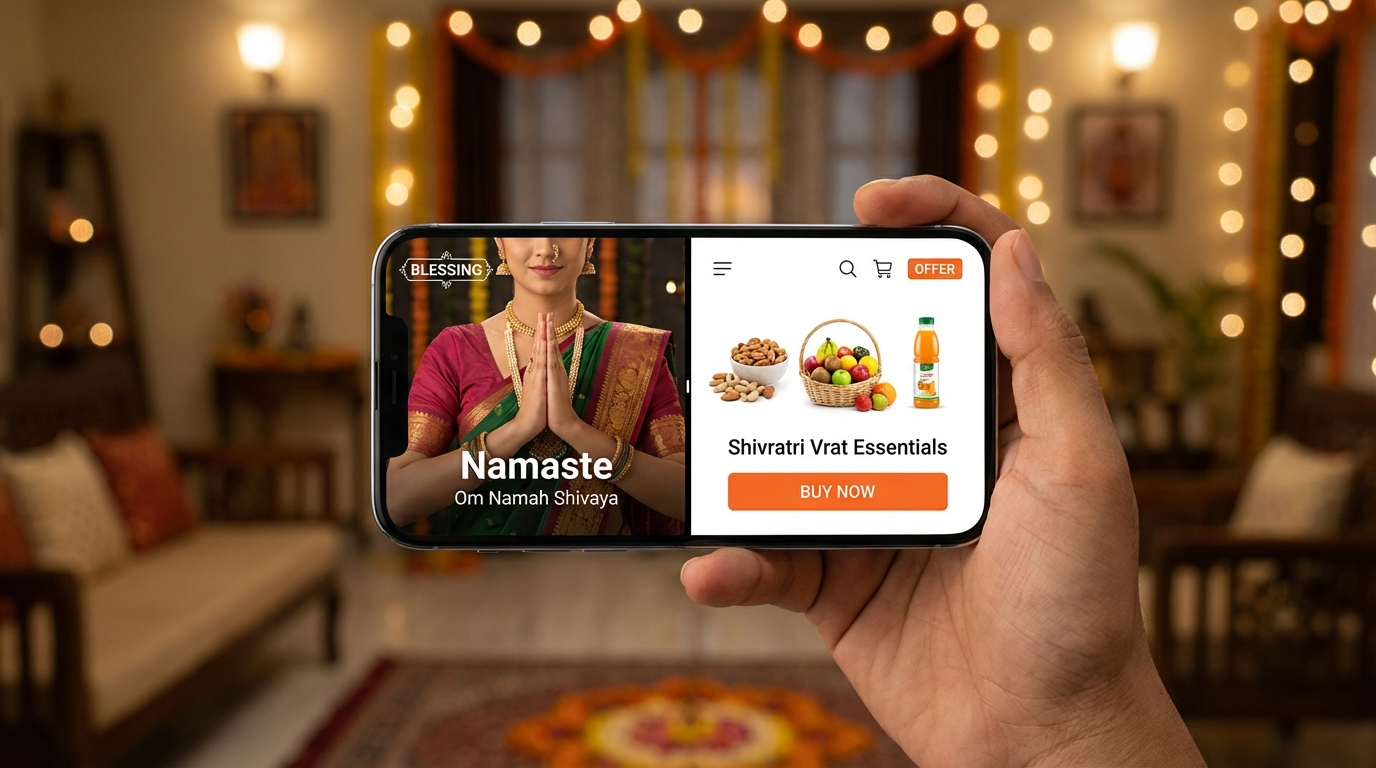
- Awareness (T-6 to T-3 Weeks): Focus on vernacular explainer videos regarding the significance of Maha Shivratri. Use these assets to capture opt-ins via WhatsApp. A trigger in the CRM, such as a “festival interest” tag, can initiate the journey.
- Consideration (T-14 to T-5 Days): Deliver personalized blessing videos combined with soft offers. This is the time for travel itinerary previews, fasting kit education, and app challenge teasers. Use browse and cart activity as triggers for these high-relevance messages.
- Conversion & Devotion (Festival Eve & Day): Deploy time-boxed offers and darshan assistance. For travel brands, geofencing near temple cities can trigger helpful “last-mile” navigation or aarti timing alerts. This stage requires a high degree of operational readiness to handle real-time requests.
- Loyalty & Retention (T+1 to T+14 Days): The journey doesn't end when the vigil is over. Send “Thank You” blessing videos and encourage users to share their own experiences (UGC). This is also the ideal time to seed interest in upcoming festivals like Holi.
Channel Orchestration
WhatsApp Business API serves as the primary channel for these journeys due to its high open rates and support for rich media. However, a multi-channel approach is necessary for maximum reach. SMS and email can serve as reliable fallbacks, directing users to personalized microsites where their videos are hosted. On-site video widgets can also greet returning users with a personalized “Welcome back, [Name]. Ready for your Shivratri preparations?” message, creating a seamless omni-channel experience.
Solutions like TrueFan AI demonstrate ROI through increased view-through rates and significantly higher conversion metrics compared to static imagery. By tracking each personalization variable—such as which language or which influencer drove the most engagement—enterprises can continuously optimize their journeys in real-time, ensuring that every rupee of the marketing budget is working toward a measurable outcome.
Source: TrueFan AI Retention Strategies
Source: Samaaro Event Marketing Trends
Governance, Cultural Sensitivity, and the 2026 Execution Timeline
Operating in the spiritual domain requires a heightened level of governance and cultural sensitivity. A single misstep in tone or timing can lead to significant brand damage. Therefore, every Maha Shivratri marketing campaign must be governed by a strict set of ethical and cultural guardrails.
Cultural Sensitivity Checklist
- Respect “Quiet Hours”: During the night of the vigil (Jagran), avoid sending commercial or intrusive messages. Focus only on devotional content if a user has explicitly opted in for live updates.
- Tone and Language: Ensure that all scripts are reviewed by cultural experts to avoid trivializing sacred rituals. Use regionally appropriate phrasing and honorifics.
- Temple Partnerships: If using temple names or logos, ensure all necessary approvals from temple trusts are in place. Transparency regarding “independent” vs. “official” services is crucial for building trust.
- Data Privacy: Adhere to ISO 27001 and SOC 2 standards. Collect only the minimum data required for personalization and ensure clear opt-out mechanisms are present in every communication.
The 2026 Execution Timeline
To launch a successful campaign by February 15, 2026, enterprises should follow this structured timeline:
- December 7–21, 2025 (T-10 to T-8 Weeks): Define personas, finalize data schemas, and shortlist influencers or celebrities for the master shoot.
- December 22, 2025 – January 12, 2026 (T-7 to T-5 Weeks): Conduct the master shoot. Build video templates and integrate WhatsApp flows. Pilot the campaign in two cities and three languages for QA.
- January 13–27, 2026 (T-4 to T-2 Weeks): Scale the creative to 12+ languages. Finalize media buys and seed referral mechanics.
- February 5–10, 2026 (T-10 to T-5 Days): Ramp up personalized awareness videos. Lock in logistics for prasad delivery and travel operations.
- February 15–16, 2026 (The Festival): Execute peak flight operations. Use AI virtual reshoots for any last-minute changes to offers or schedules.
- February 17 – March 1, 2026 (Post-Festival): Deploy gratitude journeys and capture NPS/UGC for future campaign planning.
Source: Isha Foundation Date Confirmation
Source: MonkeyAds Social Media Calendar
Source: TrueFan AI Festival Playbook
Conclusion and Frequently Asked Questions
Maha Shivratri marketing campaigns 2026 offer a unique opportunity for enterprise brands to demonstrate deep cultural alignment through spiritual commerce personalization in India. By moving beyond generic outreach and embracing the precision of devotional video marketing automation, companies can build lasting relationships with the modern Indian devotee. The key to success lies in the balance of technology and tradition—using AI to scale the human touch of a personalized blessing.
As the spiritual landscape continues to evolve, the brands that win will be those that treat the devotee's journey with the respect it deserves, providing value that transcends the transactional. Through vernacular devotional content marketing and a commitment to cultural sensitivity, enterprises can ensure that their 2026 campaigns are not just seen, but felt.
Source: TrueFan AI Enterprise Solutions
Source: Olyv Maha Shivratri 2026 Calendar
Source: Samaaro Regional Marketing
Frequently Asked Questions
Frequently Asked Questions
What is the primary date for Maha Shivratri marketing campaigns 2026?
The primary date for national campaigns is Sunday, February 15, 2026. However, some regions like Tamil Nadu may observe it on February 16, 2026. Plan for a 48-hour peak window to cover regional variations.
How does spiritual commerce personalization India improve ROI?
Personalization increases relevance, which boosts engagement and conversions. By tailoring offers to a user's language, fasting type, and temple affinity, brands reduce ad fatigue, build trust, and improve ROAS.
Can TrueFan AI handle the scale of a national festival campaign?
Yes. TrueFan AI is built for enterprise-scale automation, rendering thousands of personalized videos in under 30 seconds with support for 175+ languages and perfect lip/voice sync—ideal for large festival orchestration.
What are the best channels for delivering devotional video marketing automation?
WhatsApp Business API is most effective in India due to penetration and media support. Use an omni-channel mix with SMS, email, and social video (Reels/Shorts) to broaden reach across demographics.
How can brands ensure cultural sensitivity during Maha Shivratri?
Adopt a devotion-first tone, avoid commercial messaging during sacred vigil hours, and validate scripts with cultural experts. Partnering with trusted spiritual influencers or temple trusts further strengthens credibility.