Pharma B2B Doctor Engagement 2026: Union Budget Healthcare Opportunities for Personalized HCP Education in India
Estimated reading time: ~12 minutes
Key Takeaways
- Union Budget 2025–26 accelerates digital health infrastructure, enabling scalable, education-first HCP engagement.
- Compliance-first personalization aligned to UCPMP/UCMPMD 2024 builds trust and long-term doctor relationships.
- A video-led content stack (MoA, policy updates, microlearning) matches HCP preferences and clinical workflows.
- Automation powers conference follow-ups, device onboarding, and clinical trial recruitment at scale.
- Platforms like TrueFan AI operationalize hyper-personalized, multilingual video with analytics and CRM integration.
The landscape of pharma B2B doctor engagement 2026 is defined by a rigorous shift toward compliance-first, video-led, and omnichannel orchestration. As Indian pharmaceutical and medical device companies navigate the complexities of the Union Budget 2025–26, the focus has pivoted toward leveraging digital infrastructure to deliver high-value, personalized educational content that strengthens healthcare professional (HCP) relationships and improves long-term retention.
With the government’s projected 15% increase in digital health infrastructure spending for the 2026 fiscal cycle, the industry is moving away from traditional sales-led models. Instead, leaders are adopting healthcare professional video marketing India strategies that prioritize scientific exchange and clinical utility over conventional promotional tactics.
This strategic evolution is not merely a response to regulatory pressure but a proactive alignment with the Union Budget healthcare opportunities that emphasize capacity building and digital health integration. By utilizing advanced automation and hyper-personalization, pharma brands can now deliver tailored medical education that meets the specific needs of diverse HCP segments across the subcontinent.
What India’s Union Budget 2025–26 means for HCP engagement
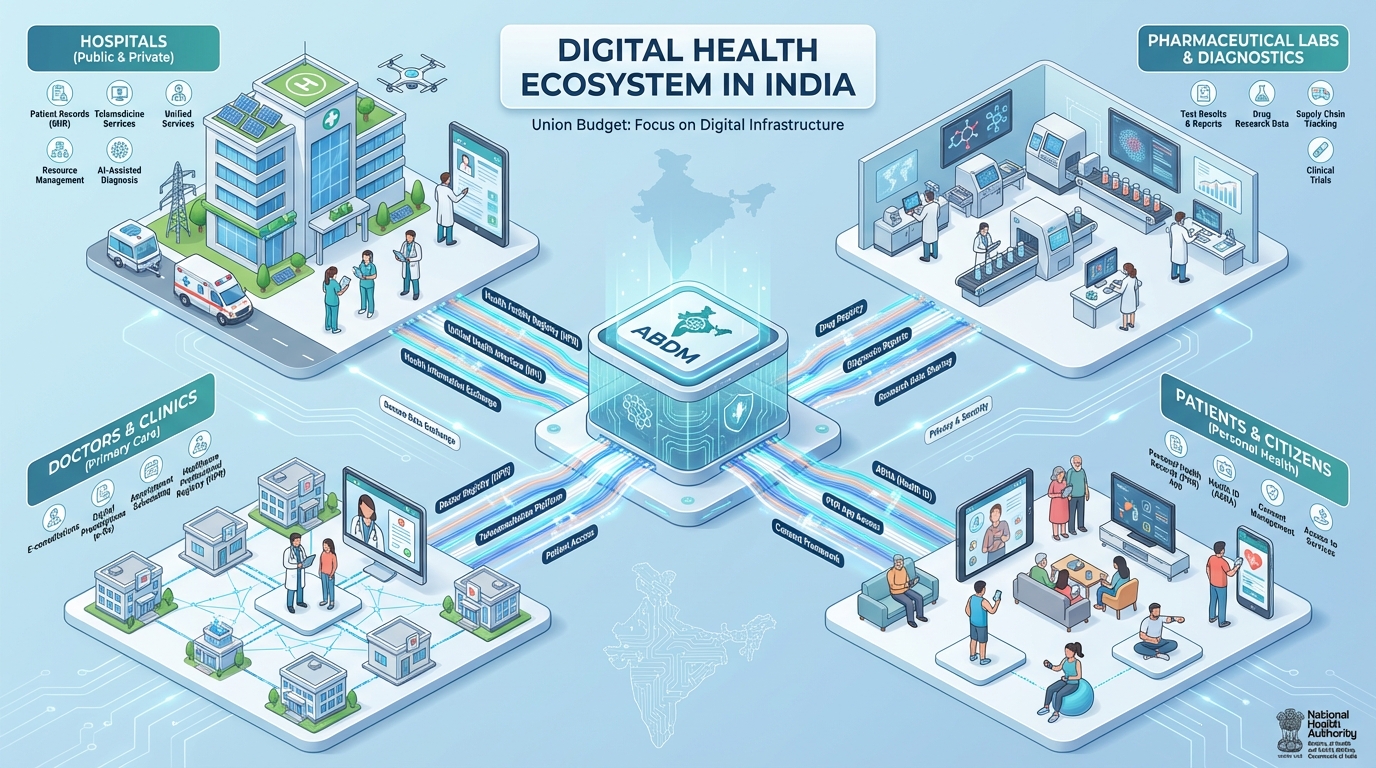
The Union Budget healthcare opportunities for the 2025–26 period represent a watershed moment for the industry, characterized by a substantial allocation toward the Ayushman Bharat Digital Mission (ABDM) and the strengthening of digital health ecosystems. According to analysis from PRS India, the total health allocation has seen a consistent upward trajectory, with a specific focus on enhancing the “Demand for Grants” for Health and Family Welfare to address regional disparities in medical access.
These budgetary priorities translate directly into funding buckets for pharma B2B doctor engagement 2026, specifically in the realms of content operations, compliance tooling, and medical representative enablement. Industry experts at ORF highlight that the emphasis on digital health infrastructure and capacity building creates a fertile ground for scalable HCP education programs that can be integrated into the national health stack.
Furthermore, the KPMG POV on the Union Budget 2025–26 underscores the government's commitment to specialized care, such as the establishment of cancer day-care centers and the expansion of the medical device manufacturing ecosystem. For commercial excellence leaders, this means that engagement strategies must now align with these national priorities, focusing on therapeutic areas that receive the highest policy attention and funding.
The shift toward a digital-first engagement model is further accelerated by the 2026 projection that 78% of Indian HCPs will prefer video-based medical education over traditional text-based materials. This necessitates a robust investment in healthcare professional video marketing India, ensuring that scientific data is not only accessible but also delivered in a format that respects the time constraints of modern practitioners.
Sources:
- PRS India: Demand for Grants 2025–26 – Health and Family Welfare
- ORF: Union Budget 2025 – A pulse check on healthcare
- KPMG in India: Healthcare POV on Union Budget 2025–26
Personalization that strengthens doctor relationships (and stays compliant)
In the current regulatory climate, doctor relationship personalization must be executed with a “compliance-first” mindset, strictly adhering to the Uniform Code for Pharmaceutical Marketing Practices (UCPMP) 2024. The Department of Pharmaceuticals (DoP) has established clear guardrails that prohibit any form of financial or non-monetary inducement, shifting the focus entirely toward ethical scientific exchange and educational value.
Effective personalization in 2026 involves tailoring educational touchpoints by specialty, practice setting, and regional language, ensuring that every interaction provides tangible clinical utility. For instance, a cardiologist in Chennai and a general practitioner in Lucknow require vastly different content cadences and technical depths, yet both must receive information that is fair-balanced and evidence-based.
To maintain pharma compliance marketing India standards, companies are moving toward building education-led doctor loyalty programs. These programs replace traditional incentives with value-based offerings such as Continuing Medical Education (CME) credits, access to peer-reviewed case libraries, and skills micro-credentials that enhance the HCP’s professional standing.
The UCMPMD 2024 guidelines for medical devices further emphasize the need for documented training and educational interactions, particularly for complex surgical equipment or diagnostic tools. By focusing on healthcare professional retention strategies that prioritize the HCP's learning journey, brands can foster deep-seated trust that transcends the transactional nature of the past.
The measurement of these relationships has also evolved; success is no longer just about prescription volume but about longitudinal engagement metrics. High-performing teams are tracking repeat views per HCP, module completion rates, and Net Promoter Scores (NPS) to gauge the effectiveness of their personalization efforts and ensure they are meeting the evolving needs of the medical community.
Sources:
- Department of Pharmaceuticals: UCPMP 2024 official page
- DoP: Uniform Code for Marketing Practices in Medical Devices (UCMPMD 2024)
- KPMG India: Navigating the new regulatory terrain
The video-first HCP content stack for India
The implementation of healthcare professional video marketing India requires a sophisticated content stack that can produce, approve, and distribute evidence-based videos across multiple digital channels. In 2026, the “gold standard” for HCP engagement involves a mix of pharmaceutical education videos, rapid-response policy updates, and microlearning modules that fit into the busy workflow of a doctor.
Pharmaceutical education videos are the cornerstone of this stack, focusing on Mechanism of Action (MoA) animations, clinical trial summaries, and dosing guidelines. These videos must be meticulously scripted to include on-screen data citations and fair-balanced safety information, ensuring they pass rigorous Medical-Legal-Regulatory (MLR) reviews while remaining engaging for the viewer.
Healthcare policy update videos have emerged as a critical tool for maintaining relevance in a fast-moving regulatory environment. With central and state-level policies changing frequently, the ability to deliver a 60-second explainer on reimbursement changes or new clinical guidelines within 48 hours of an announcement is a significant competitive advantage. See the Union Budget 2026 marketing strategies guide for more.
Furthermore, medical rep enablement videos are transforming the traditional “detail aid” into a dynamic, interactive experience. Reps can now share personalized pre-call primers that address a doctor's specific clinical interests or post-call recaps that summarize the key takeaways from a meeting, all delivered via compliant WhatsApp Business API or CRM-embedded links.
The distribution strategy for this content must be equally robust, utilizing HCP-gated portals and Single Sign-On (SSO) via medical council IDs to ensure that promotional or highly technical content is only accessible to qualified professionals. This multi-layered approach ensures that the right message reaches the right doctor at the right time, maximizing the impact of every digital touchpoint.
Automation and Scale: From Conferences to Clinical Trials
Achieving scale in pharma B2B doctor engagement 2026 is impossible without HCP engagement automation. By integrating rule-based triggers into CRM and Marketing Automation platforms, pharma companies can ensure that educational content is delivered automatically based on specific HCP actions, such as attending a webinar or requesting information on a new therapy.
One of the most impactful applications of this technology is medical conference follow-up automation. Traditionally, the lag time between a conference interaction and a follow-up could be weeks; in 2026, automated workflows capture booth scans and deliver personalized recap videos—featuring session highlights and speaker insights—within 24 to 48 hours, resulting in a projected 22% increase in engagement.
This automation extends to medical device launch campaigns, where surgeon training and technique videos can be automatically deployed to hospital procurement teams and clinical staff. By automating the delivery of Instructions for Use (IFU) and setup guides, device manufacturers can ensure that their products are used safely and effectively from day one, while maintaining a full audit trail for compliance.
Clinical trial recruitment videos are also benefiting from automation, with HCP-facing referral explainers and patient-facing consent videos being deployed to site investigators in real-time. This reduces the administrative burden on clinical trial sites and helps accelerate the “time-to-first-patient-in,” a critical metric for any R&D-driven organization.
Finally, the concept of prescription influence marketing in India has been redefined through automation. It is now a process of gated, evidence-driven dissemination of guideline updates and patient selection checklists. By providing HCPs with the data they need to make informed prescribing decisions, pharma brands can influence clinical practice ethically and transparently, fully aligned with UCPMP 2024 standards.
How TrueFan Enterprise operationalizes this strategy
Operationalizing a high-scale, compliant video strategy requires technology that can handle the nuances of the Indian healthcare market. Platforms like TrueFan AI enable pharma companies to bridge the gap between static content and hyper-personalized engagement by automating the production of thousands of unique video assets that address HCPs by name, specialty, and language.
TrueFan AI's 175+ language support and Personalised Celebrity Videos (used ethically with KOLs or medical spokespeople) allow brands to reach doctors in their preferred regional language with perfect lip-sync and voice consistency. This is particularly vital in India, where regional language localization can increase content retention by up to 30% in non-metro clinical settings.
The platform’s “virtual reshoot” capability is a game-changer for healthcare policy update videos. When a label change or a new government circular is issued, companies can update specific lines of dialogue in existing videos without the need for a full production crew, accelerating the delivery of critical information from weeks to hours.
Solutions like TrueFan AI demonstrate ROI through detailed analytics dashboards that track view rates, completion percentages, and per-personalization element performance. This data allows commercial excellence teams to optimize their “cost per educated HCP” and refine their content strategy based on real-world interaction patterns, ensuring that every rupee of the marketing budget is working toward building stronger doctor relationships.
By integrating directly with existing CRM systems like Veeva or Salesforce, the platform ensures that every personalized video sent is logged for compliance purposes. This creates a seamless workflow where MLR-approved templates are populated with dynamic data, providing a scalable solution for pharmaceutical education videos and medical rep enablement videos alike.
90-Day Rollout Plan and FAQ
Days 0–15: Compliance Alignment and Segmentation
The first phase focuses on aligning the strategy with UCPMP 2024 and UCMPMD 2024 guidelines. Teams must define their HCP segments based on specialty, region, and language, while finalizing the KPI framework that will measure engagement, retention, and clinical influence.
Days 16–30: Content Production and Automation Setup
During this period, the core pharmaceutical education videos and healthcare policy update videos are produced using scalable templates. The HCP engagement automation triggers are configured within the CRM, and the HCP-gated portals are established to ensure secure content delivery.
Days 31–60: Pilot Launch and Field Enablement
The pilot is launched for a specific therapy area or medical device launch campaign. Field teams are equipped with medical rep enablement videos, and medical conference follow-up automation is activated for upcoming industry congresses to capture and nurture leads in real-time.
Days 61–90: Scale and Optimization
In the final phase, clinical trial recruitment videos are added to the mix, and education-led doctor loyalty programs are officially launched. The team uses weekly analytics to optimize the prescription influence marketing tactics, ensuring that the content remains relevant and impactful for the target HCP audience.
Recommended Internal Links
- Healthcare professional video marketing in India
- Pharma HCP video engagement 2026
- Pharma doctor engagement automation 2026
- Union Budget 2026 sector opportunities
- Union Budget 2026 marketing strategies guide
- Medical device launch campaigns
Frequently Asked Questions
How does pharma B2B doctor engagement 2026 differ from previous years?
The 2026 landscape is defined by “education-over-promotion.” With stricter UCPMP 2024 enforcement, the focus has shifted to providing high-value clinical data through automated, personalized video channels rather than traditional sales tactics or incentives.
Is it compliant to use personalized videos for HCP engagement in India?
Yes, provided the content is purely educational and scientific. Personalization—such as addressing a doctor by name or specialty—is a delivery mechanism, not an inducement. All content must still undergo standard MLR approval and be delivered through gated, HCP-only channels.
How can TrueFan AI help in maintaining compliance for pharma marketing?
TrueFan AI's 175+ language support and Personalised Celebrity Videos (with KOL consent) ensure that all content is template-based and MLR-approved. The platform maintains strict audit logs of every video generated and distributed, providing a transparent record for regulatory reviews.
What are the key KPIs for measuring the success of a video-led HCP strategy?
Key metrics include the content completion rate, repeat views per HCP, time-to-publish for policy updates, and the “cost per educated HCP.” Commercial proxies like formulary pull-through and qualified clinical trial referrals are also critical indicators of success.
Can these video strategies be used for medical device launches?
Absolutely. Medical device launch campaigns benefit significantly from video-based surgeon training, technique demonstrations, and IFU explainers. These assets ensure that complex devices are used correctly, which is a core requirement of the UCMPMD 2024 guidelines.
How do we handle the multilingual requirements of the Indian market?
By using AI-driven localization tools, brands can produce content in 10+ Indian languages simultaneously. This ensures that doctors in every region receive information in the language they are most comfortable with, significantly improving the effectiveness of healthcare professional retention strategies.
What is the role of the Union Budget in shaping these engagement strategies?
The Union Budget healthcare opportunities, particularly the focus on digital health and capacity building, provide the infrastructure and policy tailwinds necessary for pharma companies to invest in scalable, digital-first engagement models that align with national health priorities.