
Good Friday Easter Marketing 2026: Enterprise Strategies for Faith-Based Engagement in India
Key Takeaways
- Balance Good Friday solemnity with Easter celebration through tone-gated messaging and respectful creative.
- Use first-party data and AI personalization to deliver localized, faith-aware experiences across India’s Christian communities.
- Ensure DPDP Act compliance with explicit consent, clear purpose statements, and friction-free opt-outs.
- Leverage faith commerce automation to orchestrate Palm Sunday–Easter touchpoints and honor worship “quiet hours.”
- Drive ROI with ethical gamification, church partnerships, and community-first CSR without compromising values.
Good Friday Easter marketing 2026 requires a sophisticated, dual-toned approach that respects the solemnity of April 3 and the celebration of April 5. For Indian enterprises, this period represents a critical window to connect with a diverse Christian community across hubs like Kerala, Goa, and the Northeast. By prioritizing religious sensitivity and data-driven personalization, brands can foster deep faith-based customer engagement that transcends traditional transactional marketing.
According to the DateTimeOnline India holiday calendar, Good Friday falls on April 3, 2026, followed by Easter Sunday on April 5. This 48-hour transition from reflection to renewal demands a marketing strategy that is both agile and culturally nuanced. Enterprise leaders must navigate the complexities of the Digital Personal Data Protection (DPDP) Act while delivering high-impact, personalized experiences.
This guide provides a comprehensive framework for Marketing Directors to orchestrate Holy Week brand campaigns that drive measurable ROI. We will explore the intersection of faith commerce automation, ethical AI integration, and regional community targeting. By the conclusion of this playbook, you will have the tools to execute a 2026 campaign that balances reverence with commercial growth.
The 2026 Landscape for Holy Week Brand Campaigns in India
The landscape for Holy Week brand campaigns in India has evolved into a multi-channel experience driven by urban concentration and digital maturity. In 2026, the Christian community—comprising over 30 million individuals—is increasingly looking for brands that acknowledge their cultural identity without trivializing their faith. This demographic shows high engagement in sectors like confectionery, travel, apparel, and home decor during the spring season.
Market data from the RefreshIdeas 2026 eCommerce calendar suggests that seasonal spending during the Easter window is projected to grow by 18% year-on-year. This growth is fueled by the “Homecoming” trend, where urban professionals travel back to ancestral towns in Kerala and Tamil Nadu. Consequently, OOH advertising near major parishes and geo-fenced mobile notifications are becoming essential components of the enterprise mix.
Successful campaigns in 2026 will move beyond generic “Happy Easter” banners. Instead, they will utilize a sequence of touchpoints starting from Palm Sunday (March 29, 2026). This sequence must account for the specific liturgical atmosphere of each day, ensuring that the brand voice remains a welcome guest in the consumer’s digital life.
Platforms like TrueFan AI enable enterprises to bridge the gap between mass communication and individual reverence by delivering hyper-personalized video content that resonates with the specific spiritual context of the user. By integrating these technologies, brands can automate the delivery of messages that feel hand-crafted rather than mass-produced.
Source: DateTimeOnline India Holiday Calendar
Source: RefreshIdeas India eCommerce Calendar
Source: Aabhishek Social Media Festival Calendar
Religious Sensitivity Marketing Strategies That Build Trust
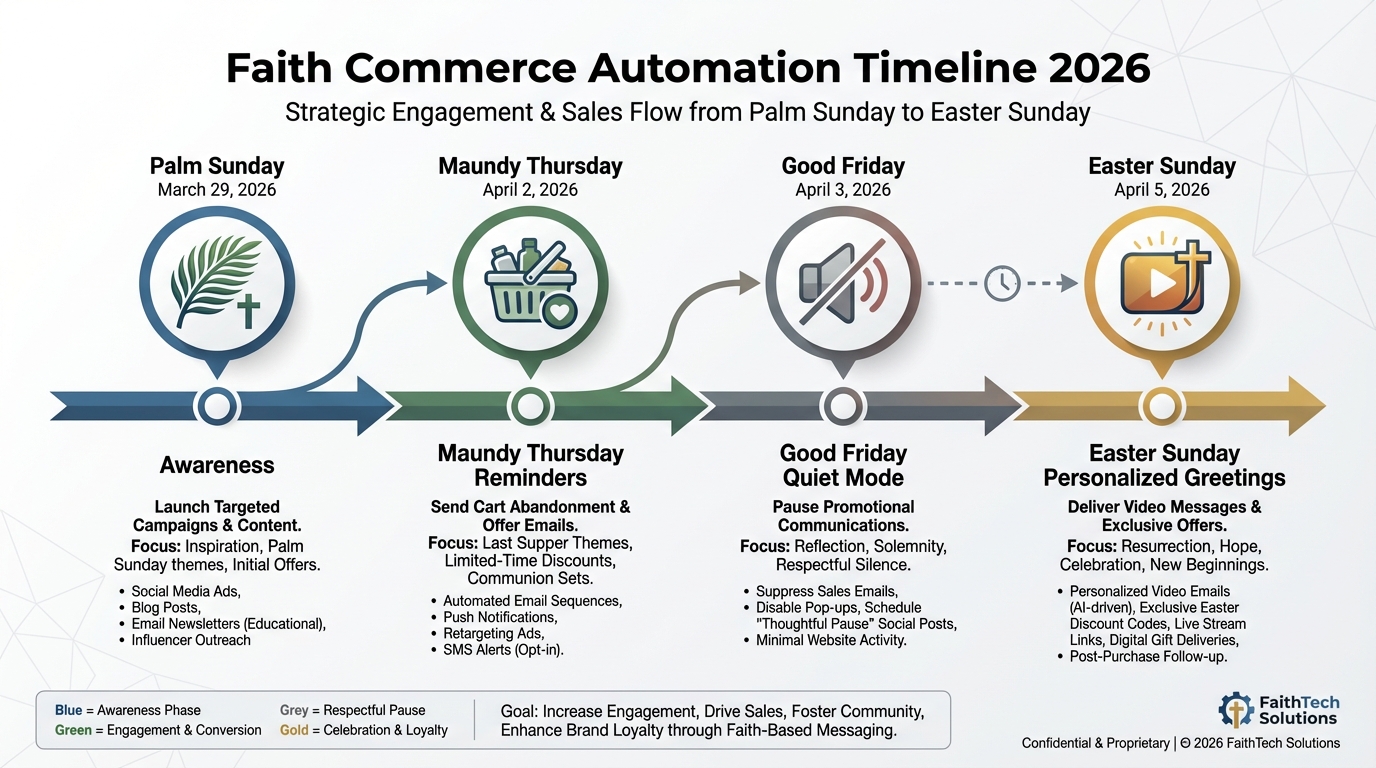
Implementing religious sensitivity marketing strategies is no longer optional; it is a prerequisite for brand safety in a hyper-connected India. The primary challenge for 2026 is maintaining a strict “tone-gate” between Good Friday and Easter Sunday. Good Friday is a day of fasting and penance; celebratory or high-decibel sales messaging can be perceived as tone-deaf or offensive.
To maintain trust, enterprises should adopt a “Service-First” model on April 3. This involves pivoting from product-led CTAs to community-led initiatives, such as CSR updates or informational content regarding local church service timings. Imagery must avoid bright, festive colors on this day, opting instead for muted tones and minimalist design that reflects a somber mood.
Compliance with the India DPDP Act is equally vital. Marketing Directors must ensure that any faith-based targeting is built on “free, specific, informed, and unambiguous” consent. This means clearly stating why a user is receiving a faith-themed message and providing an immediate, friction-free opt-out mechanism.
Furthermore, the ASCI Code for ethical advertising mandates that advertisements must not contain anything which is likely to hurt religious sentiments. In 2026, this extends to AI-generated content. Brands must implement rigorous moderation filters to ensure that symbols like the Cross or images of churches are used with absolute respect and within appropriate contexts.
Authenticity in cultural campaigns is no longer optional; Indian consumers in 2026 reward genuine, value-aligned narratives over superficial tie-ins. By implementing a sensitivity-first framework, brands avoid the “commercialization trap” that often alienates faith-based communities. This involves rigorous language checks across Malayalam, Konkani, Tamil, and English to ensure that the tone remains reverent during the Triduum (the three days leading to Easter). (Maha Shivratri marketing campaigns 2026)
Source: India Digital Personal Data Protection Act 2023/2026
Source: ASCI Code of Ethics
Source: Latham & Watkins: DPDP vs GDPR
Personalization-Led Journeys for Easter Shopping Personalization India
Easter shopping personalization India (Rapid fulfillment personalization strategies) is moving toward a “Segment of One” approach. By 2026, the use of first-party data to predict seasonal needs—such as traditional attire for Sunday Mass or ingredients for an Easter brunch—will be the benchmark for enterprise success. AI-driven recommendation engines now allow for the dynamic assembly of “Easter Baskets” based on past purchase behavior and regional preferences.
For instance, a user in Mangalore might receive a personalized recommendation for local delicacies, while a user in Shillong might see a curated collection of spring fashion. TrueFan AI's 175+ language support and Personalised Celebrity Videos allow brands to reach diverse Christian communities in Kerala, Goa, and the Northeast in their native dialects, ensuring the message feels local and authentic. This level of localization is crucial for building emotional resonance.
The journey begins with “Faith Commerce Automation,” where triggers are set based on the liturgical calendar. If a customer has previously purchased devotional items, the system can trigger a personalized “Thank You” video on Easter morning. These videos can feature brand ambassadors or even the company’s CEO addressing the customer by name, creating a sense of direct, personal connection.
Beyond the video, the checkout experience must be optimized for the holiday weekend. Offering “Gratitude Discounts” or “Family Bundle Pricing” specifically for the Easter period can increase Average Order Value (AOV). By 2026, enterprises will also use “Virtual Reshoots” to iterate on these offers in real-time, testing which discount structures perform best across different demographic cohorts without the need for expensive new production cycles.
Source: DHL Discover India E-commerce Events 2026
Source: RTB House 2026 Cultural Events Calendar
Creative Playbook for Good Friday Marketing Campaigns 2026
The creative playbook for Good Friday marketing campaigns 2026 must be rooted in the concept of “Quiet Presence.” For many Christians in India, Good Friday is the most solemn day of the year. Brands that recognize this through silence or low-impact communication often see a significant boost in long-term brand affinity and trust.
One effective strategy is “Devotional Product Marketing.” If your brand sells candles, books, or specialty foods, the messaging should focus on utility and preparation rather than “deals.” For example, a campaign could highlight the craftsmanship of hand-poured candles used for evening vigils. The copy should be reflective, using phrases like “In quiet reflection” or “Honoring the tradition.”
Religious gifting personalization videos can also play a role here, provided they are executed with extreme care. A personalized video that acknowledges the day’s significance and offers a message of peace—without a hard sell—can be a powerful tool for CRM. These videos should be delivered through private channels like WhatsApp or Email rather than public-facing social media blasts to maintain a sense of intimacy.
In 2026, we also see the rise of “CSR-Linked Activations.” Brands can pledge a portion of their Holy Week proceeds to local community projects or church-run NGOs. Communicating this on Good Friday as a “Day of Giving” aligns the brand with the values of sacrifice and charity inherent to the holiday. This approach fulfills the need for communication while remaining strictly non-commercial in spirit.
Source: Picasso Multimedia India Festival Calendar 2026
Source: Mailjet 2026 Marketing Strategy Guide
Easter Sunday Sale Campaigns That Convert Without Compromising Values
When the clock strikes midnight on Easter Sunday, the tone shifts dramatically to joy and celebration. Easter Sunday sale campaigns in 2026 (Easter Sunday sale campaigns) will leverage gamification to engage families. Digital “Easter Egg Hunts” integrated into mobile apps or WhatsApp flows are highly effective. Users can find hidden “eggs” (discount codes or exclusive content) across the brand's digital ecosystem, encouraging exploration and increasing time-on-app.
To ensure these campaigns don't feel purely transactional, the rewards should be framed as “Easter Gifts” or “Celebration Perks.” For example, a successful hunt could unlock a personalized congratulatory video from a celebrity, addressing the user by name and wishing their family a Happy Easter. This blends the excitement of a sale with the warmth of a personal greeting.
Solutions like TrueFan AI demonstrate ROI through significantly higher engagement rates compared to static assets, often seeing a 3x increase in click-through rates for personalized holiday greetings. By automating these interactions, enterprises can scale the “human touch” to millions of customers simultaneously. This is particularly effective for high-frequency categories like grocery and food delivery, where the Easter Sunday brunch is a major consumption event.
Another emerging trend for 2026 is “Referral-Based Gratitude.” Instead of a standard “Refer a Friend” program, brands can encourage users to “Send an Easter Blessing” to a loved one. When the recipient opens the blessing (which could be a personalized video), they receive a small discount, and the sender is rewarded with loyalty points. This turns the marketing campaign into a tool for community connection.
Source: RTB House Essential Marketing Calendar 2026
Source: Aabhishek Social Media Content Cadence
Church Partnership Brand Activation and Community-First Collaborations
A “Church Partnership Brand Activation” is perhaps the most sensitive yet rewarding strategy for 2026. This involves collaborating with local parishes or dioceses to support community events like Easter breakfasts, choir competitions, or charity drives. The key here is “Permissioned Participation”—the brand acts as a facilitator or sponsor rather than the main attraction.
Ethical collaborations might include co-branded digital greetings that are approved by parish councils and sent to congregation members who have opted in. This ensures that the brand’s message is delivered within a trusted environment. In 2026, geo-targeting technology allows brands to support specific local churches in areas like Bandra (Mumbai) or Panjim (Goa), making the national brand feel like a local neighbor.
For the travel sector, “Easter Travel Package Offers” can be tailored to those attending major pilgrimages or family reunions. By 2026, travel brands will use personalized itinerary videos that show the user’s name alongside images of their destination. These videos can also include helpful information like local church service times or weather updates, adding genuine value to the customer’s journey.
Finally, “Christian Festival Video Marketing” should focus on the theme of “Renewal.” Whether it’s a home makeover brand or a financial services firm, the creative should center on starting fresh and building for the future. This thematic alignment ensures that the marketing feels like a natural extension of the holiday’s spiritual meaning rather than an interruption.
Source: DHL India E-commerce Advice
Source: India DPDP Act Compliance Guidelines
Orchestrating Faith Commerce Automation Across Channels
Faith commerce automation is the engine that drives a successful 2026 campaign. It requires a seamless integration between your Customer Data Platform (CDP), CRM, and AI video generation tools. The goal is to deliver the right message, in the right language, at the right moment of the Holy Week calendar, all while adhering to strict frequency caps.
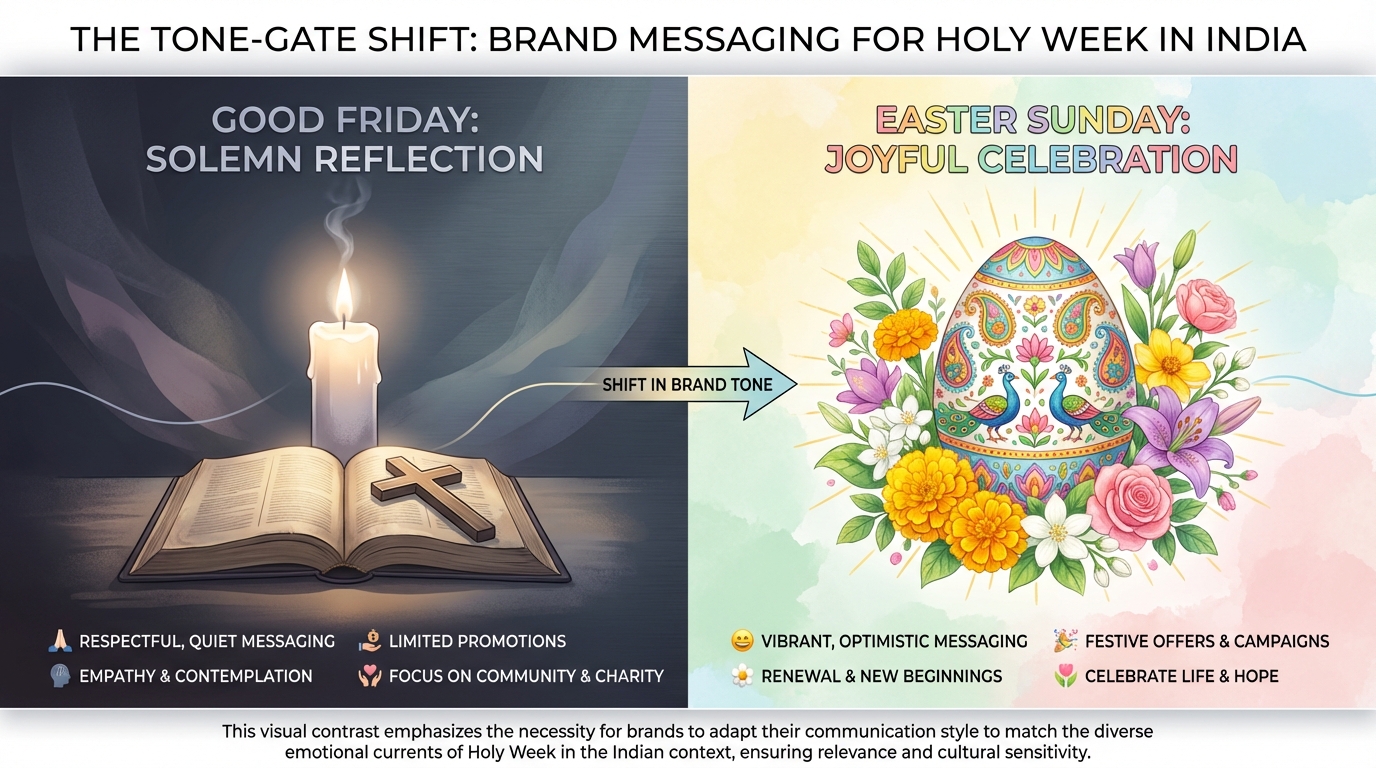
In 2026, automated workflows will look like this:
- Palm Sunday: A “Save the Date” notification for an upcoming Easter Egg Hunt.
- Maundy Thursday: A final reminder for Easter brunch delivery slots.
- Good Friday: A “Quiet Mode” trigger that pauses all promotional SMS and push notifications, replacing them with a single, respectful email or WhatsApp message focused on community service.
- Easter Sunday: A 7:00 AM celebratory personalized video greeting with an exclusive “Family Day” offer. (10-minute delivery festival personalization)
This orchestration ensures that the brand respects the “Quiet Hours” of the faith calendar. For example, automation rules should prevent any retargeting ads from appearing during traditional church service times (e.g., Friday afternoon or Sunday morning). This level of detail demonstrates a profound respect for the consumer’s lifestyle and values.
Measurement is the final piece of the puzzle. Enterprise dashboards in 2026 will track not just CTR and CVR, but also “Sentiment Delta.” By analyzing social media mentions and opt-out rates during Holy Week, brands can adjust their creative in real-time. If a particular creative is causing friction, “Virtual Reshoots” allow for the instant modification of video scripts to better align with audience expectations.
Source: Mailjet Marketing Calendar 2026
Source: ASCI Guidelines for Religious Content
Checklist: Religious Sensitivity Marketing Strategies (Operational)
To ensure your Good Friday Easter marketing 2026 campaign is both effective and respectful, use this operational checklist:
- Tone Check: Does the Good Friday creative use a somber, reflective voice? Is the Easter Sunday creative appropriately celebratory?
- Imagery Audit: Have you removed all “festive” elements (balloons, bright yellows, “Sale” banners) from Good Friday assets?
- Consent Verification: Are all targeted users opted-in under the 2026 DPDP Act standards? Is the “Unsubscribe” link clearly visible?
- Language Localization: Are your videos and copy available in regional languages (Malayalam, Konkani, Tamil) for relevant hubs? (Ugadi marketing campaigns 2026)
- Frequency Capping: Have you set “Quiet Hours” in your CRM to avoid messaging during worship times?
- Moderation Pass: Has all AI-generated content been reviewed for religious accuracy and respect?
- Crisis Protocol: Do you have a “Kill Switch” and alternative creative ready if a campaign is perceived negatively?
Frequently Asked Questions
What are the exact dates for Good Friday and Easter in 2026 in India?
Good Friday is on April 3, 2026, and Easter Sunday is on April 5, 2026. These are national and regional holidays respectively in many Indian states.
Source: DateTimeOnline India Easter Day
Can we run a sale on Good Friday?
It is highly recommended to avoid “Sale” or “Discount” focused messaging on Good Friday. Instead, focus on CSR initiatives, service information, or “Quiet Reflection” content. Save the promotional CTAs for Easter Sunday.
What consent is required for personalized videos?
Under the DPDP Act, you must obtain explicit, informed consent. Users must know their data (like their name or location) is being used to generate a personalized video, and they must have an easy way to opt-out.
Source: MeitY DPDP Act Official PDF
How can we scale personalized video for millions of users?
By utilizing API-driven platforms like TrueFan AI, brands can automate the generation of millions of unique videos in real-time. This allows for hyper-personalization (name, city, language) without manual production for each user.
What imagery is appropriate for Christian community targeting in India?
Use inclusive, respectful imagery. For Good Friday, focus on symbols of peace or community service. For Easter, use themes of renewal, spring, and family gatherings. Avoid caricatures or the trivialization of sacred symbols.
Source: ASCI Code of Conduct
How do we measure the ROI of faith-based customer engagement?
Track traditional metrics like CVR and AOV, but also monitor “Brand Trust” metrics such as NPS deltas and sentiment analysis. High-quality engagement during religious festivals often leads to higher long-term LTV.



