
Voice commerce vernacular India 2026: A CTO playbook for multilingual, conversational shopping at scale
Estimated reading time: ~12 minutes
Key Takeaways
- Vernacular voice commerce will dominate India’s 2026 digital retail landscape, demanding native-language journeys across Tier-2/3 markets.
- CTOs need a modular, low-latency stack spanning ASR, NLU, and TTS optimized for Indian dialects and code-mixed speech.
- Video-augmented voice journeys close conversions: short, dialect-specific explainers triggered by voice queries reduce returns and lift trust.
- Measure ROI end-to-end (discovery to retention) and align with India’s DPDP Act via consent, minimization, and ethical AI.
- Execute a 90-day rollout: Hindi/Hinglish foundation, Tamil + smart speakers, then Bengali scale with full attribution.
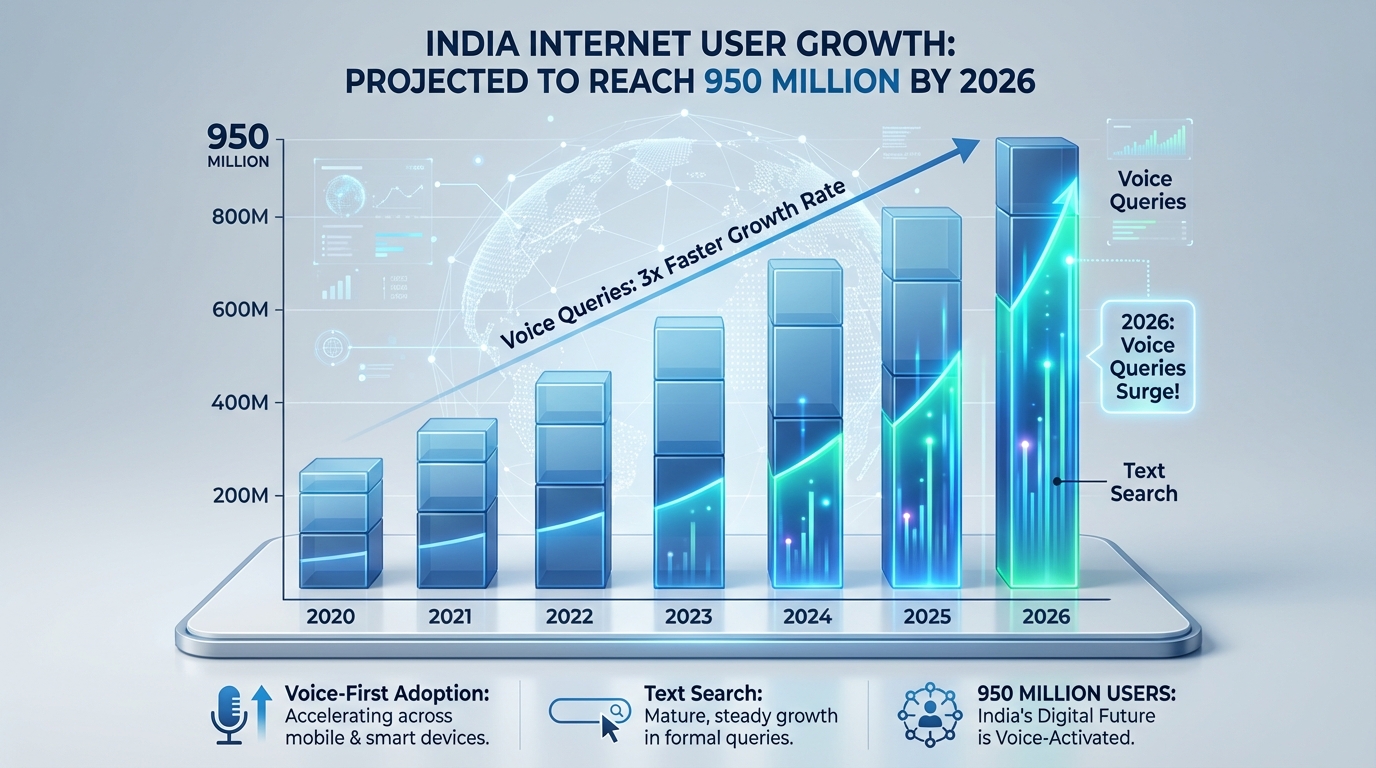
The landscape of Indian retail is undergoing a seismic shift as we enter 2026, driven by a surge in voice commerce vernacular India 2026 adoption across Tier-2 and Tier-3 cities. With over 950 million active internet users and a projected voice commerce market value of USD 7.47 billion by 2030, the mandate for CTOs is clear: transition from text-heavy interfaces to intuitive, multilingual voice journeys. This playbook provides the technical and strategic framework required to deploy natural language commerce that resonates with India’s diverse linguistic fabric.
1. India 2026: The Vernacular Voice Commerce Revolution
By 2026, the "next billion users" are no longer a future projection; they are the primary engine of India's digital economy. According to the IAMAI-Kantar Internet in India 2024 report, rural India has already surpassed urban centers in internet growth, with a significant portion of these users preferring voice as their primary mode of interaction. This shift has birthed a new era of voice commerce India 2026, where the ability to transact in one's mother tongue is a prerequisite for brand trust and market penetration.
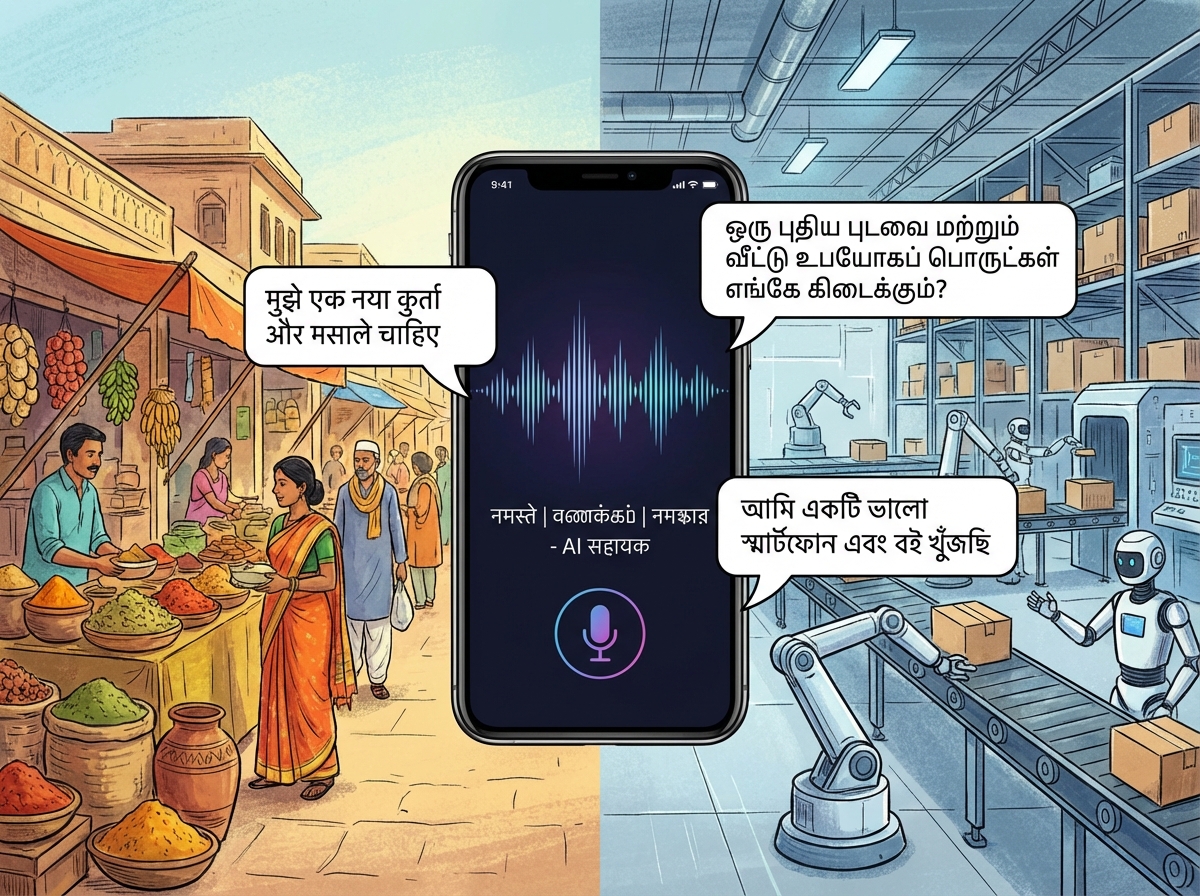
Vernacular voice shopping is defined as a comprehensive journey where discovery, product Q&A, and checkout assistance occur through a user’s native language—be it Hindi, Tamil, Bengali, or code-mixed variants like Hinglish. For Digital Innovation Teams, this means moving beyond simple translation to deep linguistic understanding. Natural language commerce allows users to use everyday speech, such as "Mujhe 40 size ke white sneakers dikhaiye" (Show me white sneakers in size 40), which the system must map to specific product attributes and inventory in real-time.
The opportunity is immense. Grand View Research projects the Indian voice commerce market to grow at a staggering CAGR, reaching nearly USD 7.5 billion by the end of the decade. This growth is fueled by tier-2 voice adoption, where users find voice interfaces more accessible than navigating complex app menus. Furthermore, the normalization of voice at the point of sale—pioneered by merchant-side devices like the PhonePe SmartSpeaker—has conditioned users to expect auditory confirmations and assistance in their local dialect.
Key 2026 Market Indicators:
- Internet User Base: Projected to exceed 950 million by late 2025/early 2026.
- Voice Query Growth: 3x faster growth in vernacular voice queries compared to English text searches.
- Market Valuation: Voice commerce is set to contribute significantly to the USD 186 billion global market by 2030.
- Rural Participation: Over 50% of new e-commerce shoppers originate from rural and semi-urban areas.
Sources:
- Grand View Research: India Voice Commerce Outlook
- IAMAI-Kantar: Internet in India 2024 Report
- TrueFan AI: Hindi Voice Shopping Optimization
2. Decoding Regional Behavior: Designing for Dialects and Intent
To succeed in multilingual voice marketing, CTOs must architect systems that account for the nuances of regional shopping behavior. India is not a monolith; the way a user in Kanpur searches for a refrigerator differs fundamentally from a user in Coimbatore or Kolkata.
Hindi and Hinglish: The Power of Code-Switching
In the Hindi heartland, code-switching (mixing Hindi and English) is the norm. A user might ask, "Aaj ka sabse sasta AC offer kya hai?" (What is today's cheapest AC offer?). Your NLU (Natural Language Understanding) models must be trained on these hybrid datasets. Hindi voice search optimization involves creating intent clusters that recognize "sasta" (cheap), "offer," and "discount" as synonymous within a shopping context.
Tamil: Precision and Stepwise Guidance
Tamil users often exhibit a preference for structured, stepwise guidance. Tamil conversational commerce should emphasize clear confirmations at every stage of the funnel—from size selection to payment method. Robust ASR (Automatic Speech Recognition) is critical here to handle specific phonetic nuances and retroflex consonants that generic models often miss.
Bengali: Contextual and Seasonal Resonance
For the Bengali market, Bengali voice-activated offers should be synchronized with regional festivals like Durga Puja or Poila Boishakh. Using local idioms and culturally relevant nudges can significantly increase resonance. For instance, a voice prompt mentioning "Pujor Shaj" (Puja dressing) during October can drive much higher engagement than a generic "festive sale" message.
Video-Augmented Voice Journeys
The most effective strategy in 2026 involves dialect-specific shopping videos. When a user asks a question via voice, the response shouldn't just be audio; it should be a short, 15-second video snippet in their dialect explaining the product features. These voice-triggered video offers bridge the gap between digital browsing and the physical "touch and feel" experience, reducing post-purchase anxiety and return rates.
Sources:
- TrueFan AI: Voice Commerce Personalization in India
- PhonePe SmartSpeaker: Multi-language Merchant Confirmations
3. The CTO’s Tech Stack: Architecting for Multilingual Scale
Building a robust infrastructure for voice commerce India 2026 requires a modular, event-driven architecture. The stack must handle high-concurrency voice streams while maintaining low latency for a "conversational" feel.
Core AI Components
- ASR (Automatic Speech Recognition): You need models trained specifically on Indian accents and dialects. Generic global models often fail with "Indianisms" or noisy environments (like a busy street in Tier-2 India).
- NLU (Natural Language Understanding): This is the brain of the operation. It must extract intents and entities (product, price, location) across multiple languages using a shared ontology to ensure consistency.
- TTS (Text-to-Speech): Move away from robotic voices. 2026 demands high-fidelity, Indian-accented voices that sound empathetic and brand-consistent.
Smart Speaker Integration
Smart speaker integration is no longer limited to home devices like Alexa or Google Home. In India, the merchant-side smart speaker (like the upgraded PhonePe SmartSpeaker) has become a critical endpoint. These devices normalize voice interactions at the point of sale, and integrating your brand’s voice into these ecosystems can provide a seamless omnichannel experience.
Orchestration and Data Plane
An event-driven architecture allows you to trigger voice responses based on catalog changes or user behavior. For example, if a price drops on a "wishlisted" item, a WhatsApp voice note can be automatically generated and sent to the user in their preferred language. Conversational AI personalization ensures that these triggers are relevant, using data points like past language preference, location-based seasonality, and price sensitivity.
Technical Checklist for 2026:
- Latency: Target sub-200ms for ASR-to-NLU processing to maintain conversational flow.
- Noise Robustness: Ensure models can handle background noise typical of Indian urban and semi-urban environments.
- Code-Mix Handling: Explicitly train for Hinglish, Tanglish, and other hybrid linguistic patterns.
- Security: Implement PII (Personally Identifiable Information) segregation and secure consent management for voice data.
Sources:
- Varindia: PhonePe Upgraded Made-in-India SmartSpeaker
- IBS Intelligence: Celebrity Voice Feature in SmartSpeakers
4. The Content Supply Chain: Video-Augmented Voice Journeys
In 2026, voice is the trigger, but video is the closer. The content supply chain must evolve to produce dialect-specific shopping videos at scale. Traditional video production is too slow and expensive for the millions of permutations required for personalized commerce.
Platforms like TrueFan AI enable enterprises to transform a single celebrity or brand ambassador shoot into millions of hyper-personalized videos. Hindi AI Video Marketing By integrating these videos into the voice commerce journey, brands can provide a "face" to the voice assistant. When a user asks for a product recommendation, they receive a video of a trusted celebrity addressing them by name and explaining the product in their local dialect.
Automating the Pipeline
To achieve this, CTOs should implement CSV-to-video or API-to-video pipelines. These systems take structured data (user name, product, price, language) and instantly render a localized video. This is particularly effective for voice-triggered video offers, where the offer is generated in real-time based on the user's voice intent.
Content Strategy for Conversion:
- Explainer Videos: 15-30 second "Explain Like I'm Five" videos for technical specs, localized in 175+ languages.
- Dynamic CTAs: Videos should include tappable overlays or links that lead directly to a voice-assisted checkout.
- Phonetic Accuracy: Ensure that the AI-generated speech (TTS) correctly pronounces brand names and local terms to maintain credibility.
By leveraging generative AI, brands can save thousands of man-hours. For instance, moving from traditional editing to AI-driven virtual reshoots can reduce production time by over 90%, allowing for "offer freshness" that matches the speed of real-time commerce.
Sources:
5. Measuring ROI and Navigating the DPDP Compliance Landscape
Implementing voice commerce vernacular India 2026 requires a rigorous focus on both performance metrics and legal guardrails. As the Digital Personal Data Protection (DPDP) Act, 2023, comes into full effect, compliance is not optional—it is a foundational element of user trust.
Voice Assistant Marketing ROI
Solutions like TrueFan AI demonstrate ROI through significant uplifts in engagement and conversion. To measure success, CTOs should track:
- Discovery Metrics: Voice query share, ASR confidence scores, and snippet win rates for voice SEO regional languages.
- Engagement Metrics: Video watch-through rates for personalized content and catalog dwell time.
- Conversion Metrics: Voice-assisted checkout rates and AOV (Average Order Value) deltas between voice and text users.
- Retention Metrics: Repeat purchase rates via voice and opt-in rates for voice-based order updates.
Case studies show that personalized celebrity videos can lead to a 17% higher read rate on WhatsApp and a 3.2x higher participation rate in brand activations compared to standard text-based communication.
DPDP and Ethical Guardrails
The DPDP Act mandates explicit consent for processing personal data, including voice prints. CTOs must ensure:
- Consent Orchestration: Clear, voice-based consent prompts before recording or processing user speech.
- Data Minimization: Retaining only the data necessary for the transaction and providing users with the right to delete their voice history.
- Ethical AI: When using AI-generated content, such as TrueFan AI's 175+ language support and Personalised Celebrity Videos, brands must disclose that the content is AI-generated and ensure all celebrity likenesses are used with proper authorization.
Compliance Checklist:
- ISO 27001/SOC 2 certification for all AI partners.
- Watermarking of AI-generated video content.
- Robust moderation filters to prevent the generation of restricted or harmful content.
Sources:
- PRS India: Digital Personal Data Protection Act, 2023 Overview
- TrueFan AI: Enterprise Video ROI Metrics Guide
6. Execution Blueprint: A 90-Day Rollout for Enterprise Scale
A successful transition to vernacular voice shopping requires a phased approach, starting with the highest-impact languages and expanding based on data-driven insights.
Days 0–30: Foundation in Hindi
Focus on the largest market segment. Stand up Hindi and Hinglish voice intents for the top 20 customer journeys (search, price check, order status). Implement Hindi voice search optimization by publishing localized FAQs with schema.org markup. Launch a pilot for voice-triggered video offers on WhatsApp for your top-selling SKUs to establish a baseline for engagement.
Days 31–60: Expansion to Tamil and Smart Speakers
Introduce Tamil conversational commerce flows, ensuring the NLU is tuned for regional morphology. Begin integrating with smart speaker ecosystems for regional optimization, both for home assistants and merchant-side devices. This phase should also focus on A/B testing different voice tones—formal vs. colloquial—to see which resonates better with your specific audience segments.
Days 61–90: Bengali Scale and ROI Optimization
Launch Bengali voice-activated offers timed with regional seasonal events. By this stage, your voice assistant marketing ROI dashboard should be fully operational, allowing you to allocate budget toward the highest-performing linguistic segments.
TrueFan AI’s enterprise capabilities, including their low-latency rendering (sub-30 seconds) and API-first architecture, allow for rapid scaling during this 90-day window. Whether it is generating 354,000 unique videos for a single-day campaign or managing a steady stream of personalized travel nudges, the infrastructure must be built for elasticity.
Implementation Summary:
- Phase 1: Hindi/Hinglish foundation + Voice SEO.
- Phase 2: Tamil expansion + Smart speaker pilot.
- Phase 3: Bengali launch + Full ROI attribution.
7. Strategic SEO and Future-Proofing Your Voice Strategy
To capture the "zero-click" searches of 2026, your content must be optimized for voice SEO regional languages. This involves more than just keywords; it requires a structural rethink of how information is presented to search engines and voice assistants.
Voice-First Content Optimization
- Conversational Snippets: Structure your FAQs to provide concise, 40-50 word answers that can be easily read aloud by an assistant.
- Schema Markup: Use FAQPage and Speakable schema to help search engines identify content suitable for voice responses.
- Phonetic Keywords: Include transliterated versions of keywords (e.g., "saste joote" alongside "सस्ते जूते") to capture the diverse ways users type and speak.
Conclusion and Next Steps
The future of commerce in India is vocal, vernacular, and visual. By 2026, the brands that win will be those that speak the language of their customers—literally and figuratively. For CTOs, the challenge is to build a tech stack that is as diverse as the Indian population itself.
Ready to lead the revolution?
- Schedule an enterprise assessment to scope your vernacular voice strategy.
- Pilot voice-triggered video offers with TrueFan AI to see immediate engagement lifts.
- Download the 2026 Voice Assistant Marketing ROI template to start tracking your success.
Sources:
Frequently Asked Questions
How do I optimize Hindi voice search for my e-commerce site?
Focus on long-tail, natural language queries and "Hinglish" intent clusters. Ensure your site uses schema.org FAQPage markup and provides concise, conversational answers that voice assistants can easily parse. Learn more about Hindi voice search optimization.
What is the fastest way to pilot Tamil conversational commerce?
The most efficient path is to integrate a mobile voice SDK with pre-trained Tamil NLU models. Start with high-frequency queries like order tracking and product availability before expanding to full-funnel shopping. See the regional optimization guide.
How can I run Bengali voice-activated offers during festivals?
Leverage seasonal triggers and regional idioms. Use TrueFan AI to generate personalized Bengali video offers that can be delivered via WhatsApp voice notes, creating a high-touch, culturally relevant experience. Explore festival-focused voice SEO.
How do I measure the ROI of voice assistant marketing?
Track the full funnel: from voice query share and ASR confidence at the top, to voice-assisted checkout rates and repeat purchase deltas at the bottom. Use attribution models that account for voice as a critical touchpoint in the multi-channel journey. Get the optimization framework.
Is voice data collection compliant with India's DPDP Act?
Yes, provided you obtain explicit, informed consent from the user, practice data minimization, and provide clear mechanisms for users to access or delete their voice data.



