Sustainable shopping rewards automation 2026: Enterprise playbook for eco-loyalty, green delivery, and impact videos
Key Takeaways
- API-led eco-loyalty automation rewards eco-positive actions in real time across delivery and packaging choices.
- Carbon footprint personalization and impact visualization videos increase repeat green selections and reinforce behavior.
- Personalized incentive/recommendation videos and A/B testing drive conversion and culturally relevant localization.
- Green delivery and sustainable packaging campaigns cut emissions and build trusted, transparent CX.
- Gamification plus enterprise-grade CSR communication automation aligns ESG outcomes with secure governance.
A step-by-step guide for sustainability and marketing leaders to deploy eco-loyalty program automation, carbon footprint calculator personalization, green delivery option promotions, and sustainability score gamification—powered by personalized video at enterprise scale.
The landscape of retail is undergoing a seismic shift as we approach the mid-point of the decade. Sustainable shopping rewards automation 2026 has transitioned from a niche CSR initiative to a core pillar of enterprise customer experience (CX) and growth strategy. In an era where 78% of global consumers prioritize sustainability in their purchasing decisions, the ability to automate and personalize the "green journey" is no longer optional for market leaders.
Enterprises are now leveraging API-led systems to recognize eco-positive actions—such as choosing slower, low-carbon delivery or selecting plastic-free packaging—and issuing real-time, personalized rewards. By integrating eco-loyalty program automation with high-impact visual storytelling, brands are moving beyond static "green" labels to dynamic, data-driven engagement that drives measurable behavioral change.
1. Reference architecture for eco-loyalty program automation
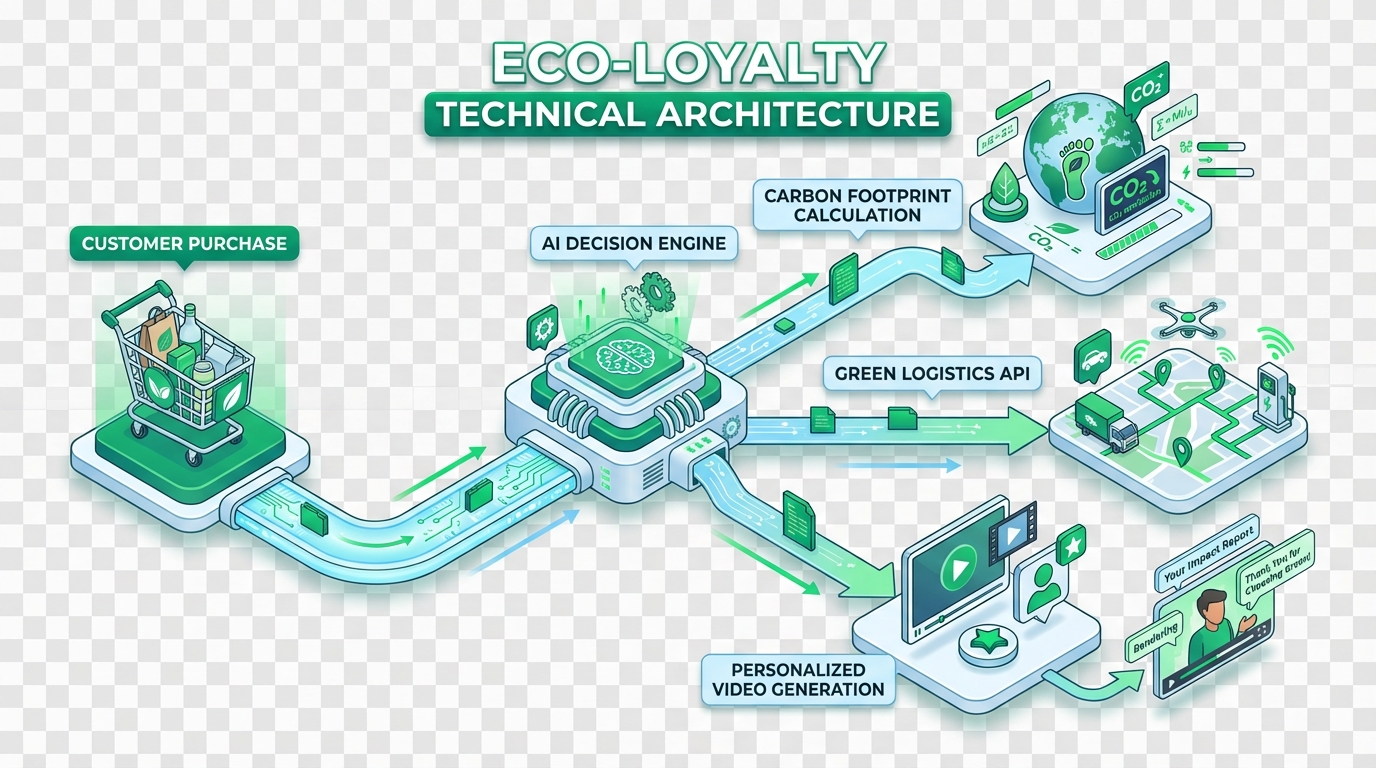
The foundation of a successful 2026 sustainability strategy lies in a robust, interconnected technical architecture. Eco-loyalty program automation requires a seamless flow of data between the product catalog, logistics providers, and the customer engagement layer. This architecture must handle high-velocity event processing to ensure that every green action is met with an immediate, personalized response.
At the data layer, enterprises must integrate product sustainability attributes, such as recycled content percentages and EPR (Extended Responsibility) compliance data. This is paired with real-time logistics emissions data, calculating gCO2e/km based on the delivery mode—whether it be electric vehicle (EV), bicycle, or traditional ground transport. These data points feed into a centralized decisioning engine that determines the "next best sustainable action" for each individual user profile.
The content layer is where the transformation occurs. Platforms like TrueFan AI enable enterprises to convert these complex data points into environmental impact visualization videos. By using API triggers, the system can generate a video in under 30 seconds that shows a customer exactly how much plastic they avoided or how much carbon they saved. This level of conscious consumer engagement videos ensures that the impact is not just a number on a screen, but a personalized narrative that builds long-term brand affinity. TrueFan AI’s 175+ language support and Personalised Celebrity Videos make these stories locally resonant at scale.
From a compliance perspective, the architecture must adhere to SOC 2 and ISO 27001 standards, especially when handling sensitive consumer data under India’s DPDP (Digital Personal Data Protection) Act. Automated environmental CSR communication automation ensures that these efforts are transparently reported to stakeholders while maintaining the highest levels of data security and consent-based processing.
Source: Capillary: Why brands need to add green loyalty to their strategy
Source: TrueFan AI: Talking Avatar Software Guide
Source: TrueFan AI: Enterprise Video Security Standards
2. Carbon footprint calculator personalization and impact visualization
To drive meaningful change, enterprises must bridge the "literacy gap" in sustainability. Carbon footprint calculator personalization is the process of taking abstract emission factors and translating them into relatable, personalized metrics for the consumer. In 2026, this is achieved by integrating Life Cycle Assessment (LCA) databases directly into the checkout and post-purchase flow.
The calculation methodology typically follows the GHG Protocol standards for Scope 3 emissions. For a standard e-commerce transaction, the system calculates the delivery emissions (Distance x Emission Factor), product emissions (Cradle-to-gate CO2e), and packaging emissions. When a customer opts for a "green" choice, the delta between the baseline and the eco-option is highlighted. For instance, choosing a 3-day consolidated delivery over next-day air might save 0.85 kg of CO2e—a fact that is immediately visualized for the user.
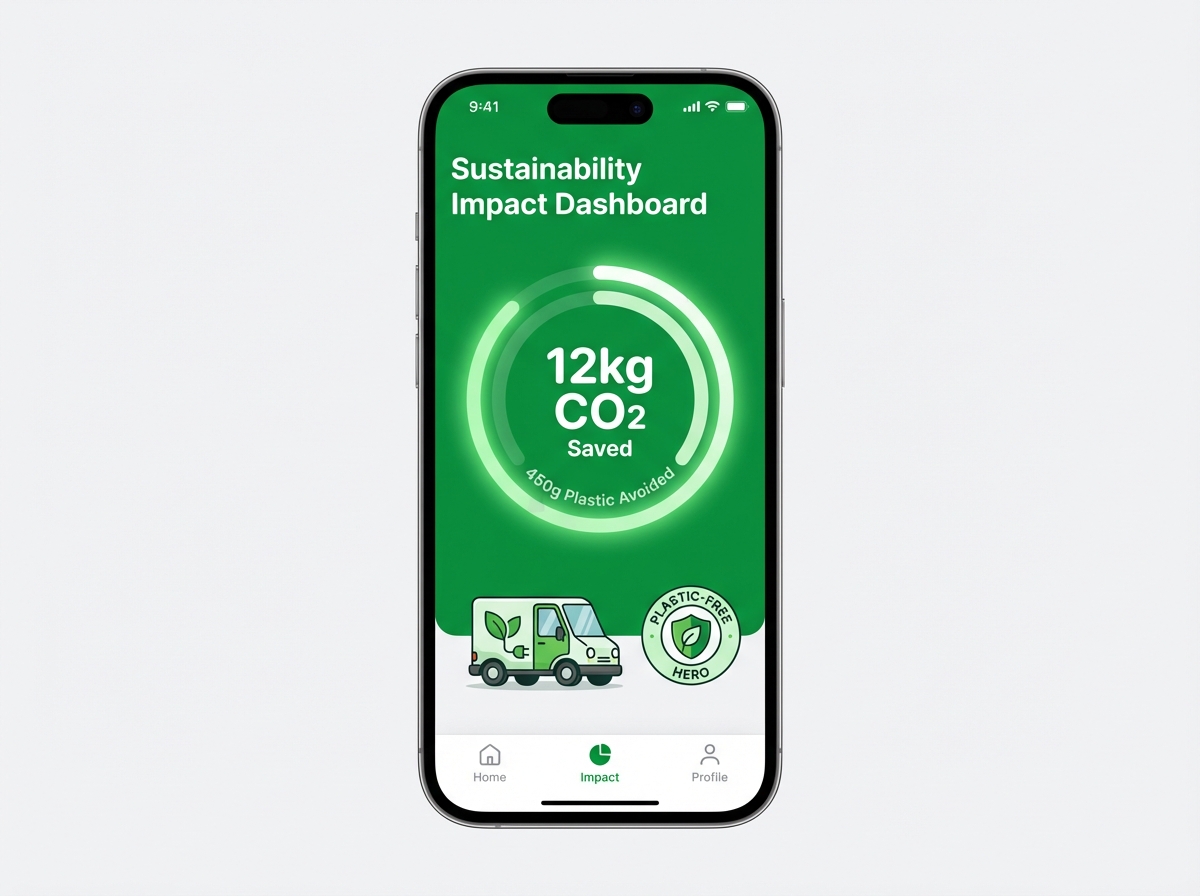
Personalization in video takes this a step further. Instead of a generic "thank you," a conscious consumer engagement video can overlay exact figures: "Hi Anika, your choice of plastic-free packaging today saved 45 grams of ocean-bound plastic." This creates a feedback loop that reinforces the positive behavior. In the Indian context, "click-and-go" climate contributions are becoming standard, with providers like Climes allowing users to balance their order's emissions with a single click.
By 2026, the integration of these calculators into environmental impact visualization videos has shown to increase repeat "green" selections by over 40%. The ability to show cumulative savings—such as "You've saved 15kg of CO2 this year, equivalent to planting 2 trees"—gamifies the experience and elevates the brand from a mere vendor to a partner in the customer's sustainability journey.
Source: Climes: Climate action click-and-go reality
Source: Climes Blog Hub: Carbon-neutral checkout insights
3. Eco-friendly purchase incentive videos and green product recommendation videos
Driving the adoption of sustainable products requires more than just availability; it requires targeted, persuasive communication. Eco-friendly purchase incentive videos are personalized short-form assets that present tailor-made rewards—such as bonus loyalty points, exclusive discounts, or matched climate contributions—when a customer chooses a certified sustainable product.
These videos are often paired with green product recommendation videos, which use machine learning to suggest alternatives based on a shopper's past behavior and sustainability preferences. For example, if a customer is browsing for home appliances, the system might trigger a video highlighting a BEE 5-star rated refrigerator, detailing the long-term energy savings and reduced carbon footprint compared to a standard model. This is particularly effective in renewable energy product marketing, where ROI math (e.g., solar lantern payback periods) can be complex to explain in text.
Enterprises are also utilizing A/B testing within these video templates to optimize conversion. Testing a celebrity-led message versus a brand ambassador, or framing the value as "money saved" versus "carbon saved," allows for data-driven refinement of the sustainability narrative. TrueFan AI's 175+ language support and Personalised Celebrity Videos allow brands to localize these incentives across diverse regions, ensuring the message resonates culturally and linguistically. localize these incentives
The momentum for sustainability-linked programs in India is growing rapidly. Industry leaders are seeing that green loyalty is not just about "doing good" but about creating a high-frequency engagement hook. By rewarding the choice of a sustainable product, brands can shift inventory toward higher-margin, eco-certified lines while simultaneously meeting their corporate ESG targets.
Source: Almonds AI: Green loyalty program overview
Source: Capillary: Sustainability-linked rewards
4. Green delivery option promotions and sustainable packaging choice campaigns
Logistics and packaging represent the most visible touchpoints for environmental impact in the e-commerce lifecycle. Green delivery option promotions involve automated nudges at the checkout stage that encourage users to select low-carbon shipping methods. By defaulting to a "Green Shipping" option—which might include EV last-mile delivery or consolidated "Eco-Days"—brands can significantly reduce their Scope 3 footprint.
To make these options attractive, enterprises use environmental impact visualization videos post-purchase to reinforce the decision. A video might show a map of the delivery route with a "Green" badge, explaining that the slower delivery window allowed for a 30% reduction in transport emissions. This transparency builds trust and encourages the user to make the same choice in the future.
Similarly, sustainable packaging choice campaigns and plastic-free shopping campaigns are becoming critical. Amazon India has already set a precedent by documenting its progress toward plastic-free packaging across its fulfillment centers. Enterprises can automate this by offering "Eco-Packaging" as a selectable option, rewarded with "Eco-Points" or badges.
A personalized video in this context might compare the options: "By choosing our compostable mailer, you've avoided 20g of single-use plastic. You are now just 2 orders away from your 'Plastic-Free Hero' badge." This level of granular recognition is what separates 2026-era loyalty programs from the generic points systems of the past. Solutions like TrueFan AI demonstrate ROI through increased opt-in rates for these green options, directly lowering the brand's environmental overhead—especially in quick commerce ecosystems where speed and stock volatility demand automation. quick commerce
Source: Amazon India: Moving towards plastic-free packaging
Source: TrueFan AI: Video Personalization ROI Metrics
5. Sustainability score gamification and circular economy participation videos
The ultimate goal of sustainable shopping rewards automation 2026 is to foster a community of conscious consumers. This is achieved through sustainability score gamification, where every green action—from choosing an EV delivery to returning a used product for recycling—is aggregated into a single, dynamic score. This score determines the user's tier, such as "Eco Starter," "Eco Pro," or "Eco Champion." (See loyalty orchestration examples)
Each tier unlocks specific tangible benefits. "Eco Champions" might receive priority access to new sustainable product launches, free green delivery on all orders, or the ability to vote on which local environmental projects the brand should fund. To drive social proof, enterprises enable one-click sharing of these achievements via personalized video shout-outs, where a digital avatar or celebrity congratulates the user on their progress.
This gamification extends into the circular economy. Circular economy participation videos are triggered by specific lifecycle events, such as a product reaching its expected end-of-life or a warranty expiration. These videos prompt users to engage in refills, repairs, or resale. For example, a customer who purchased a high-end jacket two years ago might receive a video offering a "Refresh and Repair" service, including a localized map of the nearest drop-off point and the "Eco-Points" they will earn for participating.
By 2026, the circular economy is expected to contribute significantly to retail revenue. Automating the "return-for-reuse" journey through personalized video ensures that the process is easy, rewarding, and transparent. It transforms the "end" of a transaction into the "beginning" of a new, sustainable cycle, significantly increasing customer lifetime value (CLV).
Source: Almonds AI: Gamified green loyalty
Source: TrueFan AI: Eco-loyalty program automation
6. Environmental CSR communication automation and enterprise governance
As sustainability becomes a core business metric, the need for transparent and frequent communication grows. Environmental CSR communication automation allows enterprises to send quarterly or lifecycle-based personalized video recaps to their customers. These videos summarize the individual's cumulative impact—CO2e avoided, plastic saved—alongside the brand's broader progress toward its 2026 goals.
These communications are not just marketing assets; they are essential for maintaining trust and preventing "greenwashing" claims. Every claim made in a video must be backed by verifiable data and clear disclosures regarding calculation methodologies. For instance, if a brand claims to be "carbon neutral," the video should provide a link to the specific projects funded and and the standards followed (e.g., PAS 2060).
From an enterprise standpoint, managing this at scale requires rigorous governance. The platform must support content moderation, version control, and audit trails for every video generated. Under the India DPDP Act, data minimization and purpose-bound processing are mandatory. Enterprises must ensure that the data used for personalization—such as location or purchase history—is handled with explicit consent and stored securely.
TrueFan AI's enterprise-grade stack, featuring SOC 2 and ISO 27001 compliance, provides the necessary guardrails for these high-stakes communications. By automating the CSR narrative, brands can ensure that every stakeholder—from the individual customer to the corporate board—is aligned on the impact being created. This holistic approach to sustainable shopping rewards automation 2026 ensures that sustainability is woven into the very fabric of the brand's identity. (Related governance planning)
Source: TrueFan AI: Enterprise Video Security Standards
Frequently Asked Questions
How accurate is the carbon footprint calculator personalization in these videos?
The accuracy depends on the data sources used. Most enterprise systems in 2026 utilize standardized LCA (Life Cycle Assessment) databases and the GHG Protocol. While some figures are estimates based on averages (e.g., average emissions for a delivery van), the goal is to provide a consistent and transparent "order of magnitude" that motivates better choices.
Does eco-loyalty program automation comply with India's DPDP Act?
Yes, provided the platform used follows "privacy by design" principles. This includes capturing explicit consent for data usage, providing clear purpose limitation, and ensuring regional data residency where required. TrueFan AI, for instance, incorporates these enterprise-grade security standards to ensure compliance across global and local regulations.
What is the typical ROI for green delivery option promotions?
ROI is measured through two lenses: cost savings and customer retention. By shifting customers to slower, consolidated green delivery, brands can reduce logistics costs by up to 15%. Additionally, customers engaged in eco-loyalty programs typically show a 20-25% higher retention rate compared to standard loyalty members.
Can these conscious consumer engagement videos be localized for different Indian states?
Absolutely. Using advanced AI video platforms, brands can generate content in 175+ languages, including major Indian regional languages like Hindi, Tamil, Telugu, and Kannada. This includes perfect lip-sync and voice retention for brand ambassadors, making the "green" message accessible to a diverse audience. Learn more
How long does it take to implement sustainable shopping rewards automation 2026?
A pilot program can typically be launched in 30 to 60 days. This involves setting up 2-3 core templates (e.g., green delivery and plastic-free packaging) and wiring them to existing CRM and logistics data feeds. A full-scale rollout, including sustainability score gamification and circular economy videos, usually takes 90 to 120 days.
How do you prevent greenwashing in automated CSR communications?
Prevention starts with data integrity. All automated videos should include a "Methodology Note" or a QR code/link leading to a detailed disclosure page. By using third-party verified data from partners like Climes or certified LCA providers, brands can ensure their claims are specific, measurable, and verifiable.