
Sentiment-Driven Crisis Prevention 2026: AI Sentiment, Empathy Videos, and Preemptive Retention for Enterprise CX
Key Takeaways
- Shift from reactive support to preemptive retention using AI-driven sentiment and emotion detection.
- Empathy-driven video interventions on channels like WhatsApp boost reassurance and reduce public escalations.
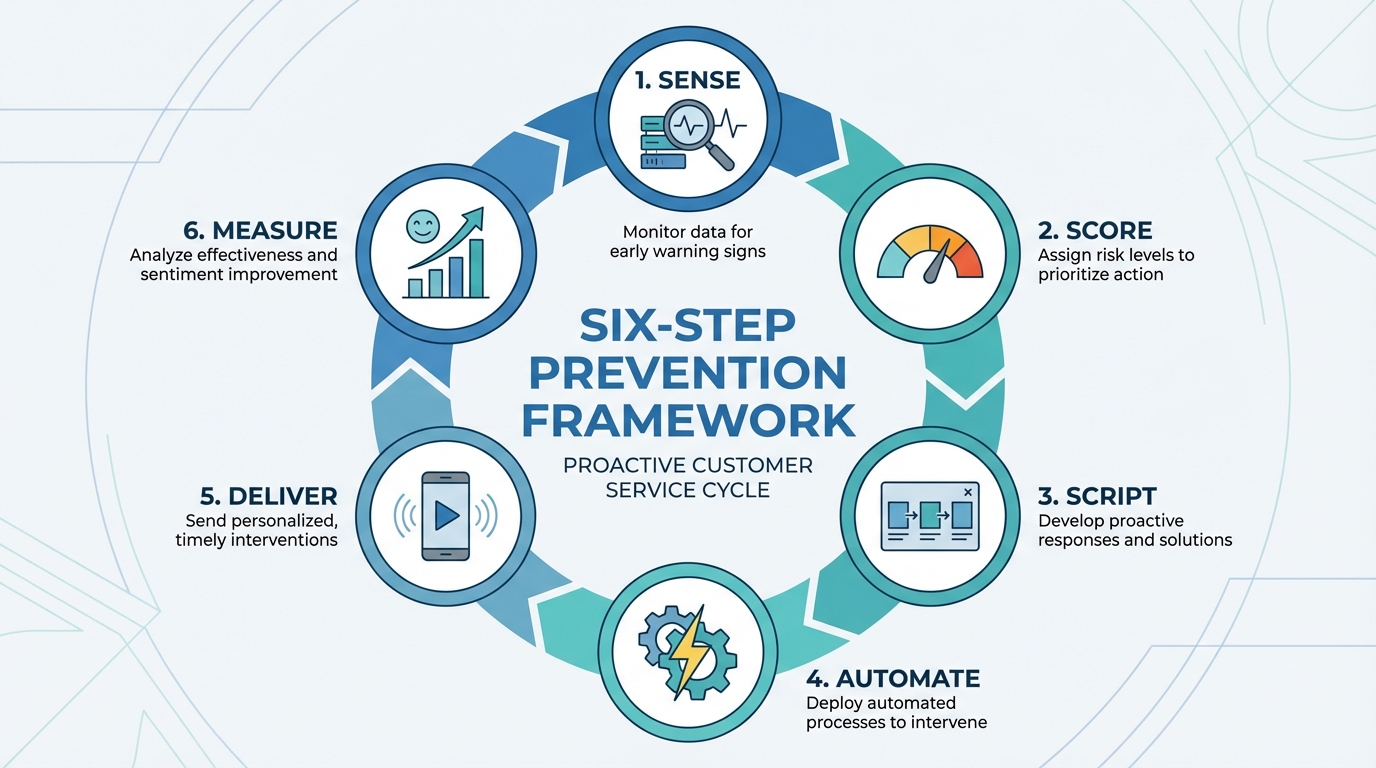
- A six-step framework—Sense → Score → Script → Automate → Deliver → Measure—operationalizes prevention at scale.
- Authenticity and C2PA content credentials are critical to trust and compliance in 2026.
- TrueFan AI infrastructure enables 175+ languages, virtual reshoots, and low-latency personalized videos for enterprise CX.
Sentiment-driven crisis prevention 2026 is an enterprise CX discipline that uses AI sentiment analysis marketing, customer mood detection marketing, and emotional engagement tracking to predict dissatisfaction. This proactive approach triggers proactive customer rescue videos and preemptive retention videos before issues escalate into public relations disasters or churn events.
In the high-velocity digital economy of 2026, reactive customer service is no longer just a bottleneck; it is a financial liability. Enterprises that wait for a support ticket to be filed before addressing customer pain are paying a “latency tax” that compounds with every minute of unresolved frustration. By the time a customer reaches out, their sentiment has often soured beyond the point of simple resolution, leading to viral social media complaints and permanent brand erosion.
Why Reactive CX Fails in 2026: The Latency Tax and Authenticity Crisis
The traditional model of “detect and respond” has been rendered obsolete by the speed of social amplification. In 2026, negative sentiment mitigation must happen in the “pre-complaint” phase. When a customer experiences friction—whether it is a delayed delivery, a billing anomaly, or a technical glitch—their emotional state shifts rapidly from neutral to anxious, then to angry. Waiting for an NPS survey or a formal ticket allows this negativity to fester and spread across public channels where virality can amplify brand risk exponentially.
In the Indian context, the stakes are even higher. As deepfakes and synthetic media become more prevalent, authenticity in brand communications has become a primary trust signal. Enterprises must now demonstrate provenance and trust in every CX outreach. According to recent guidelines from IndiaAI, content traceability and the adoption of standards like C2PA (Coalition for Content Provenance and Authenticity) are no longer optional for large-scale digital communications.
Furthermore, social listening for crisis prevention has evolved from simple keyword tracking to deep emotional analysis. Platforms like Konnect Insights highlight that early detection across brand mentions and trends is the only way to intercept a crisis before it hits the mainstream. Without a proactive strategy, brands are constantly in a defensive posture, reacting to fires rather than preventing them.
Sources:
- Konnect Insights: Social Listening for Crisis Prevention
- MediaNama on C2PA/Watermarking
- IndiaAI Governance Guidelines
The Proof of ROI: Data-Led Justification for Preemptive Retention
The business case for sentiment-driven crisis prevention 2026 is built on the measurable reduction of churn and the optimization of satisfaction score improvement. Proactive sentiment programs do more than just “fix” problems; they transform at-risk customers into brand advocates by demonstrating that the enterprise values their experience enough to intervene before being asked.
Data from the NASSCOM State of CX India 2025/2026 report indicates that AI-driven tailored offers and predictive need forecasting can reduce churn by up to 30% in high-risk cohorts. This is achieved through predictive dissatisfaction management, where algorithms identify the subtle shifts in customer behavior that precede a formal complaint. By deploying personalized interventions, brands can achieve “reassurance”—the moment a customer’s expressed emotion shifts from negative back to neutral or positive.
Channel fit is equally critical in the Indian market. The Freshdesk Customer Service Benchmark Report 2025/2026 shows that WhatsApp has become the primary channel for real-time support expectations. Enterprises that deliver proactive support video outreach via WhatsApp see significantly higher engagement rates than those relying on traditional email. When a customer receives a personalized video addressing their specific issue in real-time, the resolution acceptance rate increases by over 40% compared to text-based apologies.
Sources:
The Six-Step Prevention Framework: Sense to Measure
To operationalize sentiment-driven crisis prevention 2026, enterprises must adopt a structured framework that moves from data ingestion to emotional resolution. This framework ensures that every intervention is data-backed, emotionally intelligent, and delivered with surgical precision.
1. Sense: Multi-Signal AI Sentiment Analysis Marketing
The first step is the continuous monitoring of multi-channel signals. This involves using multilingual NLP to analyze support tickets, live chats, call transcriptions, app reviews, and social media posts. In 2026, these sentiment and emotion classifiers must support 175+ languages to cater to the diverse Indian demographic.
The goal of customer mood detection marketing is to establish thresholds for intervention. For instance, a compound sentiment score falling below -0.5 or a spike in “anger” probability above 0.7 sustained across three interactions within 72 hours should trigger an immediate alert. This is not just about keywords; it is about emotional engagement tracking—understanding the intensity and trajectory of the customer's feelings.
2. Score: At-Risk Customer Identification
Once signals are sensed, they must be scored. Predictive dissatisfaction management uses gradient boosting models (like XGBoost) to compute a risk score between 0 and 1. This score is based on variables such as recent sentiment slope, unresolved issue count, social influence, and product usage anomalies.
By tiering these risks—Tier 1 for immediate escalation and Tier 2 for proactive monitoring—CX teams can prioritize their resources. The use of SHAP-based explainability ensures that agents understand why a customer is flagged as at-risk, allowing for more tailored interventions.
3. Script: Emotional Intelligence Video Campaigns
The “Script” phase is where empathy-driven video responses are designed. These are not generic marketing clips; they are structured using a specific empathetic framework: Acknowledge → Validate → Explain → Offer → Next Steps → Reassurance.
The language must be localized, and the tone must mirror the customer's phrasing to ensure they feel truly understood. Personalization fields such as the customer's name, city, and specific issue summary are dynamically inserted to create a 1:1 connection.
4. Automate: Complaint Prevention Automation
Speed is the essence of preventive service recovery. Complaint prevention automation ensures that the right video intervention is triggered within minutes of a risk signal. For Tier 1 risks, the SLA should be less than 15 minutes.
Platforms like TrueFan AI enable this level of automation by connecting risk triggers directly to video rendering engines. This ensures that the customer receives a response while their frustration is still manageable, preventing the “emotional snowball” effect that leads to public escalations.
5. Deliver: Proactive Customer Rescue Videos
Delivery occurs across the customer's preferred channels—WhatsApp, SMS, or in-app notifications. These proactive customer rescue videos must include content credentials (C2PA) to signal authenticity. In an era of AI-generated content, a trust badge and a clear disclosure line are essential for maintaining brand integrity.
6. Measure: Emotional Engagement Tracking and KPIs
The final step is measuring the delta in customer emotion. Emotional engagement tracking computes the shift in sentiment from pre-intervention to post-intervention. Key metrics include “time-to-reassurance” and the “containment rate”—the percentage of at-risk customers who do not escalate their issue publicly within seven days of receiving a video.
Sources:
Enterprise Architecture with TrueFan AI: Fit-for-Purpose in 2026
Building a sentiment-driven crisis prevention 2026 engine requires a robust technical architecture that can handle hyper-personalization at scale. TrueFan AI's 175+ language support and Personalised Celebrity Videos provide the core infrastructure needed to turn raw sentiment data into high-impact emotional interventions.
The architecture integrates directly with enterprise CRMs and CDPs via APIs and webhooks. When a risk signal is detected in the “Sense” phase, the system triggers a low-latency rendering process. TrueFan AI can generate personalized 1:1 videos in under 30 seconds, allowing for “right-time” interventions that feel instantaneous to the customer.
Key capabilities of this architecture include:
- Virtual Reshoots: The ability to update lines and messaging without re-shooting original footage, ensuring that empathy-driven video responses are always current.
- Multilingual Voice Retention: Maintaining the original voice and perfect lip-sync across 175+ languages, which is critical for the diverse Indian market.
- C2PA Integration: Every video generated includes cryptographic content credentials, providing a layer of trust and provenance that is vital for brand safety in 2026.
- Enterprise Moderation: Built-in filters to block offensive or policy-violating content, ensuring that automated outreach remains within brand guidelines.
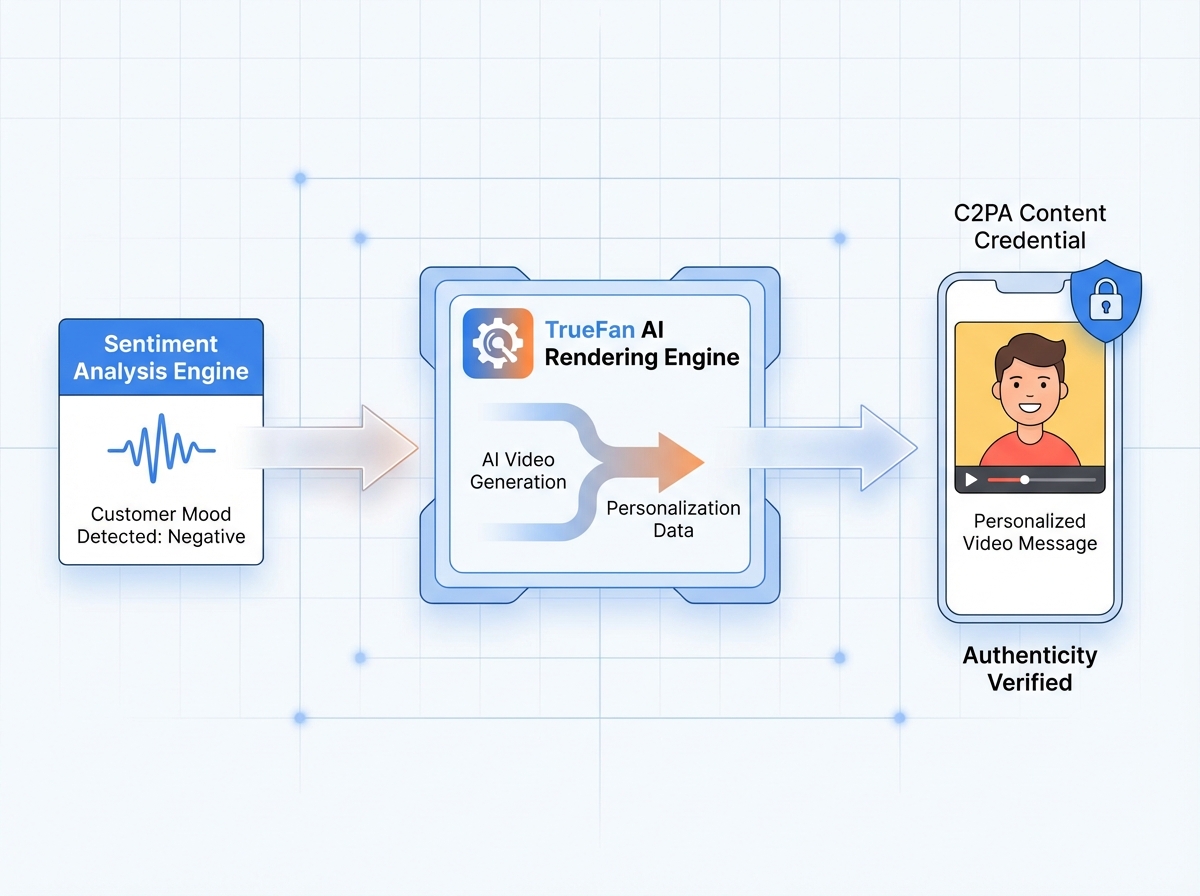
Solutions like TrueFan AI demonstrate ROI through their ability to handle massive volumes—such as generating hundreds of thousands of unique videos in a single day—while maintaining a 1:1 personal touch that traditional CX tools cannot match.
Sources:
Strategic Playbooks for Crisis Mitigation
To maximize the impact of sentiment-driven crisis prevention 2026, enterprises should deploy specific playbooks tailored to common friction points.
Playbook 1: The Shipping Delay Defuser
- Trigger: Order ETA slippage > 48 hours or a social mention with sentiment ≤ -0.6.
- Intervention: A proactive customer rescue video acknowledging the delay, explaining the cause (e.g., weather or logistics), and offering an immediate discount or expedited shipping on the next order.
- Goal: Prevent the customer from checking their order status repeatedly and becoming increasingly frustrated.
Playbook 2: Post-Ticket Sentiment Dip Recovery
- Trigger: A support ticket is marked “resolved,” but the post-resolution survey indicates “anger” or “disappointment.”
- Intervention: An empathy-driven video response from a senior CX lead thanking the customer for their patience, recapping the fix, and providing a direct escalation path if the issue persists.
- Goal: Close the “emotional loop” and ensure the customer feels the resolution was genuine.
Playbook 3: Billing Anomaly Apology
- Trigger: A spike in billing-related ticket topics combined with negative sentiment for a specific customer segment.
- Intervention: A personalized video explainer that walks the customer through their bill line items and offers a fee waiver or credit.
- Goal: Reduce chargebacks and prevent billing disputes from escalating to regulatory complaints.
Playbook 4: Renewal Risk Save
- Trigger: Subscription renewal date < 30 days with a risk score ≥ 0.7 and declining usage.
- Intervention: Preemptive retention videos featuring a value recap and a tailored renewal offer based on the customer's specific usage patterns.
- Goal: Achieve a 10-30% uplift in renewal rates as per NASSCOM benchmarks.
Playbook 5: VIP/Influencer Mitigation
- Trigger: A high-reach social handle posts a negative experience; sentiment analysis flags “high potential reach.”
- Intervention: An immediate personalized apology video from a brand ambassador or leader, committed to a 1-hour resolution.
- Goal: Contain the crisis before it becomes a trending topic.
Sources:
Governance, Safety, and the Implementation Roadmap
Implementing a sentiment-driven crisis prevention 2026 strategy requires a phased approach to ensure both technical stability and brand safety.
Phase 1: Signal Calibration
Integrate your CRM and social listening tools. Define your sentiment thresholds and risk tiers. This is where you establish the baseline for what constitutes a “crisis” in your specific industry.
Phase 2: Scripting and Localization
Develop your library of empathy templates. Ensure they are localized for the 175+ languages supported by your video engine. This phase also involves setting up the C2PA disclosure blocks and trust badges.
Phase 3: Orchestration
Wire your triggers to the video generation APIs. Test the low-latency rendering to ensure videos are delivered within the 15-minute SLA for Tier 1 risks.
Phase 4: Pilot and Scale
Run A/B tests on specific playbooks. Measure the satisfaction score improvement and the reduction in complaint volume. Use these insights to refine your predictive models.
Phase 5: Governance Hardening
Finalize your audit logs and legal review processes. Ensure that every automated video complies with ISO 27001 and SOC 2 standards. In 2026, transparency about AI usage is a cornerstone of customer trust.
Sources:
Conclusion: The Shift to Emotional Resilience
The future of CX is not just about solving problems; it is about managing emotions. Sentiment-driven crisis prevention 2026 represents a shift from reactive firefighting to proactive emotional resilience. By identifying dissatisfaction early and responding with high-fidelity, personalized video content, enterprises can turn potential crises into opportunities for deep customer loyalty.
In an era where trust is the ultimate currency, the ability to show up for a customer with a personalized, authentic, and empathetic video—before they even have to ask—is the most powerful retention tool available to the modern enterprise.
Final Sources Summary:
Frequently Asked Questions (FAQ)
What exactly is sentiment-driven crisis prevention 2026?
It is an advanced enterprise CX strategy that uses AI sentiment analysis marketing and customer mood detection to identify at-risk customers in real-time. By deploying empathy-driven video responses before a customer files a formal complaint, brands can prevent escalations and significantly improve retention.
How do preemptive retention videos differ from standard marketing videos?
Unlike marketing videos designed for acquisition, preemptive retention videos are triggered by specific risk signals like declining sentiment or unresolved issues. They are hyper-personalized to the customer's context and emotional state, focusing on resolution and reassurance rather than promotion.
Is it safe to automate video responses for angry customers?
Yes, provided there is robust governance. Using enterprise-grade moderation tools and human-in-the-loop triggers for high-risk cases ensures that the tone remains appropriate. Furthermore, using C2PA content credentials provides the necessary transparency and trust.
Can this framework handle the linguistic diversity of the Indian market?
Absolutely. Modern AI engines support over 175 languages, allowing brands to respond to customers in their native tongue with perfect voice retention and lip-sync, which is vital for building emotional rapport in India.
How does TrueFan AI fit into this crisis prevention ecosystem?
TrueFan AI provides the scalable video infrastructure required to render personalized, empathy-driven responses in under 30 seconds. By integrating with enterprise sentiment analysis tools, it allows brands to automate the delivery of proactive customer rescue videos at a scale that was previously impossible.



