Reverse migration recruitment 2026: How Indian tech employers win tier-2 city talent this appraisal season
Estimated reading time: ~12 minutes
Key Takeaways
- Appraisal season catalyzes reverse migration recruitment as senior tech talent rebalances pay, lifestyle, and family proximity.
- Tier-2 hubs offer cost and talent advantages, higher retention, and expanding GCC footprints.
- Designing high-impact hometown roles (Staff IC, EM, DevEx) proves “small city, big opportunities.”
- Personalized, regional-language video outreach via WhatsApp and LinkedIn drives superior conversions.
- Retention soars when employers invest in ecosystem support—local hubs, hackathons, and entrepreneurship tracks.
Reverse migration recruitment 2026 is peaking during India’s appraisal season, as returnee professionals reassess roles, quality of life, and hometown career opportunities. This structural shift marks a departure from the traditional “metro-only” career path, as experienced software engineers, product managers, and data scientists look toward tier-2 cities to optimize their personal and professional lives. In the first quarter of 2026, the movement of experienced professionals from high-pressure metro hubs or overseas roles back to their hometowns has accelerated, driven by a desire for cost-of-living arbitrage and family proximity without sacrificing career momentum.
For Indian tech employers, the appraisal windows of April–June and September–October represent critical strategic opportunities (see Appraisal Season Banking Offers). These are the periods when increments and promotions trigger high-stakes “move home” decisions. To capture this elite talent pool, organizations must pivot their talent acquisition strategies to emphasize “small city big opportunities,” aligning their employer brand with the specific values of the returnee demographic.
1. The 2026 Landscape: Data and Drivers of Reverse Migration Recruitment 2026
The 2026 reverse migration landscape is defined by a sophisticated blend of institutional support and individual prioritization. According to reports from the New Indian Express in January 2026, states like Uttarakhand have institutionalized this trend through “Pravasi Panchayats,” providing structured support for NRI returnees who are bringing global experience back to native villages and towns. Data indicates that over 6,000 professionals have returned across specific districts in early 2026 alone, often launching local ventures or taking up high-impact remote roles.
This trend is further validated by the greytHR HR Trends 2026 report, which highlights that reverse migration is keeping talent closer to home to achieve a sustainable work-life balance. For employers, this necessitates a localization of the employer brand. The Indiatimes Pulse (February 2026) notes that Indian tech workers are increasingly choosing India-based remote or tier-2 roles over US-based paychecks, citing visa stress, astronomical living costs abroad, and the emotional value of family freedom.
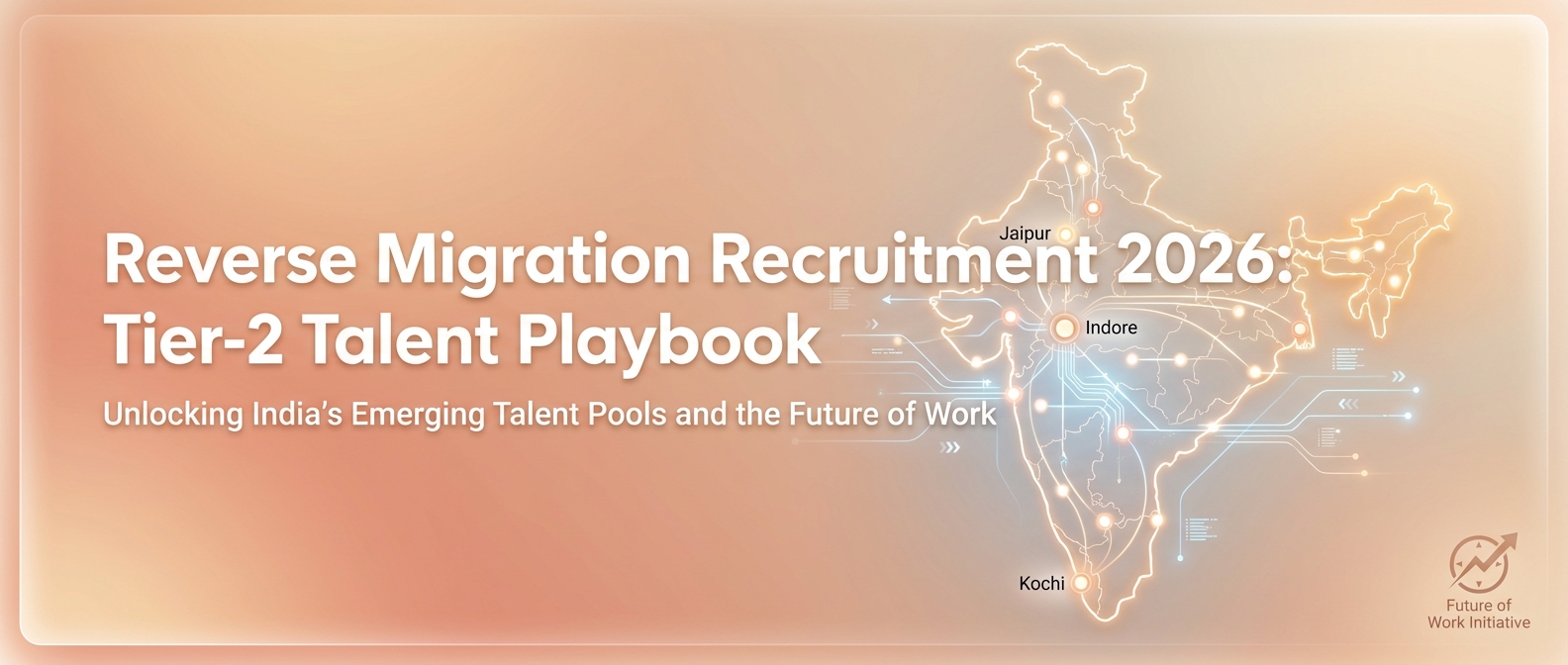
In this context, a “tier-2 city” is no longer a secondary choice but a strategic hub. Urban centers such as Indore, Coimbatore, Kochi, Jaipur, and Chandigarh have evolved into robust ecosystems featuring advanced IT parks, a steady supply of co-working spaces, and flourishing startup scenes. Taggd HR Trends 2026 confirms that senior professionals are pivoting to these quality-of-life cities while maintaining their professional momentum, creating a “value over headline pay” equation that employers must master.
Sources:
- New Indian Express (2026): Reverse Migration Trend in Uttarakhand
- greytHR 2026 Trends: Top Ten HR Management Trends in India
- Indiatimes Pulse (2026): Tech Talent Choosing Family Over US Paycheques
- Taggd HR Trends 2026: HR Trends Witnessing in Early 2026
- Abhinav Job Market Outlook 2026: India’s Job Market Outlook
2. Market Validation: Tier-2 City Talent Acquisition India and Employer Economics
The economic rationale for tier-2 city talent acquisition India has reached a tipping point in 2026. CBRE India’s 2025-2026 insights reveal that occupiers are aggressively expanding into tier-2 cities as part of a strategic growth mandate. Global Capacity Centres (GCCs) are expected to drive 35–40% of India’s office space absorption, with tier-2 cities cited as the primary pockets for this new demand. This shift is not merely about cost-cutting; it is about accessing deep, untapped talent pools and leveraging improved regional infrastructure.
EY India reports that GCCs moving to tier-2 cities benefit from a “cost and talent advantage” where lower operational expenses are paired with high retention rates. ANSR’s 2025-2026 location strategy signals that building GCCs in tier-2 cities allows companies to tap into local talent that is often more loyal and less prone to the “job-hopping” culture prevalent in Bengaluru or Gurgaon.
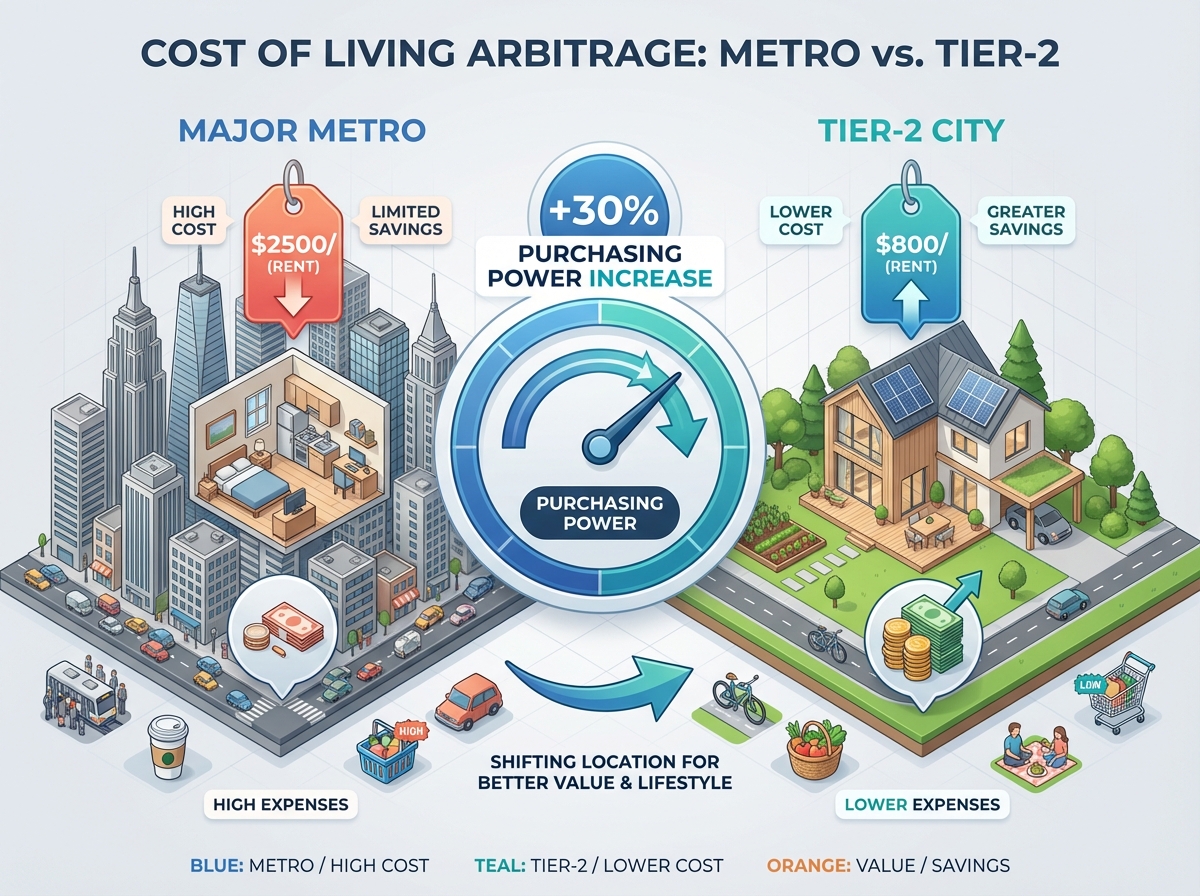
The employer value equation in 2026 has been rebalanced. While headline CTCs in tier-2 cities might be slightly lower than metro standards, the purchasing power is significantly higher. Employers are utilizing flexible workspaces and managed office micro-hubs to reduce fixed costs while unlocking distributed hiring. This allows for a “reverse brain drain” where the incentives are not just financial, but lifestyle-oriented. Promoting the local startup ecosystem and providing hometown entrepreneurship support further cements the employer's position as a community builder rather than just a recruiter.
Sources:
- CBRE India Market Monitor: India Market Monitor Office Insights
- Economic Times (CBRE Data): GCCs to Drive Office Absorption
- EY India: GCCs Moving to Tier-2 Cities
- ANSR Location Strategy: Tier-II Cities for GCCs
3. Hometown Career Opportunities: Designing Roles for the Returnee Professional
To succeed in reverse migration recruitment 2026, organizations must design hometown career opportunities that resonate with senior talent. This involves creating role archetypes that offer high impact and visibility, regardless of physical location. Staff and Principal Individual Contributor (IC) tracks, Engineering Manager (EM) roles, and Platform/Developer Experience (DevEx) owners are particularly suited for this model. These roles allow returnees to lead critical projects from their home cities, debunking the myth that “small city” means “small impact.”
Effective programs in 2026 include “Returnee Track” job postings specifically labeled with home city tags. These postings should outline clear growth ladders and offer mentorship from senior leaders who have already made the move back to a tier-2 city. Internal mobility is another crucial lever; companies that offer a metro-to-hometown transfer policy with 60–90 day Service Level Agreements (SLAs) see much higher retention during appraisal seasons.
The narrative must focus on “small city big opportunities.” This means showcasing that the complexity of work, the level of ownership, and the visibility to global leadership remain unchanged. By framing the move as a career acceleration rather than a retirement, employers can attract high-performers who are looking for family proximity career benefits without stalling their professional trajectory.
4. Work-from-Hometown Jobs Marketing: Precision Targeting and Personalization
Marketing work-from-hometown jobs requires meeting returnees exactly where they are—emotionally and geographically. The message pillars for 2026 focus on stability, flexibility, and the tangible windfalls of time and money. Employers must highlight hybrid norms, periodic travel to metro hubs, and access to local micro-hubs. The family proximity career benefits are a major selling point: being near parents, having reliable childcare, and participating in a local community significantly reduce burnout and increase focus blocks.
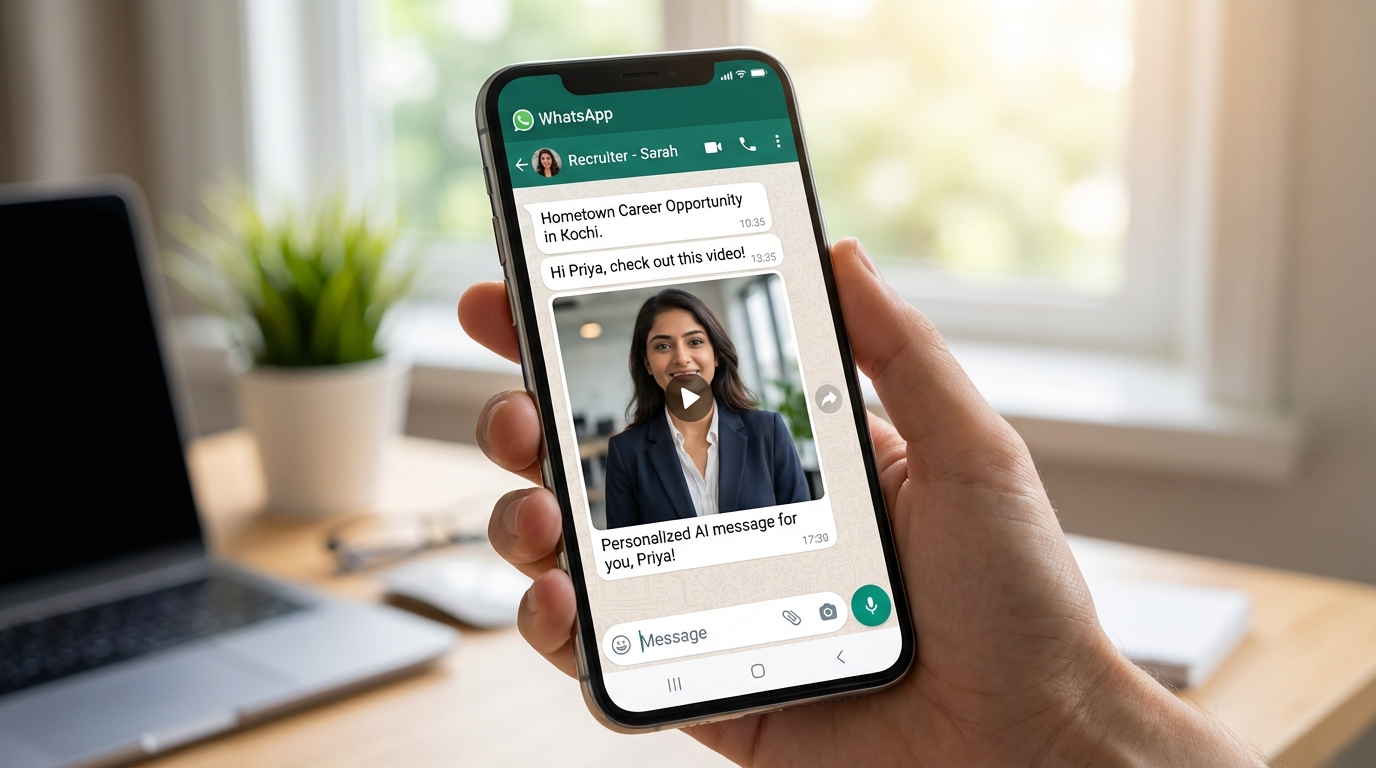
The channel plan for 2026 has shifted toward high-touch, personalized communication. WhatsApp Business Commerce Automation 2026 and LinkedIn DMs are used for 1:1 nudges, while alumni groups and hometown-specific job forums serve as fertile ground for talent. Timing is everything; recruitment campaigns must be front-loaded 2–3 weeks before increment letters are issued and followed up with drip sequences post-announcement.
Platforms like TrueFan AI enable this level of hyper-personalization at scale. By integrating AI-driven video with CRM systems, recruiters can send personalized video DMs that address the candidate by name, mention their specific hometown, and highlight a role that fits their expertise. This regional language job marketing approach ensures that the message feels authentic and tailored, rather than a generic corporate broadcast.
Sources:
- TrueFan AI: AI Video Webhook for WhatsApp Business
- TrueFan AI: Video Personalization at Scale
- TrueFan AI: Batch Video Creation Automation
5. Regional Tech Hub Recruitment Videos and Cost of Living Comparisons
Visual storytelling is the most effective way to power quality of life career campaigns. Regional tech hub recruitment videos should showcase the specific infrastructure and community benefits of each city. For instance, a video for Indore might feature the Super Corridor IT park and local coding meetups, while a Kochi-focused campaign would highlight the Infopark in Kakkanad and the unique waterfront commutes. Coimbatore’s TIDEL Park and Jaipur’s Mahindra World City serve as excellent backdrops for demonstrating that these cities are ready for world-class tech operations.
TrueFan AI's 175+ language support and Personalised Celebrity Videos allow these campaigns to be localized across various dialects, ensuring the “vernacular-first” approach Regional Language Voice Shopping resonates deeply. A script might hook a candidate by saying, “Arjun, build the next-gen fintech platform from Kochi,” followed by B-roll of local tech assets and quotes from other successful returnees. The call to action is always direct: “Apply to the Lead Engineer role in Kochi today.”
Another critical conversion lever is the cost of living comparison video. During appraisal season, candidates are hyper-focused on their “take-home” value. Side-by-side videos comparing a ₹30L salary in Bengaluru versus the same in Indore can be eye-opening. These videos use dynamic data overlays to show differences in rent, commute time, and childcare costs. When a candidate sees that their purchasing power increases by 25-30% by moving home, the decision becomes much easier.
Sources:
- TrueFan AI: White Label AI Video Platform
- TrueFan AI: Two-Way Conversation AI Video
- Taggd: HR Trends 2026
6. Returnee Professional Targeting: Incentives, Retention, and Ecosystem Support
Successful returnee professional targeting requires identifying specific signals: LinkedIn hometown keywords, “moved back to” posts, and location changes on GitHub. Once identified, these segments should be nurtured with a mix of regional language job marketing and reverse brain drain incentives. These incentives might include relocation bonuses, state-specific IT policy benefits (like those in Uttarakhand), and learning credits.
Solutions like TrueFan AI demonstrate ROI through their ability to generate high-volume, personalized outreach that cuts through the noise of standard recruitment emails. By using CRM-triggered sends, recruiters can automate the delivery of 1:1 videos the moment a candidate shows interest or hits a specific career milestone. This level of engagement is vital for regional talent retention strategies via WhatsApp Catalog Video Marketing Guide.
Retention in tier-2 cities is not just about the job; it’s about the ecosystem. Employers should support local startup ecosystem promotion and hometown entrepreneurship support. This can include sponsoring local hackathons, offering “founder-in-residence” tracks for employees with side projects, or providing micro-grants for employee-led community initiatives. When an employee feels integrated into their local tech community, their 12-month retention rate skyrockets.
Sources:
Recommended Internal Links
- Reverse Migration Recruitment 2026
- Regional Language Video SEO
- WhatsApp Business Commerce Automation 2026
- Regional Language Voice Shopping
- WhatsApp Catalog Video Marketing
- WhatsApp Catalog Video Marketing Guide
- Appraisal Season Banking Offers
Recommended Internal Links
- Reverse Migration Recruitment 2026: Big Opportunities Ahead
- Regional Language Video SEO: Strategies for 2026 Growth
- WhatsApp Business Commerce Automation 2026: Growth Playbook
- Regional Language Voice Shopping: 2026 Growth Guide
- WhatsApp Catalog Video Marketing: Tactics for 2026
- WhatsApp Catalog Video Marketing: Automation Strategies
- Appraisal Season Banking Offers: Maximize Salary Benefits
Frequently Asked Questions
What is reverse migration recruitment 2026 and why does appraisal season matter?
Reverse migration recruitment 2026 refers to the strategic hiring of experienced professionals who are moving from metros back to tier-2 cities. Appraisal season is critical because it is the primary window when employees evaluate their current compensation against their quality of life, often leading to a decision to relocate to their hometown for better value and family proximity.
Which tier-2 cities are seeing the fastest tech hiring growth in India?
Cities like Indore, Kochi, Coimbatore, Jaipur, and Chandigarh are leading the growth. These hubs offer robust infrastructure like IT parks (e.g., Infopark Kochi, TIDEL Park Coimbatore) and a lower cost of living, making them attractive for both GCCs and senior tech talent.
How do cost of living comparison videos improve conversion?
These videos provide a data-driven visual of “purchasing power.” By showing a side-by-side comparison of expenses in a metro versus a tier-2 city, employers can demonstrate that a similar or slightly lower CTC actually results in significantly higher savings and a better lifestyle, which is a powerful motivator during salary negotiations.
How can we execute regional language job marketing without losing brand consistency?
Using platforms like TrueFan AI, companies can create white-labeled video content that maintains brand guidelines while offering localized voiceovers and lip-syncing in 175+ languages. This ensures the message is culturally resonant but professionally consistent.
What signals identify returnee professional targeting segments on LinkedIn/WhatsApp?
Recruiters look for “hometown” updates, alumni network activity in specific regions, and “open to work” statuses that specify tier-2 locations. Engaging with local WhatsApp community groups and monitoring GitHub location changes are also effective ways to identify these high-intent candidates.
Which reverse brain drain incentives should we highlight in offers?
Key incentives include relocation assistance, access to local co-working hubs, state-sponsored IT incentives, and flexible “metro-travel” allowances. Highlighting hometown entrepreneurship support and intrapreneurship tracks also appeals to senior talent looking to build something local.