
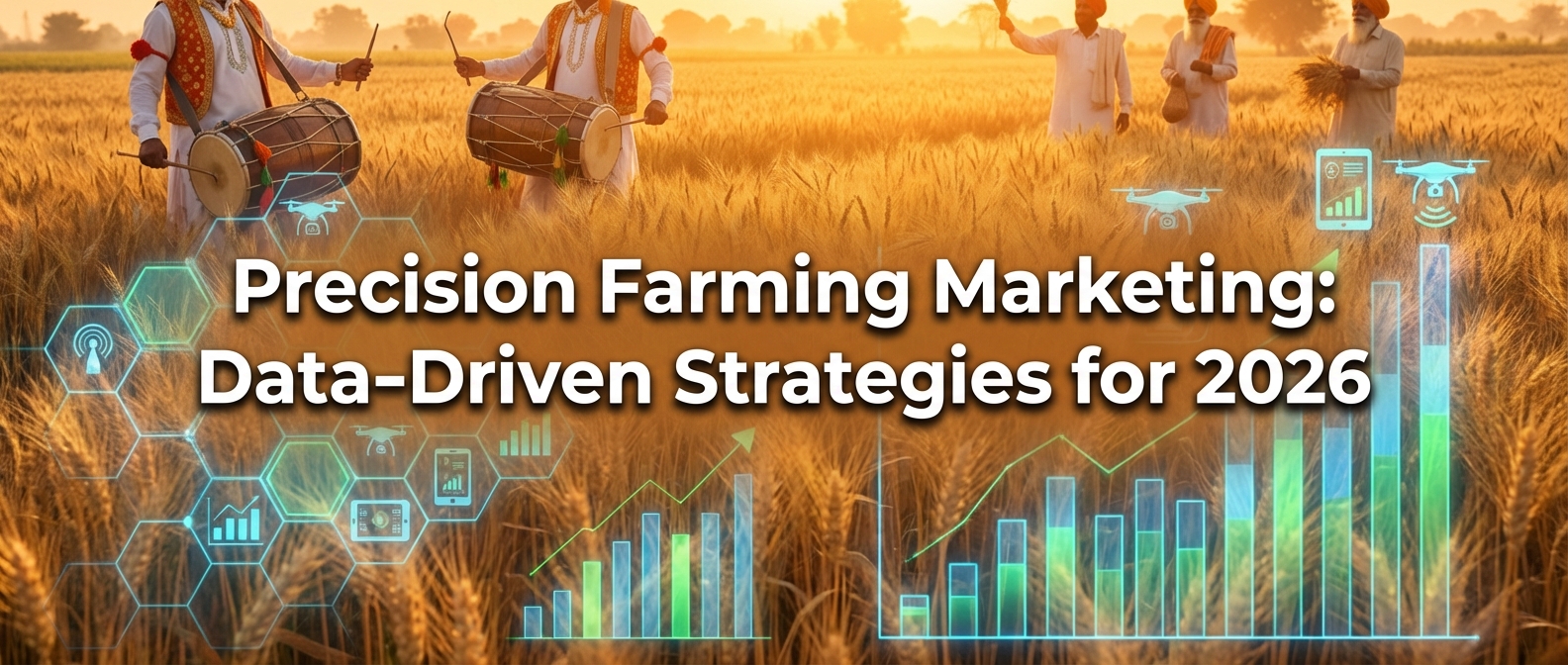
Agri-tech harvest marketing 2026: A Baisakhi-ready playbook for personalized farmer engagement
Estimated reading time: ~10 minutes
Key Takeaways
- Leverage Baisakhi timing with vernacular, voice-first videos to move farmers toward next-best-actions.
- Use digital mandi personalization and soil data to deliver clear sell/store guidance and dosage plans.
- Accelerate rural fintech adoption with personalized loan explainer videos and tap-to-call fallbacks.
- Improve trust via insurance claims education, geo-targeted nudges, and transparent payout explainers.
- Scale outcomes through governance and measurement: sub-30s rendering, DPDP compliance, and cohort dashboards.
The arrival of Baisakhi in mid-April 2026 marks more than just a cultural milestone; it represents the most critical economic window for the Indian agricultural ecosystem. As the Rabi wheat crop reaches peak maturity across the fertile plains of Punjab, Haryana, and Uttar Pradesh, the demand for high-intent transactions—ranging from procurement and storage to credit and insurance—reaches a fever pitch. For enterprise marketers, this period is the ultimate conversion moment where the “right advice, right price, and right finance” must converge. (See our Baisakhi marketing campaigns 2026 guide)
In the current landscape of agri-tech harvest marketing 2026, the traditional “one-size-fits-all” broadcast is obsolete. Today’s farmer expects hyper-relevance delivered through familiar channels. Baisakhi farmer engagement now relies on the seamless integration of cultural timing with data-driven triggers like real-time mandi prices and soil health metrics. By leveraging digital mandi personalization and crop advisory video automation, platforms can move farmers toward specific next-best-actions, such as securing harvest season loan offers or enrolling in precision spray programs.
This comprehensive playbook provides a deployable blueprint for 2026, mapping advanced video technology to measurable KPIs. We will explore how to bridge the gap between complex agri-data and farmer action through vernacular, voice-first interfaces that drive rural fintech adoption and platform loyalty.
1. Baisakhi farmer engagement: Cultural timing and language operations
Baisakhi, observed on April 13th or 14th, serves as the psychological and economic anchor for the North Indian farmer. In 2026, the synchronization of harvest maturity with this festival remains the primary driver of rural liquidity. Successful engagement strategies must respect this cultural nuance by blending gratitude-based messaging with practical utility. Using local farming idioms and Punjabi or Haryanvi motifs creates an immediate emotional bridge, but the content must quickly transition to actionable harvest data.
Language operations are the backbone of this engagement. With rural smartphone penetration projected to reach 78% by late 2026, the demand for Gurmukhi, Hindi, and regional dialects has never been higher. Content should be designed for a 6th-to-8th-grade reading level, prioritizing voice-first scripts that accommodate varying levels of literacy (conversational shopping in Hindi). Short, 30-to-45-second video spots are the gold standard, featuring a single, clear Call to Action (CTA) and a tap-to-call fallback for immediate human assistance.
Platforms like TrueFan AI enable agri-tech enterprises to generate these vernacular festival greetings and advisory nudges at an unprecedented scale. By auto-localizing content into 175+ languages and rendering videos within 30 seconds, marketers can respond to harvest shifts in real-time. This agility allows for A/B testing of CTA phrasing via virtual reshoots, ensuring that a “Sell Now” prompt in Ludhiana is as effective as a “Store for Later” suggestion in Karnal.
Sources:
2. Digital mandi personalization and crop advisory video automation
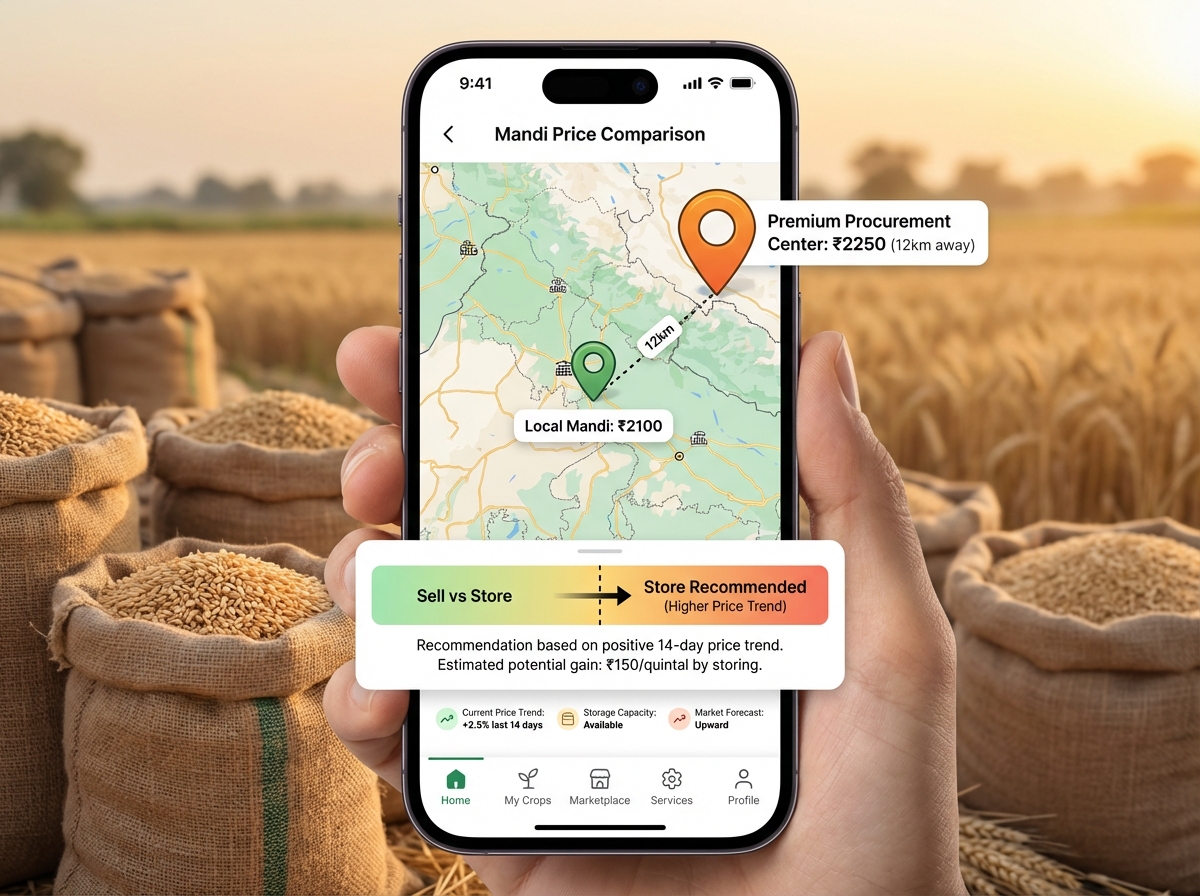
The concept of digital mandi personalization has evolved into a sophisticated decision-support system. By pulling daily price feeds from eNAM and local district mandis, agri-tech platforms can now compute price differentials against 14-day moving averages. This data allows for the generation of farmer-specific “sell vs. store” guidance. A personalized video might inform a farmer that while the local mandi is crowded, a procurement center 15 kilometers away is offering a 3% premium, effectively redirecting logistics and optimizing the supply chain.
Furthermore, crop advisory video automation transforms static data into dynamic, stage-aware guidance. In 2026, these advisories are triggered by ML models that monitor crop phenology and weather patterns. For instance, if the India Meteorological Department (IMD) predicts a sudden heatwave or unseasonal rain during the Rabi harvest, an automated video alert can provide immediate instructions on moisture management or accelerated reaping. This level of precision farming marketing ensures that the farmer views the platform as a vital partner rather than just a service provider.
Integrating soil health card data into these videos adds another layer of depth. By converting complex parameters like pH, Organic Carbon (OC), and NPK levels into visual, personalized fertilizer plans, platforms can demystify precision agriculture. A video showing exact dosage per acre, complete with subsidy mentions and brand-agnostic guidance, significantly increases the likelihood of a farmer following the advisory. This approach addresses the critical gap in farmer digital literacy by making scientific data visually intuitive.
Sources:
- eNAM trade dashboard
- Ministry of Agriculture Annual Report 2024–25
- TrueFan AI two-way conversation videos
3. Financing the season: Agricultural loan campaigns and rural fintech adoption
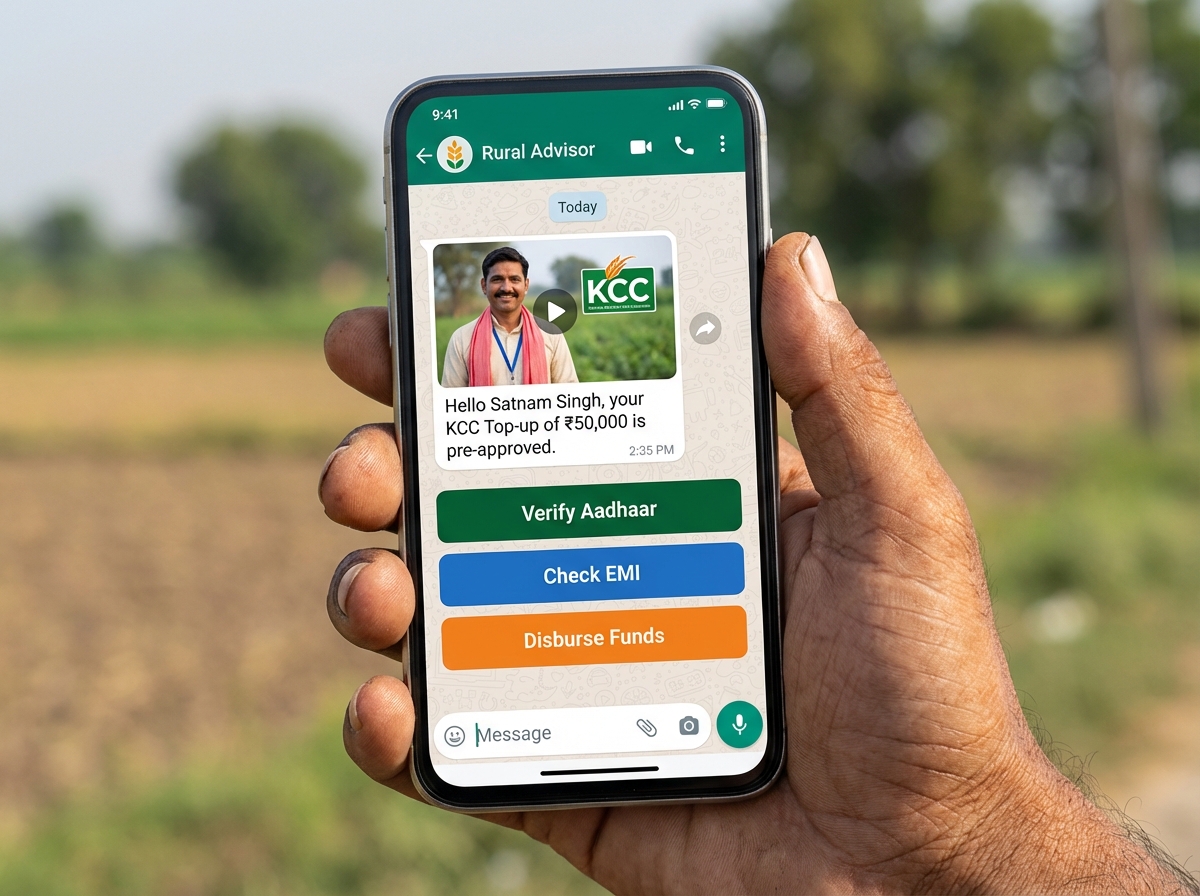
The 2025-26 Union Budget has placed a significant emphasis on digital agriculture credit, setting the stage for aggressive agricultural loan campaigns during the Baisakhi window. Harvest season loan offers, such as Kisan Credit Card (KCC) top-ups and warehouse receipt financing, are essential for managing post-harvest cash flow. However, the complexity of documentation often hinders uptake. Personalized video marketing simplifies this by mentioning the farmer’s name, their specific loan limit, and an estimated EMI, all within a 40-second WhatsApp message.
Rural fintech adoption is further accelerated when onboarding flows are demystified. Videos that walk a farmer through Aadhaar-based OTP verification or CKYC steps reduce friction and build trust (embedded finance video marketing 2026). For farm equipment OEMs, farm equipment financing videos are particularly effective. These videos can showcase tractors or harvesters with region-specific subsidy overlays, providing a clear path from “interest” to “pre-approval.” By including a “tap-to-call” agent fallback, fintechs can ensure that no lead is lost due to technical hesitation.
TrueFan AI's 175+ language support and Personalised Celebrity Videos can be leveraged here to add a layer of authority and trust to financial products. Whether it is a regional influencer or a trusted virtual avatar explaining the benefits of a low-interest gold loan for agricultural purposes, the impact on conversion is measurable. These solutions are built on enterprise-grade security, including ISO 27001 and SOC 2 compliance, ensuring that sensitive financial data is handled with the highest standards of integrity.
Sources:
4. Risk protection: Weather-based crop insurance and claims education
As climate volatility increases, weather-based crop insurance has become a cornerstone of rural resilience. Programs like the Pradhan Mantri Fasal Bima Yojana (PMFBY) and the Restructured Weather Based Crop Insurance Scheme (RWBCIS) rely on transparent triggers and timely enrollment. In 2026, the challenge is no longer just enrollment, but claims education. Farmers often feel disconnected from the payout process, leading to skepticism. Personalized claim status videos can bridge this gap by explaining exactly why a payout was triggered (e.g., “Rainfall in your block exceeded 100mm”) and providing a timeline for disbursement. (insurance CLM video automation in India)
Pre-monsoon and add-on covers are another critical area for agri-tech harvest marketing 2026. By using geo-tagged enrollment nudges, insurers can target farmers in high-risk zones with tailored messages. An animated video walkthrough of the “notified crops” and “sum insured” for a specific village makes the policy tangible. This proactive communication reduces grievance rates and increases the perceived value of the insurance product, fostering long-term loyalty.
The use of digital checklists and vernacular “how-to” guides for claim filing is essential for improving the user experience. When a farmer receives a video explaining the step-by-step process of reporting a loss via the app, the barrier to entry drops significantly. This strategy directly contributes to higher farmer digital literacy, as it provides a practical, high-stakes reason for the farmer to engage with digital tools.
Sources:
5. Precision farming: Agricultural drone services and sustainable incentives
The “Namo Drone Didi” scheme has reached a point of massive scaling in 2026, making agricultural drone services marketing a primary focus for FPOs and agri-input companies. Drone spray packages for Rabi crops like wheat and mustard offer significant ROI through reduced chemical usage and uniform coverage. Marketing these services requires a blend of “seeing is believing” and clear economic justification. Short reels of drone demos, combined with personalized ROI calculators, can convince even the most traditional farmers of the benefits of precision farming.
Subsidy education is equally vital. Many farmers and Self-Help Groups (SHGs) are unaware of how to access the 40-50% subsidies available for drone procurement. A video walkthrough of the application process, highlighting the necessary documents and the “Drone Didi” program's specific benefits, can drive significant engagement. These videos should be localized to the village level, referencing the nearest FPO or SHG that provides these services.
Furthermore, sustainable farming incentives are gaining traction as carbon credit markets mature in India. Farmers who adopt micro-irrigation or direct-seeded rice (DSR) techniques are now eligible for payouts. Marketing these incentives requires a clear explanation of the verification process. Videos that show how to “enroll, verify, and claim” ensure that the transition to sustainable practices is financially rewarding and easy to understand for the rural audience.
Sources:
6. Market access: Farm-to-consumer platform videos and traceability
The rise of farm-to-consumer platform videos in 2026 has revolutionized how farmers perceive their own produce. By telling the “producer story” through personalized narratives, platforms can command a premium in urban markets. For the farmer, this means higher margins and a direct link to the end consumer. A video showing the journey of a specific batch of wheat from a farm in Moga to a household in Delhi, complete with a QR code for traceability, builds immense trust on both sides of the transaction.
Onboarding seasonal SKUs—such as kinnow, mangoes, or premium wheat varieties—requires a tutorial-based approach. Farmers need to know how to grade their produce, pack it according to platform standards, and list it on the app. Personalized videos that address the farmer by name and show them exactly how to list their “Grade A” produce can significantly increase the SKU onboarding rate. This digital mandi personalization ensures that the right produce reaches the right market at the peak of its value.
Solutions like TrueFan AI demonstrate ROI through these high-impact market linkage campaigns. By tracking the funnel from video delivery to SKU listing and final sale, enterprises can see the direct correlation between personalized communication and revenue growth. These campaigns not only drive immediate sales but also build a database of “high-quality producers” that can be targeted for future precision farming or financing offers.
Sources:
7. Execution blueprint: Farmer digital literacy and technical governance
The successful execution of an agri-tech harvest marketing 2026 strategy hinges on a robust technical and governance framework. Farmer digital literacy is not just about teaching someone to use an app; it is about designing UX patterns that are inherently intuitive. This includes 30-second videos with large, high-contrast buttons, lightweight codecs for low-bandwidth areas, and proactive safety nudges regarding OTP security and fraud prevention.
From a technical perspective, the integration of farmer CRM data with real-time triggers (price, weather, credit) is paramount. The rendering SLA must be sub-30 seconds to ensure that a price alert is still relevant when the farmer opens their WhatsApp (WhatsApp catalog video marketing guide). Furthermore, compliance with the Digital Personal Data Protection (DPDP) Act is non-negotiable. Every personalized video must be backed by a clear consent audit log (interactive video data capture) and feature visible watermarking to prevent the misuse of AI-generated content (content credentials for video marketing).
Measurement and reporting should move beyond “views” to “outcomes.” Dashboards should track KCC pre-approvals, drone service bookings, and mandi intent-to-sell submissions. By analyzing cohort performance across different regions and languages, marketers can continuously refine their scripts. Virtual reshoots allow for rapid iteration, ensuring that the Baisakhi campaign remains optimized throughout the entire harvest window.
Sources:
2026 India Agri-Tech Trend Signals
As we look toward the remainder of 2026, several key trends are shaping the future of Indian agriculture:
- Drones as a Service (DaaS): The shift from drone ownership to service-based models is accelerating, led by SHGs and rural entrepreneurs.
- Interoperable Data Flows: The Digital Agriculture Mission is creating a unified farmer ID system, making it easier for fintechs and insurers to verify data instantly.
- Climate-Smart Advisory: AI models are now capable of providing hyper-local pest and disease forecasts with 90%+ accuracy, delivered via automated video.
- Direct-to-Consumer (D2C) Grains: High-quality wheat and rice varieties are increasingly being sold directly to urban clusters, bypassing traditional intermediaries through digital traceability.
By aligning Baisakhi marketing strategies with these trends, agri-tech enterprises can ensure they are not just participating in the harvest, but leading the digital transformation of the Indian farm.
Frequently Asked Questions
What documents are required for a KCC top-up during the 2026 harvest season?
Typically, farmers need their updated land records (Jamabandi), a valid Aadhaar card, and a bank statement showing a clean repayment history. Under the 2025–26 digital credit initiatives, many banks now offer “instant top-ups” via WhatsApp using OTP-based authentication, significantly reducing the need for physical paperwork.
How can an FPO access the Namo Drone Didi subsidy?
FPOs can apply through the central agriculture portal or their state's department of agriculture. The scheme provides up to 80% subsidy (capped at Rs. 8 Lakhs) for drone procurement by SHGs/FPOs. Personalized video tools like TrueFan AI can help FPOs educate their members on the application process and the benefits of drone-based spraying.
Where can I find real-time mandi prices for my specific district?
The eNAM (National Agriculture Market) trade dashboard provides real-time data for over 1,300 mandis across India. Many agri-tech platforms now integrate this API to send personalized price alerts directly to farmers' phones, helping them decide whether to sell or store their harvest.
How are PMFBY claims calculated if my crop is damaged by unseasonal rain?
Claims are calculated based on the “yield loss” or “weather trigger” specified in the policy. If the actual yield (determined by Crop Cutting Experiments) is lower than the threshold yield, the payout is automatically triggered. Weather-based insurance (RWBCIS) uses data from local weather stations to trigger payouts if rainfall or temperature exceeds set limits.
Is AI-generated video content safe for rural marketing?
Yes, provided it follows DPDP guidelines and includes clear watermarking. Enterprise platforms ensure that all content is moderated and that farmer data is stored securely. Using virtual avatars for advisory and two-way Q&A sessions has proven to be an effective way to scale expert advice while maintaining a human touch.



