
Post-purchase customer lifecycle optimization: Predictive video trigger automation to maximize CLV in 2026
Key Takeaways
- Post-purchase lifecycle optimization fueled by predictive video triggers is now a primary growth engine for CLV in 2026.
- Leverage real-time behavioral data to deliver personalized videos that reduce churn, accelerate activation, and drive repeat purchases.
- Upsell, cross-sell, and replenishment campaigns perform best when timed by predictive models and delivered via high-attention channels like WhatsApp/RCS.
- Enterprise execution requires a unified identity graph, modular content templates, and low-latency video rendering integrated via APIs.
In the hyper-competitive enterprise landscape of 2026, post-purchase customer lifecycle optimization has evolved from a secondary retention tactic into the primary engine of sustainable revenue growth. Modern brands no longer view the “thank you” page as the end of a transaction but as the starting line for a sophisticated, data-driven journey designed to maximize customer lifetime value (CLV).
The shift toward predictive video trigger automation is at the heart of this transformation, allowing marketing teams to intervene with surgical precision at the exact moment a user requires guidance, encouragement, or a nudge toward their next purchase. By orchestrating these interventions through high-attention, personalized video formats, enterprises are effectively bridging the gap between transactional efficiency and emotional brand loyalty.
As we navigate 2026, the mandate for retention marketing teams is clear: move beyond generic email sequences and embrace lifecycle marketing video personalization. This approach leverages real-time behavioral data to deliver contextually relevant video content that clarifies product value, reduces churn, and accelerates the path to repeat purchases.
Source: Customer.io 2026 Trends
Source: WebEngage Trends via CXOToday
Source: Mordor Intelligence
1. The Strategic Shift to Lifecycle Marketing Video Personalization
The attention economy of 2026 demands more than just “personalization” in the form of a first-name tag in an email subject line. Enterprises are now adopting lifecycle marketing video personalization to cut through the noise of saturated digital channels. This discipline involves programmatically tailoring video content—including the spokesperson’s speech, product details, and specific calls-to-action—to an individual’s unique journey stage.
Platforms like TrueFan AI enable brands to transform static customer data into dynamic, celebrity-led video experiences that resonate on a personal level. In the Indian market, where WhatsApp Business dominates with over 40% of the CPaaS market share, the delivery of these personalized videos via chat interfaces has become the gold standard for engagement.
The link between video personalization and CLV is rooted in cognitive ease and trust. When a customer receives a video that addresses their specific order status or usage patterns, it reduces the friction of adoption and builds a sense of being “seen” by the brand. This emotional connection is a powerful driver for replenishment adherence and subscription renewals, especially as Rich Communication Services (RCS) continues its 24.3% CAGR growth, offering even richer interactive video environments.
Source: Mordor Intelligence
Source: Promodo
Source: Madgicx
2. Orchestrating the Journey: Post-Purchase Engagement Automation
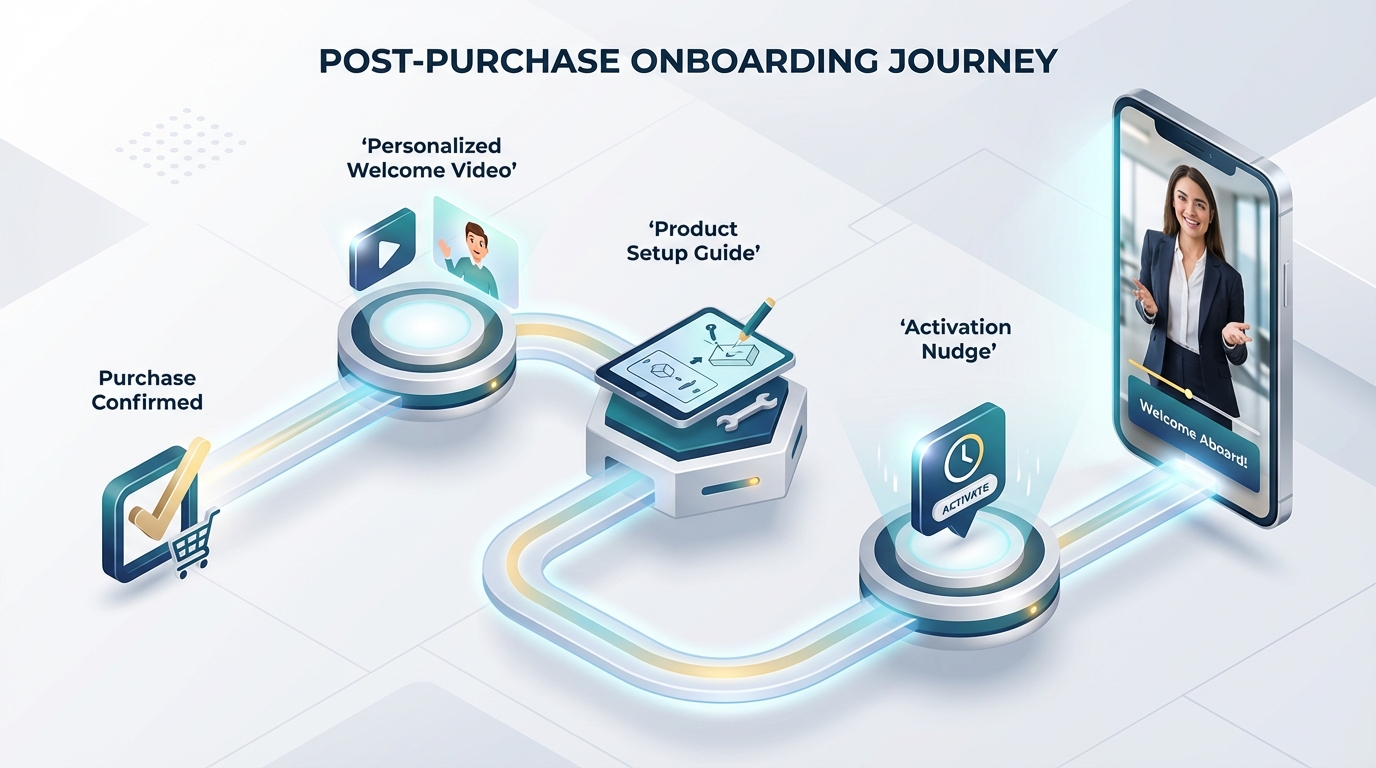
The initial 30 days following a purchase are critical for long-term retention. Post-purchase engagement automation ensures that no customer is left in a “value vacuum” after their credit card is charged. By mapping specific behavioral signals to automated video triggers, brands can proactively guide users through the onboarding and activation phases.
In the onboarding stage, the goal is to eliminate “buyer’s remorse” and accelerate the time-to-first-value. Trigger signals such as order confirmation or fulfillment status should immediately initiate a personalized thank-you video. This video can include a walkthrough of the specific SKU purchased, setting clear expectations for delivery and initial setup. For instance, a consumer electronics brand might trigger a video showing exactly how to sync a new device the moment the package is marked as “delivered.”
Moving into the activation phase, predictive customer success videos become essential. If a user has not opened the app or activated their product within a predefined window, an automated nudge can be triggered. These videos should focus on clearing specific friction points, perhaps by offering a “first-week success plan” or a direct CTA to a support specialist. By addressing inactivity before it becomes a habit, enterprises can significantly boost first-month retention rates and CSAT scores.
Source: SuccessCOACHING 2026 Predictions
Source: Storyboard18 - EaseMyTrip
3. Revenue Expansion: Upsell, Cross-Sell, and Replenishment Triggers
Once a customer is successfully onboarded, the focus shifts to maximizing their value through strategic expansion. This is where behavioral trigger video campaigns demonstrate their highest ROI. By analyzing purchase history and usage frequency, predictive models can identify the optimal moment for replenishment or a logical upsell.
Replenishment reminder automation is particularly effective for CPG and wellness brands. Instead of a generic “Time to restock” email, a personalized video can be triggered based on the predicted depletion of the product. The video might feature a spokesperson reminding the customer of the benefits they’ve seen so far and offering a one-tap “Buy Again” button within WhatsApp or RCS. This level of convenience directly correlates with higher replenishment adherence and AOV.
Upsell cross-sell video triggers take this a step further by utilizing affinity graphs. If a customer has purchased a base product, the system can trigger a personalized recommendation reel for compatible accessories or premium tiers. These videos are most effective when they include “reasons-to-believe” tailored to the user’s specific price sensitivity and past behavior. For example, a travel platform might send a personalized video offering a room upgrade or a curated local experience based on the user's upcoming trip details, driving a measurable lift in attach rates.
Source: CXOToday/WebEngage
Source: Netcore Industry Trends
4. Retention Mastery: Predictive Churn Prevention and Subscription Optimization
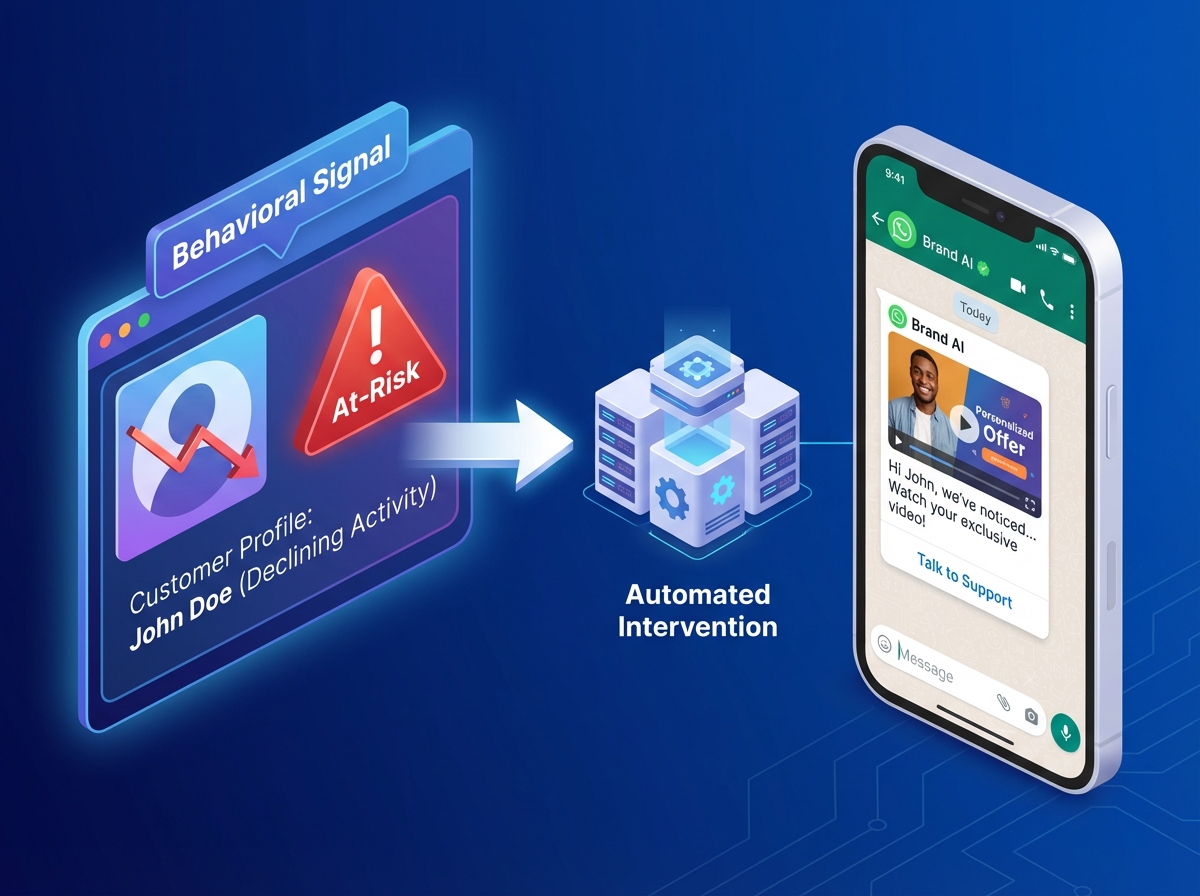
In 2026, the most sophisticated enterprises have moved from reactive churn management to proactive intervention. Predictive churn prevention videos are triggered when the system detects “at-risk” signals, such as a sudden drop in login frequency, repeated failed payments, or a decline in sentiment scores.
These videos should acknowledge the potential issue with empathy and offer a tailored solution—whether that’s a quick-fix tutorial for a technical hurdle, a “pause” option for a subscription, or a high-value win-back offer. By delivering this message through a personalized video, the brand humanizes the recovery process, which is often enough to reverse a negative trend. Agentic AI now allows these videos to be part of a two-way conversation, where the customer’s response to the video can trigger an immediate resolution flow.
Subscription lifecycle optimization further ensures that long-term customers remain on the right plan for their needs. As a renewal date approaches, automated videos can visualize the user’s usage over the past year, celebrating milestones and suggesting plan adjustments that maximize their ROI. Milestone celebration videos, triggered by the 100th order or a one-year anniversary, serve as powerful advocacy tools. These videos encourage users to share their success on social media, effectively turning satisfied customers into a decentralized marketing force.
Source: Medallia 2026 Predictions
Source: Zoom CX Trends
5. The Architecture of Predictive Video Trigger Automation
Implementing these strategies at an enterprise scale requires a robust technical foundation. Predictive video trigger automation relies on the seamless integration of a brand's CDP, CRM, and product analytics tools. This unified identity graph allows the system to score every customer in real-time for churn risk, upsell propensity, and replenishment timing.
When a behavioral threshold is met, a webhook or API call is sent to the video generation engine. TrueFan AI's 175+ language support and Personalised Celebrity Videos allow for the rapid rendering of high-quality assets in under 30 seconds. This low latency is crucial for real-time interventions, ensuring that the video reaches the customer while the context of their action is still fresh.
The content system must also be modular. By using tokenized templates, brands can swap out names, products, and localized messaging without needing new production shoots. Virtual reshoots and AI editing enable rapid A/B testing of different creative variants, allowing marketing teams to optimize for watch-through rates and conversion. Furthermore, enterprise-grade security standards—including ISO 27001 and SOC 2 compliance—ensure that customer data and celebrity likenesses are handled with the highest level of integrity and consent.
Source: Customer.io
Source: Mordor Intelligence
6. Measurement, ROI, and Implementation Roadmap
The success of post-purchase retention automation must be measured through a rigorous framework of incrementality. Enterprises should utilize holdout groups to compare the performance of behavioral trigger video campaigns against traditional text-based or static image sequences. Key metrics to track include activation rate, time-to-first-value, replenishment adherence, and ultimately, the lift in 180-day CLV.
Solutions like TrueFan AI demonstrate ROI through significant improvements in engagement metrics. For instance, case studies in the Indian travel sector have shown a 17% increase in WhatsApp read rates when personalized celebrity videos are used as nudges. Similarly, reader activation campaigns have seen participation rates jump by over 3x. These results translate directly into reduced customer acquisition costs (CAC) by making the existing customer base more profitable.
A typical 90-day implementation roadmap begins with data integration and a pilot of three core triggers: onboarding, replenishment, and churn prevention. By day 60, brands should be scaling these triggers across multiple languages and testing creative variants. By day 90, the focus shifts to full subscription lifecycle optimization and the integration of agentic AI flows to handle complex customer queries within the video journey.
Source: WebEngage via CXOToday
Source: MoEngage Case Study
Frequently Asked Questions
How does predictive video trigger automation handle millions of customers without lag?
The architecture is built on high-performance API-driven rendering engines. By utilizing cloud-agnostic GPU farms, systems can render personalized videos in under 30 seconds. This allows for real-time delivery even during massive traffic spikes, such as festive sales or national holidays.
Is it possible to deliver these videos through WhatsApp in India?
Yes, WhatsApp Business API is the primary delivery channel for these campaigns in India. The videos are optimized for mobile viewing and can be paired with deep links that take the user directly to a checkout page or a specific feature within an app.
How do you ensure the security of customer data in these videos?
Enterprise solutions prioritize data residency and security. TrueFan AI, for example, maintains ISO 27001 and SOC 2 certifications. All personalization is handled through secure API calls, and built-in moderation tools ensure that no unapproved or sensitive content is ever generated.
Can we use our own brand ambassadors or celebrities for these videos?
Absolutely. The technology is designed to take a single short shoot of a brand ambassador and turn it into an infinite library of personalized messages. This maximizes the value of celebrity contracts by allowing them to “speak” to every customer individually.
What is the expected ROI for a post-purchase retention automation pilot?
While results vary by industry, most enterprises see an immediate lift in engagement metrics (open and watch rates) of 15-30%. Over a 6-month period, this typically translates into a 5-10% increase in overall CLV and a significant reduction in churn-related revenue loss.



