Regional sports marketing automation 2026: The Tier-2/3 India playbook for Pro Kabaddi, ISL, and domestic cricket
Key Takeaways
- AI-led vernacular creative automation is the growth engine for Tier-2/3 sports marketing in 2026
- Personalized athlete videos rendered from CRM triggers and delivered via WhatsApp materially lift engagement and conversions
- Geofenced stadium activations and match-day offers convert fan emotion into instant commerce
- Micro-influencer grids and loyalty programs deepen trust and maximize lifetime value
- Regional sentiment analysis and MMM prove hyperlocal sponsorship ROI with district-level precision
The landscape of Indian fan engagement is undergoing a seismic recalibration as we enter the era of regional sports marketing automation 2026. This paradigm shift represents the end-to-end integration of artificial intelligence, real-time data triggers, and vernacular creative workflows to deliver hyper-personalized, compliance-safe campaigns at the district and language cohort level. Platforms like TrueFan AI enable brands to bridge the gap between mass broadcasting and individual fan intimacy, transforming passive viewership into active, measurable brand loyalty across Bharat’s burgeoning sports ecosystem.
In 2026, the necessity for this automation is driven by a "media rights reset" and the rapid digital acceleration of Tier-2 and Tier-3 cities. As consumer behavior recalibrates toward localized experiences, sports marketers must move beyond generic "one-size-fits-all" creative. True regional sports marketing automation 2026 involves orchestrating awareness, engagement, and conversions through granular measurement, ensuring that a fan in Kolhapur receives a different, more culturally resonant message than a fan in Coimbatore, even if they are supporting the same league.
This playbook provides a comprehensive framework for brand managers and sports marketers to navigate the complexities of multilingual sports marketing. By leveraging autonomous AI and retail media bidding, brands can now achieve hyperlocal sports sponsorship ROI that was previously impossible. We will explore how to automate personalized video at scale, integrate regional sentiment analysis, and drive tangible results through Pro Kabaddi, ISL, and domestic cricket properties.
Vernacular sports content marketing: The 2026 data-driven landscape
The 2026 market signals indicate that AI automation and vernacular-first creative are no longer optional; they are the core levers of performance-linked sponsorships. According to recent industry insights, India’s advertising playbook has shifted toward AI-led creative automation to match the recalibration of media rights and retail media dynamics. This shift is particularly evident in the "Bharat" market, where digital adoption in Tier-2 and Tier-3 cities has surpassed metropolitan growth rates, demanding a more sophisticated approach to vernacular sports content marketing vernacular voice SEO strategies.
Data from the EY India M&E 2025 report highlights that regional content consumption is the primary driver of digital growth, with fans increasingly seeking "language-first" performance. This means marketing is no longer just about translating English copy into Hindi; it is about adapting idioms, humor, and cultural references to specific regional dialects. In 2026, the sports fan economy has broadened significantly, with women’s cricket, chess, and esports providing new avenues for brands to piggyback on regional passions through programmatic DOOH (Digital Out-of-Home) and district-level bidding.
To succeed in this environment, brands must adopt a "multilingual sports marketing" voice commerce in vernacular India strategy that utilizes language-level performance analytics. By monitoring regional sentiment analysis, marketers can identify which cultural hooks are resonating in specific districts and pivot their creative templates in real-time. This level of granularity ensures that every rupee spent on sponsorship is optimized for the local context, driving higher engagement and lower acquisition costs.
Source: The Economic Times: 26 trends for 2026—AI becomes more autonomous; consumer experiences localize
Source: Royalways: 13 digital marketing trends Indian brands must watch in 2026
Source: EY India M&E 2025: Vernacular and digital growth trends
Pro Kabaddi fan engagement videos and ISL local team personalization
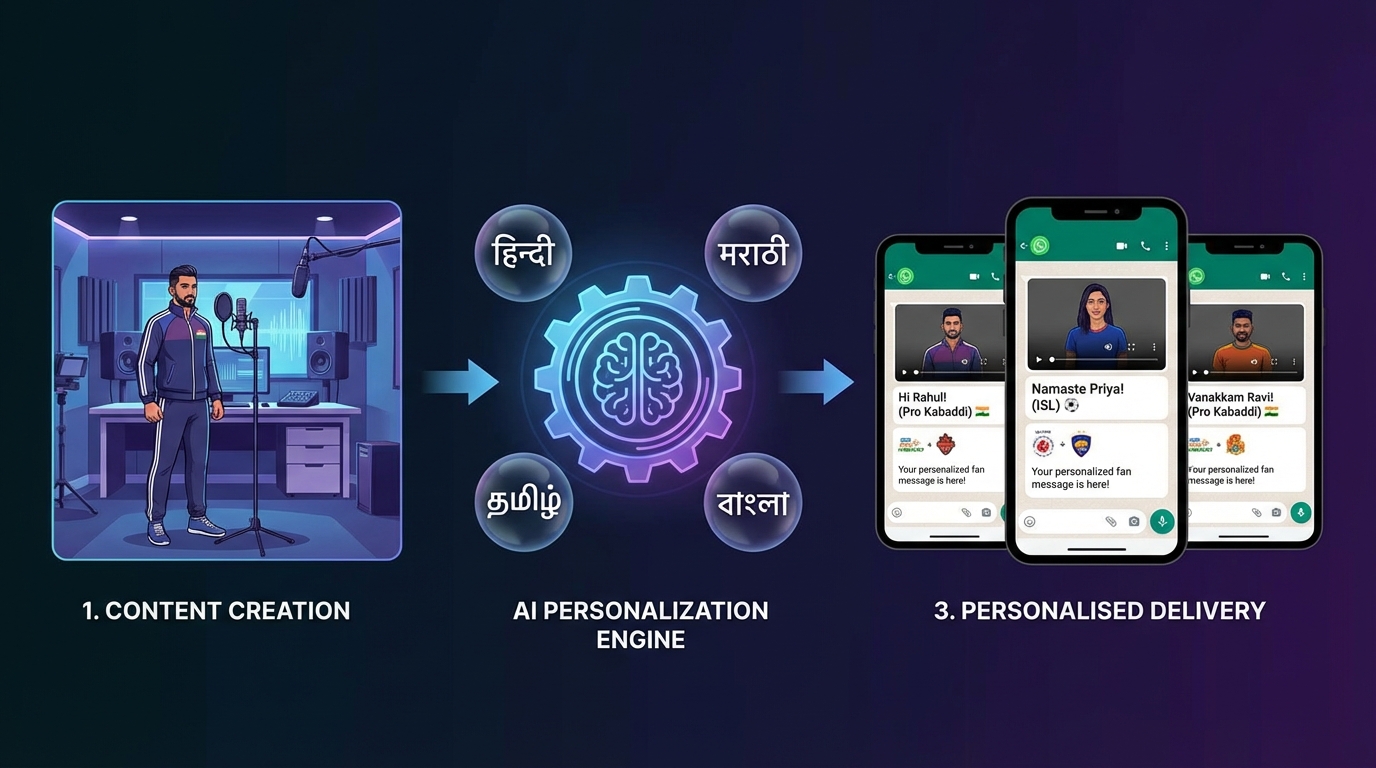
The Pro Kabaddi League (PKL) and the Indian Super League (ISL) represent the pinnacle of regional sports affinity in India. For PKL, the strategy revolves around Pro Kabaddi fan engagement videos that utilize player-led, snackable content. By recording a single 5-minute base shoot with an athlete, TrueFan AI's 175+ language support and Personalised Celebrity Videos can render millions of variants that address fans by their name, city, and favorite raider. Imagine a fan in Pune receiving a video in Marathi: "Namaste [Name], Puneri Paltan che raiders aaj court var aag lavnar! Fakt tumchyasathi [Sponsor] kadun 15% off."
For the ISL, the focus shifts to ISL local team personalization. Marketers can automate "Matchday in [District]" versions of videos that weave in local chants, stadium visuals, and even nods to neighborhood eateries. This district-level variant strategy ensures that a supporter in North Kerala feels a deeper connection to the club than a generic national ad could ever provide. By co-creating chant hooks with local fan clubs and offering UGC (User-Generated Content) remix templates, brands can turn every fan into a micro-influencer for the team.
The workflow for these campaigns is highly automated: data triggers from ticketing platforms or CRM systems (like fan name, language preference, and seat location) feed into an API-driven templating engine. Within sub-30 seconds, a personalized video is rendered and delivered via WhatsApp Business API. This real-time delivery ensures that "pre-match hype" or "post-win thanks" videos reach the fan when their emotional engagement is at its peak, leading to significantly higher view-through and share rates compared to static assets.
Source: YouGov: Pro Kabaddi League fan insights and demographics
Source: Havas Emerging Sports: PKL and ISL growth beyond cricket
Source: KPMG India Sportlight 2025: Regional engagement strategies and league growth
Domestic cricket tier-2 campaigns and community sports engagement videos
While international cricket captures the headlines, the true heart of Indian cricket lies in the Ranji Trophy, Syed Mushtaq Ali Trophy, and various state T20 leagues. Executing domestic cricket tier-2 campaigns cricket tournament fan engagement videos requires a deep understanding of local pride and festival tie-ins. During Ganeshotsav in Maharashtra or Pongal in Tamil Nadu, brands can deploy "Road to [City] Derby" countdowns featuring local state heroes. A Bengali video for a fan in Siliguri might say: "[Name], [State] er all-rounder [Player] aaj shera form-e. Apnar jonne [Local Store] e buy-1-get-1 offer!"
Beyond professional leagues, community sports engagement videos offer a unique opportunity for CSR and grassroots brand building. By covering local school tournaments, academy matches, or panchayat leagues, brands can automate personalized "thank you" videos for participants and their parents. This creates a powerful emotional bond, as the brand is seen as a supporter of the local community's aspirations. These videos, distributed via WhatsApp, often see a "K-factor" (viral coefficient) much higher than professional sports content due to the personal nature of the achievement.
To manage these diverse campaigns, brands utilize regional athlete endorsement videos where city-favorite players record base messages that can be swappable via AI editing. This allows for "virtual reshoots" where offer lines or sponsor logos can be updated without the athlete ever returning to the studio. This agility is crucial for domestic cricket, where match schedules and local heroes can change rapidly. By integrating micro-creators from each district to co-host these personalized clips, brands ensure the content remains authentic and culturally grounded.
Source: EY India M&E 2025: Regional content and digital adoption in Tier-2/3
Source: Zupotsu: Sports marketing opportunities for 2026 (premium sports and chess momentum)
Local stadium offer activation and match-day personalized offers
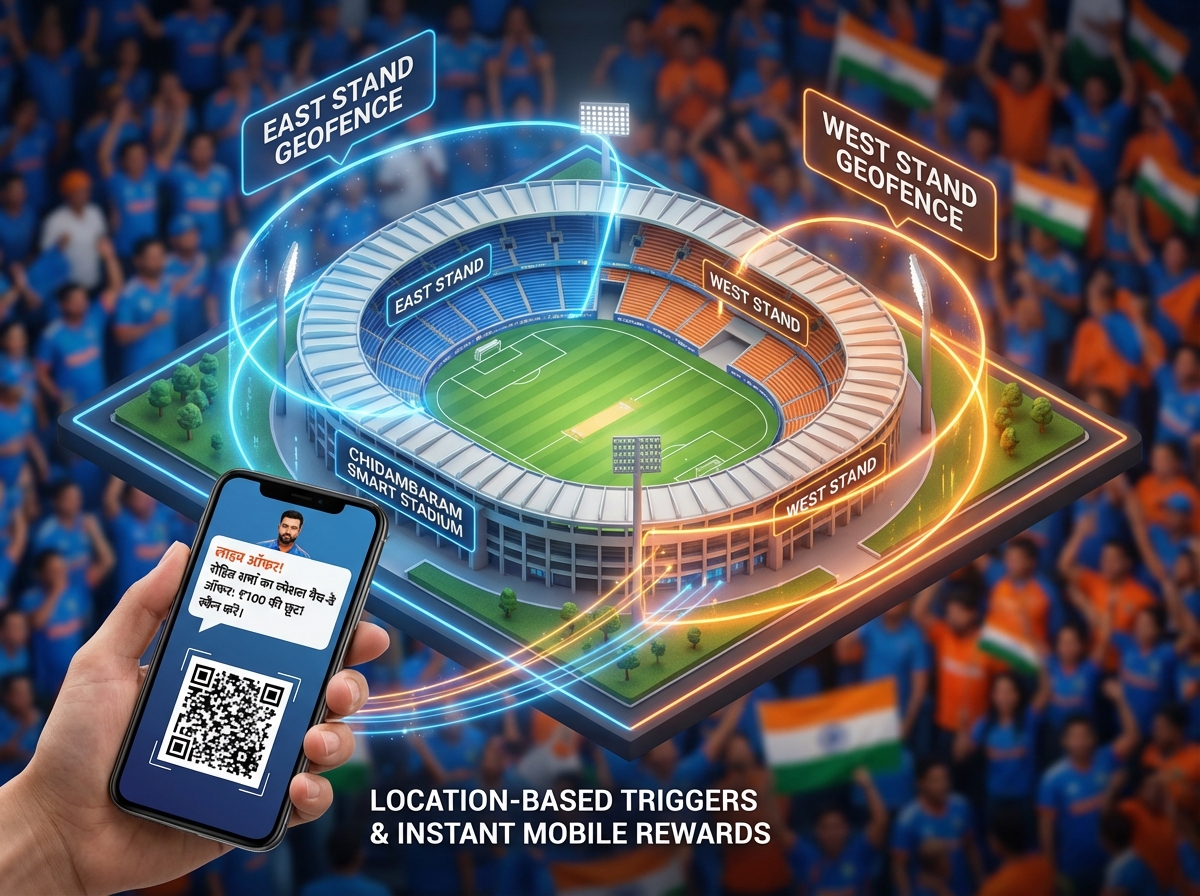
The stadium experience in 2026 is no longer just about the game; it is a hub for local stadium offer activation. By utilizing geofencing and stand-level QR scans, brands can trigger match-day personalized offers that are delivered directly to a fan's smartphone. For example, a fan sitting in the "East Stand" might receive a video from a star player saying, "Hey [Name], I see you're in the East Stand! Head to the nearest kiosk for a free drink on us." This level of precision transforms the stadium into a high-conversion retail environment.
Solutions like TrueFan AI demonstrate ROI through these real-time API renderings, which allow for sub-30 second delivery of video + coupon bundles. This is particularly effective for local team merchandise campaigns, where urgency can be created through countdowns in the local language. A fan who just witnessed a spectacular goal or a "Super Raid" is far more likely to purchase a jersey if the offer is personalized and delivered instantly. These campaigns also support "WhatsApp Commerce" flows post-purchase loyalty automation guide, allowing fans to complete purchases via UPI without ever leaving their seats.
The measurement of these activations is equally granular. Marketers can track gate-wise scan rates, beverage uptake, and time-to-redeem by specific fan cohorts. By comparing the performance of personalized videos against generic holdout groups in different districts, brands can quantify the "personalization lift." This data is then fed back into the regional sentiment analysis loop, allowing the AI to optimize the tone, offer type, and even the background music for the next match day.
Source: Nielsen: Tops of Sports 2026—Media behaviors shaping engagement
Source: Dentsu: 2026 Media Trends—Human truths in the algorithmic era
Regional sports influencer partnerships and sports fan loyalty programs India
In the fragmented media landscape of 2026, regional sports influencer partnerships nano-influencer Tier-3 marketing playbook have become the backbone of trust. Instead of relying solely on national celebrities, brands are building "district micro-influencer grids." These influencers, who speak the local dialect and understand the specific nuances of their community's sports culture, co-create hooklines and remixable templates. This approach ensures that the brand's message is not seen as an intrusion but as a recommendation from a trusted local voice.
These influencer efforts are often tied into broader sports fan loyalty programs India loyalty automation guide. These programs use automated "level-up" videos to reward fans for watch-time, UGC participation, and referrals. For instance, a fan who has watched 500 minutes of ISL content in Malayalam might receive a personalized milestone video from a Kerala Blasters player, unlocking a special discount at a local partner store. This creates a virtuous cycle of engagement where loyalty is recognized and rewarded in a culturally relevant way.
The integration of these programs with WhatsApp Business API allows for seamless communication. Fans can check their loyalty points, redeem rewards, and receive personalized match-day alerts all within a single chat interface. For brands, this provides a wealth of first-party data that can be used to refine their regional sports marketing automation 2026 strategy. By understanding which loyalty tiers are most active in which districts, brands can tailor their sponsorship assets to maximize long-term fan value (LTV).
Source: Royalways: 13 digital marketing trends (Regional SEO and voice commerce)
Source: Boston Institute of Analytics: Early 2026 marketing moves in India
Hyperlocal sports sponsorship ROI and regional sentiment analysis
The ultimate goal of any automated campaign is to prove hyperlocal sports sponsorship ROI. In 2026, this is achieved through a "Geo-Incrementality Funnel" that tracks a fan's journey from awareness (personalized video views) to commerce (coupon redemptions) and finally to loyalty (repeat purchases). By using Marketing Mix Modeling (MMM) with district-level holdouts, brands can clearly see the incremental lift provided by personalized vernacular content versus standard national advertising.
Central to this optimization is regional sentiment analysis. This involves the continuous monitoring of comments, shares, and reactions across different language cohorts. If fans in a particular district are reacting negatively to a specific slang term or a player's tone, the AI-driven system can automatically flag this. Marketers can then use "virtual reshoots" to swap out the offending lines and redeploy the corrected creative within hours. This intelligence loop ensures that the brand remains in sync with the local mood at all times.
Sponsor accountability is further enhanced by variant-level dashboards. These dashboards provide real-time visibility into which athlete, which language, and which offer type is driving the best results in specific regions. For a sponsor, this means they are no longer buying "eyeballs" in bulk; they are investing in targeted engagement that leads to verifiable sales. This shift toward performance-linked sponsorships is the defining characteristic of the Indian sports market in 2026.
Source: KPMG India Sportlight 2025: Business of sports and sponsorship maturity
Source: Storyboard18: India’s Advertising Playbook 2026—Performance-linked sponsorships
Frequently Asked Questions
What exactly is regional sports marketing automation 2026?
It is the use of AI and real-time data to create and deliver personalized sports marketing content (like videos and offers) in local languages and dialects, specifically tailored to the cultural nuances of Tier-2 and Tier-3 Indian cities.
How does TrueFan AI help in achieving hyperlocal ROI?
TrueFan AI automates the creation of millions of personalized athlete videos in over 175 languages. By integrating with CRM and ticketing data, it delivers these videos in real-time, driving higher engagement and measurable conversions through localized offers.
Can these automated campaigns be used for non-cricket sports?
Absolutely. The playbook is highly effective for leagues like Pro Kabaddi (PKL) and the Indian Super League (ISL), where regional pride and local "hero" athletes are major drivers of fan engagement.
How do you ensure cultural accuracy in 175+ languages?
The system uses native-language reviewers and AI-driven phonetic accuracy checks. It also incorporates regional sentiment analysis to monitor how local audiences are reacting to specific dialects, idioms, and cultural references.
Is fan data privacy protected in these automated workflows?
Yes. Modern automation platforms are built with "privacy-by-design," adhering to ISO 27001 and SOC 2 standards. They use consent-first models and ensure that only minimal, necessary data is passed through the rendering and delivery pipelines.