Q1 2026 Multi-Festival Marketing Automation: A Retention Playbook for India’s January to March Festival Calendar
Estimated reading time: 12 minutes
Key Takeaways
- Adopt a festival-based lifecycle to sustain engagement across January–March events and grow LTV.
- Leverage vernacular personalization and cultural nuance for Tier-2/3 markets to lift conversions.
- Use AI-orchestrated automation with strict frequency caps, stock-aware creatives, and API-driven content.
- Activate high-impact playbooks for Makar Sankranti, Republic Day, Valentine’s, Maha Shivratri, and Holi.
- Measure festival retention ROI via cohort LTV, view-to-conversion, language opt-outs, and referrals.
In the hyper-competitive landscape of Indian e-commerce and digital services, the first quarter of the year presents a unique challenge and a massive opportunity for growth teams. Deploying a robust Q1 2026 multi-festival marketing automation strategy is no longer optional; it is the fundamental engine for driving sustainable Customer Lifetime Value (LTV). As we move into 2026, the shift toward AI-orchestrated, event-driven programs has become the industry standard for enterprises seeking to maintain continuous festival engagement.
The January to March festival calendar in India is a dense tapestry of cultural milestones, including Lohri, Makar Sankranti, Republic Day, Valentine’s Day, Maha Shivratri, and Holi. For retention leaders, the goal is to move beyond isolated campaign “blasts” and transition toward festival-based lifecycle management. This approach treats each celebration not as a one-off event, but as a sequential stage in a unified customer journey. By 2026, Indian consumer spend is projected to be heavily influenced by AI-led shopping experiences and the rapid expansion of quick commerce, making timely, hyper-personalized nudges more effective than ever before.
Platforms like TrueFan AI enable enterprises to bridge the gap between generic automation and authentic human connection by delivering personalized video content at a scale previously thought impossible. To succeed in this environment, brands must integrate first-party data with sophisticated orchestration tools to ensure that every touchpoint—from a Lohri greeting to a Holi discount—feels relevant, culturally sensitive, and timely.
Source: Tantrash 2026 Trends in India
Source: YourStory Consumer Trends 2026
Architecting the January to March Festival Calendar for Continuous Engagement
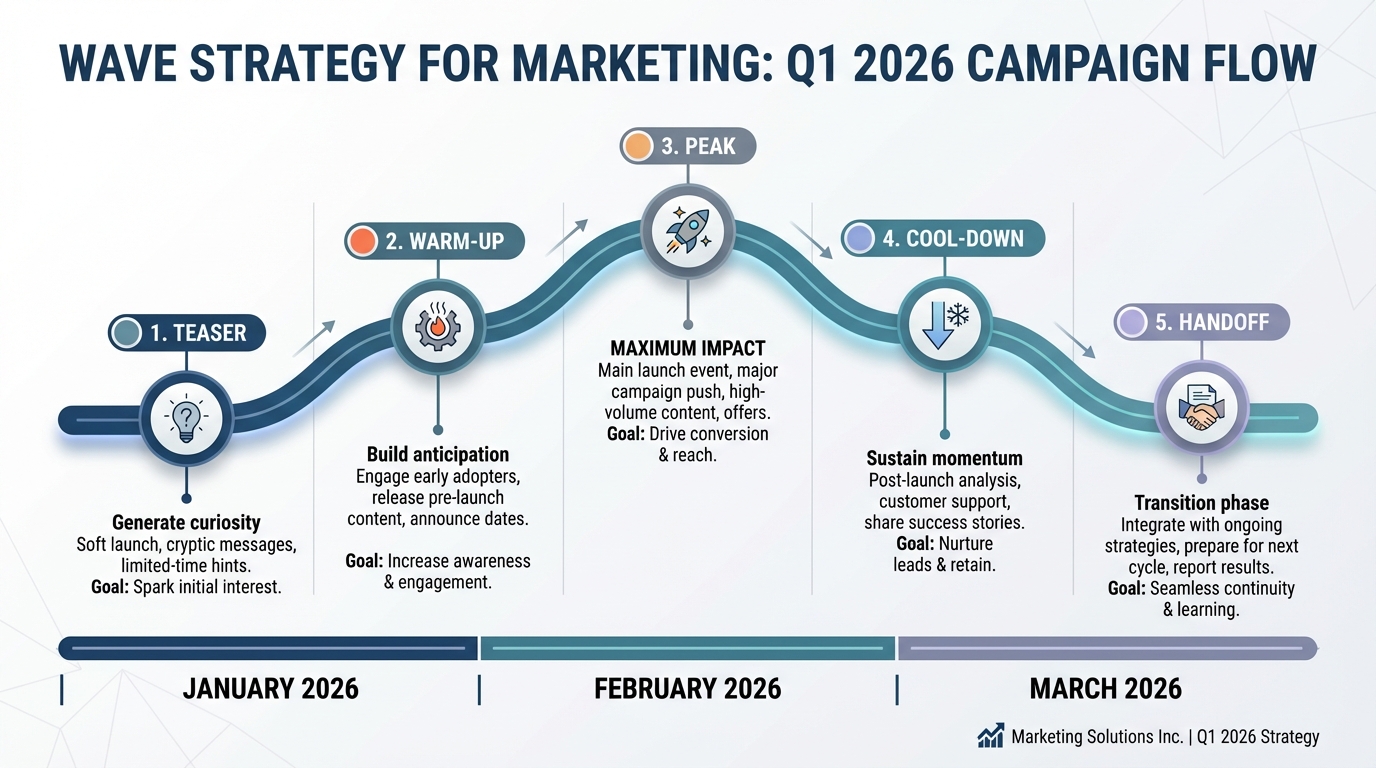
To maximize retention, enterprises must view the January to March festival calendar as a single, connected lifecycle backbone. The traditional “burst” model of marketing often leads to audience fatigue and high opt-out rates. Instead, continuous festival engagement requires a “wave” strategy that sequences audience interactions across back-to-back events. This ensures that the momentum gained during Makar Sankranti is carried forward into Republic Day and beyond.
A sophisticated festival-based lifecycle management program utilizes five distinct phases for each festival wave:
- Teaser (T-14 to T-7): Building anticipation through early-access announcements and intent-gathering surveys.
- Warm-up (T-6 to T-3): Deploying personalized recommendations based on past festive purchase behavior.
- Peak (T-2 to T+1): High-frequency, high-urgency triggers across WhatsApp and Push notifications.
- Cool-down (T+2 to T+7): Post-purchase care, UGC prompts, and “how-to” content (e.g., stain removal after Holi).
- Handoff (T+7 to T+14): Transitioning the user to the next festival teaser using loyalty credits earned in the previous wave.
In 2026, digital growth in India is increasingly regional-first. This means the sequencing of these waves must account for local nuances. For instance, while North India focuses on Lohri (Jan 13), South India observes a four-day Pongal celebration. A centralized automation hub must be capable of branching these journeys based on the user's geographic and linguistic profile. By chaining these touchpoints, brands can achieve a “compounding effect” on engagement metrics, reducing the cost of re-acquisition for each subsequent festival.
Source: DrikPanchang Lohri Dates
Scaling Regional Festival Personalization through Vernacular Greetings
The key to unlocking deep resonance in the Indian market lies in regional festival personalization. By 2026, generic English-language campaigns are seeing diminishing returns as users in Tier-2 and Tier-3 cities demand content in their native tongues. Vernacular festival greetings are no longer just about translation; they are about cultural alignment, using accurate idioms, local motifs, and perfect pronunciation in audio-visual content.
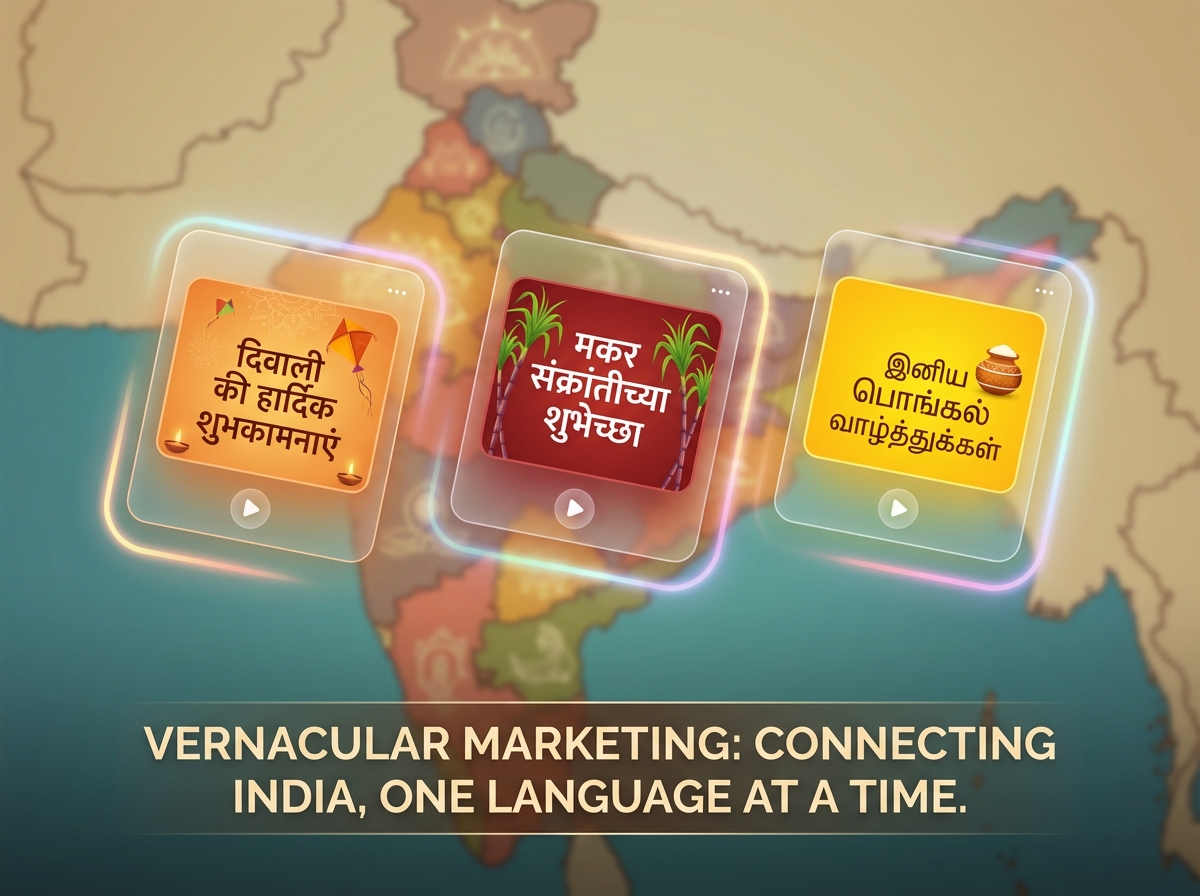
TrueFan AI's 175+ language support and Personalised Celebrity Videos allow brands to automate this level of localization at an enterprise scale. Imagine a Makar Sankranti campaign where a user in Maharashtra receives a video message saying, “Sankrantichya Hardik Shubhechha, [Name]!” while a user in Ahmedabad receives, “Uttarayan ni Haardik Shubhkaamnao!” accompanied by visuals of kites. This level of detail transforms a standard marketing message into a meaningful cultural interaction.
Effective cultural celebration marketing automation involves mapping specific visual and linguistic assets to regional segments. For Pongal (Tamil Nadu), the creative should feature sugarcane and traditional pots, whereas for Lohri (Punjab), the focus should be on the bonfire and harvest themes. By 2026, predictive analytics will allow brands to determine the preferred language of engagement for each user, ensuring that WhatsApp voice notes and video messages are delivered in the dialect that drives the highest conversion.
High-Impact Playbooks: From Makar Sankranti Customer Engagement to Holi Personalized Video Campaigns
Executing a successful Q1 strategy requires specific playbooks for each major milestone. These playbooks must balance commercial objectives with cultural sensitivity marketing.
Makar Sankranti Customer Engagement (Jan 14)
The focus here is on “The Great Harvest.” Automation triggers should be linked to family-oriented SKUs, wellness products, and winter care. Use weather-API triggers to send “kite-ready” notifications in cities like Ahmedabad or Jaipur when wind conditions are optimal. Loyalty multipliers should be applied to traditional sweets (Til-Gur) and festive attire, with referral streaks leading directly into the Republic Day window.
Republic Day Loyalty Campaigns (Jan 26)
This is a period for high-gravity brand storytelling. Avoid aggressive discounting tied to national symbols. Instead, focus on “Made in India” narratives and gratitude videos for long-tenure customers. Use tenure-based triggers to send personalized “Thank You” messages from the CEO or a brand ambassador, highlighting the customer's contribution to the brand's journey. This builds emotional equity that fuels long-term retention.
Valentine’s Day Retention Marketing (Feb 14)
Segmentation is critical here. Move beyond “couples” and include personas for self-love and friendship. Use cart-saver automation with deadline-driven video nudges. If a user abandons a gift item on Feb 10, a personalized WhatsApp video reminding them of the delivery SLA for their specific city can significantly lift recovery rates.
Maha Shivratri Spiritual Commerce (Feb 15)
This festival requires a respectful, non-commercialized tone. Offer opt-in spiritual content tracks, such as “Jagran” (night vigil) playlists or meditation guides. Triggers should be based on prior religious-category purchases or CSR interests. Avoid price-slashing; instead, focus on “Puja Kits” and wellness add-ons that facilitate the user's observance of the day.
Holi Personalized Video Campaigns (Mar 3–4)
Holi is the pinnacle of Q1 engagement. Deploy Holi personalized video campaigns featuring celebrity “color reveals” or safety tips. Post-Holi, the automation should pivot to “stain-care” and “skin-recovery” journeys. Use AI to remix UGC (User Generated Content) with celebrity intros, creating a viral loop that encourages users to share their festive moments on social media, further driving organic acquisition.
Cultural Celebration Marketing Automation and Data-Driven Orchestration
To manage the complexity of the January to March festival calendar, enterprises need a robust data orchestration blueprint. This involves integrating the Customer Data Platform (CDP) with execution channels to ensure real-time relevance. Cultural celebration marketing automation relies on a library of pre-approved, culturally vetted assets that can be dynamically swapped based on the user's profile.
Key Components of the Orchestration Blueprint:
- RFM Segmentation: Distinguish between “Champions” (who get early access) and “At Risk” users (who receive high-value reactivation offers).
- Frequency Caps: Implement strict rules to prevent fatigue. During a festival week, a user should receive no more than 2–3 high-impact messages across all channels.
- Stock-Aware Creatives: Ensure that if a “Holi Kit” goes out of stock, the creative assets in the automation flow are updated within 2 hours to reflect alternative products.
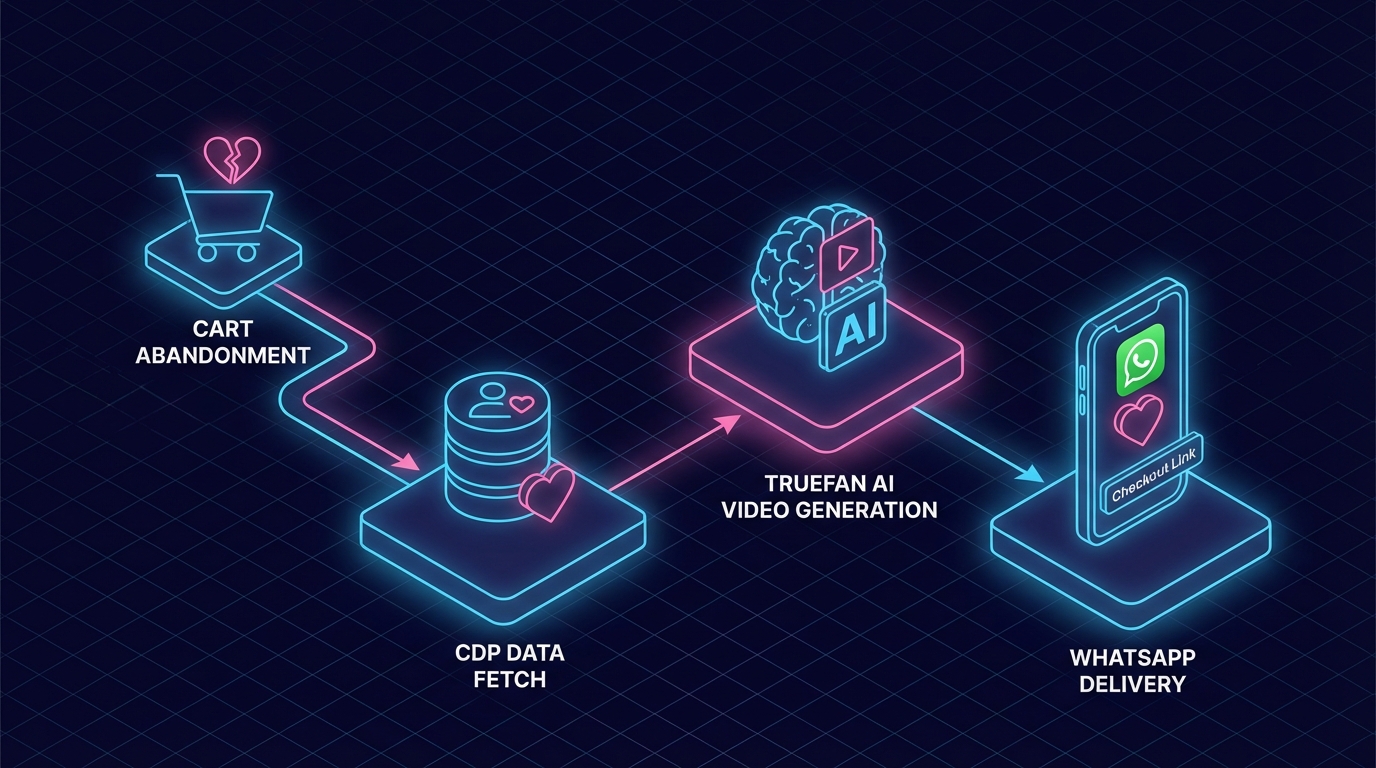
- API Integration: Utilize high-speed APIs to generate personalized content. For example, the TrueFan AI New Request API allows for the POSTing of JSON data (name, city, offer, language) to generate a video in under 30 seconds.
Technical Implementation (Example API Workflow):
- Trigger: User abandons a cart during the Valentine's Day window.
- Request: System calls https://newvideorequest.truefans.in/api/post_new_request with the user's name and the abandoned product.
- Polling: System checks https://dev-newvideorequest.truefans.in/api/video-status for the video_url.
- Delivery: Once ready, the video is sent via WhatsApp with a one-tap checkout link.
This level of automation ensures that the brand remains top-of-mind without requiring manual intervention for every regional variant.
Source: TrueFan Enterprise Executive Summary (Internal Data)
Measuring Festival Retention ROI and Enterprise Implementation
The final pillar of a successful Q1 strategy is festival retention ROI measurement. In 2026, marketing leaders are held accountable for incremental LTV rather than just immediate campaign revenue. By comparing cohorts exposed to the multi-festival automation versus a control group, brands can quantify the “loyalty lift” generated by continuous engagement.
Critical Metrics for Q1 2026:
- Cross-Festival LTV: The total value generated by a user who engaged in 3 or more festivals during the quarter.
- View-to-Conversion Rate: Specifically for video-led messages on WhatsApp and Email.
- Opt-out Rate by Language: A key indicator of whether your vernacular festival greetings are resonating or feeling intrusive.
- Referral Multiplier: The number of new users acquired through festival-themed share-and-earn programs.
Solutions like TrueFan AI demonstrate ROI through significantly higher engagement rates—often seeing 17% higher WhatsApp read rates and 3.2x higher participation in activation campaigns compared to static image-based marketing. For enterprises, the ability to scale these personalized experiences across millions of users while maintaining ISO 27001 and SOC 2 compliance is the ultimate competitive advantage.
As you conclude your Q1 planning, remember that the goal is to create a seamless experience where the customer feels celebrated, not just targeted. By leveraging AI-driven personalization and a structured lifecycle approach, you can turn the January to March window into a powerhouse for retention and long-term growth.
Frequently Asked Questions
What is the primary benefit of Q1 2026 multi-festival marketing automation?
The primary benefit is the ability to maintain continuous festival engagement without manual overhead. By automating the transition between festivals like Makar Sankranti and Republic Day, brands can increase repeat purchase frequency and LTV while reducing audience fatigue through smart frequency capping.
How does regional festival personalization impact conversion rates in India?
In the 2026 market, regional festival personalization is a major driver of trust. Using the customer's preferred language and culturally relevant motifs (like specific kite designs for Uttarayan) can lead to significantly higher click-through and conversion rates, especially in Tier-2 and Tier-3 cities.
Can TrueFan AI handle the scale of a national Holi campaign?
Yes, TrueFan AI is built for enterprise scale, having successfully delivered over 354,000 personalized videos in a single day for major campaigns. Its low-latency rendering and API-first architecture make it ideal for high-traffic events like Holi or Valentine’s Day.
What are the cultural guardrails for Republic Day loyalty campaigns?
Cultural sensitivity marketing for Republic Day requires a focus on service, inclusivity, and national pride. Brands must strictly adhere to the Flag Code of India and avoid using national symbols for direct commercial gain or aggressive discounting. The focus should be on “Made in India” stories and customer gratitude.
How do I measure the success of my festival-based lifecycle management?
Success should be measured through festival retention ROI measurement, focusing on cohort-based LTV, incremental revenue over a control group, and the “streak” rate—the percentage of users who engage with multiple festivals throughout the January to March period.