
Voice Commerce Vernacular India 2026: The Enterprise Playbook for Natural Language Commerce
Estimated reading time: 9 minutes
Key Takeaways
- Vernacular voice commerce will drive enterprise growth by 2026, demanding deep natural language commerce capabilities across dialects.
- Conversational shopping AI Hindi and regional-language NLU must handle Hinglish, phonetic variants, and context-aware intents.
- Scale campaigns with multilingual voice marketing automation and emerging smart speaker commerce Bharat routines.
- Activate demand via voice-activated offer redemption and lifecycle-triggered, personalized offers with robust fraud controls.
- Prove value through voice commerce ROI measurement and build LTV with conversational AI retention strategies.
By 2026, the digital landscape in India will have undergone a seismic shift, making voice commerce vernacular India 2026 the primary driver of enterprise growth. With the internet user base projected to exceed 900 million, the majority of new entrants are coming from rural areas where voice is the preferred interface. This transition necessitates a sophisticated approach to natural language commerce India, moving beyond simple translation to deep linguistic and cultural resonance.
Enterprises must recognize that tier-2 voice commerce adoption is no longer a peripheral experiment but a core survival strategy. As rural India extends its lead in internet usage over urban centers, the demand for intuitive, hands-free shopping experiences has skyrocketed. This playbook provides a technical and operational roadmap for Digital Innovation Teams to pilot and scale multilingual voice shopping journeys that capture the "Next Billion Users."
1. The Architecture of Natural Language Commerce India
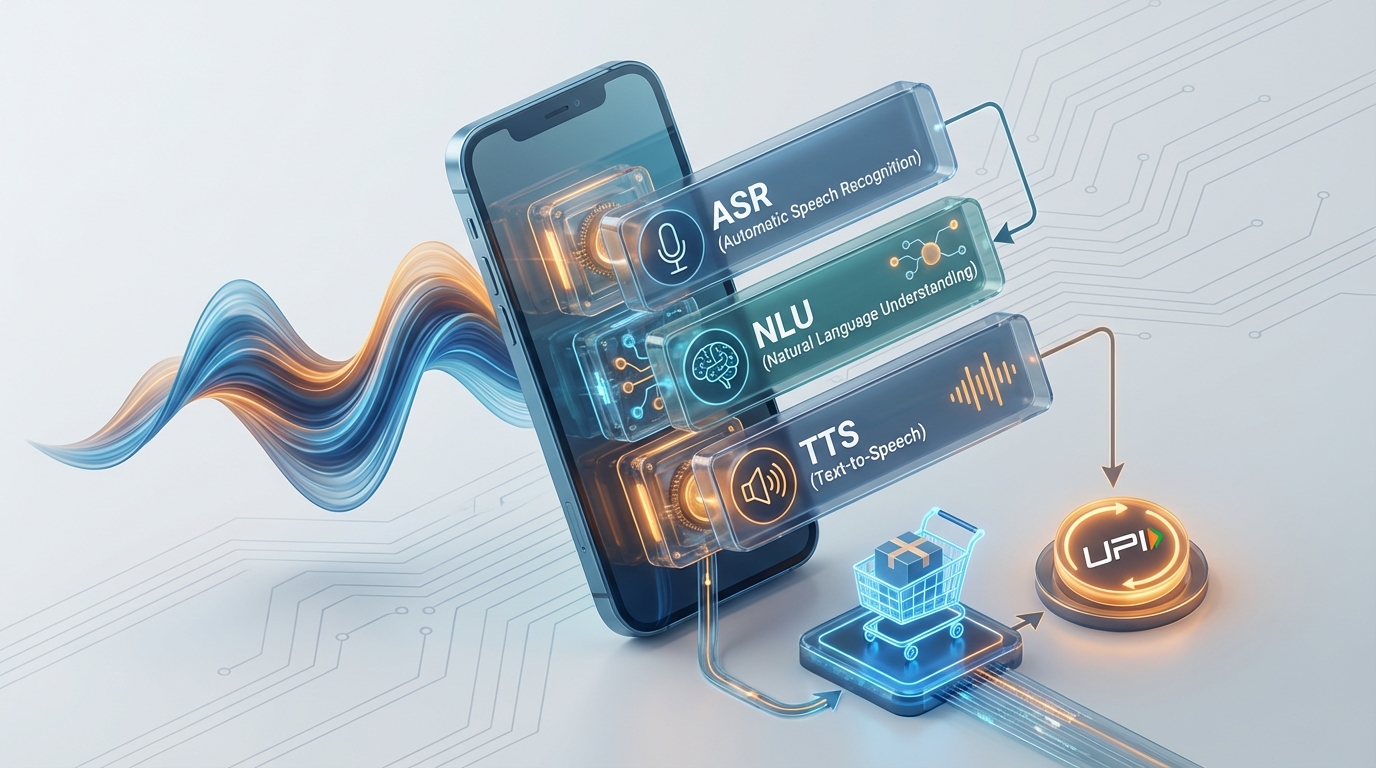
Building a robust framework for natural language commerce India requires a multi-layered technology stack that transcends traditional e-commerce boundaries. At its core, the system must integrate Automatic Speech Recognition (ASR), Natural Language Understanding (NLU), and Text-to-Speech (TTS) engines specifically tuned for the Indian linguistic tapestry. This includes not just the 22 official languages but the myriad dialects and the ubiquitous "Hinglish" that defines modern Indian communication.
The orchestration layer must handle complex event buses for triggers such as cart abandonment, restock alerts, and local festival cycles. For instance, a user in rural Maharashtra might interact via a WhatsApp voice note, requiring the system to compress audio, identify the Marathi dialect, and map the intent to a specific product SKU. This must be supported by a real-time catalog and dynamic pricing engine that adjusts based on regional availability and logistics.
Payment integration is the final, critical hurdle in the voice journey. Enterprises must deploy deep-linked UPI and UPI Lite flows that allow for voice-confirmed transactions. Handling multilingual OTPs and capturing explicit consent for mandates are essential for maintaining security and trust. By 2026, the integration of voice-activated payment handlers will be the standard for reducing friction in the checkout process for non-English speaking cohorts.
Source: India’s internet users to exceed 900 million in 2025 - IBEF
Source: Rural India extends lead in internet usage - Financial Express
Source: India Voice AI market growth projections - Vomyra
2. Deploying Conversational Shopping AI Hindi and Regional Language Voice Shopping
To effectively capture the Hindi-speaking heartland, enterprises must move beyond literal translation and invest in conversational shopping AI Hindi that understands context and colloquialisms. A user saying "Saste running shoes dikhao" (Show me cheap running shoes) requires the AI to understand the intent of "saste" as a budget filter and "running shoes" as a category, even when mixed with English nouns. The NLU must be trained on phonetic variants and common Hinglish structures to ensure high intent completion rates.
Expanding this to regional language voice shopping involves a phased rollout across the "Big 6" Indic languages: Bengali, Telugu, Marathi, Tamil, Kannada, and Gujarati. Each language requires its own state handling and error repair logic. For example, a Tamil-speaking user may have different confirmation preferences than a Bengali speaker. Using Speech Synthesis Markup Language (SSML) allows the TTS to sound natural, adjusting pitch and speed to match regional speech patterns, which significantly enhances user comfort and trust.
The design of these flows should prioritize core intents: product search, price checks, and reordering. By analyzing funnel drop-offs by dialect and region, brands can continuously refine their ASR confidence scores. This data-driven approach ensures that the voice assistant becomes more proficient over time, reducing the need for human intervention and providing a seamless shopping experience that feels native to the user's daily life.
Source: Brands need a voice search strategy in India - WARC
Source: Vernacular voice commerce: Unlocking India's next billion shoppers - BuildMyStore
3. Activation via Voice-Activated Offer Redemption and Personalized Offers
Marketing in 2026 is defined by the immediacy of voice. Voice-activated offer redemption allows brands to create interactive campaigns where users unlock discounts by speaking a specific phrase. Imagine a Diwali campaign where a user says "Meri Diwali Offer" to reveal a personalized coupon. This mechanic not only increases engagement but also provides a unique identifier for tracking the effectiveness of voice-led marketing efforts across different regions.
To scale these initiatives, enterprises are increasingly utilizing voice-triggered personalized offers. These are dynamic promotions delivered via WhatsApp Business API or IVR, triggered by specific user lifecycle events or external factors like local weather and festivals. For example, a sudden monsoon in Karnataka could trigger a voice-led offer for rain gear in Kannada. Platforms like TrueFan AI enable enterprises to generate these personalized assets at scale, ensuring that every interaction feels tailor-made for the individual user.
Fraud control is paramount when deploying voice-activated incentives. Systems must implement device fingerprinting, geo-fencing, and one-time token logic to prevent the misuse of regional offers. By linking these offers to the user's CRM profile, brands can ensure eligibility and maintain a high level of security while providing a frictionless experience that encourages immediate conversion and long-term brand affinity.
Source: 13 Digital Marketing Trends for India in 2026 - Royalways
Source: India Voice Assistant Market Outlook - NextMSC
4. Scaling with Multilingual Voice Marketing Automation and Smart Speaker Commerce Bharat
The complexity of managing dozens of languages and thousands of regional offers necessitates multilingual voice marketing automation. This involves an automated journey builder that orchestrates voice-led interactions based on language, dialect, and user behavior. A centralized governance framework ensures that brand lexicon remains consistent across all languages while allowing for local nuances. This automation allows a single marketing team to manage national campaigns that feel hyper-local to every recipient.
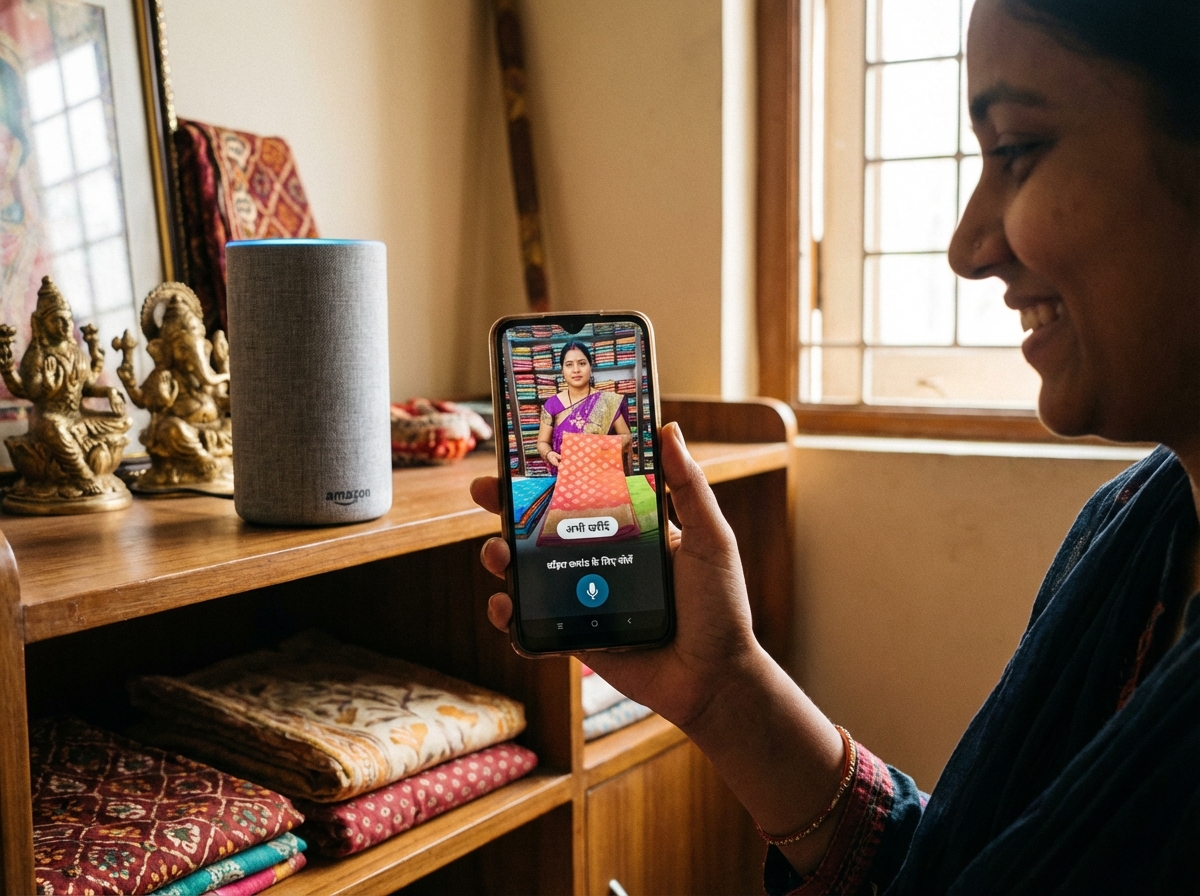
While smartphones are the primary gateway, smart speaker commerce Bharat is gaining momentum in semi-urban households. Integrating with Google Assistant and Alexa routines allows brands to become part of the user's daily home environment. For instance, a morning routine could include a voice nudge for a grocery restock. In areas with lower smart speaker density, IVR and WhatsApp voice notes serve as the primary channels, providing a similar hands-free experience without the need for dedicated hardware.
TrueFan AI's 175+ language support and Personalised Celebrity Videos and the voice sync accuracy comparison guide provide the creative engine for these automated journeys, allowing brands to deliver high-impact, localized content that resonates deeply with tier-2 and tier-3 audiences. By integrating these assets into the automation flow, enterprises can achieve a level of personalization that was previously impossible at scale. This holistic approach ensures that the brand's voice is heard—literally—in every corner of the country.
Source: Internet users in India to surpass 900 million by 2025 - Indian Express
Source: TrueFan AI Voice Commerce Insights
5. Discovery through Vernacular Voice Search Optimization and Dialect-Specific Shopping Videos
Capturing the user at the moment of intent requires a robust strategy for vernacular voice search optimization. Voice queries in India are often longer, more conversational, and heavily influenced by local dialects. Brands must optimize their digital assets for "Hinglish" and regional script queries, focusing on long-tail keywords like "Sabse sasta AC kahan milega" (Where can I find the cheapest AC). Implementing FAQ and HowTo schema in multiple Indic languages ensures that brand content appears in voice snippets and assistant responses.
To complement voice search, dialect-specific shopping videos provide the visual context necessary for conversion. These short, 15-30 second videos should mirror the exact voice flow the user is experiencing, using local idioms and on-screen captions in the regional script. A video in the Bhojpuri dialect for a user in Bihar, featuring a clear CTA and a UPI deep-link, is significantly more effective than a generic English advertisement. These videos can be distributed via WhatsApp, ShareChat, or Moj to reach users where they spend their time.
The synergy between voice search and video content creates a powerful discovery layer. When a user searches for a product via voice, the assistant can surface a dialect-specific video that explains the product's benefits and offers a direct path to purchase. This "see it, hear it, buy it" model is particularly effective for users with lower literacy levels, as it removes the barriers of reading and typing, making commerce truly accessible to everyone.
Source: 45% of Indians still do not access internet - ET Telecom
Source: Brands need a voice search strategy in India - WARC
6. Maximizing Voice Commerce ROI Measurement and Conversational AI Retention Strategies
For any enterprise initiative, the ability to prove value is critical. Voice commerce ROI measurement involves tracking a unique set of KPIs, including voice-initiated sessions, intent completion rates, and the uplift in Average Order Value (AOV) compared to traditional text-based channels. By tagging events by language and region, brands can identify which linguistic cohorts are most profitable and where the funnel needs optimization. Solutions like TrueFan AI demonstrate ROI through significant increases in engagement and conversion rates in regional markets.
Beyond the initial sale, conversational AI retention strategies are essential for building long-term Customer Lifetime Value (LTV). Voice-first post-purchase journeys, such as automated reorder nudges ("30 din baad phir se order karen?") or voice-led warranty registrations, keep the brand top-of-mind. Loyalty programs can also be voice-enabled, allowing users to check their points balance or redeem rewards through a simple regional language command.
Finally, enterprise-grade governance is required to manage the risks associated with AI-driven voice commerce. This includes DPDP-aligned consent capture, cultural QA of scripts to avoid regional sensitivities, and human-in-the-loop systems for complex support queries. By combining technical excellence with cultural intelligence, Indian enterprises can build a voice commerce ecosystem that is not only profitable but also inclusive and trustworthy for the next generation of shoppers.
Source: India Voice AI trends and growth - Vomyra
Source: TrueFan AI Enterprise Offerings
2026 Implementation Roadmap
- Q1 2026: Pilot in Hindi + 2 regional languages; focus on top 10 intents (search, offer, reorder) via WhatsApp and IVR.
- Q2 2026: Expand to 6+ languages; launch smart speaker commerce Bharat skills; integrate voice-activated offer redemption.
- Q3 2026: Scale to 20+ regions; deepen voice assistant regional integration; automate with multilingual voice marketing automation.
- Q4 2026: Standardize voice commerce ROI measurement dashboards; implement enterprise-wide governance and accessibility upgrades.
Frequently Asked Questions (FAQ)
1. Why is voice commerce vernacular India 2026 the critical focus for enterprises?
By 2026, over 50% of India's 900M+ internet users will prefer voice commands over typing. With rural usage surpassing urban, providing a shopping experience in the user's native dialect is the only way to capture the tier-2 and tier-3 market effectively.
2. How does conversational shopping AI Hindi handle "Hinglish" queries?
Advanced NLU models are trained on phonetic variants and mixed-language datasets. They identify the core intent (e.g., "buy") and entities (e.g., "shoes") regardless of whether the user uses the Hindi or English term, ensuring a seamless experience for modern Indian speakers.
3. What are the security measures for voice-activated offer redemption?
Enterprises use device fingerprinting, geo-fencing, and single-use tokens linked to a user's CRM profile. This ensures that offers are redeemed by eligible users and prevents the fraudulent use of regional promotions.
4. Can voice commerce ROI measurement be integrated with existing CRM systems?
Yes, by using UTM-tagged deep links and API integrations, voice interactions are mapped directly to user profiles in the CRM. This allows for precise tracking of conversion rates, AOV uplift, and long-term LTV across different linguistic segments.
5. How does TrueFan AI support the creation of dialect-specific shopping videos?
TrueFan AI provides a scalable platform for generating personalized, multilingual video content in over 175 languages and dialects. This allows brands to automatically trigger shoppable videos that match the user's voice intent, significantly boosting engagement and trust in regional markets.
6. What is the role of smart speaker commerce Bharat in rural areas?
While smartphone penetration is higher, smart speakers are becoming common in semi-urban households for family-shared tasks. For areas with lower device density, brands use IVR and WhatsApp voice notes to provide a similar "hands-free" commerce experience.
Frequently Asked Questions
Why is vernacular voice commerce pivotal for India in 2026?
Vernacular voice commerce aligns with how the next billion users naturally interact—through speech in local languages. It removes typing and literacy barriers, increases intent completion, and expands market reach across tier-2/3 regions.
How do enterprises handle Hinglish and dialects in NLU?
Train ASR/NLU on mixed-language corpora, phonetic variants, and colloquialisms. Use entity resolution, context windows, and confidence thresholds tuned by region, plus SSML in TTS for natural prosody.
What safeguards secure voice-activated offer redemption?
Device fingerprinting, geo-fencing, OTP/one-time tokens, CRM-linked eligibility, and consent capture mitigate fraud while keeping redemption flows fast and user-friendly.
How can brands measure ROI from voice commerce?
Track voice-initiated sessions, intent completion, AOV uplift, CAC/LTV by language, and re-engagement. Attribute via deep links and CRM integrations to see cohort-wise profitability.
Which channels best scale multilingual voice journeys?
Combine WhatsApp voice notes, IVR, and smart-speaker routines with multilingual voice marketing automation to orchestrate localized, high-frequency interactions at national scale.



