AMC renewal automation 2026: The enterprise playbook to retain annual maintenance contracts before April
Key Takeaways
- Adopt a T-90/T-60/T-30 renewal cadence to reinforce value early and avoid last-minute discounting
- Use a predictive renewal risk model powered by CLM, ITSM, and IoT data to trigger proactive interventions
- Deploy personalized AMC video campaigns to recap ROI, prove SLA performance, and upsell higher tiers
- Streamline deals with negotiation automation, tiered offers, and multi-year incentives
- Ensure stack integration and governance for speed, scale, and enterprise-grade security
AMC renewal automation 2026 is no longer a luxury for B2B service companies; it is the definitive survival mechanism for the upcoming fiscal transition. In the high-stakes landscape of Indian enterprise commerce, the period leading up to April represents a critical juncture where billions in recurring revenue are either secured or lost to competitors. As procurement departments become more data-driven and budget-conscious, the traditional “manual reminder” approach to B2B service contract renewals has become obsolete, replaced by sophisticated, AI-driven retention ecosystems.
The Indian financial year, running from 1 April to 31 March, creates a unique seasonal pressure where the majority of annual maintenance contract retention efforts must peak in the final quarter (Q4). During this window, stakeholders reassess vendor value, procurement freezes thaw for new negotiations, and last-mile operational bottlenecks often threaten to derail even the most stable partnerships. To navigate this, enterprises are shifting toward predictive churn prevention and hyper-personalized value reinforcement to ensure multi-year uptake and seamless renewals.
Source: ClearTax explainer
This playbook outlines the strategic transition from reactive renewal management to a proactive, automated framework. By integrating predictive risk models, contract expiry reminder automation, and enterprise AMC video campaigns, your organization can transform the April renewal crunch into a predictable engine for growth and customer loyalty.
1. Defining the Scope of AMC Renewal Automation 2026
To master the 2026 landscape, we must first establish a sophisticated understanding of the components that constitute modern annual maintenance contract retention. An Annual Maintenance Contract (AMC) is a comprehensive service agreement that covers both preventive and corrective maintenance, encompassing parts, labor, and specific response/restore Service Level Agreements (SLAs). Unlike a standard warranty, an AMC is a proactive partnership designed to maximize asset uptime and lifecycle value.
Service Level Agreements (SLAs) serve as the heartbeat of these contracts. They define measurable commitments—such as 99.9% uptime, 4-hour response times, or Mean Time To Repair (MTTR)—that provide the empirical evidence of value required for a successful renewal. In 2026, the ability to visualize these metrics through service level agreement videos has become a primary differentiator for elite service providers.
Enterprise contract management automation represents the orchestration of this entire lifecycle. By leveraging Contract Lifecycle Management (CLM) and Configure, Price, Quote (CPQ) systems, enterprises can automate alerts, synchronize data across CRM platforms, and streamline approval workflows. This digital maturity is essential because AMC management software in 2026 is shifting toward complete workflow digitization and predictive analytics.
Source: SmartLogics (India)
2. The April Renewal Season: Why Timing Dictates Retention
The Indian B2B landscape is governed by the April-March fiscal cycle, which dictates that the vast majority of maintenance service retention activities must be concluded before the first week of April. This seasonality creates a “renewal bottleneck” where multi-stakeholder committees re-evaluate every vendor on a cost-to-value basis. If your outreach begins in March, you have already lost the strategic high ground to fatigue and procurement bureaucracy.
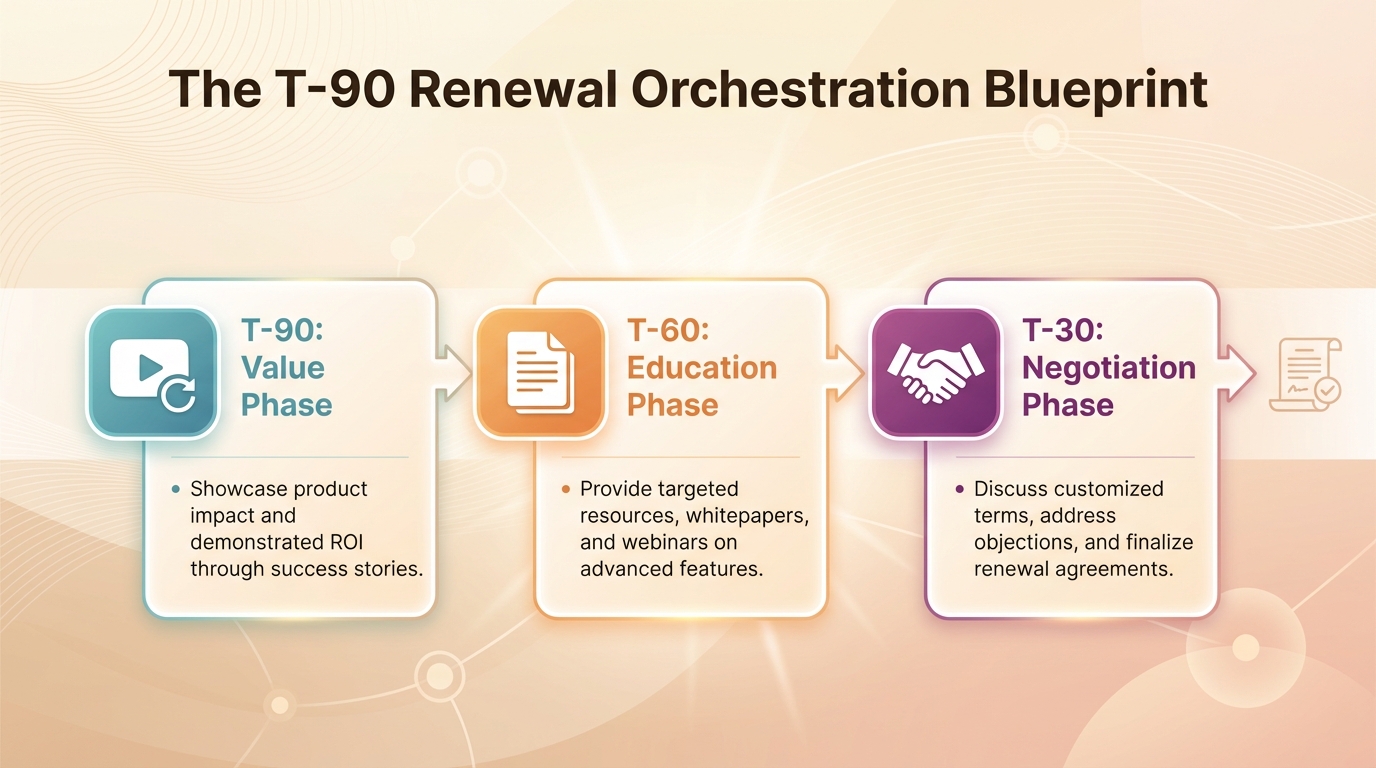
To succeed, enterprises must adopt a T-90/T-60/T-30 approach. This timeline ensures that value is reinforced long before the price is discussed. By 2026, data suggests that 78% of B2B enterprises in India will have automated at least 60% of their renewal workflows to avoid the “last-week negotiation fatigue” that leads to heavy discounting and margin erosion.
Industrial AMC marketing during this period must focus on the “budget reset” phenomenon. As new budgets are allocated in April, the goal is to have your AMC already “pre-approved” as a non-negotiable line item. This requires a consistent cadence of communication that proves the ROI of the service throughout the preceding months, ensuring that the renewal is viewed as a value-preservation step rather than a new expense.
Source: ClearTax
3. Building a Predictive Renewal Risk Model
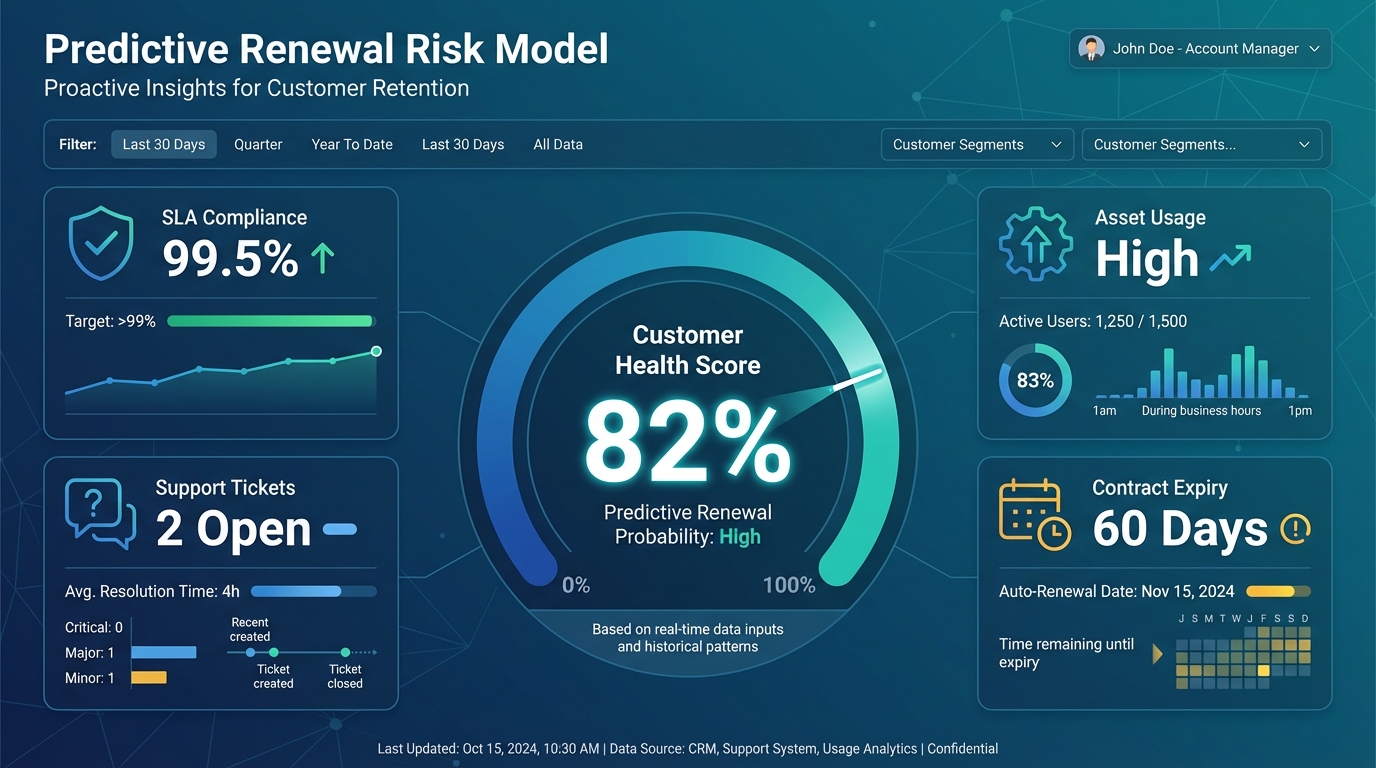
The foundation of AMC renewal automation 2026 is the ability to predict churn before it happens. A renewal risk score should be synthesized from multiple data inputs, including asset usage, SLA performance, incident volume, and open escalations. If a customer has experienced three major SLA breaches in Q3, their “risk score” should automatically trigger a high-touch intervention.
Contract expiry reminder automation is the first line of defense. Automated systems should trigger multi-channel nudges starting at T-90, escalating to senior management by T-30 if no engagement is recorded. This prevents the “silent churn” where a contract simply lapses because no one was assigned to follow up. Leading Indian CLM platforms like Sirion and Volody emphasize that automated alerts significantly mitigate the risk of missed deadlines.
Source: Sirion (India)
Source: Volody (India)
Furthermore, data from ITSM and IoT telemetry should feed directly into the risk model. Declining usage or a spike in “unresolved” tickets are leading indicators of dissatisfaction. By 2026, predictive churn models are expected to reduce “surprise” non-renewals by 35% in the industrial sector by allowing teams to address friction points months before the contract expires.
4. Value Storytelling via Enterprise AMC Video Campaigns
In the era of information overload, static PDF reports are no longer sufficient to justify multi-million rupee contracts. Enterprise AMC video campaigns have emerged as the most effective medium for value storytelling. These campaigns use data-driven personalization to show each stakeholder exactly what they gained from the service over the past year.
Contract value reinforcement videos are particularly potent. A 60-90 second recap can highlight specific metrics: “You achieved 99.8% uptime, resolved 45 critical incidents within 2 hours, and avoided an estimated ₹12 Lakhs in potential downtime costs.” Platforms like TrueFan AI enable enterprises to generate these hyper-personalized videos at a massive scale, ensuring that every site manager and CFO receives a tailored message.
Service agreement personalization extends to the language and regional context of the recipient. In a diverse market like India, delivering a renewal message in Hindi, Tamil, or Bengali can significantly increase engagement. TrueFan AI’s 175+ language support and Personalised Celebrity Videos allow brands to add an element of prestige and authority to their renewal outreach, making the message impossible to ignore.
Source: TrueFan AI
Source: Video personalization ROI and engagement metrics
5. Renewal Negotiation Automation and Expansion Plays
Once the value has been established, the focus shifts to the transaction. Renewal negotiation automation involves using logic-based engines to generate tiered proposals. For “Green” accounts with high health scores, the system might offer a standard renewal with a small price protection. For “Red” at-risk accounts, it might automatically include remediation credits or a “service audit” to rebuild trust.
To drive expansion, companies are utilizing AMC upgrade incentive videos. These videos don’t just ask for more money; they demonstrate the quantified ROI of moving to a higher tier. For example, a video might show how upgrading to “Platinum Support” would have reduced the customer’s specific MTTR by an additional 20% over the last year. This data-backed upselling is far more effective than generic sales calls.
Multi-year contract promotions are another critical tool for 2026. By offering to “lock in 2026 rates for 36 months,” companies can stabilize their long-term revenue while protecting customers from future inflation. In the Indian market, where price sensitivity is high, showing the Total Cost of Ownership (TCO) savings of a 3-year deal versus three 1-year deals is a winning strategy.
Source: Service CRM India
Source: SmartLogics
6. The Orchestration Blueprint: T-90 to T-0
Successful AMC renewal automation 2026 requires a disciplined timeline. The “T-minus” approach ensures that every stakeholder is reached at the optimal moment with the right message.
- T-90 Days (The Value Phase): Trigger contract expiry reminder automation. Send the first contract value reinforcement video. This is the time for the Customer Success (CS) team to schedule an Executive Business Review (EBR) to align on the past year’s successes.
- T-60 Days (The Education Phase): Deploy a service agreement personalization microsite. Include service level agreement videos that demystify complex terms. This phase is about removing “indecision friction” by ensuring the buyer understands exactly what they are paying for.
- T-30 Days (The Negotiation Phase): Send the renewal negotiation automation offer set. Include AMC upgrade incentive videos and multi-year contract promotions. If no response is received, escalate to regional heads and utilize high-impact channels like WhatsApp Business API for direct executive reach.
By 2026, 90% of procurement heads are expected to prefer these digital-first, automated negotiation interfaces over traditional back-and-forth emails, as they provide a clear audit trail and faster approval cycles.
7. Stack Integration and Enterprise Governance
To make enterprise contract management automation a reality, your technology stack must be seamlessly integrated. The CLM (like Sirion or Volody) serves as the system of record for contract clauses, while the CRM (Salesforce/HubSpot) manages stakeholder relationships. The “magic” happens when these systems connect to a video generation engine.
Solutions like TrueFan AI demonstrate ROI through their ability to integrate via APIs and webhooks, generating personalized videos in under 30 seconds. This speed is crucial during the April rush when thousands of renewals are happening simultaneously. Furthermore, enterprise-grade security—including ISO 27001 and SOC 2 compliance—is mandatory to ensure that sensitive contract data and customer PII are protected during the automation process.
Governance is equally important. Automated workflows must include “human-in-the-loop” checkpoints for high-value contracts. Using a centralized “Studio” for video production allows marketing and legal teams to pre-approve templates, ensuring that every automated message remains on-brand and legally compliant.
8. Industry Mini-Playbooks: SaaS vs. Industrial
The application of AMC renewal automation 2026 varies significantly by sector. In the SaaS and IT Services world, the focus is on usage and feature adoption. B2B customer success videos should highlight “time saved” or “tasks automated.” Renewal offers are often usage-based, and the primary channels are in-app notifications and email.
In the Industrial, Facilities, and OEM sectors, the focus shifts to physical asset health. Industrial AMC marketing must emphasize site-level SLA performance, such as “99% uptime for the HVAC system in the Chennai plant.” Videos should show asset-criticality views and parts availability status. Because these buyers are often in the field, WhatsApp-first orchestration with localized language support is the most effective way to reach decision-makers.
Regardless of the industry, the core objective remains the same: use data to prove value, use automation to remove friction, and use personalization to build trust.
Conclusion: Securing Your 2026 Revenue
The transition to AMC renewal automation 2026 is a strategic imperative for any enterprise looking to dominate the Indian B2B market. By moving away from manual, reactive processes and embracing a data-driven, video-first approach, you can eliminate the chaos of the April renewal season. The combination of predictive risk modeling, contract value reinforcement videos, and automated negotiation logic creates a frictionless experience for the customer and a predictable revenue stream for the business.
As we look toward the 2026 fiscal cycle, the winners will be those who treat annual maintenance contract retention not as a clerical task, but as a high-tech marketing and success motion. By implementing these strategies today, you ensure that your “maintenance service retention” is not just a goal, but a guaranteed outcome.
Ready to transform your renewal process? Book an Enterprise Renewal Readiness Workshop or pilot a 30-day Value Reinforcement Sprint to see the impact of hyper-personalization on your bottom line.
Frequently Asked Questions
How does AMC renewal automation 2026 differ from traditional CRM reminders?
Traditional CRM reminders are often just internal tasks for sales reps. AMC renewal automation 2026 is an external-facing, multi-channel orchestration that uses predictive data to send personalized content, such as videos and tiered offers, directly to the customer without manual intervention.
Can personalized video really impact B2B renewal rates?
Yes. Data from 2026 indicates that personalized video content increases renewal intent by 44% compared to static PDF reports. It humanizes the data and makes the value proposition much easier for a busy executive to digest. See more on AI-powered video campaigns.
Is it difficult to integrate video automation with existing CLM systems?
No. Modern platforms like TrueFan AI are designed to work via APIs. They can pull data directly from your CLM or CRM, generate a video, and embed it into an automated email or WhatsApp flow in less than 30 seconds.
How do we handle multi-stakeholder approvals in an automated flow?
The system can be configured to “multi-thread” the outreach. For example, the CFO receives a video focused on TCO and ROI, while the Technical Lead receives a video focused on SLA performance and uptime. Each stakeholder can then provide digital “thumbs-up” approvals within a unified portal.
What are the primary KPIs for measuring the success of these campaigns?
The core KPIs include Renewal Rate, Net Revenue Retention (NRR), and Multi-year Take-rate. Operationally, you should also track video view-through rates and the reduction in “time-to-renewal” (the number of days it takes to close the contract once the T-90 trigger is pulled).



