URL-to-video AI generator: Convert any product link into 15-second ads (India)
Estimated reading time: ~12 minutes
Key Takeaways
- URL-to-video AI converts Shopify, Amazon, and Flipkart links into 15-second ads, cutting production costs by up to 88% versus freelancers.
- Automated pipeline includes data extraction, storyboarding, safe zones, voiceover, and captions optimized for short-form placements.
- Platforms like Studio by TrueFan AI add localization (175+ languages) and photorealistic avatars to boost trust and conversions.
- Amazon SBV and Shopify workflows require strict specs; tools enforce sound-off readability and platform-safe text areas.
- Scale with catalog sync, governance, and APIs; brands report lower CAC and higher ROAS through rapid A/B testing.
In the hyper-competitive Indian e-commerce landscape of 2026, speed is the only sustainable moat. For D2C founders and Shopify sellers, the traditional bottleneck has always been creative production. Paying ₹5,000+ per video to freelancers for every single SKU is no longer a viable strategy for growth. This is where a URL-to-video AI generator changes the game. By simply pasting a product link from Amazon, Flipkart, or Shopify, brands can now generate high-converting, 15-second video ads in minutes, ready for Meta Reels, YouTube Shorts, and Amazon Sponsored Brands Video.
The shift toward automation is backed by staggering data. Recent reports indicate that India’s digital advertising market is set to cross $10 billion by the end of 2026, with over 65% of that budget flowing into short-form video content. Furthermore, 78% of Indian businesses have now integrated AI into their marketing stacks to combat rising customer acquisition costs (CAC). For a brand with 50+ SKUs, a URL-to-video AI generator India focused tool isn't just a luxury—it’s the engine of modern performance marketing.
1. Why a URL-to-video AI generator in India beats ₹5,000+ per video
The traditional workflow for creating a product video in India involves a multi-day cycle: briefing a freelancer, sending samples, waiting for a draft, and iterating on edits. At a baseline cost of ₹5,000 to ₹15,000 per video, scaling a catalog of 100 products requires a capital outlay of ₹5 lakhs or more. In contrast, a URL-to-video AI generator automates the extraction of product data—titles, images, descriptions, and pricing—to assemble a professional ad in under five minutes.
The Cost-Time Delta in 2026
Data from 2026 shows that AI-automated creative production saves Indian D2C brands approximately 88% in costs compared to traditional agencies. While a freelancer might take 48 hours to deliver one variant, an AI tool can output 10 variants for A/B testing in the time it takes to brew a cup of chai.
Platforms like Studio by TrueFan AI enable brands to bypass these production bottlenecks entirely by using pre-licensed, photorealistic virtual humans for real-time interactive AI avatars in India to deliver product pitches. This “human touch” is critical in the Indian market, where trust and relatability drive conversion.
Key Benefits for Indian Sellers:
- Instant Localization: Convert a single English product link into ads for Hindi, Tamil, Bengali, and 175+ other languages.
- Consistency: Maintain brand colors, fonts, and logos across thousands of videos without manual oversight.
- Marketplace Optimization: Automatically generate videos that meet the strict technical specs of Amazon India and Flipkart.
Sources:
- Zartek India: Best AI Video Generation Websites
- TrueFan AI: Cinematic AI Video Generator India 2026
- TrueFan AI: Free AI Video Generator Guide
2. Product link to video converter — how it works end-to-end
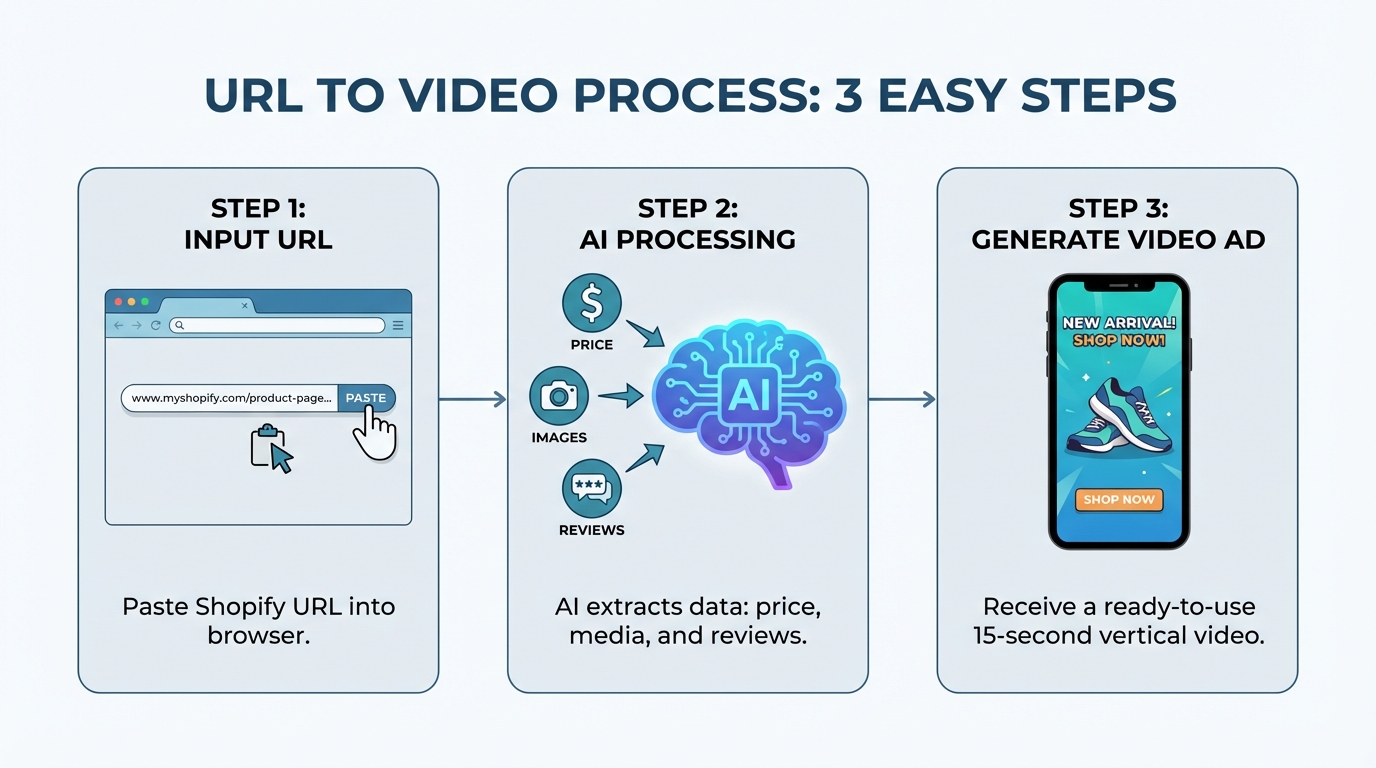
Understanding the mechanics of a product link to video converter is essential for founders who want to automate their creative pipeline. The process isn't just about “making a video”; it’s about intelligent data parsing and cinematic assembly.
Step 1: Data Extraction (The Crawl)
When you paste a URL from Shopify or Amazon into an AI video generator from URL, the engine performs a deep crawl. It identifies the H1 (Product Title), the gallery images (Hero and secondary shots), the bullet points (Features), and the current price/discount. Advanced tools even scrape social proof, such as star ratings and top-rated customer reviews, to include as overlays.
Step 2: Auto-Storyboarding
The AI doesn't just slap images together. It maps the extracted data into a 15-second sequence. A typical storyboard includes:
- 0-2s: The Hook (Hero image + price drop animation).
- 3-10s: The Value Prop (Feature bullets with motion transitions).
- 11-15s: The Closer (Social proof + Brand CTA).
Step 3: Branding and Safe Zones
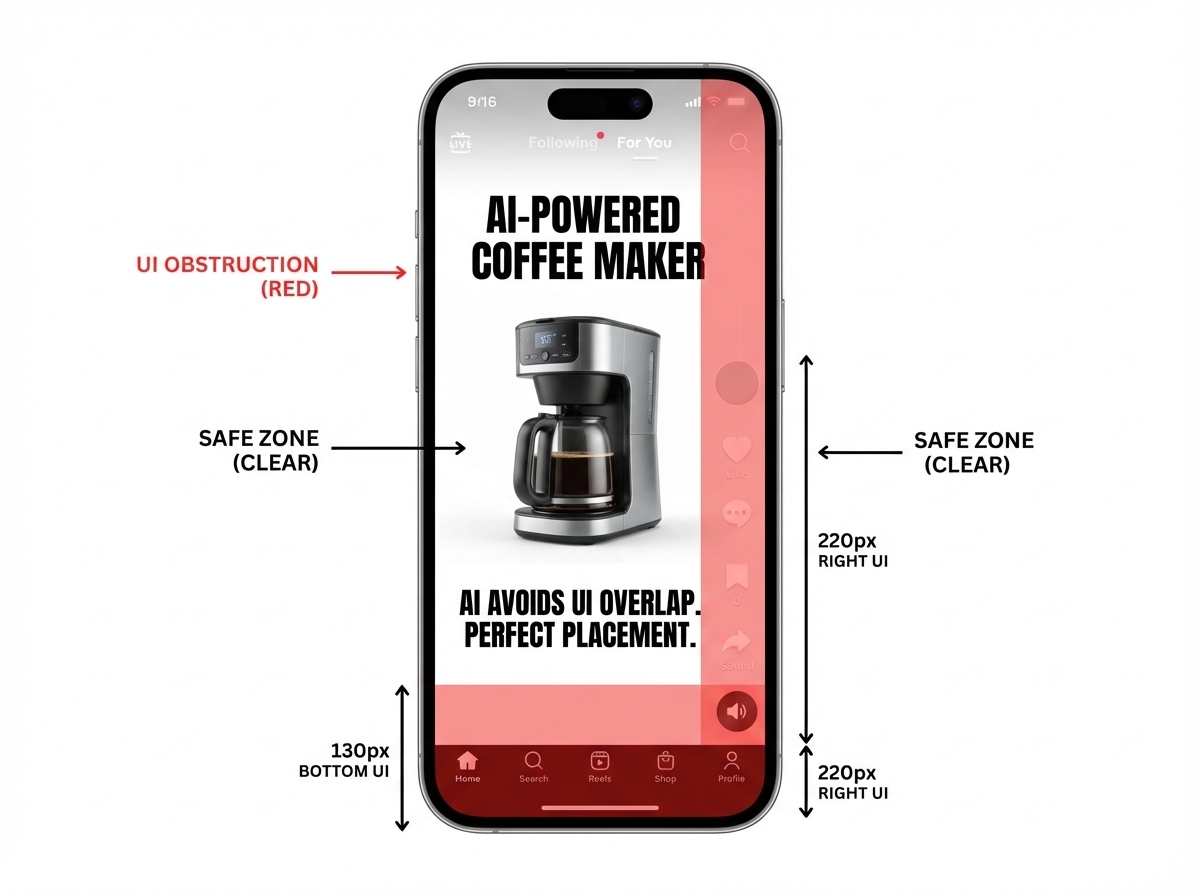
The tool applies your brand kit—logo, color palette, and typography—automatically. Crucially, it enforces “safe text areas.” For 9:16 Reels or 1:1 Amazon ads, it ensures that captions and CTAs aren't cut off by the platform's UI elements (like the “Like” button on Instagram or the “Sponsored” tag on Amazon).
Step 4: Voice and Captions
Using advanced Text-to-Speech (TTS) with AI voice cloning for Indian accents, the generator creates a voiceover (VO) in the chosen language. In India, “Hinglish” or regional-first VOs are seeing a 30% higher engagement rate than standard English. The AI auto-generates captions with word-level timing, ensuring the text syncs perfectly with the audio.
Sources:
3. Platform Specifics: Shopify and Amazon Video Automation
Not all product links are created equal. A high-performing AI video from Shopify URL requires different metadata than an Amazon product video AI creative.
Shopify Workflows that Just Work
For Shopify sellers, the goal is often volume. By connecting your Shopify store via API or pasting individual links, you can batch-generate videos for entire collections.
- Dynamic Sale Badges: If your Shopify store has a “Compare at Price,” the AI automatically generates a “Save 30%” badge in the video.
- Variant Mapping: If a product has multiple colors (e.g., a dress in Red, Blue, and Green), the AI can generate separate variants for each, allowing for hyper-targeted Meta ads.
Amazon Sponsored Brands Video (SBV)
Amazon has strict guidelines for its video ads. If your video has black bars (letterboxing), distracting transitions, or unclear text, it will be rejected.
- SBV Creative Specs: Videos must be 6–45 seconds (15s is the sweet spot), under 500MB, and in 16:9 or 9:16 ratios.
- The “Sound-Off” Rule: 80% of Amazon shoppers watch videos on mute. Your AI generator must include bold, high-contrast captions that tell the story without audio.
- A+ Content: Beyond ads, these tools can generate “How-to” or “Unboxing” style videos for your A+ listing pages, which have been shown to increase conversion rates by up to 18% on Amazon India.
Sources:
4. Scaling E-commerce Video Automation in India
As a D2C brand grows, manual link-pasting becomes a chore. This is where e-commerce video automation India strategies move into the “Enterprise” tier. By 2026, the most successful brands are using catalog-syncing to keep their creative fresh.
Catalog Sync and Refresh
Imagine your brand has a flash sale. Instead of manually updating 500 videos, an automated system ingests your product feed (XML/JSON) and refreshes the price overlays and CTA buttons across all active ad campaigns. This ensures that a customer never sees an “Out of Stock” product in a video ad, reducing wasted ad spend.
Text-to-Video AI for Sellers vs. URL-to-Video
Founders often ask: “Should I use text-to-video AI for sellers or a URL-to-video tool?”
- URL-to-Video: Best for product-accurate, data-driven ads. It uses your actual product photos, ensuring the customer sees exactly what they are buying.
- Text-to-Video: Best for “mood” films or brand storytelling. If you want to show a person running in the mountains to sell hiking boots, text-to-video (prompt-based) is better for generating that B-roll.
In 2026, the winning strategy is a hybrid: use URL-to-video for the core product showcase and layer in AI-generated cinematic B-roll in India for emotional resonance.
Sources:
5. The Buyer’s Guide: Choosing the Right AI Video Generator
With dozens of tools entering the market, Indian D2C brands must look beyond the “free trial” and evaluate long-term scalability.
The Checklist for 2026
- URL Parsing Depth: Does the tool capture only the hero image, or can it pull from the entire gallery and review section?
- Brand Kit Integration: Can you lock your brand's specific hex codes and font files (e.g., custom Devanagari fonts for Hindi ads)?
- Studio by TrueFan AI's 175+ language support and AI avatars ensure that your videos look and sound natural, not like a robotic translation.
- Governance and Safety: As deepfake regulations tighten in India, ensure your provider is ISO 27001 and SOC 2 certified. You need a “walled garden” where your brand assets are secure.
- Distribution APIs: Does the tool connect to WhatsApp? In India, 90% of internet users are on WhatsApp. Being able to send a personalized product video via a WhatsApp API is a massive competitive advantage.
Why TrueFan AI for Enterprises?
For brands scaling to thousands of videos, the self-serve “Studio” is just the beginning. Enterprise-grade D2C video marketing automation requires HD/4K outputs, custom influencer avatars (digital twins), and real-time content moderation to prevent brand-unsafe generation.
Sources:
6. ROI Math for Indian D2C Brands — Break-even and Scale
Let's look at the numbers. If you are a mid-sized Indian D2C brand with 40 SKUs, here is how the math of automated product ads AI stacks up against traditional methods.
The Freelancer Model (Traditional)
- Cost per video: ₹7,500
- 40 SKUs (1 variant each): ₹3,00,000
- A/B Testing (2 variants per SKU): ₹6,00,000
- Turnaround time: 3–4 weeks.
The AI Automation Model
- SaaS Subscription (Growth Tier): ~₹20,000/month
- Output: 120+ minutes of video (enough for 400+ 15-second ads).
- Cost per video: ~₹50
- Turnaround time: 1 day for the entire catalog.
Solutions like Studio by TrueFan AI demonstrate ROI with an enterprise video ROI metrics dashboard through a 42% reduction in CAC and a significant increase in ROAS (Return on Ad Spend) by allowing brands to test 10x more creative hooks. When you can test a “Hindi-first” hook against an “English-first” hook for every product at zero marginal cost, your performance marketing becomes a scientific process rather than a guessing game.
Performance Metrics to Track:
- Thumb-Stop Ratio: The % of people who watch the first 3 seconds.
- Conversion Rate (CVR): The % of video viewers who click through and purchase.
- MER (Marketing Efficiency Ratio): Total Revenue / Total Ad Spend.
7. FAQs and Strategic Insights
How do I turn a product link into a video ad?
The process is simple: Copy your Shopify, Amazon, or Flipkart URL and paste it into the product link to video converter. The AI will crawl the page to extract images and text, apply a pre-set brand template, and generate a 15-second MP4 file. You can then edit the captions or change the background music before exporting.
Can I generate Amazon product videos automatically?
Yes. Modern tools are designed to follow Amazon product video AI guidelines, including safe zones for text and specific aspect ratios (16:9 for listings, 9:16 for SBV). Ensure your tool allows you to export in high bitrate MP4 format to meet Amazon's quality standards.
How do I create AI video from a Shopify URL?
Most sellers use a direct integration or a “Paste URL” feature. See the free AI video generator guide. Once the link is pasted, the AI pulls the “Compare at Price” and “Product Description” to create dynamic overlays. Studio by TrueFan AI allows you to even use real influencer avatars to “present” your Shopify products, significantly increasing trust.
Is text-to-video AI for sellers better than URL-to-video?
It depends on the goal. URL-to-video is superior for “Product Ads” because it uses your actual product photography. Text-to-video AI for sellers is better for “Brand Awareness” or “Lifestyle” content where you don't necessarily need to show the specific SKU in every frame.
How much do automated product ads AI tools cost in India?
Pricing typically starts around ₹2,999/month for basic tiers and goes up to ₹19,999/month for growth-stage brands. For large enterprises requiring thousands of videos and custom API integrations, bespoke pricing is common. The break-even point is usually around 6–8 videos per month compared to hiring a freelancer.
What are the best practices for 15s video ads in India?
- The 2-Second Hook: Address a specific pain point or show a massive discount immediately.
- Bilingual Captions: Use a mix of Hindi and English (Hinglish) to reach a wider audience.
- Clear CTA: Don't just say “Buy Now”; say “Shop the Sale on Shopify” or “Available on Amazon India.”
Final Thought for 2026:
The era of “one video fits all” is over. To win in the Indian D2C space, you need a high-velocity creative engine. Whether you are a solo founder on Shopify or a marketing lead at a major enterprise, a URL-to-video AI generator is the most efficient way to turn your product links into a revenue-generating machine.
Try it now: Generate your first 15s video from a URL for free.
Frequently Asked Questions
What is a URL-to-video AI generator?
It’s a tool that ingests a product page URL (Shopify, Amazon, Flipkart), parses titles, images, features, and price, and automatically assembles a short video ad with brand styling, captions, and optional voiceover.
Is this allowed on Amazon and Flipkart?
Yes—provided you follow each platform’s ad specs and policies. For Amazon SBV, ensure the correct duration, aspect ratio, file size, and sound-off readability. Tools highlighted here help enforce these requirements.
How accurate is data extraction from URLs?
Accuracy is high for standard product templates. Advanced systems can capture gallery images, feature bullets, pricing, and even review snippets. Always preview and approve variants before publishing to ensure compliance and accuracy.
How do I measure ROI from automated video ads?
Track thumb-stop ratio, CTR, CVR, MER, and CAC trends across A/B variants. Platforms like Studio by TrueFan AI support rapid iteration, helping you identify winning hooks and reduce acquisition costs.