Kling AI vs Runway Gen-4 comparison India 2026: cinematic realism, INR pricing, and pro workflows with Pika & Luma
Estimated reading time: ~12 minutes
Key Takeaways
- Kling AI excels at physics-true motion and fabric dynamics, ideal for Bollywood-style B-roll and action choreography.
- Runway Gen-4 delivers superior prompt coherence, narrative control, and an editor-friendly toolset for agency timelines.
- For style-forward sequences, use Pika Labs; for rapid previz and budget prototyping, use Luma Dream Machine.
- Indian teams should plan with clear INR pricing, licensing, and a hybrid workflow that splits ideation, production, and post across tools.
- Operationalize outputs at scale with Studio by TrueFan AI for localization, approvals, and licensed avatars.
The Kling AI vs Runway Gen-4 comparison India 2026 has become the central debate for Mumbai’s ad agencies and Bangalore’s tech-driven production houses. As generative video matures from a “cool experiment” into a non-negotiable line item in production budgets, choosing between the physics-defying realism of Kling and the robust creative ecosystem of Runway Gen-4 is no longer just about aesthetics—it’s about ROI, workflow integration, and local accessibility. This guide provides a definitive breakdown for Indian creative professionals, ad agency directors, and music video producers who need to navigate the high-stakes world of pro-grade generative video tools.
In 2026, the Indian digital video market is projected to reach a staggering valuation, with AI-generated content accounting for nearly 35% of all social media B-roll. According to the HubSpot State of Marketing Report 2026, blog posts and short-form video remain the top 5 highest-ROI content formats, with video delivering a 22.26% higher engagement rate than static assets. For agencies in India, the challenge isn't just generating a clip; it's generating a usable clip that respects the laws of physics and the nuances of Indian cinematic language.
Audience and search-intent alignment
This comparison is designed for the “Power User” in the Indian creative circuit. Whether you are an independent short-film maker in Kolkata or a creative director at a top-tier Mumbai agency, you are likely looking for:
- Visual Fidelity: How well does the AI handle Indian skin tones, intricate saree drapes, and the chaotic beauty of a monsoon-drenched street?
- Workflow Efficiency: Can these tools cut down the “boardomatic-to-final” timeline from weeks to days?
- Financial Clarity: What is the actual cost in Indian Rupees (INR), and how do licensing terms apply to local commercial broadcasts?
Platforms like Studio by TrueFan AI enable agencies to bridge the gap between high-end generative video and scalable, personalized content delivery, ensuring that the “hero shots” generated in Kling or Runway find their way into a structured, brand-safe pipeline.
TL;DR: The 2026 Verdict by Use-Case
For those in the middle of a high-pressure edit, here is the quick-glance recommendation for the Indian market:
- Ad Films (30–60s): Runway Gen‑4 is your workhorse. Its structured narrative controls and fast iteration cycles are built for agency timelines. Use Kling for 1-2 “hero” shots where hyper-realism is mandatory. (See the fastest AI video generator benchmark)
- Bollywood-style B-roll: Kling AI wins on physics. It handles complex camera pushes and fabric motion (like a flowing lehenga) with superior realism.
- Music Videos: Pika Labs remains the king of “vibe.” Use it for stylized, dreamy interludes, while relying on Runway for narrative continuity.
- Short Films: Runway for sequence control; Kling for action; Luma Dream Machine for rapid, low-cost previsualization (previz).
Fast Head-to-Head: Kling AI vs Runway Gen-4 Comparison India 2026
When we talk about creative AI video tools comparison 2026, the “Big Two” dominate the conversation for different reasons. (Generative Video AI Shootout)
1. Visual Fidelity and Motion Physics
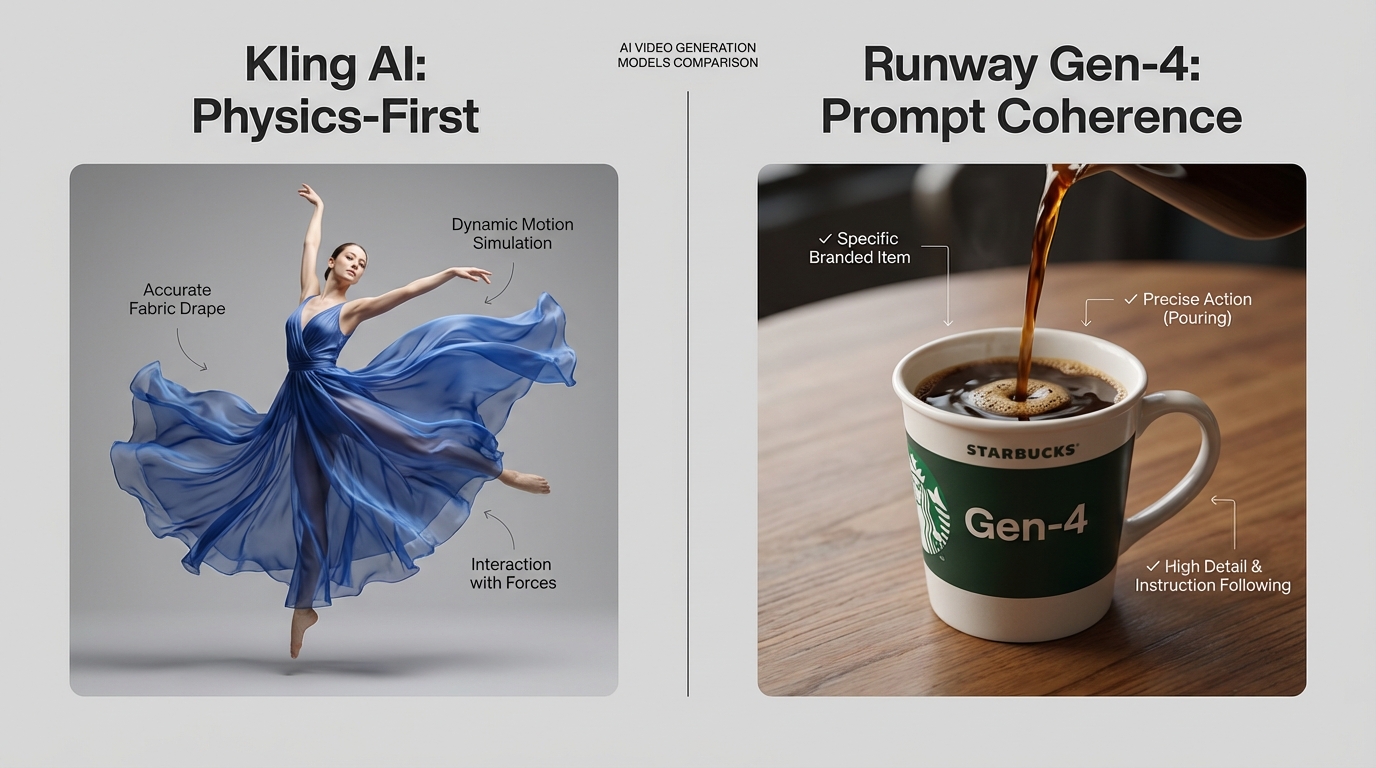
Kling AI has gained massive traction in the Indian market due to its “Physics-First” approach. In 2026, Kling’s 2.0 model has mastered the dynamics of human movement—a critical factor for Bollywood-style dance sequences or action choreography. While earlier models struggled with “spaghetti limbs,” Kling 2.0 produces motion that respects gravity and momentum.
Runway Gen-4, conversely, focuses on “Prompt Coherence.” It is exceptionally good at following complex instructions. If your storyboard requires a specific brand of coffee to be poured into a specific ceramic mug under “Mumbai golden hour” lighting, Runway is more likely to get the details right on the first try.
2. India Availability and Procurement
Both platforms are accessible in India via global portals. However, procurement remains a hurdle for many smaller boutiques. Most agencies currently use corporate credit cards to pay in USD, which is then converted to INR on their statements.
Runway Gen-4 pricing rupees (Approximate):
- Standard: ~$15/month (approx. ₹1,250)
- Pro: ~$35/month (approx. ₹2,900)
- Unlimited: ~$95/month (approx. ₹7,900)
Kling AI 2.0 India availability and pricing:
Kling offers a credit-based system. A typical “Pro” subscription costs roughly $20/month (approx. ₹1,650), providing enough credits for about 60-80 high-quality 5-second clips.
Sources: Runway Pricing Official, Kling Global Portal
Runway vs Pika Labs Quality Comparison: The Stylistic Divide
While Kling and Runway fight for realism, the Runway vs Pika Labs quality comparison is about the “look.” (Leonardo Motion vs Pika Labs)
Pika Labs has carved a niche in the Indian music video industry. Its 2026 updates have introduced “Cinematic Flare” presets that perfectly mimic the high-contrast, saturated look of modern Punjabi pop videos. Pika is less about “realism” and more about “aesthetic.” It is the tool you use when you want a shot to look like a dream sequence or a high-fashion editorial.
Runway Gen-4 is the “Editor’s Choice.” Its ecosystem includes in-painting, motion brushes, and “Expand Video” features that allow an editor to take a 16:9 shot and turn it into a 9:16 vertical for Instagram Reels without losing quality. For a Mumbai agency handling a multi-platform campaign, this versatility is a massive time-saver.
Pika Labs cinematic video review India:
Users in Bangalore tech hubs report that Pika’s “Sound-to-Video” sync has improved significantly in 2026, allowing creators to upload a beat and have the AI generate motion that pulses with the BPM. (Genmo AI Review India (Free))
Luma Dream Machine: The Previz Powerhouse
Luma Dream Machine India pricing rupees makes it the most accessible tool for the “starving artist” or the student filmmaker. At approximately $10/month (approx. ₹830) for the entry tier, it is the go-to for rapid prototyping.
In the Indian context, Luma is frequently used for “Mood Reels.” Before an agency spends ₹50,000 on high-end Kling renders, they will often use Luma to test the “vibe” of a scene. It is fast, relatively cheap, and offers a “Free Queue” that, while slow, allows for experimentation without upfront investment.
Source: Luma AI Dream Machine Pricing
Best AI for Bollywood Style B-roll: Prompting for the “Desi” Aesthetic
To achieve the “Bollywood look,” you need more than just a good tool; you need a specific prompting strategy. Indian cinema is characterized by dramatic camera movements and rich, atmospheric lighting.
The Kling Advantage for Bollywood:
Kling’s ability to handle “cloth physics” is vital. If you are prompting for a “Sangeet dance sequence,” Kling will correctly simulate the way a heavy lehenga swishes or a dupatta flies.
Sample Prompt Kit for 2026:
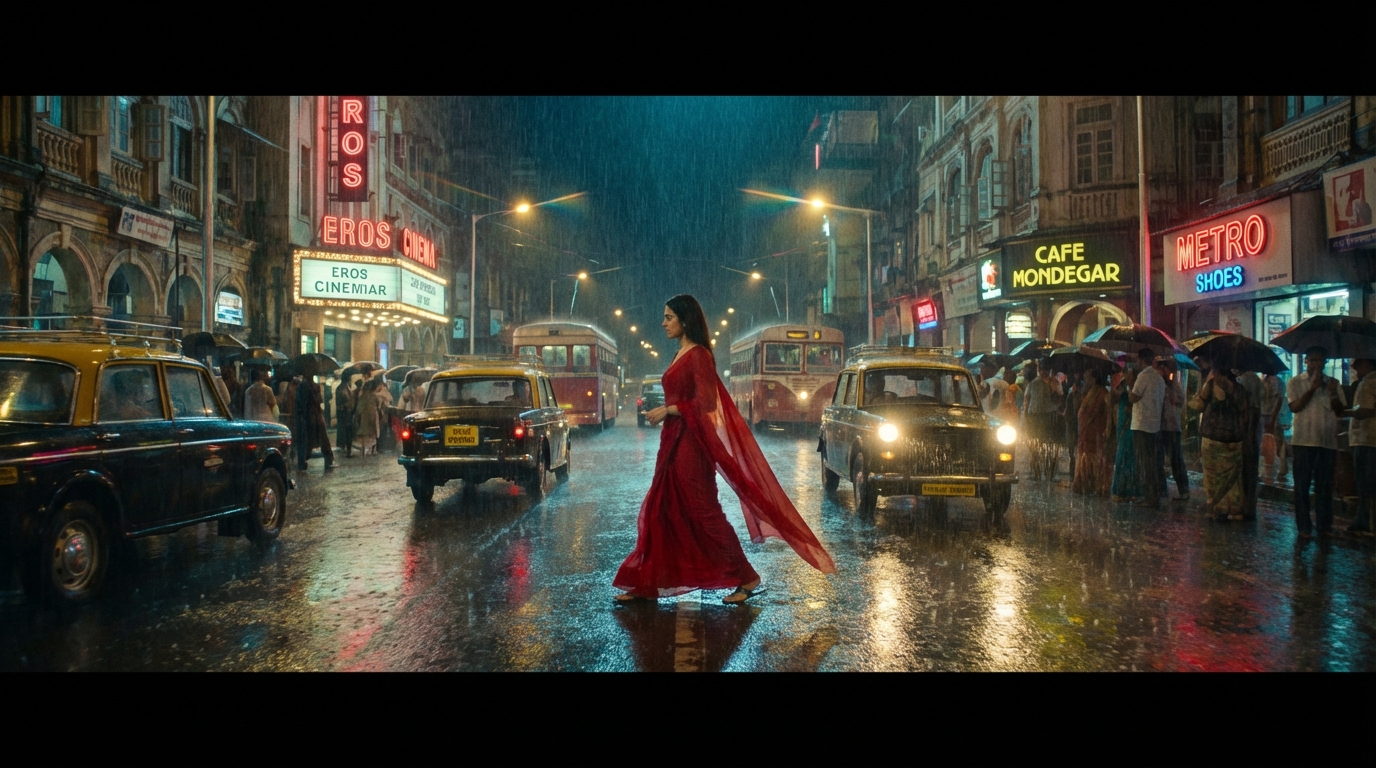
“Cinematic Bollywood wide shot, monsoon rain in South Mumbai, yellow taxi reflections on wet asphalt, slow-motion dolly-in on a protagonist wearing a red saree, fabric fluttering in the wind, 8k resolution, anamorphic lens flares, high-energy motion.”
Cinematic B-roll automation AI:
For agencies in Bangalore, the goal is to automate this. By using batch-processing scripts, agencies can generate 50 variations of a “monsoon street” shot overnight, selecting the best 3 for the final edit.
Generative Video for Ad Agencies Mumbai: The “Superagency” Workflow
The term “Superagency,” coined in recent McKinsey reports, refers to firms that use AI to augment every step of the creative process. In Mumbai and Bangalore, this is becoming the standard.
The Workflow Split:
- Ideation: Luma Dream Machine for quick “vibe checks.”
- Storyboarding: Runway Gen-4 for consistent character references.
- Production: Kling AI for the “Hero” shots (the 5 seconds that sell the product).
- Post-Production: Pika Labs for stylized transitions and color-grading references.
Ad film AI video generator Bangalore:
Bangalore-based startups are increasingly using these tools for “Hyper-Localization.” A single ad can be “re-shot” with AI to feature different regional backgrounds—changing a North Indian backdrop to a traditional South Indian temple setting in minutes.
Solutions like Studio by TrueFan AI demonstrate ROI through this exact type of localization, allowing brands to take a high-end AI video and instantly adapt it for 175+ regional languages and dialects with perfect lip-sync. (Enterprise Video Analytics Platform: ROI and Attribution)
Operationalizing at Scale: Studio by TrueFan AI
While Kling and Runway provide the “raw footage,” agencies need a platform to manage the output, especially when dealing with client approvals and brand safety.
Studio by TrueFan AI's 175+ language support and AI avatars provide the “last mile” of production. While you might use Kling to generate a beautiful background of the Himalayas, you can use Studio by TrueFan AI to place a photorealistic, licensed AI avatar in the foreground to deliver a personalized brand message in Marathi, Tamil, or Bengali. (Real-time Interactive AI Avatars India)
Key Features for Indian Agencies:
- INR Billing: No more credit card conversion headaches.
- WhatsApp Integration: Send draft videos directly to clients for “one-tap” approval. (AI video webhook WhatsApp Business integration guide)
- Licensed Avatars: Avoid the legal grey area of “deepfakes” by using fully consented digital twins of real Indian influencers.
Step-by-Step Implementation Playbooks
The “30-Second Ad” Playbook
- Drafting: Use Runway Gen-4 to create a 10-shot storyboard.
- Hero Shot: Identify the most complex motion shot (e.g., a person running through a crowd). Generate this in Kling AI for maximum realism.
- Stylization: Use Pika Labs to add a “dreamy” filter to the product close-ups.
- Final Polish: Bring all clips into a traditional NLE (Premiere/Resolve), add a grain layer to unify the textures, and use Studio by TrueFan AI for any talking-head segments to ensure perfect lip-sync.
The “Music Video” Playbook
- Beat Mapping: Identify the BPM of your track.
- Visual Generation: Use Pika’s sound-sync features for the chorus.
- Narrative: Use Runway’s “Motion Brush” to animate static photos of the artist for the verses.
- Action: Use Kling for any dance choreography shots.
Data & Statistics: The 2026 AI Video Landscape
To understand the scale of this shift, consider these 2026 data points:
- Efficiency Gain: Indian ad agencies using an integrated AI workflow (Runway + Kling) report a 65% reduction in “time-to-first-draft” for video campaigns.
- Cost Savings: The average cost of producing a high-end B-roll sequence has dropped from ₹5,00,000 (traditional shoot) to approximately ₹15,000 (AI-generated).
- Market Adoption: Over 80% of Bangalore’s top 50 digital agencies now have a dedicated “AI Video Lead” role as of early 2026.
- Consumer Sentiment: A 2026 study by SellersCommerce indicates that 74% of Indian consumers cannot distinguish between high-end AI video (Kling 2.0) and traditional cinematography.
- ROI: Content creators using AI-driven localization (like that offered by Studio by TrueFan AI) see a 4.2x increase in engagement when videos are served in the viewer's native regional language.
Final Verdict: Choosing Your Weapon
The Kling AI vs Runway Gen-4 comparison India 2026 doesn't have a single winner—it has a “best fit.”
- Choose Kling AI if your project relies on physical realism, human motion, and cinematic grandeur. It is the “Director of Photography” of the AI world.
- Choose Runway Gen-4 if you need control, consistency, and a professional ecosystem. It is the “Studio Executive” that ensures everything stays on brand and on time.
- Choose Pika Labs for style and vibe.
- Choose Luma for speed and budget.
For the modern Indian agency, the secret isn’t picking one; it’s orchestrating all of them. By using a central hub like Studio by TrueFan AI, you can ensure that your high-end AI visuals are paired with ethical, licensed, and localized human elements, creating a final product that resonates deeply with the diverse Indian audience.
Source Appendix & External Links
- Runway Gen-4 Model Intro - Analytics India Magazine
- Kling vs Sora: The Battle for Realism - Analytics India Magazine
- Luma Dream Machine Launch Details
- Official Runway Pricing
- Official Kling AI Global Portal
- Studio by TrueFan AI - Enterprise Solutions
Recommended Internal Links
- Google Veo 3.1 vs Sora 2 comparison: Generative Video AI Shootout
- Fastest AI video generator benchmark (India 2026)
- Leonardo Motion vs Pika Labs: Free Text-to-Video Showdown
- Genmo AI Review India (Free)
- Real-time Interactive AI Avatars India
- Enterprise Video Analytics Platform: ROI and Attribution
- AI video webhook WhatsApp Business: integration guide 2026
Frequently Asked Questions
Can I use these tools for free in India?
Yes, most offer a Free Tier. You can find generative video AI tools free India through Runway’s basic credits or Luma’s free queue. However, these usually include watermarks and are not licensed for commercial use. For client work, a paid tier is mandatory.
How do I handle the “AI Look” (flicker and artifacts)?
In 2026, the best way to fix flicker is Temporal Upscaling. Tools like Topaz Video AI are often used alongside Runway and Kling to smooth out motion and increase the resolution to 4K.
Is there a tool that bills in Indian Rupees (INR) directly?
Yes, Studio by TrueFan AI offers native INR billing, simplifying accounting and reducing GST-on-import complexities.
Which tool is best for “Text to Cinematic Video India Free”?
Luma Dream Machine currently offers the most generous free tier for high-quality cinematic output, though the wait times in the Free Queue can be several hours during peak Indian business hours.
Are there legal risks with using AI-generated people in Indian ads?
Yes. Look-alike risks can lead to lawsuits. Use a consent-first platform like Studio by TrueFan AI, where avatars are licensed digital twins of real people compensated for their likeness.
What is the Kling AI 2.0 availability in India?
Kling 2.0 is fully available in India via their global web portal. It does not require a VPN, and it accepts most major Indian international credit cards.



