
AI Crisis Communication Tools: The Enterprise Playbook for Automated Brand Recovery Campaigns in India
Estimated reading time: 13 minutes
Key Takeaways
- Enterprises need an integrated, closed-loop crisis stack—detection, decisioning, creation, and activation—to respond at algorithmic speed.
- Real-time sentiment monitoring must handle 175+ Indian languages and regional platforms to detect toxicity, intent, and velocity early.
- Crisis response video personalization humanizes leadership at scale while complying with MeitY and DPDP Act requirements.
- Rapid response marketing automation orchestrates WhatsApp, email, in-app, and newsroom updates, followed by automated recovery campaigns.
- Governance and measurement via HITL approvals, audit logs, and KPIs (Sentiment Delta, VCR, NPS/CSAT) accelerate stakeholder trust rebuilding.
In an era where a single viral WhatsApp message can erode decades of brand equity in minutes, Indian enterprises are fundamentally shifting their defensive strategies. The adoption of AI crisis communication tools has transitioned from a competitive advantage to a mandatory operational requirement for maintaining market stability. As we navigate the complexities of 2026, the velocity of information—and misinformation—demands a shift from reactive PR to an automated brand recovery campaigns framework that operates at the speed of social algorithms.
For Crisis Management Teams and Corporate Affairs Directors at India’s largest conglomerates, the challenge is no longer just “what to say,” but how to say it across 175+ languages with absolute precision and legal compliance. This playbook outlines the strategic implementation of an emergency marketing response system designed to protect reputation, ensure business continuity, and accelerate stakeholder trust rebuilding through data-driven precision.
Executive Summary: The 2026 Crisis Readiness Standard
The modern enterprise crisis stack is no longer a collection of disparate tools; it is an integrated ecosystem. By 2026, the standard for excellence in India is defined by:
- Real-time Sentiment Monitoring: Moving beyond simple keyword alerts to NLP-driven toxicity and misinformation detection across regional platforms like ShareChat and Moj.
- Brand Reputation Management AI: A centralized decisioning engine that scores risk severity (P0–P2) and recommends pre-approved legal and communication playbooks.
- Crisis Response Video Personalization: Utilizing high-fidelity generative video to allow spokespersons or authorized ambassadors to address affected cohorts by name and context.
- Rapid Response Marketing Automation: Orchestrating multi-channel delivery—from WhatsApp Business API to in-app banners—within a 60-minute window of incident detection.
Platforms like TrueFan AI enable enterprises to execute this level of personalization at a scale previously thought impossible, ensuring that every stakeholder receives a direct, empathetic, and transparent update (AI celebrity video marketing in India).
1. The Architecture of an Emergency Marketing Response System
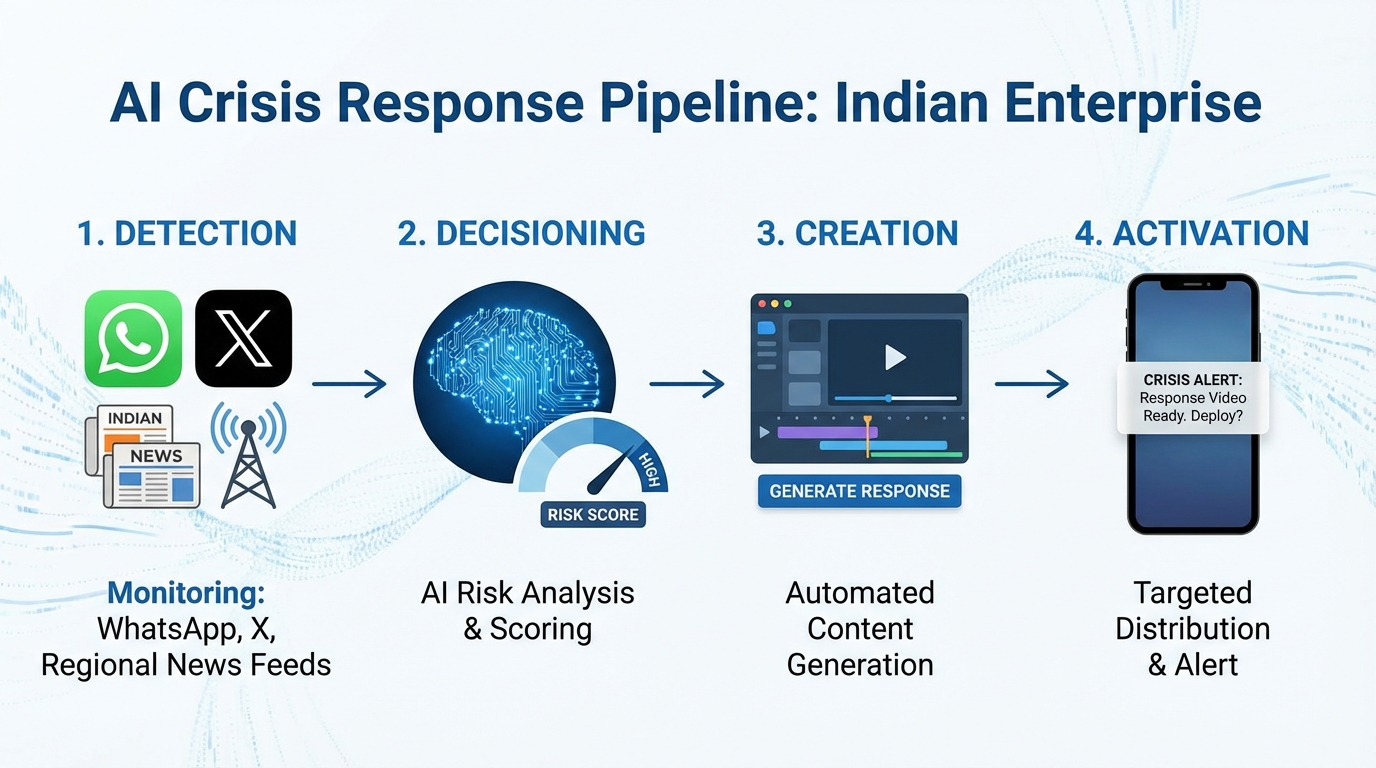
An effective emergency marketing response system functions as a closed-loop pipeline. It is not merely a notification tool but a strategic framework that integrates detection, decisioning, creation, and activation. In the Indian context, where “cancel culture” can peak within hours, this system must be wired for “communication with a click” speed.
Detection: Omnichannel Intelligence
The first layer involves continuous ingestion of data from diverse sources. In India, this must include WhatsApp support threads, X (formerly Twitter) trends, Instagram Reels comments, and regional news scraping. Advanced NLP classifiers now distinguish between genuine consumer grievances and coordinated misinformation campaigns. Technical thresholds are set: for instance, a 30% hour-over-hour spike in negative sentiment within a specific geographic cluster (e.g., Mumbai or Bengaluru) triggers an immediate P0 alert.
Decisioning: The Governance Layer
Once a spike is detected, the brand reputation management AI scores the risk based on virality momentum, influencer involvement, and potential legal exposure. This layer enforces the “Human-in-the-Loop” (HITL) requirement, routing drafts to Legal, CISO, and Comms teams via an immutable audit trail. This ensures that every response aligns with the Digital Personal Data Protection (DPDP) Act 2023 and MeitY’s latest synthetic media advisories.
Creation and Activation
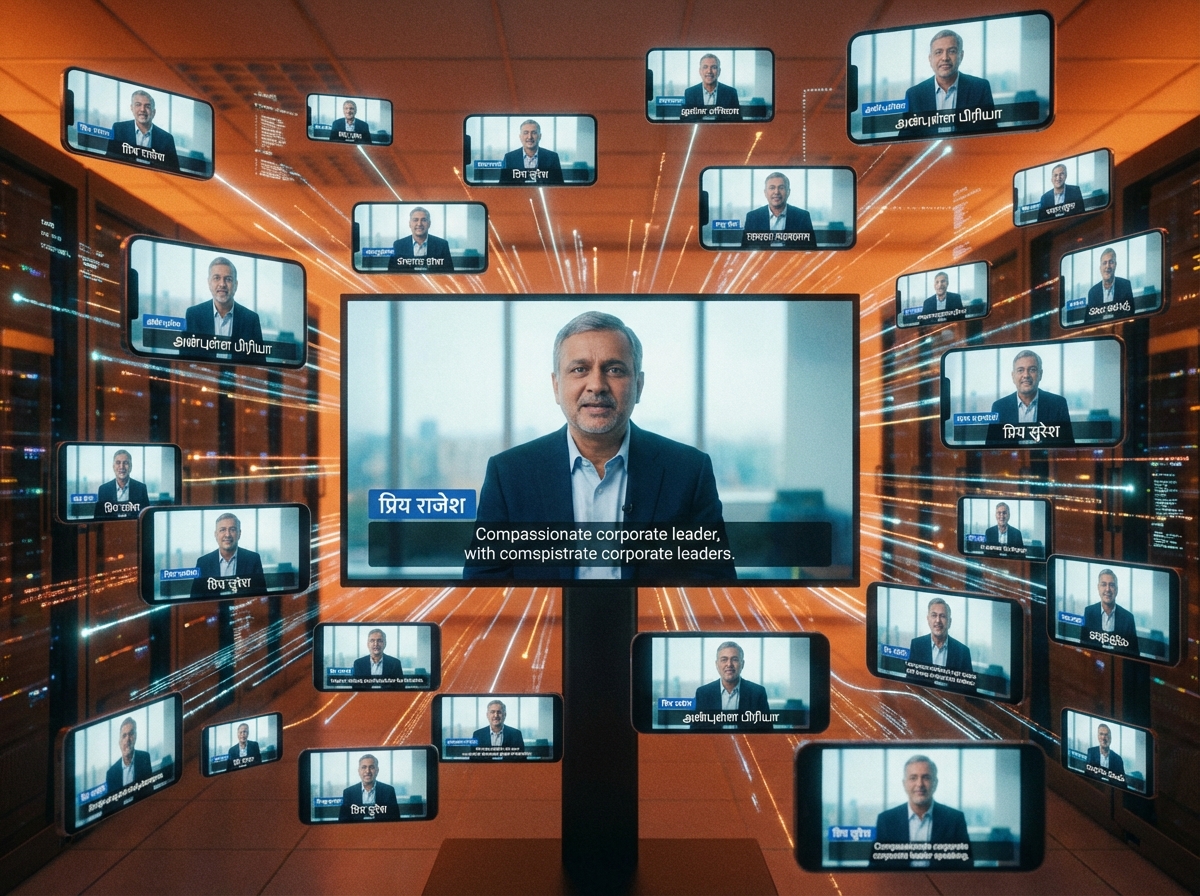
The creation phase leverages crisis communication personalization to tailor messages for different segments—customers, employees, and regulators. The activation phase then pushes these messages through rapid response marketing automation channels. This ensures that a customer in Tamil Nadu receives a video update in Tamil, while a regulator in Delhi receives a formal, timestamped PDF statement simultaneously.
Source: PR 3.0: The Next Frontier of AI-Driven Campaigns
2. Detection with Real-Time Sentiment Monitoring
In 2026, real-time sentiment monitoring has evolved from simple social listening to “predictive reputation intelligence.” Enterprises now monitor not just what is being said, but the velocity and intent behind the conversation.
Regional Language Nuance
India’s linguistic diversity is a primary challenge in crisis detection. A crisis might start in a regional ShareChat group in Telugu before hitting national headlines. Modern AI crisis communication tools utilize Large Language Models (LLMs) trained specifically on Indian dialects and “Hinglish” to detect toxicity that standard global tools often miss (regional language video SEO).
Thresholds and Alerting
Enterprises must define “Severity Matrices” to avoid alert fatigue:
- P0 (Critical): Direct threat to life, data breach, or 500+ negative mentions/hour. Requires response within 60 minutes.
- P1 (High): Product failure or executive controversy. Requires response within 4 hours.
- P2 (Medium): Localized service disruption. Requires daily updates.
By integrating these alerts into an emergency marketing response system, teams can move from “monitoring” to “mitigation” without manual handoffs.
Source: 92% of Indian Comms Teams Use AI but Fumble with GEO
3. Decisioning with Brand Reputation Management AI
The decision-making phase is where brand reputation management AI proves its value. It acts as a digital “War Room” assistant, providing the data necessary for executives to make high-stakes calls.
AI-Powered Damage Control
When a crisis hits, the first instinct is often to go silent. However, AI-powered damage control recommends the opposite: radical transparency. The AI analyzes historical crisis data to suggest the most effective “apology framework.” Should the brand lead with empathy, or with a technical explanation of the fix?
In 2026, Indian enterprises use these tools to:
- Map Risk Scores: Evaluate the credibility of the source (e.g., a verified influencer vs. a bot).
- Enforce Approvals: Ensure no content is published without dual-control from Legal and Corporate Affairs.
- Audit Logs: Maintain a record of every decision made, which is critical for post-crisis regulatory reviews under the DPDP Act.
Strategic Scenario Planning
Forward-thinking brands in sectors like healthcare and finance use AI for proactive scenario planning. By simulating a “deepfake attack” or a “supply chain collapse,” they pre-approve templates and workflows, reducing the time-to-first-response by up to 80%.
Source: How AI-Powered Scenario Planning is Changing Health Brand Crisis Prep
4. Creation at Scale: Crisis Response Video Personalization
The most significant breakthrough in 2026 is the ability to use crisis response video personalization to humanize a brand during its most vulnerable moments. A generic text post on X is no longer sufficient; stakeholders demand to see and hear from leadership.
The Power of Crisis Transparency Videos
Crisis transparency videos are structured to acknowledge facts, explain the impact, and outline concrete actions. By using generative AI, a CEO can record a single 5-minute master video, which the system then adapts into thousands of personalized versions.
TrueFan AI's 175+ language support and Personalised Celebrity Videos technology allows this to happen at scale. Imagine a bank experiencing a technical outage: instead of a generic “we are sorry” email, every Gold-tier customer receives a video from the Head of Retail Banking, addressing them by name, acknowledging their specific city, and providing a direct link to a temporary service portal (personalised celebrity video endorsements).
Compliance and Ethics
Per MeitY’s 2024 and 2025 advisories, all such AI-assisted media must include:
- Clear Disclosures: A watermark or text overlay stating “AI-assisted video.”
- Consent Management: Ensuring the spokesperson has provided explicit, time-bound consent for their likeness to be used in crisis scenarios.
- Data Minimization: Adhering to DPDP Act principles by only using the customer data necessary for the personalization (e.g., Name and Segment). See the voice sync accuracy guide.
Source: MeitY Advisory on Synthetic Media and Deepfakes
5. Activation: Rapid Response Marketing Automation
Once the content is created, the rapid response marketing automation layer ensures it reaches the right people on the right channels. In India, this is a multi-modal challenge.
Omnichannel Orchestration
A crisis journey might look like this:
- Instant Alert: A WhatsApp Business message with a crisis transparency video link.
- Detailed Follow-up: An email containing the full technical brief and business continuity messaging.
- In-App Support: A banner notification within the brand’s mobile app providing real-time status updates.
- Public Record: A timestamped update on the brand’s “Crisis Newsroom” hub for media and regulators.
Automated Brand Recovery Campaigns
Recovery doesn't end when the “fire” is out. Automated brand recovery campaigns are sequenced over weeks to rebuild trust. This includes “Proof of Fix” videos, customer testimonial montages, and leadership commitments to new safety standards. By automating this cadence, brands ensure they don't go silent the moment the news cycle moves on, which is often when long-term trust is actually rebuilt (rapid fulfillment personalization strategies).
Source: Crisis Control: Communication with a Click - HP India Lessons
6. Measurement and Stakeholder Trust Rebuilding
The final stage of the playbook is proving that the strategy worked. Stakeholder trust rebuilding is now a measurable KPI, tracked with the same rigor as sales or lead generation.
The 2026 Crisis KPI Set
Enterprises now utilize dashboards that track:
- Sentiment Delta: How quickly did negative sentiment return to neutral or positive?
- Video Completion Rate: Did stakeholders actually watch the transparency updates? (High completion rates correlate with higher trust scores).
- Helpdesk Deflection: Did the automated updates reduce the load on human call centers?
- Regulatory Satisfaction: Did the audit logs and transparency measures satisfy MeitY or RBI inquiries?
Solutions like TrueFan AI demonstrate ROI through these engagement metrics, showing that personalized, high-fidelity communication leads to faster recovery of Net Promoter Scores (NPS) and Customer Satisfaction (CSAT) levels post-crisis.
Implementation Roadmap (30–90 Days)
- Days 1–15: Establish the escalation matrix and pre-approve “Skeleton Templates” for P0 scenarios.
- Days 16–45: Integrate the emergency marketing response system with existing CRM and social listening tools.
- Days 46–90: Conduct “Red-Team” crisis drills and localize all recovery assets into the top 10 Indian languages.
Source: PR Trends 2026: Expert Insights on ROI and AI
7. Governance and Legal Guardrails in India
Operating AI crisis communication tools in India requires a deep understanding of the regulatory landscape. AI-powered damage control must be balanced with strict adherence to the law.
DPDP Act 2023 Compliance
Every personalized message sent during a crisis must comply with the Digital Personal Data Protection Act. This means:
- Lawful Purpose: The data is used specifically to inform the user of a service disruption or safety issue.
- Retention: Personalization data used for the crisis video must be purged once the recovery campaign concludes.
- Accuracy: Ensuring the AI does not “hallucinate” facts about the crisis, which could lead to further legal liability.
Cultural Sensitivity and Cancel Culture
India’s “cancel culture” is unique in its speed and regional nuances. A message that works in Delhi might be perceived as insensitive in Chennai. Brand reputation management AI now includes “Cultural Sensitivity Filters” to ensure that apologies and remediation offers are contextually appropriate for India’s diverse demographic (cultural celebration marketing automation).
Source: Crisis Communication in the Age of Cancel Culture
Conclusion: The Future of Brand Resilience
The transition to AI crisis communication tools is not just a technological upgrade; it is a commitment to stakeholder respect. In the high-stakes Indian market of 2026, silence is no longer an option, and generic responses are a liability. By building a robust emergency marketing response system, enterprises can turn a moment of crisis into an opportunity to demonstrate radical transparency and unwavering accountability.
The path to stakeholder trust rebuilding is paved with data, speed, and personalization. As the digital landscape continues to evolve, the brands that survive and thrive will be those that have automated their recovery before the crisis even begins.
Ready to fortify your brand?
- Request a 14-day crisis comms pilot wired to your listening tools.
- Book a solutions architecture session to map your emergency marketing response system.
- Download our 2026 Crisis Video Playbook and KPI Tracker.
Frequently Asked Questions
How do we prevent AI from generating non-compliant or “hallucinated” crisis responses?
Implement a “Locked Template” approach where the AI only fills in specific variables (like name or location) within a legally-vetted script. Furthermore, brand reputation management AI should include a mandatory human approval gate for all P0 and P1 communications.
Can we generate 100,000+ personalized crisis videos in under an hour?
Yes. Modern cloud-agnostic GPU farms and real-time APIs allow for sub-30-second renders per video. This enables an emergency marketing response system to trigger mass personalization almost instantly after a crisis is confirmed.
What are the legal requirements for disclosing AI-generated content in India?
Per MeitY advisories, all synthetic or AI-assisted media must be clearly labeled. This is typically done via a persistent watermark or a prominent text disclosure within the video frame to ensure crisis transparency videos remain ethical and legal.
How does TrueFan AI ensure the security of our spokesperson’s digital likeness?
TrueFan AI utilizes a consent-first model with ISO 27001 and SOC 2 certification. Digital likenesses are encrypted and only accessible through role-based permissions, ensuring that a CEO's “AI Avatar” can only be activated for pre-approved crisis scenarios.
How do we measure the ROI of an automated brand recovery campaign?
ROI is measured through “Time-to-Stabilization” (how quickly sentiment returns to baseline) and “Trust Recovery Curves.” Brands using these tools typically see a 40% faster recovery in brand favorability compared to those using traditional PR methods.



