YouTube Safe AI Video Creation Avoid Demonetization 2026: India-First Guide for Faceless Channels, Automation Teams, and MCNs
Estimated reading time: ~15 minutes
Key Takeaways
- Post-2025 policies reward original, transformative AI content with human editorial value.
- Clear AI disclosure in uploads, descriptions, and on-screen labels reduces Limited Ads risk.
- Avoid repetitious/reused content by diversifying scripts, visuals, audio, and metadata.
- Build authenticity signals with sources, human oversight, and brand-safe topics for AdSense.
- Use governed workflows and tools like Studio by TrueFan AI to scale MCN production compliantly.
Navigating the landscape of YouTube safe AI video creation avoid demonetization 2026 is the single most critical challenge for Indian creators today. Following the landmark July 15, 2025, policy update, the "Wild West" of mass-produced AI content has ended. For faceless channels exploring India-first faceless YouTube channel ideas and MCNs in India, the path to sustainable revenue now requires a sophisticated blend of human editorial value, precise disclosure labeling, and high-authenticity signals that satisfy both the YouTube algorithm and AdSense suitability standards.
The stakes have never been higher. By Q1 2026, data indicates that YouTube India’s AI content disclosure rate reached 68%, as creators scrambled to comply with new transparency mandates. Furthermore, the July 2025 policy update led to a 22% increase in manual reviews for faceless channels, particularly those in the "automation" niche. If you are operating a channel in India, understanding the nuances of these shifts is no longer optional—it is a survival requirement.
1. The 2026 Policy Environment in India: What Changed and Why It Matters
The transition from 2025 to 2026 marked a fundamental shift in how YouTube defines "value." The core of this change lies in the clarification of "repetitious" and "inauthentic" content. While AI has always been permitted, the July 15, 2025, update broadened the definition of repetitious content to include "mass-produced patterns" where the viewer cannot distinguish one video from another in a meaningful way.
In the Indian market, this crackdown has been particularly visible. According to reports from the Times of India, YouTube began tightening payout rules and YPP (YouTube Partner Program) reviews to curb the flood of low-effort AI-generated news and trivia channels. The goal is not to ban AI, but to ensure that AI is a tool for creators, not a replacement for creativity.
Key Policy Pillars for 2026:
- Repetitious Content: Content that appears mass-produced or follows a rigid, unvarying template across multiple videos.
- Reused Content: Content that provides little to no original commentary or educational value, even if the clips are technically "newly generated" by AI.
- Inauthentic Behavior: Using AI to mislead viewers about the reality of a situation, especially in news, politics, or sensitive social issues.
As Neal Mohan highlighted in his 2026 creator priorities, the focus is on "monetization signals" that reward authenticity. This means that a faceless channel using AI voices must demonstrate a clear "host POV" and editorial transformation to pass the manual review process.
Sources:
- YouTube Channel Monetization Policies (Updated July 2025)
- Times of India: YouTube Crackdown on AI and Repetitive Content
2. Reused vs. Original: How to Pass the Authenticity Test
The most common reason for demonetization in 2026 is the "Reused Content" flag. See our copyright safety guide for faceless channels. For AI-driven channels, this often happens when the AI is used to assemble existing materials—like stock footage and generic scripts—with minimal changes. To avoid this, creators must focus on transformation.
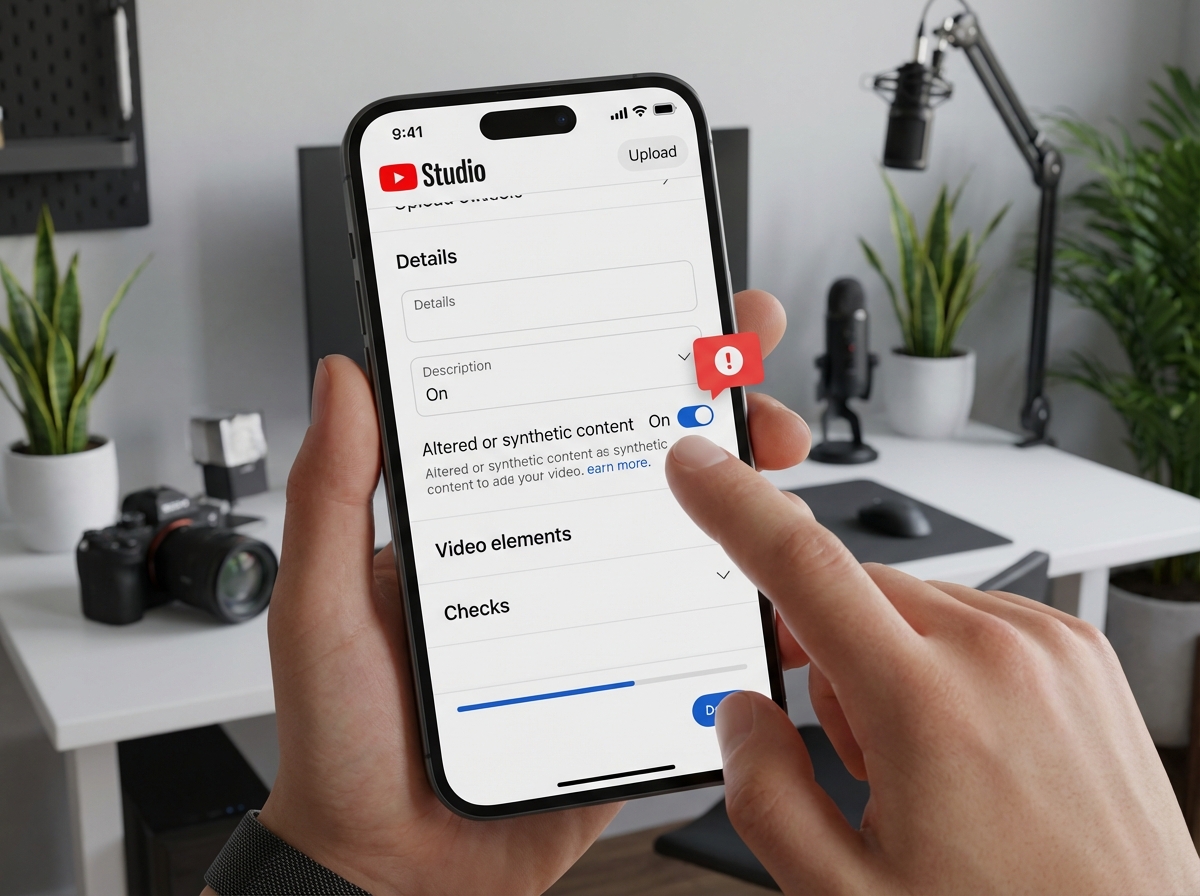
The Transformation Checklist for AI Videos:
To ensure your content is considered "Original AI Content," you must move beyond the "prompt-and-publish" model.
- Unique Scripting: Every video needs a unique narrative arc. Avoid using the same "Top 5 Facts" structure for every upload. Incorporate first-party data, local Indian case studies, or unique comparisons.
- Visual Differentiation: While stock footage is fine, it must be layered. Use custom AI visuals, branded lower-thirds, and on-screen citations. If you use the same stock clip of a "person typing" in ten different videos, you risk a repetitious content flag. Explore our multimodal AI video creation guide.
- Audio Identity: Avoid using the most popular, overused AI voices without modification. Adjust the pitch, speed, and emphasis (prosody) to create a distinct "brand voice."
- Metadata Uniqueness: Do not use "templated" titles and descriptions. Each piece of metadata must reflect the specific value of that individual video.
Compliant vs. Non-Compliant Examples:
- Non-Compliant: A channel that produces 100 videos on "Indian History" using the same AI voice, the same background music, and a slideshow of Wikipedia images. This is "mass-produced" and likely to be demonetized.
- Compliant: A channel that uses AI to recreate historical battles in 3D, provides a deep-dive analysis of the military strategy (written by a human), and includes on-screen citations of historical documents.
Platforms like Studio by TrueFan AI enable creators to generate high-quality, compliant content by providing licensed avatars and unique voice models that move away from the "generic AI" look that triggers flags. Learn about real-time interactive AI avatars in India.
Sources:
- MediaNama: YouTube Monetization Policy and Repetitive Content
- YouTube Community: Will AI Videos be Monetized?
3. The India-Specific AI Disclosure & Labeling Mandate
In 2026, transparency is the "Golden Rule." Google India has been proactive in rolling out specific labeling requirements for "altered or synthetic content." This is especially critical when AI is used to depict realistic people or events. Review disclosure and copyright safety best practices.
When Must You Label?
You are required to disclose AI use if:
- You use a realistic AI voice that sounds like a real person.
- You use AI to swap faces or create "deepfake" presenters.
- You generate realistic scenes that never happened (e.g., a fake news report or a synthetic depiction of a real Indian city).
How to Disclose in the India Workflow:
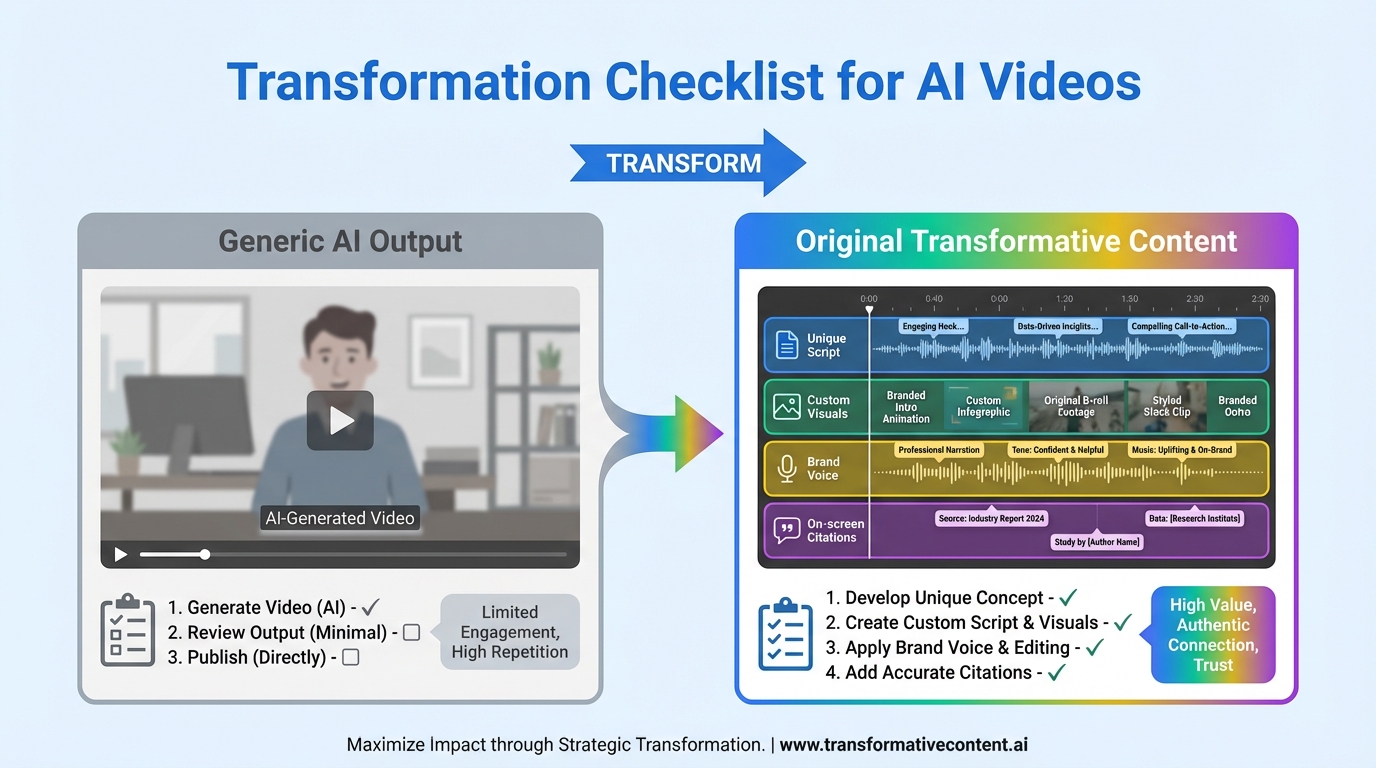
- The Upload Toggle: During the upload process in YouTube Studio, you must check the box for "Altered or synthetic content."
- Description Syntax: Include a clear note in the first two lines of your description. Example: "Disclosure: This video features AI-generated visuals and voiceovers for illustrative purposes."
- On-Screen Indicators: For videos depicting realistic events, a lower-third graphic should appear within the first 30 seconds stating "AI-Generated Content."
Failure to disclose can lead to content removal, suspension from the YouTube Partner Program, or even a permanent ban. Interestingly, AdSense "Limited Ads" flags for AI channels dropped by 45% for those using verified disclosure labels correctly, proving that transparency actually protects your revenue.
Sources:
- Google India Blog: Helping Creators Disclose Altered Content
- YouTube Help: Labeling Synthetic Content
4. AdSense Suitability and Authenticity Signals
Even if you pass the YPP review, you must still satisfy AdSense. Advertisers in 2026 are increasingly sensitive to where their ads appear. "Safe AI video for AdSense" means content that is not only original but also brand-safe.
Building Authenticity Signals:
- Source Transparency: If your AI video discusses the Indian economy or health, cite your sources on-screen. Link to official reports (like RBI or Ministry of Health) in the description.
- Human Editorial Oversight: YouTube’s manual reviewers look for "evidence of effort." This includes custom transitions, thoughtful pacing, and a narrative that feels "curated" rather than "calculated."
- Avoid Controversial Clusters: MediaNama notes that 2026 ad rules for controversial topics have tightened. Avoid using AI to generate content on sensitive political or social issues in India unless you have a verified, authoritative background in those areas.
MCNs in India reported a 30% increase in RPM (Revenue Per Mille) for "High-Authenticity" AI channels compared to mass-produced ones. This is because high-quality AI content attracts premium advertisers who are willing to pay more for "safe" environments. See faceless YouTube earnings in India (2026).
Studio by TrueFan AI's 175+ language support and AI avatars allow for localization without losing authenticity, ensuring that creators can reach diverse Indian audiences while maintaining the high production standards that advertisers demand.
Sources:
5. The 10-Step India-First Workflow for Monetization
To succeed in 2026, you need a repeatable, compliant workflow. This 10-step guide is designed specifically for the Indian creator ecosystem.
- Niche Vetting: Choose a topic that is data-rich and advertiser-safe (e.g., Personal Finance, Tech Reviews, Educational Explainers).
- Multi-Source Research: Pull data from at least 3–5 Indian sources to ensure your script has depth.
- POV-Led Scripting: Write your script with a clear "voice." Use "I" or "We" to establish a brand persona, even if you are faceless.
- Asset Planning: Identify where you will use AI visuals and where you will use licensed stock or original screen recordings.
- Voice Generation: Use high-fidelity AI voices. Over 40% of top-performing Indian faceless channels now use custom-trained AI voice models to ensure uniqueness. Explore AI avatars for India.
- The "Transformation" Edit: Layer your AI assets. Add captions, motion graphics, and sound effects that break up the "AI feel."
- Disclosure Implementation: Apply the "Altered or Synthetic" label in YouTube Studio and add your description disclaimer.
- Originality QA: Before uploading, run your script through a plagiarism checker and ensure your metadata isn't a carbon copy of previous videos.
- Rights & Audit: Maintain a folder with all your licenses (music, stock, AI avatar permissions). This is your "insurance policy" against copyright claims.
- Batch & Monitor: Upload in small batches. Monitor the "Monetization" icon. If you see "Limited Ads," analyze the video for potential policy triggers and iterate.
Solutions like Studio by TrueFan AI demonstrate ROI through reduced manual editing time and lower risk of policy strikes by providing built-in compliance tools and licensed assets.
6. Scaling with Compliance: MCN and Automation Strategies
For MCNs (Multi-Channel Networks) and automation teams, the challenge is scaling without triggering "mass-produced" red flags. In 2026, the algorithm is highly sensitive to "channel clusters" that use identical templates.
MCN Hygiene Standards:
- Script Variation: Enforce a rule where every script in a niche must have at least 40% unique phrasing compared to other videos in the same batch.
- Asset Rotation: Limit the reuse of specific b-roll clips. If a clip is used more than 3 times in 20 videos, it should be retired or modified.
- Audit Logs: Maintain a centralized registry of every AI model and version used. This is essential for responding to manual reviews or copyright disputes.
Why Enterprise Tools Matter:
Scaling requires governance. You need a platform that doesn't just generate video, but manages the compliance of that video. This includes real-time moderation to block prohibited content (like political endorsements or hate speech) before it is even rendered. See YouTube Shorts automation with AI.
By centralizing production in a "walled garden" environment, MCNs can ensure that every video produced across 50+ channels meets the same high standard of authenticity and disclosure.
7. FAQ & 2026 Watchlist
Explore the most common questions in the dedicated FAQ section at the end of this article.
2026 Watchlist: What’s Next?
- Shorts AI Likeness: Watch for the rollout of "AI Likeness" features in YouTube Shorts, which will likely come with even stricter disclosure UI. Scale-safe Shorts automation and YouTube Shorts product tagging in India.
- Manual Review Intensity: Expect manual reviews to become more frequent as YouTube refines its "Authenticity Score" for channels.
- Local Regulation: Keep an eye on the Indian government’s evolving stance on "Deepfakes" and AI-generated news, as platform policies often shift to align with local laws.
Conclusion: The Path Forward
The era of "lazy" AI automation is over, but the era of the "AI-Augmented Creator" has just begun. By focusing on YouTube safe AI video creation avoid demonetization 2026, Indian creators can build sustainable, high-revenue channels that stand the test of time. The key is to treat AI as your production crew, not your creative director.
Final Compliance Checklist
- [ ] Disclose realistic AI visuals/voices using YouTube’s tools.
- [ ] Ensure every script has a unique human POV and original insights.
- [ ] Layer your edits to avoid "mass-produced" patterns.
- [ ] Maintain an audit log of all licenses and AI models.
- [ ] Align with advertiser-friendly guidelines to maximize RPM.
Sources & Further Reading
- YouTube Official: Repetitious Content Policy Update
- Google India: Creator Disclosure Guidelines
- MediaNama: Analysis of 2026 Ad Suitability Rules
- YouTube How YouTube Works: AI and Transparency
- Times of India: The Future of AI on YouTube India
Recommended Internal Links
- Originality checks, duplicate detection, and YPP-safe workflows for faceless channels
- How to layer text, image, and audio for transformative AI videos
- RPM/CPM modeling and sponsorship pricing for faceless YouTube in India
- Scale-safe YouTube Shorts production and automation best practices
- Shoppable Shorts and product tagging on YouTube (India)
- Licensed AI avatars, consent-first deployment, and voice/viseme quality for India
Frequently Asked Questions
Are AI-generated videos still eligible for monetization in India in 2026?
Yes. AI content is eligible for monetization when it is original, transformative, and properly disclosed. Focus on human editorial value—distinct scripting, layered visuals, unique voice, and non-templated metadata—to pass YPP and AdSense reviews.
What is the biggest trigger for "Reused Content" flags on faceless channels?
The primary trigger is minimal transformation—e.g., generic stock b-roll plus a basic AI narration over aggregated facts without unique analysis or production craft. Add original POV, sources, motion design, and scene-level changes to avoid repetitious patterns.
Do I need to label AI content if it's clearly a cartoon or animation?
Generally, no. Disclosures are required when AI output is realistic enough to mislead viewers (e.g., synthetic people/events). Stylized animations or obviously fictional graphics typically do not require "Altered or Synthetic" labels.
How can I avoid copyright strikes on AI-generated music or voices?
Use AI tools that grant clear commercial licenses for outputs. Keep proof of rights for music, SFX, voices, and avatars. Avoid cloning public figures or copyrighted performances without explicit, written permission.
How can I automate the disclosure process for a large number of channels?
Solutions like Studio by TrueFan AI demonstrate ROI through automated metadata generation and built-in disclosure toggles that ensure every video is "monetization-ready" upon export.



