Employee Wellness Video Campaigns Q1 2026: Personalized Mental Health Support for Appraisal Stress Management
Key Takeaways
- Q1 appraisal season heightens stress; a video-first, personalized approach delivers scalable, empathetic support.
- Personalized wellness journey automation drives just-in-time interventions and boosts EAP and benefits uptake.
- Multilingual, accessible content with captions/transcripts ensures inclusivity and higher engagement.
- Measure success beyond views: track activation and outcomes like EAP bookings, enrollment, and retention signals.
- Govern with consent-first, data-minimized practices and secure, compliant platforms.
The first quarter of 2026 represents a critical juncture for Human Resources and People Operations leaders across India and global corporate hubs. As the traditional appraisal season approaches, the convergence of performance pressure and compensation discussions creates a high-stakes environment where employee well-being often hangs in the balance.
To navigate this period effectively, organizations are increasingly turning to employee wellness video campaigns Q1 2026 as a primary vehicle for delivering scalable, empathetic, and highly relevant support. Appraisal stress management is no longer a peripheral concern; it is a strategic imperative that directly impacts retention, engagement, and the overall health of the organizational culture.
In 2026, the standard for corporate wellness has shifted from generic, one-size-fits-all initiatives to deeply personalized, data-driven interventions. HR leaders now require a practical, compliant playbook to address Q1 appraisal stress through video programs that leverage personalization and automation to meet the specific needs of a diverse, multilingual workforce.
This comprehensive guide outlines how to design, produce, and measure a 90-day campaign that boosts Employee Assistance Program (EAP) uptake and enrollment in wellness benefits. By integrating mental health support personalization with automated delivery, enterprises can transform the appraisal cycle from a period of anxiety into an opportunity for growth and resilience.
1. The Q1 2026 Imperative: Why Video-First Personalization is Non-Negotiable
Appraisal stress management is defined as the structured set of tools, trainings, and support resources deployed to help employees anticipate, process, and recover from performance reviews. In the Indian corporate context, where the “appraisal crunch” is particularly acute, proactive support is essential to reduce friction and maintain productivity during the first quarter.
Recent industry analysis from ETHRWorld highlights that stress and friction increase significantly around appraisal cycles, but continuous, fairer processes and proactive support can drastically reduce anxiety. Furthermore, India’s corporate wellness focus in 2026 has shifted toward holistic, community-driven, and financially inclusive wellbeing, reflecting a deeper understanding of the stressors that peak during compensation reviews.
Video has emerged as the anchor of these wellness strategies because it provides consistent, scalable microlearning that maintains an emotionally supportive tone. For multilingual workforces, video is significantly more effective at ensuring comprehension and engagement compared to text-heavy emails or static intranet pages.
Platforms like TrueFan AI enable enterprises to bridge the gap between high-level wellness goals and individual employee needs by delivering hyper-personalized video content at scale. By tailoring messages to the specific context of the appraisal cycle, HR leaders can ensure that every employee feels seen, supported, and equipped to handle the pressures of Q1.
Source: ETHRWorld Performance Appraisal Coverage
Source: People Matters Wellness Trends 2026
Source: Financial Wellbeing Trends
2. Strategic Design: Addressing the Appraisal Stress Problem
The drivers of appraisal stress are multifaceted, including uncertainty regarding ratings, sensitivity to feedback, and the workload spikes experienced by both reviewers and employees. If unaddressed, this seasonal risk can lead to elevated anxiety, increased absenteeism, and higher attrition rates during the post-appraisal “migration” period.
To combat this, HR leaders must implement mental health support personalization, which involves tailoring content, tone, and language based on the employee's role, geography, and specific stage in the appraisal timeline. For example, a manager delivering reviews requires different support than an individual contributor receiving feedback for the first time.
Mental health awareness personalization also plays a vital role by normalizing help-seeking behavior and contextualizing the appraisal season within the broader framework of professional development. By pointing to confidential support resources like EAPs with culturally sensitive examples, organizations can lower the barrier to entry for employees who need professional assistance.
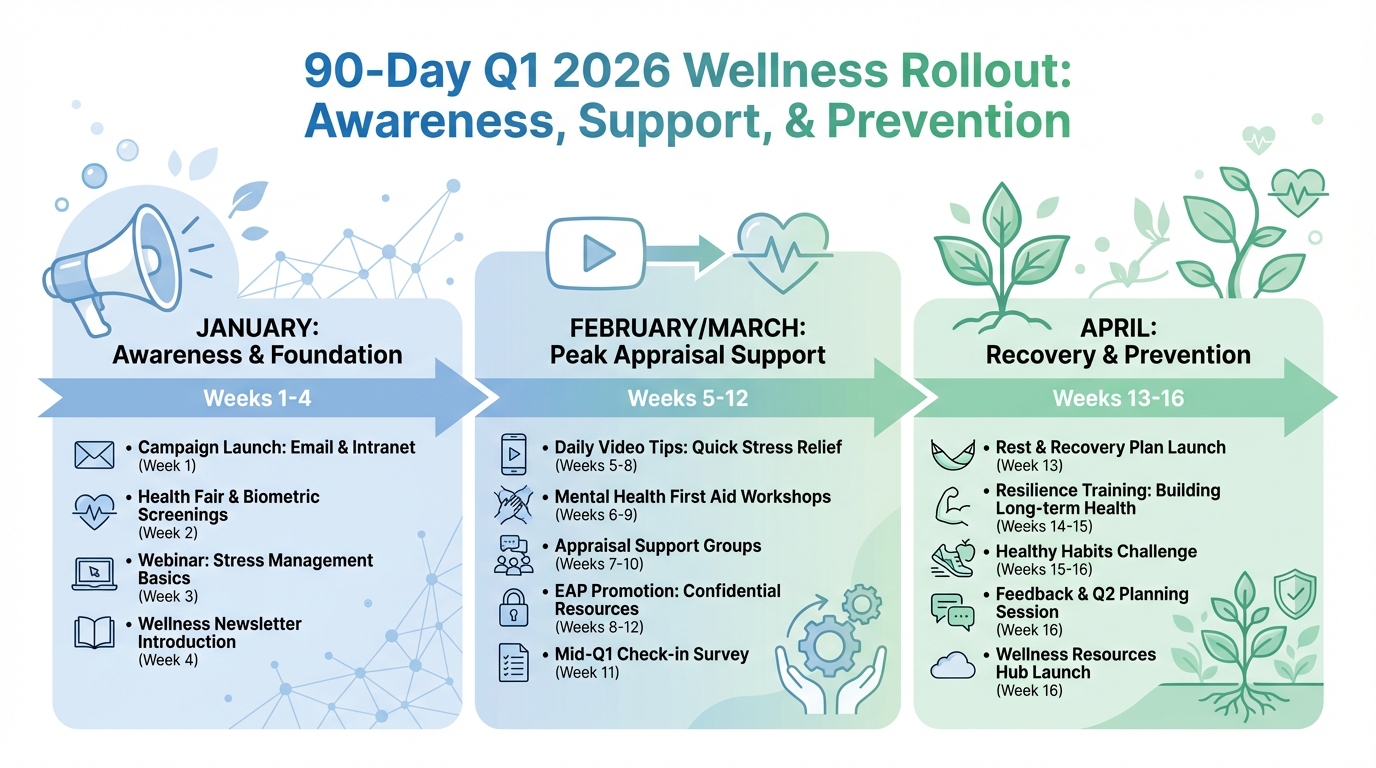
A key innovation for 2026 is the use of personalized wellness journey automation. This involves rule-based and event-triggered journeys—such as a “pre-review coping module” triggered seven days before a scheduled review—synced directly to HRIS calendars and internal communication channels.
TrueFan AI's 175+ language support and Personalised Celebrity Videos ensure that these automated journeys are not only timely but also deeply resonant. By delivering content in an employee's preferred language and using recognizable, authoritative voices, enterprises can achieve engagement levels that traditional wellness programs simply cannot match.
Source: Lyra Health 2026 Workforce Mental Health Trends
Source: PwC Medical Cost Trend 2026
3. The Essential Video Toolkit for Appraisal Season
A successful Q1 wellness campaign requires a diverse array of video assets designed to address specific stressors and behavioral triggers. These assets should be short, situational, and mobile-first to ensure they can be consumed during busy workdays without adding to the employee's cognitive load.
Workplace stress management videos should focus on situational modules, such as “reframing feedback” or “conversation planning for difficult reviews.” These 2–4 minute videos provide practical scripts and mental models that employees can apply immediately, often accompanied by a call-to-action (CTA) to download a preparation checklist.
Stress reduction technique videos offer micro-practices like box breathing, body scans, or grounding exercises. These 60–120 second “resets” are particularly effective when delivered via WhatsApp or Slack just hours before a scheduled performance discussion, providing just-in-time relief for the nervous system.
The toolkit should also include a meditation mindfulness video series for deeper decompression and work-life balance coaching videos that help managers and employees set boundaries during high-pressure weeks. For managers, these videos might include “scripts for saying no” or “how to reset expectations after a review cycle.”
Furthermore, employee assistance program videos are essential for demystifying the scope and confidentiality of EAP services. By using a myth-busting format and including on-video QR codes for instant booking, HR can significantly increase the utilization of these critical resources during the peak stress months of February and March.
Finally, wellness program enrollment automation ensures that employees are nudged toward relevant benefits at the exact moment they are most likely to value them. For instance, a video explaining financial wellness benefits can be triggered following a compensation discussion, linking directly to the enrollment portal.
Source: People Matters “Beyond the Paycheck”
Source: Corporate Wellness Market Trends 2026
4. Delivery, Targeting, and Enterprise Governance
Reaching employees at the right moment requires a sophisticated multi-channel approach. In India, WhatsApp Business has become a primary channel for high-adoption engagement, alongside email, Slack, Microsoft Teams, and HRIS-integrated inboxes.
The logic behind personalized wellness journey automation must account for different cohorts. Individual contributors (ICs) might receive a “pre-review prep drip” starting seven days before their meeting, while managers receive a “conducting compassionate reviews” toolkit. This ensures that the content is always relevant to the user's current responsibilities and stress levels.
Accessibility and inclusivity are paramount in 2026. All video content must include captions, transcripts, and high-contrast visuals to meet WCAG AA standards. Additionally, providing low-bandwidth versions of videos ensures that employees in regions with varying internet speeds can still access support without frustration.
From a governance perspective, enterprises must prioritize data minimization and consent. Only the variables necessary for personalization—such as name, role, and language preference—should be collected. Clear opt-out links must be included in every communication, and the non-diagnostic, educational nature of the content should be explicitly stated.
Solutions like TrueFan AI demonstrate ROI through their ability to provide secure, ISO 27001 and SOC 2 compliant platforms that handle the complexities of mass personalization. With built-in moderation filters and a consent-first model, these solutions allow HR teams to scale their wellness efforts without compromising on security or ethical standards.
Source: BI WORLDWIDE India on Manager Impact
Source: McKinsey Future of Wellness 2025/2026
5. Measurement, ROI, and Manager Enablement
Measuring the success of an employee wellness video campaign requires looking beyond simple view counts. HR leaders should track engagement (completions and repeat views), activation (EAP inquiries and benefit enrollment), and long-term outcomes (pulse survey stress deltas and retention signals).
Data from 2026 indicates that personalized mental health programs can deliver a return on investment (ROI) as high as 539%, primarily through reduced absenteeism and improved productivity. By segmenting analytics by personalization elements, HR teams can identify which hooks, scripts, or delivery times are most effective for different employee cohorts.
Manager enablement is a critical multiplier during the appraisal season. A manager-facing mini-series on “delivering constructive feedback” or “bias checks” can significantly improve the quality of the appraisal experience for the entire team. Providing managers with ready-to-use scripts and checklists empowers them to lead with empathy and clarity.
Furthermore, holistic health engagement campaigns that include wellness challenge gamification can build a sense of community during an otherwise isolating time. Tracking participation rates in these challenges provides a real-time pulse on organizational morale and the effectiveness of the communication strategy.
Ultimately, the goal is to move from “clicks to care.” When an employee watches a stress reduction video and subsequently books an EAP session, the campaign has successfully bridged the gap between awareness and action. This level of activation is the true hallmark of a high-impact Q1 wellness strategy.
Source: CuraLinc ROI Study 2025/2026
Source: Wellhub Corporate Wellness Trends 2026
6. The 90-Day Q1 2026 Rollout & Production Blueprint
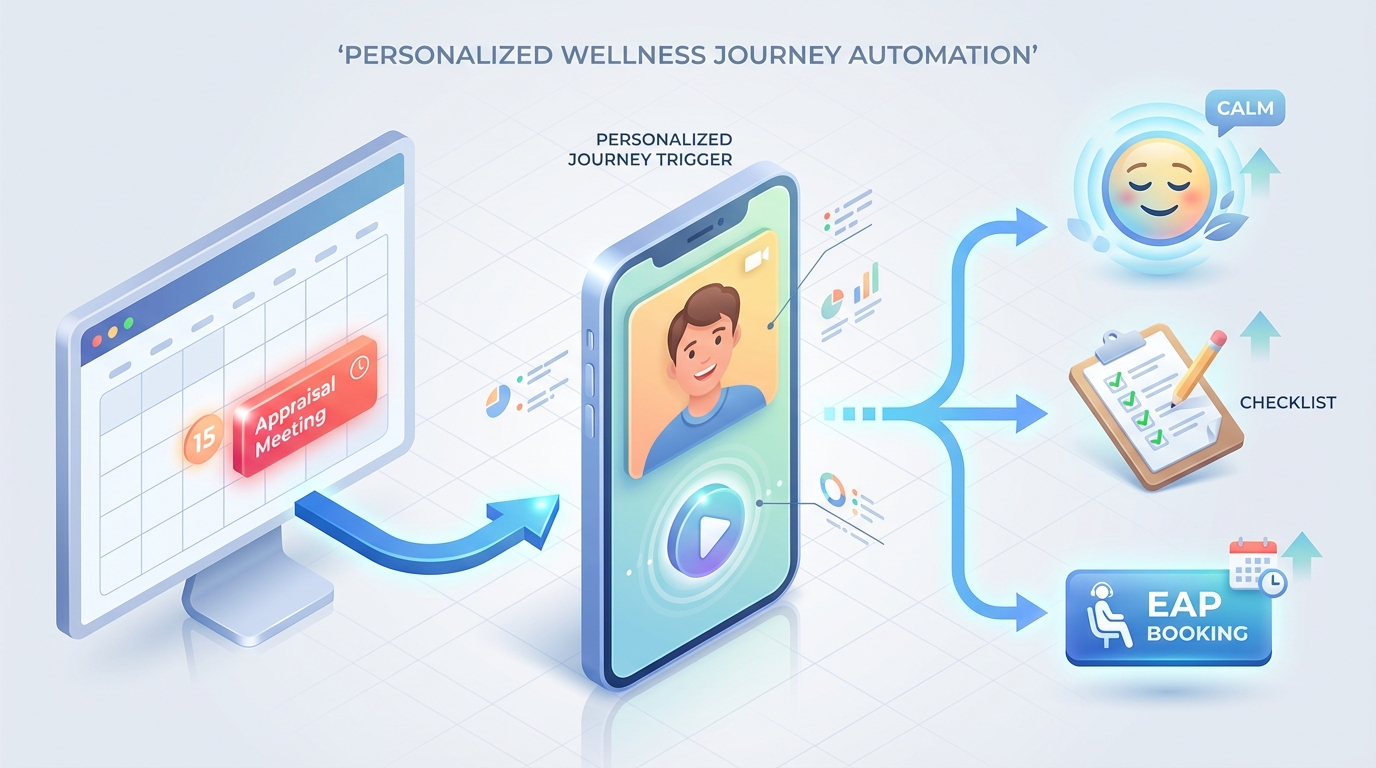
A successful rollout follows a structured three-month timeline, beginning with awareness and foundation-building in January. During this phase, the focus is on mental health awareness personalization and introducing the toolkit hub, alongside light gamification to build habit-forming engagement.
February and March represent the peak of the review cycle. The strategy shifts toward “just-in-time” delivery of workplace stress management videos and stress reduction technique videos. These assets are triggered by specific HRIS events, ensuring that an employee receives a grounding video on the morning of their review.
April is the month for recovery and prevention. The campaign should transition into burnout prevention campaigns and reinforce work-life balance coaching. This is also the ideal time for wellness program enrollment automation, as employees reflect on their performance and look toward their personal and professional goals for the remainder of the year.
The production of these videos can be streamlined using AI-driven virtual reshoots and editing. This allows HR teams to update scripts or policy references without the need for expensive and time-consuming traditional video shoots. By using a modular script structure—Hook, Value, Practice, CTA—teams can create thousands of variations that feel uniquely tailored to each recipient.
With real-time rendering and API-driven delivery, the gap between a personalization trigger and the employee receiving their video can be as short as 30 seconds. This speed and agility are essential for maintaining the relevance and impact of wellness interventions in a fast-paced corporate environment.
Frequently Asked Questions
How do we ensure employee data privacy when personalizing wellness videos?
Data privacy is managed through strict adherence to ISO 27001 and SOC 2 standards. We only use essential variables like first name and role, and all data is processed through secure, encrypted pipelines. Furthermore, platforms like TrueFan AI use a consent-first model, ensuring that all personalization is transparent and that employees can opt out at any time.
Can these video campaigns support a global workforce with multiple languages?
Yes. Modern generative AI allows for perfect lip-sync and voice retention across 175+ languages. This ensures that an employee in Chennai receives the same high-quality support in Tamil as an employee in New York receives in English, maintaining cultural relevance and emotional resonance across the entire organization.
What is the ideal length for a wellness video during appraisal season?
For high-stress periods, microlearning is most effective. We recommend 60–120 seconds for quick stress reduction techniques and 2–4 minutes for situational coaching or stress management modules. This ensures the content is digestible and does not add to the employee's existing workload.
How do we measure the ROI of these personalized video campaigns?
ROI is measured through a combination of engagement metrics (watch time, completion rates), activation metrics (EAP bookings, wellness benefit enrollment), and outcome metrics (pulse survey results, reduced turnover, and absenteeism data). Personalized campaigns typically see significantly higher engagement than generic content.
How quickly can a personalized video be delivered after a trigger event?
Using advanced API integrations and GPU-accelerated rendering, personalized videos can be generated and delivered in under 30 seconds. This allows for “just-in-time” support, such as sending a calming video immediately after a performance review is logged in the HRIS.
Conclusion
The appraisal season of Q1 2026 does not have to be a period of organizational strain. By implementing a video-first, personalized wellness strategy, HR and People Operations leaders can provide the targeted support necessary to navigate this high-pressure window with resilience and empathy.
From workplace stress management videos to personalized wellness journey automation, the tools available today allow for a level of care and precision that was previously impossible at scale. By focusing on the unique needs of each employee and leveraging the power of automated, multilingual delivery, enterprises can build a culture of well-being that extends far beyond the appraisal cycle.
Ready to transform your Q1 wellness strategy? Book a TrueFan AI Enterprise demo to launch employee wellness video campaigns Q1 2026 with secure personalization, real-time automation, and measurable ROI. Build a more resilient workforce today.