Women’s Day DEI marketing 2026 in India: A Practical Playbook for Authentic Impact
Estimated reading time: ~11 minutes
Key Takeaways
- Adopt a policy-first approach: link campaigns to pay equity, anti-harassment, and transparent metrics.
- Scale impact with personalized employee recognition videos and multilingual, accessible formats.
- Use leadership storytelling automation to sustain authentic narratives year-round.
- Prove value with retention and maternal wellness KPIs tied to business outcomes.
- Balance internal activation with external testimonials and partnerships for credibility.
Women’s Day DEI marketing 2026 in India: Personalization, Policy, and Proof Over Tokenism
Meta Description: Women’s Day DEI marketing 2026 in India: authentic policies, personalized employee recognition videos, leadership storytelling, and measurable equality.
In the rapidly evolving corporate landscape of India, Women’s Day DEI marketing 2026 has transcended the era of symbolic gestures. For HR Directors and Corporate Communications leaders, the stakes for March 8 corporate initiatives have never been higher. Indian consumers and employees now demand a shift from “pink-washed” creatives to substantive, policy-backed change. This year, the focus is on gender equality brand campaigns India that prioritize personalized employee recognition videos, leadership storytelling automation, and inclusive workplace video marketing.
The shift is driven by a sophisticated workforce that values “visible equity.” In 2026, a successful campaign is not defined by a single day of celebration but by a year-round commitment to workplace equality campaigns. This playbook outlines how to move beyond tokenism, leveraging women empowerment content marketing to drive measurable outcomes in retention, engagement, and brand trust.
1. The Shift from Tokenism to Authenticity in 2026
The authenticity gap in Indian corporate marketing has become a significant liability. Historically, many March 8 corporate initiatives were limited to symbolic discounts or social media posts that lacked structural support. In 2026, tokenism is defined as any gesture—such as a “Happy Women’s Day” banner—that is not accompanied by improvements in policy or transparent metrics.
Authenticity, conversely, requires a “policy-first” approach. Before launching gender equality brand campaigns India, organizations must audit their internal structures. This includes equal pay audits with quarterly delta reporting and anti-harassment redressal systems with strict Service Level Agreement (SLA) transparency. When storytelling is used to amplify these real changes, it becomes a powerful tool for women empowerment content marketing rather than a performative distraction.
Recent trends in the Indian market highlight this shift. For instance, the 2025 collaboration between Axis Bank and Shefali Shah explicitly called out hollow gestures, signaling a growing appetite for substance. Similarly, brands like Tanishq and Prega News have moved toward narratives that challenge societal norms, such as “mom guilt” and the freedom of choice. These examples demonstrate that the most effective workplace equality campaigns are those that link storytelling directly to organizational or societal progress.
Furthermore, the scale of distribution in India has reached a tipping point. With over 500 million WhatsApp users, internal distribution for recognition videos and leadership messages has become highly viable. Data from 2026 indicates that Gen Z women, in particular, prioritize brands that demonstrate “visible equity”—a metric that tracks how often DEI goals are met and publicly reported.
Sources:
2. Internal Activation: Personalized Female Employee Recognition Videos
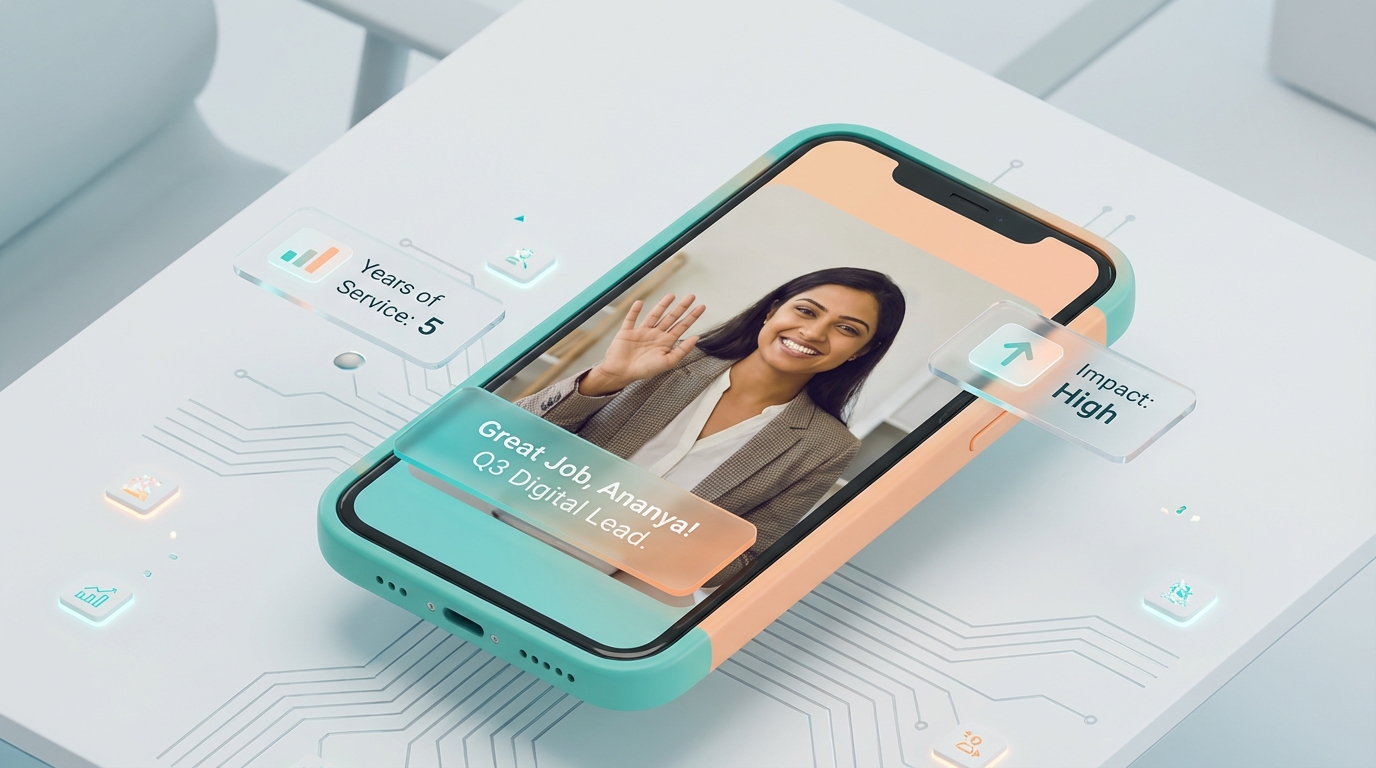
The cornerstone of an effective internal strategy for 2026 is the deployment of female employee recognition videos. Employee review season engagement These are not generic “thank you” messages but short-form, data-driven videos that celebrate specific achievements such as project wins, tenure milestones, or mentorship impact. Platforms like TrueFan AI enable enterprises to generate these personalized assets at a scale previously impossible with manual editing.
To implement International Women’s Day personalization effectively, organizations must integrate their HR Information Systems (HRIS) with video automation tools. This allows for the dynamic insertion of variables such as the employee’s name, pronouns, years of service, and specific achievement snippets. A typical 60-75 second recognition video should follow a structured blueprint:
- Hook (0-5s): Immediate personalization, e.g., “Hi Ananya, your work in the Bangalore office has been exceptional.”
- Recognition Body (5-45s): Highlighting a specific impact with measurable outcomes, such as “leading the Q3 digital transformation project.”
- Ally Boost (45-60s): A cameo from a manager or executive leader thanking the employee by name.
- CTA (60-75s): An invitation to an Employee Resource Group (ERG) or a leadership development resource.
Privacy and consent are paramount in inclusive workplace video marketing. Organizations must ensure written consent for internal distribution, provide clear opt-out mechanisms, and follow strict data minimization principles. Accessibility is equally critical; in 2026, all recognition content must include auto-captions, high-contrast templates, and multilingual options to cater to India's diverse workforce. Multilingual voice marketing automation
Distribution should leverage the channels where employees already spend their time. While email and intranet embeds are standard, using the WhatsApp Business API for direct delivery has shown significantly higher engagement rates in the Indian context. WhatsApp catalog video marketing Metrics to track include view-through rates, unique reach by business unit, and the subsequent uplift in ERG enrollment or eNPS (Employee Net Promoter Score) among recipients.
Sources:
- TrueFan AI: Personalization and Multilingual Uplift in India
- Meta/WhatsApp: India Scale and E-Governance
3. Women Leadership Storytelling Automation and Brand Positioning
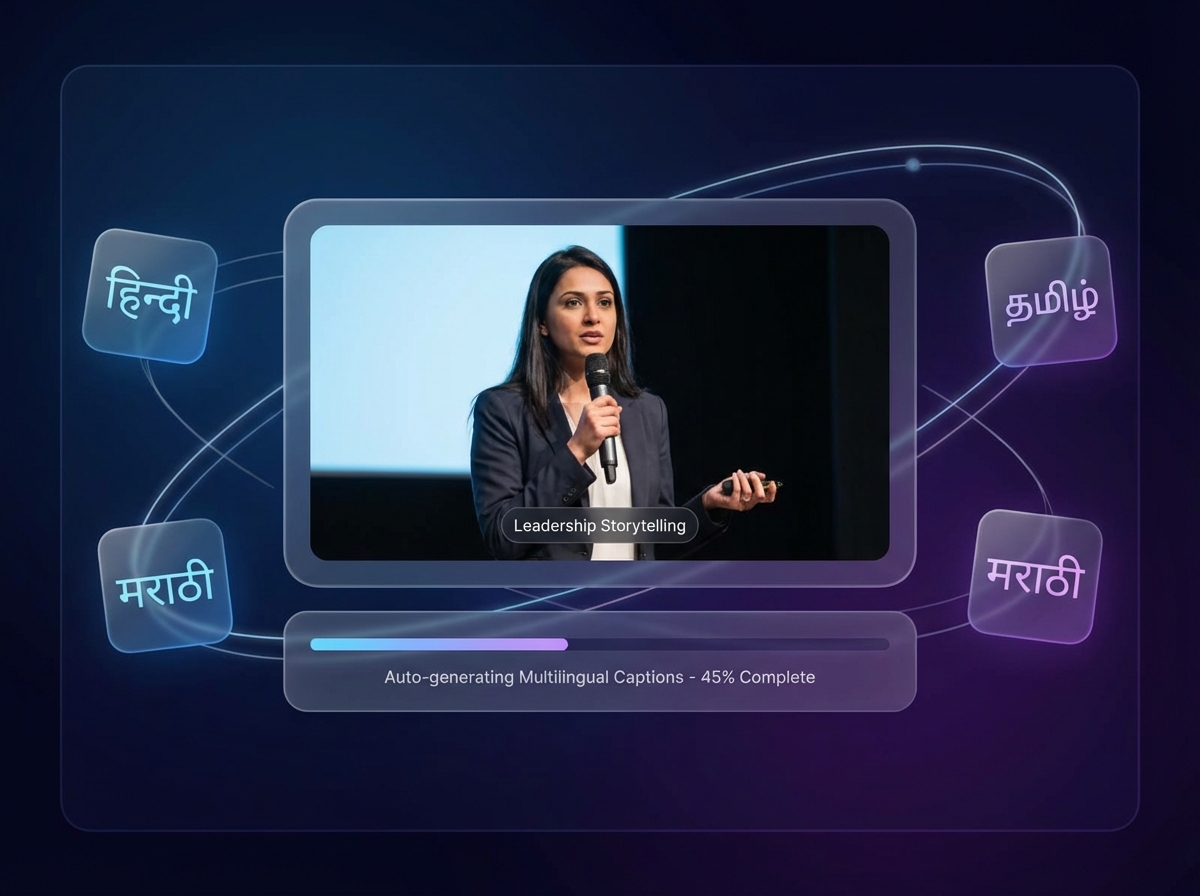
Scaling the voices of women leaders is a primary objective for women leadership storytelling automation. In 2026, enterprises are moving away from one-off executive interviews toward systematized creation of recurring, templated videos. These videos feature CXOs, ERG heads, and frontline managers, using dynamic data fields to localize language and visuals without the need for manual reshoots.
TrueFan AI's 175+ language support and Personalised Celebrity Videos offer a unique way to enhance diversity brand positioning videos. AI celebrity video marketing in India By automating the production of executive spotlights and ERG leader series, companies can maintain a consistent presence throughout the year. For example, an “Executive Spotlight” template can swap background b-roll based on the specific business unit, while “Virtual Reshoots” allow for updating quarterly metrics in a single line of dialogue without re-filming the entire segment.
The automation playbook requires a robust input schema, typically a CSV or API feed containing speaker names, roles, topic tags, and metric highlights. Governance is maintained through brand-safe templates and role-based approvals, ensuring that every piece of inclusive workplace video marketing aligns with corporate standards. This level of automation is particularly effective for “Frontline Hero” stories, where customer impact and mentor acknowledgments can be highlighted across multiple regions in languages like Hindi, Tamil, Bengali, and Marathi.
Beyond internal engagement, these automated narratives serve as powerful external assets. When shared on platforms like LinkedIn, they reinforce the organization’s commitment to gender equality brand campaigns India. The ROI of such initiatives is measured through engagement quality—such as peer shoutouts and comments—and the overall lift in brand favorability among women.
Sources:
4. External Activation: Women Customer Testimonials and B2B Partnerships
External Women’s Day DEI marketing 2026 must be anchored in the lived experiences of customers and partners. Women customer testimonials provide social proof of a brand’s impact on accessibility, safety, and economic empowerment. In 2026, these testimonials are moving toward story-led, consent-based video narratives that demonstrate specific product outcomes.
For B2B organizations, she-commerce B2B marketing is a critical frontier. This involves targeting women-owned enterprises or businesses selling to women decision-makers with tailored messaging and co-developed offers. Women entrepreneur partnerships can be activated through supplier diversity showcase series—short-form diversity brand positioning videos that highlight the success of women-led SMEs within the company's supply chain.
To avoid virtue signaling, these external campaigns must disclose metrics and limitations. For instance, if a brand highlights its support for maternal wellness, it should also share data on the return-to-work rates of its employees. Brands like Re’equil have set a benchmark by spotlighting postpartum depression—a condition affecting 1 in 5 mothers in India—and tying that awareness to their maternal wellness support programs.
Execution of these partnerships should include co-branded pilots and mentorship capital. By bundling promotions to enterprise buyers and publishing partner revenue lift, brands can demonstrate a tangible commitment to women empowerment content marketing. This approach not only builds trust but also creates a “she-commerce” ecosystem that drives long-term business value.
Sources:
- Re’equil: Spotlighting Postpartum Depression in India
- Prega News: Challenging Mom Guilt and Supporting Working Mothers
- BrandEquity: India Women’s Day Campaign Tracker
5. Proving ROI: Maternal Wellness and Female Talent Retention Strategies
One of the most significant coverage gaps in traditional DEI marketing is the failure to connect workplace equality campaigns to financial outcomes. In 2026, the ROI of DEI is increasingly measured through female talent retention strategies. Predictive analytics for customer retention Research indicates that the cost of post-maternity attrition in India can range from 80% to 135% of an employee's annual salary. This makes maternal wellness programs not just a moral imperative but a financial necessity.
Comprehensive maternal wellness programs in 2026 include:
- Phased return-to-work options and flexible scheduling.
- Onsite or partnered creche facilities and dedicated lactation rooms.
- Mental health counseling, specifically addressing postpartum depression.
- Manager coaching to eliminate “maternal wall” bias. Q1 2026 appraisal retention strategies
Solutions like TrueFan AI demonstrate ROI through increased engagement and retention metrics, providing the data needed to justify these investments. By tracking KPIs such as the return-to-work rate at 3, 6, and 12 months, and the promotion velocity of women post-maternity, organizations can build a data-backed case for their DEI initiatives.
Furthermore, the “Motherhood Code” in tech leadership highlights that while longer leave is a start, retention depends on re-entry support and manager sentiment. Organizations that publish these KPIs as part of their Women’s Day DEI marketing 2026 demonstrate a level of transparency that earns the trust of both employees and investors. This transparency is the ultimate differentiator in a crowded market of gender equality brand campaigns India.
Sources:
6. Execution Roadmap and Measurement Governance
A successful campaign for March 8 corporate initiatives requires a 6-8 week run-up. This timeline ensures that policy-proof sprints and story sourcing are completed before production begins.
The 8-Week Execution Timeline:
- Weeks 1-2: Validate policy changes, lock KPIs, and finalize consent forms. Shortlist 12-20 key recognition stories.
- Weeks 3-4: Build video templates and map language requirements. Record leadership base footage and generate the first batch of female employee recognition videos.
- Weeks 5-6: Film women customer testimonials and finalize she-commerce B2B marketing assets. Load analytics dashboards.
- March 8 Week: Stagger internal rollouts in the morning and external premieres at midday. Monitor real-time engagement and optimize distribution.
- Post-March 8: Publish the outcome report and continue weekly recognitions to sustain momentum.
Governance is the final, critical component. This includes role-based approvals, legal sign-offs on all scripts, and strict data retention limits. Bias and accessibility QA checklists must be applied to all inclusive workplace video marketing assets. In India, ensuring vernacular quality gates for languages like Hindi, Tamil, and Marathi is essential for maintaining brand safety and resonance.
Ultimately, the goal of Women’s Day DEI marketing 2026 is to make DEI outcomes visible. By reporting on pre-March 8 baselines and providing Q2/Q4 follow-ups, organizations can prove that their commitment to gender equality is not a seasonal trend but a core business strategy.
Sources:
Conclusion: The Path to 2026 Excellence
The future of Women’s Day DEI marketing 2026 lies in the intersection of data-driven personalization and authentic policy change. By moving beyond the performative and embracing International Women’s Day personalization, Indian enterprises can build deeper connections with their employees and customers. Whether through female employee recognition videos or women leadership storytelling automation, the goal remains the same: to create a workplace where equality is not just a goal, but a visible, measurable reality.
Call to Action: Ready to elevate your 2026 strategy? Book a TrueFan Enterprise demo to stand up International Women’s Day personalization, female employee recognition videos, and women leadership storytelling automation in under 30 days. Download our comprehensive consent kit and KPI dashboard starter to begin your journey toward authentic impact today.
Frequently Asked Questions
How can we avoid tokenism in our workplace equality campaigns?
To avoid tokenism, ensure your campaign is “policy-first.” This means auditing pay equity, harassment redressal, and parental leave before launching any marketing. Use storytelling to amplify these existing structural changes rather than as a substitute for them.
What KPIs are most effective for measuring female talent retention strategies?
Key metrics include the return-to-work rate after maternity leave (at 6 and 12-month intervals), promotion velocity by gender, pay equity deltas, and eNPS scores segmented by gender. Tracking these quarterly provides a clear picture of retention health.
How do we implement International Women’s Day personalization securely in India?
Secure implementation requires integrating your HRIS with a platform like TrueFan AI via encrypted APIs. Ensure you have explicit, written consent from employees for video creation and distribution, and use a platform that offers role-based access and audit trails.
What are the benefits of women leadership storytelling automation?
Automation allows you to produce high-quality, localized video content at scale without the need for constant manual filming. This ensures that a diverse range of voices—from CXOs to frontline managers—is consistently represented across all regions and languages.
How does she-commerce B2B marketing differ from standard B2B marketing?
She-commerce B2B marketing specifically targets women-owned enterprises or businesses where women are the primary decision-makers. It uses tailored messaging, highlights supplier diversity, and offers co-marketing opportunities that address the unique challenges faced by women in business.
What role does multilingual support play in inclusive workplace video marketing?
In a diverse market like India, multilingual support is essential for inclusion. Providing content in an employee's native language (e.g., Hindi, Tamil, Bengali) significantly increases engagement and ensures that the message of recognition is understood and valued by all team members.