Summer Vacation Early Bird Campaigns 2026: Enterprise Playbook for March–April Activations That Convert Family Planners
Key Takeaways
- The March–April activation window is critical to capture high-intent family planners and protect rate integrity.
- Destination personalization marketing with recommendation engines and localized video cuts decision fatigue and lifts conversion.
- Early booking incentive campaigns should be automated with tiered value-adds to preserve ADR while rewarding commitment.
- Personalized family vacation package videos and recovery flows on WhatsApp drive shareability and conversion across APAC.
- Enterprise success requires robust measurement, security (SOC 2/ISO 27001), and a 4–6 week implementation blueprint.
The strategic window for securing peak season dominance in the travel sector has shifted significantly. For CMOs in the India and APAC regions, the traditional booking curve has been replaced by an accelerated timeline where March and April serve as the decisive battleground for May and June inventory. As we navigate the complexities of the 2026 travel landscape, the mandate is clear: move beyond generic discounting and embrace high-fidelity personalization to capture high-intent family planners.
Current market intelligence underscores this urgency. Data indicates that as early as November 2025, approximately 58% of monthly revenues for major travel aggregators were already being generated by bookings for summer vacation early bird campaigns 2026. This trend is supported by a cumulative revenue increase of 16% year-over-year, signaling a fundamental shift toward earlier commitment cycles. Furthermore, KAYAK’s 2026 projections reveal a 9% surge in general travel interest, bolstered by a 3% decline in domestic airfares and a substantial 12% drop in international fares, making early decision-making more financially attractive for the enterprise consumer.
To thrive in this environment, hospitality and travel brands must transition from reactive late-season price slashing to proactive, value-driven early-bird constructs. By leveraging destination personalization marketing and automated recovery workflows, brands can protect their rate integrity while reducing reliance on high-commission Online Travel Agencies (OTAs). This playbook outlines the technical and creative framework required to execute a multi-channel, AI-driven summer campaign that scales across the diverse linguistic and cultural landscape of the APAC market.
1. The 2026 Early Bird Shift: Market Timing and Demand Signals for Summer Vacation Early Bird Campaigns 2026
The March–April activation window is no longer just a suggestion; it is a structural necessity for maintaining yield. In 2026, the convergence of falling international airfares and the rise of “destination dupes”—affordable alternatives to traditional hotspots—has created a hyper-competitive environment where the first mover often captures the highest lifetime value (LTV) customers. Enterprise brands must monitor first-party behavioral signals, such as route-specific price alerts and loyalty point inquiries, to forecast demand spikes with surgical precision.
Strategic budget allocation must shift up-funnel during this period to capture intent before it dissipates into the fragmented OTA ecosystem. Research suggests that hotels and airlines should “stop discounting late and start winning early” by utilizing structured early-bird offers that reward commitment without eroding brand equity. This approach is particularly effective for family segments who prioritize certainty in itinerary planning over last-minute speculative deals.
Macro-economic indicators for 2026 suggest that while travel interest is peaking, price elasticity remains a critical factor. The 12% reduction in international airfares has opened the door for long-haul family vacations that were previously cost-prohibitive. By identifying these price-sensitive cohorts early in the search cycle, brands can deploy summer vacation early bird campaigns 2026 that highlight value-add inclusions—such as complimentary airport transfers or room upgrades—rather than simple percentage-based discounts.
Source: Travel Data Analytics: Summer 2026 Revenue Trends
Source: Revenue Hub: The Case for Early-Bird vs. Late Discounting
Source: Morningstar/KAYAK: 2026 Travel Price and Interest Forecast
2. Destination Personalization Marketing: Scaling Discovery with a Destination Recommendation Engine
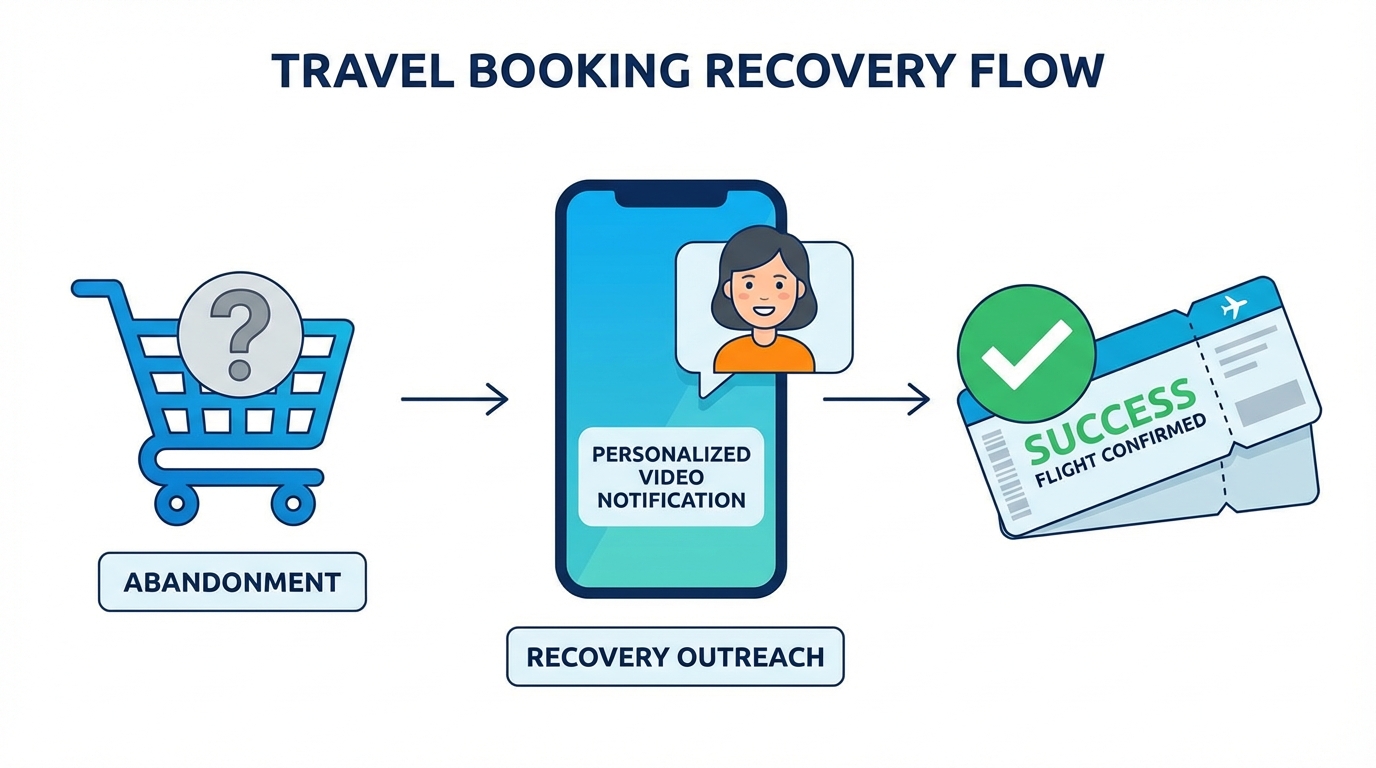
In an era of infinite choice, the primary friction point for travelers is decision fatigue. Destination personalization marketing solves this by transforming the discovery phase into a curated experience. By deploying a sophisticated destination recommendation engine, enterprise travel brands can score potential locations for each user based on historical booking patterns, real-time fare movements, and household demographics. For instance, a family with school-age children in Mumbai might receive recommendations for “destination dupes” in Southeast Asia that align with their specific school holiday calendar.
The technical execution involves feeding Customer Data Platform (CDP) insights into a content generation pipeline. This allows for the creation of vacation planning video guides that are unique to the individual. These videos do not merely show a destination; they explain why it fits the user’s profile, citing specific amenities like kids' clubs or proximity to cultural landmarks. Platforms like TrueFan AI enable travel brands to generate these hyper-personalized video assets at scale, ensuring that every recommendation feels like a bespoke consultation rather than a mass-market advertisement.
For the India outbound market, the 2026 trend of “destination dupes” is particularly relevant. As travelers seek the aesthetic and cultural richness of Europe at a fraction of the cost, recommendation engines can pivot messaging to highlight emerging gems in Central Asia or the Caucasus. By localizing these videos into regional languages such as Hindi, Tamil, or Bengali, brands can achieve a level of resonance that static, English-only campaigns cannot match.
Source: Lighthouse: 2026 Hospitality Trends and AI Personalization
Source: TrueFan AI: Enterprise Personalization Capabilities
3. Early Booking Incentive Campaigns: Orchestrating Summer Travel Offer Automation
The transition from manual campaign management to summer travel offer automation is the hallmark of a mature 2026 marketing stack. Early booking incentive campaigns must be orchestrated through rules-based triggers that respond to specific user actions, such as an abandoned flight search or a saved hotel itinerary. These triggers should deploy a tiered incentive structure: a “Tier 1” offer for bookings made by March 31st (e.g., 2x loyalty points and free breakfast), tapering down to “Tier 3” by late April.
Automation allows for the dynamic insertion of value-adds that preserve rate integrity. Instead of a 20% discount, the system might trigger a “Family Bundle” offer that includes a 2+1 room configuration or complimentary theme park access. This ensures that the Average Daily Rate (ADR) remains healthy while the perceived value for the consumer increases. The integration of these offers into personalized video content further enhances the “nudge” effect, making the deadline feel personal and urgent.
Enterprise execution requires a seamless link between the booking engine and the communication layer. When a fare drop occurs for a watched route, the automation engine should immediately generate a personalized video notification. This video should not only announce the price change but also include a deep link to the checkout page with the early-bird promo code pre-applied. This level of frictionless commerce is essential for converting the modern, mobile-first traveler in the APAC region.
Source: Revenue Hub: Structured Early-Bird Constructs
Source: WebEngage: Goibibo Case Study on Journey Orchestration
4. Family Vacation Package Videos: Converting High-Value Household Segments
Family travelers represent the highest-value segment for summer activations, yet they are often the most difficult to convert due to the complexity of their requirements. Family vacation package videos address this by providing a visual checklist of the features that matter most to parents: safety protocols, interconnecting rooms, and age-appropriate entertainment. By utilizing CRM data regarding the ages of children in a household, brands can customize the video B-roll to show toddlers in a splash pad or teenagers in a tech lounge, creating an immediate emotional connection.
TrueFan AI's 175+ language support and Personalised Celebrity Videos allow brands to add a layer of “star power” to these family-centric messages. Imagine a personalized greeting from a brand ambassador like Rishabh Pant, specifically addressing a family by name and highlighting the “Kids Stay Free” benefits of a particular resort. This approach was successfully pioneered by Goibibo, where personalized WhatsApp video nudges led to a significant uplift in funnel conversions and cross-sell efficiency.
Beyond the initial booking, these videos serve as vacation planning video guides that can be shared within family WhatsApp groups. This social sharing is a critical, often overlooked component of the travel decision-making process. When a spouse can share a personalized video of a potential villa with their partner, the barrier to “clicking buy” is drastically reduced. The ability to localize these videos into Marathi, Telugu, or any of India’s regional languages ensures that the message reaches the decision-makers in their most comfortable medium.
Source: TrueFan AI Case Study: Goibibo’s Personalized Video Success
Source: Afaqs: Goibibo and Rishabh Pant AI Campaign Coverage
5. The Conversion Engine: Hotel Booking Conversion Videos and Airline Seat Selection Personalization
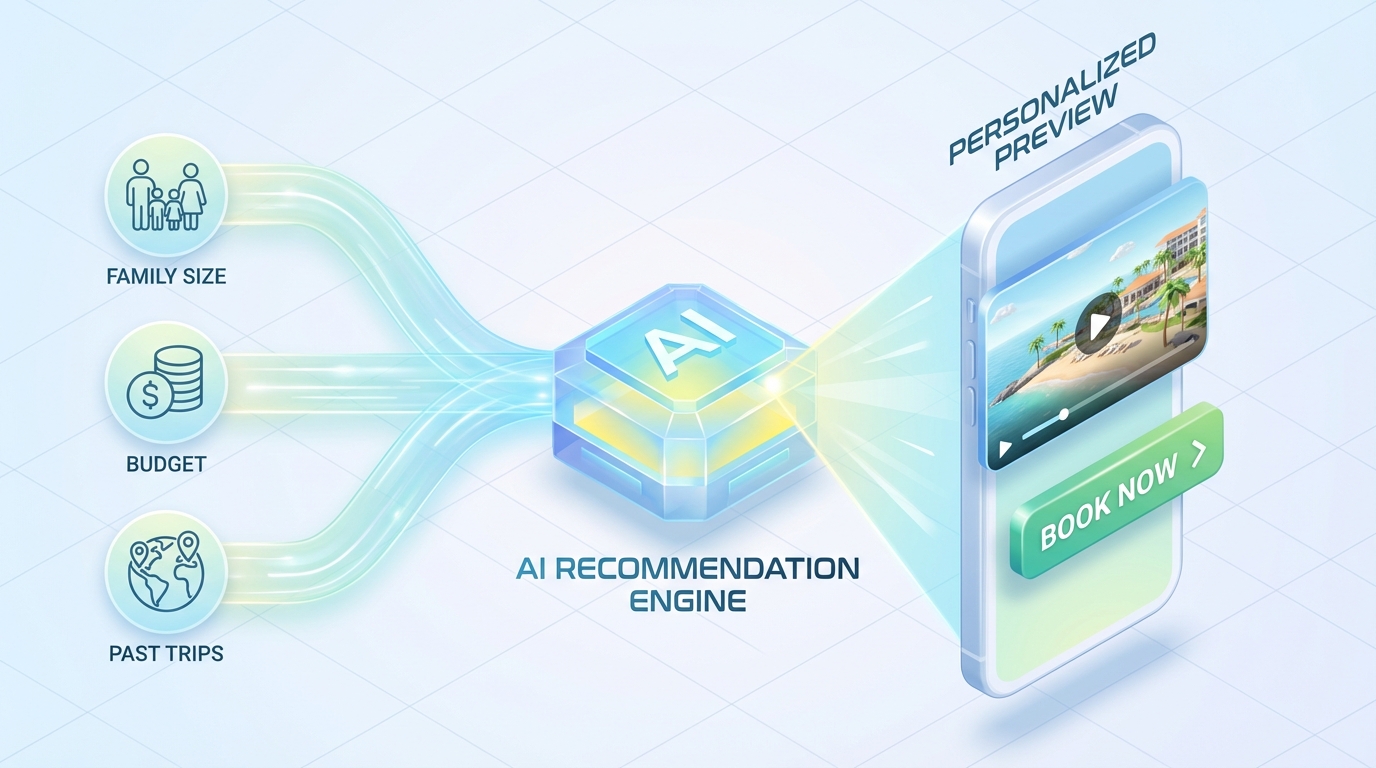
The final mile of the booking journey is where most drop-offs occur. To combat this, enterprise brands are deploying hotel booking conversion videos that act as a 1:1 virtual tour. Triggered by a cart abandonment event, these videos can showcase the exact room category the user was viewing, emphasize the flexible cancellation policy, and reiterate the early-bird bonus. This level of specificity transforms a generic “come back” email into a compelling, high-utility service.
Similarly, airline seat selection personalization is becoming a vital tool for increasing ancillary revenue. Instead of a static seat map, travelers receive a personalized video prompt highlighting the benefits of specific seats—such as extra legroom for a tall traveler or “family rows” that ensure everyone sits together. By aligning these prompts with the traveler’s loyalty status (e.g., “As a Gold member, your preferred seat is complimentary if you book in the next 24 hours”), airlines can drive immediate action and improve the overall passenger experience.
This conversion engine also extends to travel insurance cross-sell videos. By analyzing the itinerary's risk profile—such as monsoon seasonality in Southeast Asia or adventure sports in New Zealand—the system can generate a video that explains the specific benefits of the policy in simple, localized terms. This targeted approach to add-ons ensures that the cross-sell feels like a protective measure rather than an aggressive upsell, leading to higher attach rates and improved customer satisfaction.
Source: TrueFan AI: Product Intelligence and API Integration
Source: Morningstar: Trends in Airline Ancillary and Pricing
6. Recovery and Loyalty: Travel Booking Recovery Videos and Program Activation
Session abandonment is an inevitable part of the travel research process, but it should not be the end of the customer relationship. Travel booking recovery videos are the most effective way to re-engage users who have dropped off mid-funnel. These videos recap the specific itinerary, display social proof (e.g., “3 other families booked this resort in the last hour”), and provide a clear, time-bound incentive to complete the transaction. The use of urgency, combined with a personalized “Welcome back, [Name]” greeting, creates a powerful psychological trigger for completion.
For existing customers, travel loyalty program activation is the key to driving repeat bookings. Personalized videos can be used to notify members of their current point balances and suggest “point-burn” itineraries for the summer. By showing a member exactly how many points they need for a free night at a luxury property, brands can move them from passive accumulation to active redemption. This not only clears loyalty liabilities but also secures the member’s summer booking well in advance of the peak season.
Furthermore, domestic tourism promotion videos can be used to capture the “micro-break” market. For travelers not planning a major international trip, personalized videos highlighting long-weekend getaways within India—localized to their origin city—can drive significant volume. Whether it’s a monsoon retreat in Coorg or a heritage stay in Rajasthan, these videos use regional language storytelling to make domestic travel feel as aspirational as an overseas vacation.
Source: WebEngage: Enhancing Conversions with Journey Orchestration
Source: TrueFan AI: Case Study Archive
7. Enterprise Governance: Measurement, Security, and Implementation Blueprint
Executing a campaign of this scale requires more than just creative flair; it demands enterprise-grade infrastructure. Solutions like TrueFan AI demonstrate ROI through measurable uplifts in booking conversion rates (often 10–20% in recovery flows) and significant increases in ancillary attach rates. However, these gains must be balanced with rigorous data governance. In 2026, SOC 2 and ISO 27001 compliance are non-negotiable for any AI-driven personalization platform, ensuring that PII is handled with the highest level of security and that all video content meets strict moderation standards.
The implementation of summer travel offer automation and personalized video workflows typically follows a 4–6 week blueprint.
- Weeks 1–2: Focus on data mapping and script matrix development, ensuring that all variables (name, destination, loyalty tier) are correctly identified.
- Weeks 3–4: Involve API integration with the brand’s WhatsApp Business API and ESP, followed by rigorous QA across multiple languages and devices.
- Weeks 5–6: See the launch of a soft pilot, where A/B testing of different incentive lines (e.g., “15% off” vs. “5,000 bonus points”) allows for real-time optimization before the full-scale March rollout.
Finally, for the modern CMO, the focus must remain on the “Three Cs”: Conversion, Compliance, and Cost-Efficiency. By automating the creation of group booking personalization and corporate travel recovery campaigns, brands can address niche segments that are often ignored by mass-market strategies. This comprehensive approach ensures that every marketing dollar spent in the March–April window is optimized for maximum impact, setting the stage for a record-breaking summer season.
Coverage Gaps Addressed in This Playbook:
- The Psychological Shift to “Certainty-First”: While 2025 was about price-hunting, 2026 is seeing a shift where travelers prioritize “booking certainty” and “experience-locking” early to avoid the volatility of last-minute inventory.
- School Calendar Synchronization: This playbook emphasizes the need to sync automated triggers with specific regional school holiday calendars, a level of detail often missed in global campaigns.
- The “Destination Dupe” Strategy: We address the emerging 2026 trend of travelers seeking high-value alternatives to traditional expensive hotspots, and how recommendation engines can capitalize on this shift.
Source: TrueFan AI: Security and Compliance Standards
Source: Afaqs: Scaling AI Campaigns in the Indian Market
Frequently Asked Questions
Why is the March–April window critical for summer vacation early bird campaigns 2026?
The March–April period is when high-intent travelers, particularly families, finalize their plans to secure preferred inventory and lower airfares. Data shows that by November of the previous year, over 50% of summer revenue is already being booked, making early activation essential to capture the remaining high-value segments.
How does destination personalization marketing improve ROI compared to traditional ads?
Traditional ads are generic and often ignored. Personalization uses a destination recommendation engine to show users the exact locations and amenities they care about, reducing decision fatigue and increasing the likelihood of a booking. This targeted approach typically results in higher click-through and conversion rates.
Can travel booking recovery videos be automated for large-scale enterprises?
Yes. Through API integrations with booking engines and platforms like TrueFan AI, brands can automatically trigger a personalized video within minutes of a user abandoning their cart. This real-time response is crucial for recovering lost revenue before the user moves to a competitor.
What are the security implications of using AI for personalized travel videos?
Enterprise-grade platforms prioritize data security by adhering to SOC 2 and ISO 27001 standards. This ensures that user data is encrypted, consent is managed properly, and the AI-generated content is moderated to maintain brand safety and compliance with regional data laws.
How do personalized videos help with airline seat selection personalization and other ancillaries?
Personalized videos can visually demonstrate the benefits of an upgrade—such as the actual legroom in an exit row or the amenities in a premium lounge—making the value proposition much clearer than a simple text prompt. This visual “nudge” significantly improves the attach rate for ancillary services.



