Back to School Marketing India 2026: Multilingual AI Video Playbooks for Admissions, Offers, and Retention
Estimated reading time: ~9 minutes
Key Takeaways
- Adopt a WhatsApp-first strategy with personalized, vernacular videos to nudge admissions and D2C purchases.
- Scale content with AI video generation across 175+ languages, enabling rapid localization and virtual reshoots.
- Time campaigns to the academic calendar with May awareness and early-June conversion pushes.
- Track beyond opens with VTR and lead-to-counselor-booked KPIs, and A/B test avatars, language, and CTAs.
- Ensure DPDP Act 2023 and WhatsApp template compliance with explicit consent and easy opt-outs.
The landscape of back to school marketing India 2026 is defined by a massive shift toward hyper-localization and the integration of generative AI into the parent-student journey. As schools prepare for the June reopening, CMOs are moving beyond generic billboards to personalized, vernacular-first video campaigns delivered directly via WhatsApp to parents in Tier-2 and Tier-3 cities. This evolution is driven by a projected $70.5 billion school market in 2026 and a growing demand for digital trust in an era of rapid EdTech correction.
To succeed in June marketing campaigns India 2026, brands must master two core concepts:
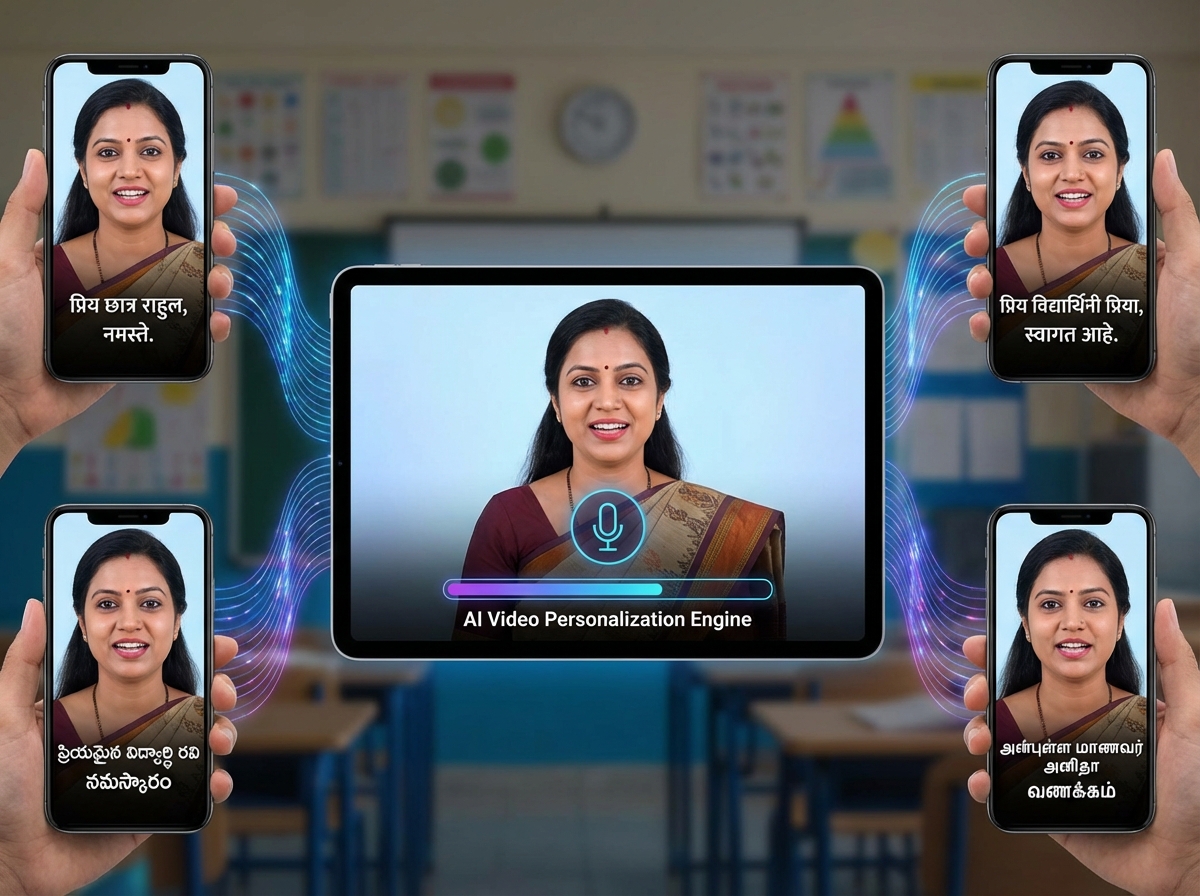
- Personalized AI Video: These are dynamic, one-to-one videos rendered at request-time where variables like child_name, grade, city, and preferred_language are injected into an avatar-anchored script.
- Vernacular-First Engagement: This involves producing original content in the target parent’s regional language—not just dubbing—with native lip-sync and cultural cues to build immediate authority.
Section 1 — June 2026 School Reopening Campaign Strategies: What CMOs Must Time-Box Now
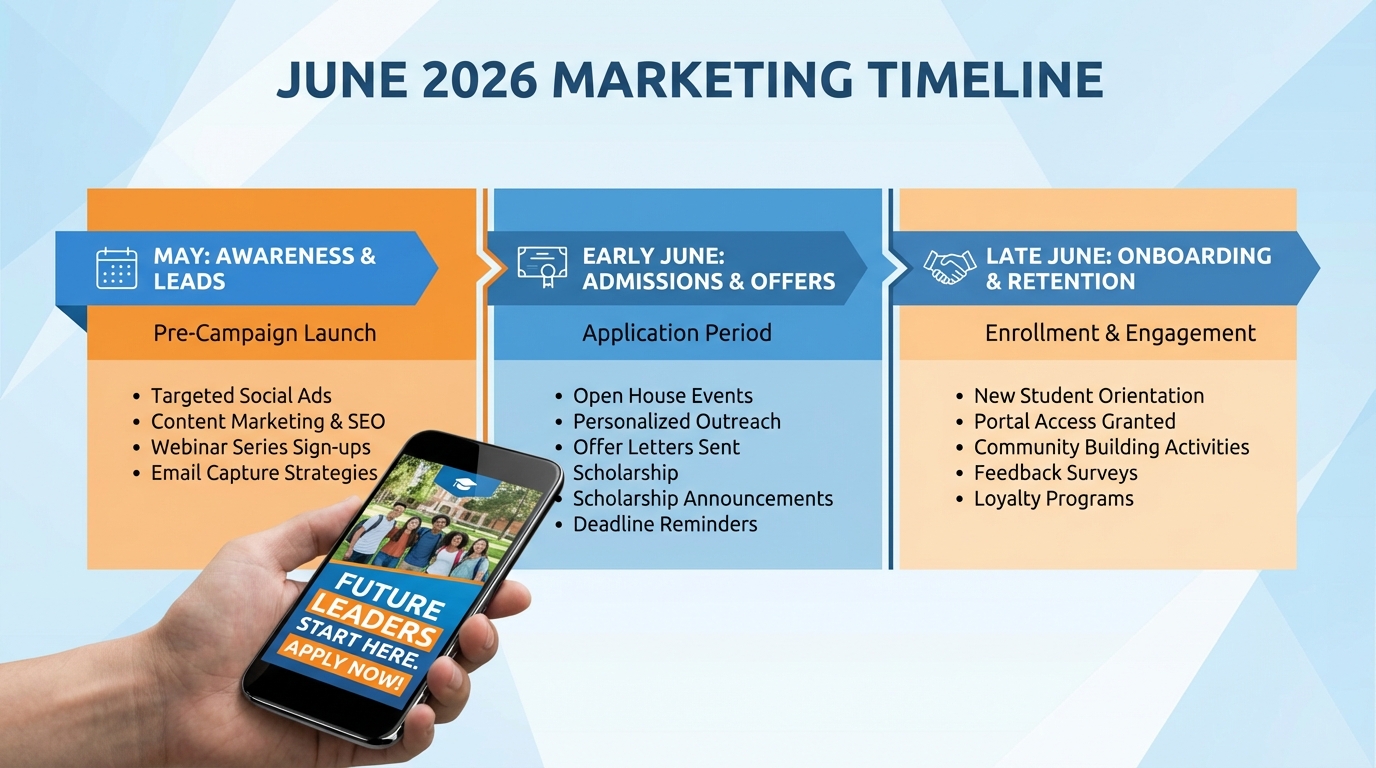
The success of June marketing campaigns India 2026 depends on a meticulously timed execution window that aligns with the Indian academic calendar. CMOs must transition from broad awareness in May to high-intent conversion by the first week of June, utilizing a "mobile-first" video strategy to capture the attention of busy parents.
The 2026 Timeline Play
- Pre-June (Mid–Late May): This phase is dedicated to audience building and consent capture. Brands should focus on lead generation through social media and local SEO, ensuring all opt-ins are DPDPA-compliant. Creative pre-approvals for WhatsApp templates must be secured now to avoid last-minute bottlenecks.
- Early June (1–10): This is the peak window for admissions nudges and D2C offer drops. Use countdown timers and "seats filling fast" messaging. Personalized videos should highlight specific school branches or product availability in the parent's city.
- Mid/Late June (11–30): Shift focus to onboarding new students and driving retention. For D2C brands, this is the time for "last-minute" kit bundles and electronics upgrades as the first week of school reveals missing essentials.
Channel Mix and Strategy
In 2026, WhatsApp Business has solidified its position as the primary high-intent channel for Indian parents, boasting open rates exceeding 90%. Short-form video combined with quick-reply menus allows for a frictionless "chat-to-convert" experience. While search and social support remain vital for intent queries like "best CBSE school near me," the final decision-making often happens within the private, trusted environment of a WhatsApp thread.
Research and Data Insights
According to NetcoreCloud’s 2026 analysis, brands like Apple and Amazon are increasingly using countdowns and UGC hauls to drive urgency during the school reopening phase. Furthermore, Brand Chanakya highlights that vernacular content is no longer optional; it is the primary driver of trust for the 70% of new internet users originating from non-metro regions.
Sources:
- NetcoreCloud: Back-to-School Marketing Ideas
- Brand Chanakya: Education Marketing Trends in India
- Boston Institute of Analytics: Early 2026 Marketing Trends Recap
- GKDigitalIndia: School Marketing Guide 2026
Section 2 — The Enterprise Stack to Scale Multilingual Back-to-School Video
Scaling multilingual back to school video India requires an enterprise-grade infrastructure capable of handling millions of unique renders with zero latency. The 2026 marketing stack is no longer just about "sending" videos; it is about "generating" them dynamically based on real-time CRM triggers.
Core Capabilities for 2026
The modern enterprise stack must support 175+ languages with accurate lip-sync and voice retention. This allows a brand to conduct a single 15-minute base shoot with a brand ambassador and generate infinite localized variants. Security is equally paramount; platforms must be ISO 27001 and SOC2 certified to handle sensitive student and parent data under the DPDP Act 2023.
Integration and Automation
Platforms like TrueFan AI enable seamless integration with existing CRMs and WhatsApp Business APIs. When a parent fills out an admission form, a webhook triggers the generation of a personalized video that is delivered within 30 seconds. This low-latency rendering is critical for maintaining the "magic" of personalization. Furthermore, LLM-agnostic generation ensures that scripts are brand-safe and whitelisted, preventing any AI-generated hallucinations in official school communications.
The ROI of Localization
Data from 2026 shows that vernacular video consumption in India is growing 3x faster than English content. By using virtual reshoots, enterprises can swap offers or messages without the need for expensive physical production. This agility allows brands to pivot their back to school marketing India 2026 strategy in real-time based on performance data from different states.
Internal Resources:
- Enterprise AI Video Platform ROI
- AI Avatar and 175+ Languages
- WhatsApp Video Workflows
- Vernacular Automation Tips
Section 3 — EdTech Playbooks: Admissions, Enrollment, Onboarding, and Retention
The EdTech sector in 2026 has moved past the "growth at all costs" era, focusing instead on sustainable LTV and structured engagement. Personalized video is the linchpin of this new strategy, providing a human touch at scale.
3.1 School Admission Personalized Video India
For admissions, the goal is to reduce the friction between a lead form fill and a counselor call. A 20-second video featuring a regional greeting, the parent’s name, and the child’s specific grade can significantly increase counselor booking rates.
- Trigger: Lead form fill on the school website.
- Script Hook: "Namaste [Parent_Name], we see [Child_Name] is ready for Grade 5 in [City]. Seats are filling fast—let's discuss their future."
3.2 EdTech Enrollment Video Marketing India
Converting a trial user to a paid subscriber requires addressing specific objections in the parent's native language. TrueFan AI's 175+ language support and Personalised Celebrity Videos allow EdTech brands to send "cart-abandonment" videos where a teacher or celebrity explains the fee breakdown and scholarship eligibility.
- Strategy: Send a reminder at T+24h and a final "last spots" video at T+48h with a unique scholarship code.
3.3 Student Onboarding Personalized Video
Onboarding is defined as the structured series that leads a student to their "First Learning Success" (FLS) within 72 hours.
- Day 1: App walkthrough video in the preferred language.
- Day 3: Progress recap and "what’s next" nudge.
- Day 7: Habit-streak congratulation and referral pitch.
3.4 EdTech Student Retention Video
Retention in 2026 is built on habit loops. Weekly study streak videos and unit completion trophies delivered via WhatsApp keep students engaged. For dormant users, a personalized "win-back" video featuring a favorite teacher can reignite interest by offering a tailored practice pack.
Sources:
- Sunil Pratap Singh: Admissions Tactics
- NDTV: EdTech in 2026 — What to Expect
- Raysolute: Indian EdTech Market Analysis 2026
Section 4 — Offer Marketing for D2C Categories: Bundles, Urgency, and Trust
The back to school D2C brand campaigns of 2026 leverage "school season offer marketing ideas" like grade-wise kits and EMI messaging to reduce decision friction for parents.
4.2 Kids Apparel Back to School Promotion
Apparel brands are moving away from generic catalogs to size-personalized lookbooks. A WhatsApp video can show a "Pack Checklist" tailored to the child's age, with deep links to the nearest store for last-minute pickups. This localized approach resonates deeply with parents in Tier-2 cities who value both convenience and cultural relevance.
4.3 School Season Electronics Marketing June 2026
For electronics, the focus is on "Product Bundling." A video might showcase a laptop paired with a headset and parental control software.
- Personalization: Mention the student's name and offer a specific "Student EMI" plan.
- Post-Purchase: Send a "Setup Guide" video in the parent's language to ensure the device is configured correctly, reducing support tickets.
4.4 Nutrition and Health
Lunchbox routine videos are a major trend for 2026. D2C health brands use personalized videos to suggest regional tiffin ideas based on the child's age and dietary preferences, including a "one-click reorder" button on WhatsApp.
Sources:
Section 5 — Parent Engagement Video Campaigns India and WhatsApp Architecture
Successful parent engagement video campaigns India require a robust WhatsApp architecture that balances personalization with strict compliance. In 2026, parents expect communication to be helpful, not intrusive.
The Opt-In and Branching Strategy
Brands must capture explicit consent through QR codes on packaging or lead-gen ads. Once opted in, the WhatsApp flow should branch based on parent intent. For example, a parent interested in "Admissions" should receive a different video sequence than one looking for "Offers."
Personalization Schema
A comprehensive data schema for 2026 includes:
- Core Fields: Parent_name, Child_name, Grade, Board (CBSE/ICSE).
- Behavioral Fields: Previous_purchase, Preferred_language, Engagement_score.
Solutions like TrueFan AI demonstrate ROI through their ability to trigger these complex flows automatically. For instance, a "Retention" template might read: "Hi [Parent_Name], [Child_Name] just completed a 5-day streak! Watch this quick recap in [Language] -> [Video Link]." This level of detail builds a "VIP experience" that generic text messages cannot match.
Sources:
Section 6 — Measurement, Experimentation, and Compliance (India-First)
In the June marketing campaigns India 2026 cycle, measurement must go beyond simple open rates. CMOs are now tracking "Video View-Through Rate" (VTR) and "Lead-to-Counselor-Booked" ratios as primary KPIs. See the AI Impact Summit TrueFan insights.
The Experimentation Grid
Continuous A/B testing is essential. Brands should test:
- Avatar Persona: Does a teacher avatar perform better than a celebrity for admissions?
- Language: Does a "Hinglish" script outperform pure Hindi in urban pockets?
- CTA: Is "Book Counselor Slot" more effective than "Download Brochure"?
DPDP Act 2023 and WhatsApp Compliance
Compliance is the most critical subtopic often missed by competitors. The DPDP Act 2023 mandates granular consent and easy opt-out mechanisms. Penalties for non-compliance can reach ₹250 crore. Brands must maintain detailed consent logs and ensure that back to school WhatsApp campaigns parents receive are pre-approved under the correct WhatsApp "Marketing" or "Utility" categories.
Sources:
- DPDPA: WhatsApp Compliance Guide
- WhatsBoost: WhatsApp API Template Rules 2026
- ComplyZero: DPDP Compliance for WhatsApp Business
- DPO India: Consent Management Under DPDPA
Section 7 — Implementation Roadmap for June Go-Live Guide
To launch a successful back to school marketing India 2026 campaign, brands must follow a rigorous three-week implementation sprint starting in mid-May.
- Week -3: Finalize scripts and data mapping. Conduct the 15-minute base shoot for the AI avatar. Submit WhatsApp templates for approval.
- Week -2: Generate video variants. Perform brand safety checks. Set up CRM webhooks and analytics tagging.
- Week -1: Run dry tests with seed audiences. Train counselors on how to handle the influx of personalized video leads.
- Week 0 (June 1-7): Launch the primary admissions and offer waves. Monitor daily VTR and reallocate budget to the best-performing languages.
Conclusion
The window for back to school marketing India 2026 is narrow but high-impact. By adopting a vernacular-first, AI-driven video strategy, brands can cut through the noise of traditional advertising and build genuine trust with parents. Whether you are driving school admissions or launching "school season offer marketing ideas" for D2C products, personalization is the only way to achieve superior ROI in 2026.
Ready to transform your June campaigns?
- Book an Enterprise Demo with TrueFan AI
- Download the June 2026 Marketing Checklist
- Request a Sample Multilingual Video in Your Language
Recommended Internal Links
-
AI Impact Summit 2026 TrueFan: Enterprise AI Video ROI
Relevance: Supports ROI-focused claims and localization impact in Section 2.
-
AI Impact Summit TrueFan: Enterprise AI Video Breakthroughs
Relevance: Reinforces measurement and ROI narratives in Section 6.
-
AI Impact Summit TrueFan: Agentic AI Marketing Insights
Relevance: Complements LLM-agnostic, brand-safe generation in Section 2.
-
AI Impact Summit TrueFan: Agentic AI Marketing Breakthroughs
Relevance: Useful for the Implementation Roadmap in Section 7.
-
AI Impact Summit TrueFan: India's Enterprise AI Video SaaS
Relevance: Ideal for the enterprise demo CTA in the Conclusion.
Frequently Asked Questions
What are the best school reopening campaign strategies June?
The most effective strategies involve a mix of early-June admissions nudges and mid-June retention loops, all powered by personalized video. Brands should focus on "mobile-first" delivery via WhatsApp to reach parents directly.
How to run back to school WhatsApp campaigns parents?
Start by capturing DPDPA-compliant consent. Use pre-approved templates that branch based on the parent's specific needs (e.g., admissions vs. offers). Ensure every message provides value, such as a personalized video update.
How to use multilingual back to school video India for Tier-2/3 parents?
Prioritize the top 10 regional languages (Hindi, Marathi, Telugu, etc.). Use TrueFan AI to ensure perfect lip-sync and native voice matching, which builds significantly more trust than standard dubbed content.
What is the impact of the DPDP Act on school marketing?
The Act requires schools and EdTechs to obtain explicit consent for data processing. It also gives parents the right to access and delete their data, making consent-first platforms essential for 2026.
What data points should be personalized in a back-to-school video?
At a minimum, include the child’s name, grade, and city. For higher conversion, include the parent's preferred language and a specific offer code or counselor name.



