Mother-Child Wellness Marketing 2026: An Enterprise Playbook for AI-Personalized Pediatric Care
Estimated reading time: ~12 minutes
Key Takeaways
- Build a privacy-first data backbone integrating CRM, EHR, and consent to power pediatric personalization.
- Use AI-personalized pediatric videos for vaccination reminders, milestones, and maternal support across WhatsApp, email, and SMS.
- Ensure DPDP-compliant verifiable parental consent (VPC) with centralized dashboards and auditable logs.
- Adopt a multi-channel orchestration with fallbacks and telemedicine CTAs to reduce no-shows and improve access.
- Measure clinical adherence and ROI via due-to-done intervals, watch-through rates, and WhatsApp commerce attribution.
Meta Description: Learn how pharma and wellness brands can win pediatric season with AI-driven pediatric health personalization videos, vaccination reminder automation, and early childhood wellness automation across WhatsApp, email, and apps.
Mother-child wellness marketing 2026 has evolved into a sophisticated enterprise strategy for pharma and wellness brands to engage new and expecting mothers across the critical 0–24 months pediatric journey. By leveraging AI-personalized video, vaccination reminder automation, and clinician-reviewed content, brands can now drive adherence, trust, and clinical outcomes during peak pediatric seasons. This playbook outlines how to navigate the complexities of the Indian market using localized, multilingual outreach to secure long-term family loyalty.
The landscape of pediatric care is shifting toward a digital-first, high-trust model where timely intervention is paramount. Peak pediatric windows in India—ranging from back-to-school immunizations to monsoon-driven illness spikes and festival travel seasons—demand a proactive approach to communication. Short-form, clinician-led, personalized video delivered via WhatsApp and email earns immediate attention while ensuring that early childhood wellness automation keeps parents informed at every milestone.
Platforms like TrueFan AI enable enterprise leaders to bridge the gap between generic health advice and personalized care pathways. By positioning pediatric health personalization videos at the center of the strategy, brands can move beyond transactional interactions. This approach transforms the brand into a trusted partner, facilitating pediatric telemedicine marketing and ensuring that every touchpoint adds measurable value to the mother-child relationship.
1. The Enterprise Personalization Backbone for Pediatric Care
The foundation of any successful mother-child wellness marketing 2026 strategy lies in a robust data architecture that integrates CRM, EHR, and app analytics. Enterprise growth leaders must synthesize data points such as infant age in weeks, vaccine history, and language preferences to create a seamless experience. This data allows for the dynamic insertion of variables like MotherName, BabyName, and LocalClinic into every communication.
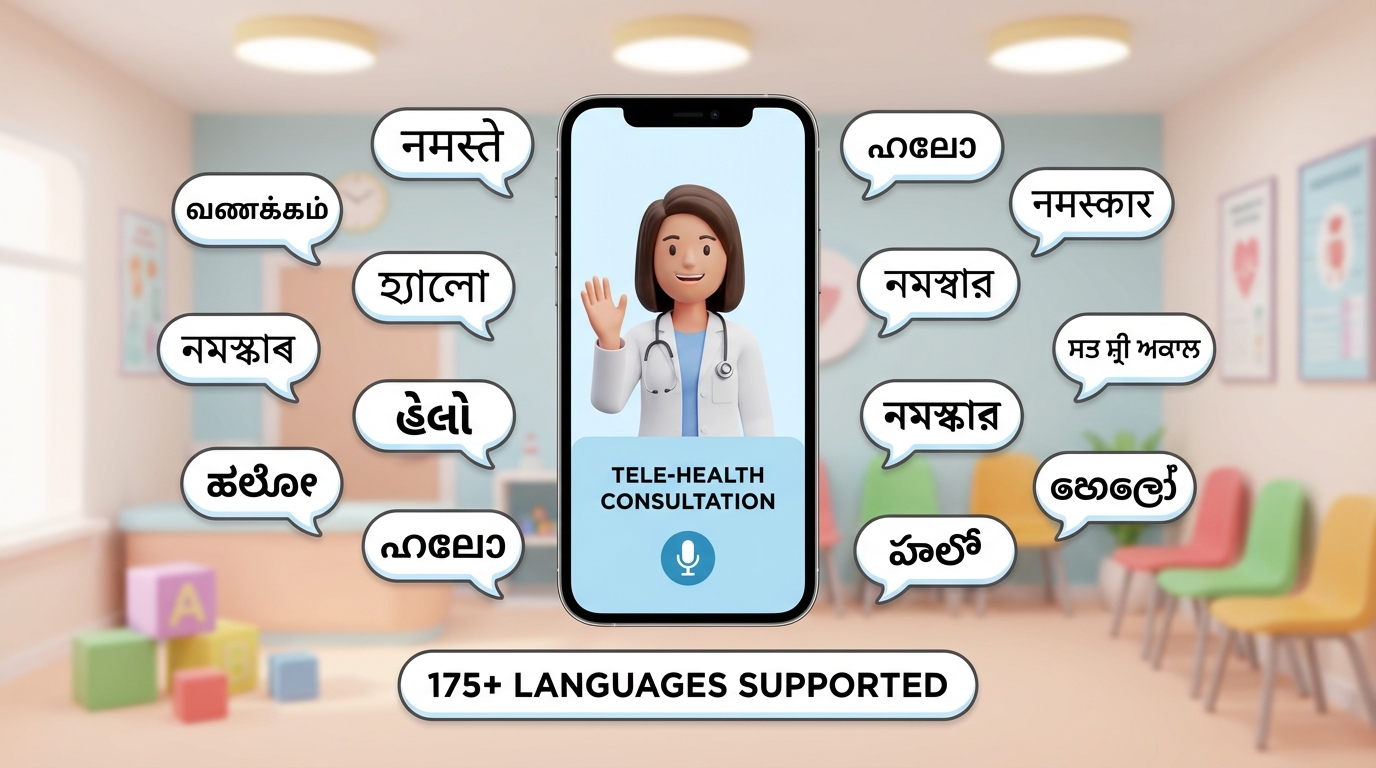
TrueFan AI's 175+ language support regional language video SEO guide and personalised celebrity video endorsements or clinician-led avatars allow brands to render millions of unique videos in under 30 seconds via API. This hyper-personalization at scale ensures that a mother in rural Tamil Nadu receives the same quality of guidance as one in urban Delhi, but in her native tongue. Virtual reshoots and AI editing further enable brands to update clinic timings or vaccine stock information without the need for expensive physical productions.
Orchestration is handled through real-time API triggers that push personalized URLs across WhatsApp Business API, SMS, and patient portals. These templates are designed with name-pronunciation accuracy and lip-sync technology to maintain the highest levels of realism and trust. Security remains a top priority, with ISO 27001 and SOC 2-grade operations ensuring that all pediatric health personalization videos are delivered within a governed, compliant framework.
Sources:
- TrueFan AI: Enterprise capabilities overview
- Digital Personal Data Protection Act, 2023 (official PDF)
2. India-First Data Privacy and Verifiable Parental Consent
Navigating the regulatory environment in 2026 requires a deep understanding of India’s Digital Personal Data Protection (DPDP) Act 2023. The act mandates Verifiable Parental Consent (VPC) for processing the data of any individual under the age of 18. For wellness brands, this means documenting auditable proof that a guardian has authorized the use of a child’s personal data for early childhood wellness automation.
Consent flows must be integrated into every entry point, whether it is at hospital discharge, during the first pediatric visit, or via a mobile app registration. These notices must be purpose-specific, clearly outlining how data will be used for vaccination reminder automation or telemedicine booking nudges. Providing a centralized consent management dashboard allows parents to view, update, or withdraw their preferences at any time across various channels. Interactive video data capture workflows
Data minimization is a core tenet of this privacy-first approach DPDP-compliant personalization strategies, ensuring that only the data necessary for specific care nudges is collected. Retention windows must be strictly defined per program, and pseudonymization should be applied to all analytics to protect individual identities. This commitment to privacy not only ensures legal compliance but also builds the foundational trust required for effective pediatric telemedicine marketing.
Sources:
3. Lifecycle Campaign Playbooks: From Birth to 24 Months
The core of mother-child wellness marketing 2026 is a series of deployable programs triggered by specific milestones in the pediatric journey. These playbooks use pediatric health personalization videos to build trust from day one, starting with onboarding explainers that welcome families and set expectations. By dynamically inserting MotherName and BabyName, brands can create a one-to-one connection that traditional marketing cannot match.
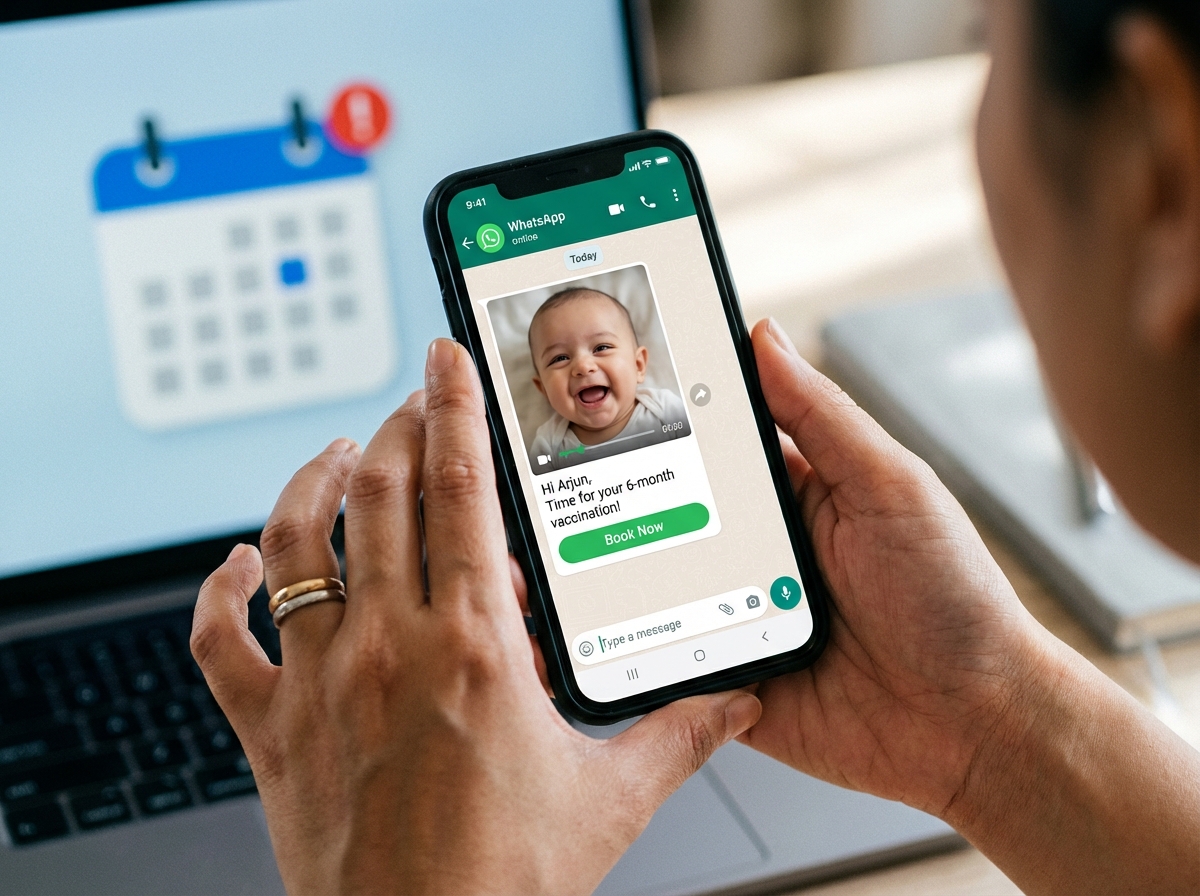
Vaccination reminder automation serves as an evidence-backed pillar for improving immunization timeliness across India. Utilizing data-driven nudges that escalate from a seven-day heads-up to overdue follow-ups, brands can significantly reduce missed appointments. Research from India’s IAP-ImmunizeIndia has already demonstrated the massive potential of SMS-based reminders, which can now be enhanced with 15-second personalized video clips.
Baby milestone tracking videos provide an ongoing engagement arc, offering monthly insights into motor, language, and social development. These videos include safe at-home activities and red-flag awareness, encouraging parents to complete micro-checks that feed back into the CRM. This engagement loop ensures that early childhood wellness automation is not just a broadcast tool but a two-way dialogue that supports the child's growth.
Maternal mental health support is another critical component, utilizing video-led, stigma-sensitive programs to offer psychoeducation and screening prompts. By normalizing the challenges of the postnatal period and providing clear referral paths to NIMHANS-supported helplines, brands can offer essential care. These postnatal care video campaigns should also cover physical recovery, lactation troubleshooting, and sleep hygiene, ensuring a holistic approach to wellness.
Infant nutrition personalization and breastfeeding support videos further extend the value proposition by providing age-appropriate feeding plans. From exclusive breastfeeding guidance to the introduction of solids at six months, these clips must be clinician-led and culturally relevant. Child development assessment videos can then be used to prompt parents to observe specific behaviors, triggering clinician outreach if developmental delays are suspected.
Sources:
- IAP-ImmunizeIndia: Official service website
- Program profile: Largest SMS-based vaccination reminder service
- NIMHANS: Management of psychiatric disorders (Indian J Psychiatry)
- IPS–NIMHANS: Mental health guidance
4. Channel Architecture and Pediatric Telemedicine Marketing
The architectural flow of a 2026 wellness campaign begins with a trigger source, such as a birth registration or a missed appointment alert. This trigger hits the TrueFan API, which renders a personalized video in under 30 seconds for immediate distribution via WhatsApp, email, or SMS. WhatsApp Business automation for 2026 The recipient is directed to a landing page with a clear Call-to-Action (CTA), such as booking a telemedicine slot or RSVPing for a community event.
Pediatric telemedicine marketing is essential for reducing no-show rates and improving access to care in low-bandwidth areas. By sending T-24 and T-2 hour reminder videos that include instant “join visit” links and doctor-intro videos, brands can humanize the digital experience. This channel strategy must include a fallback hierarchy, ensuring that if a WhatsApp message is not delivered, an SMS or email is automatically triggered.
Community building through new mother support groups adds a layer of retention that transactional apps lack. These geo-personalized, moderated WhatsApp communities WhatsApp catalog video marketing are prompted by personalized invite videos, encouraging attendance at live Q&A sessions. Solutions like TrueFan AI demonstrate ROI through these high-engagement loops, which foster a sense of belonging and increase the lifetime value of a family wellness subscription.
Maternal fitness programs and baby product recommendations round out the ecosystem by providing safe, clinician-reviewed guidance. Fitness plans should be progressive and personalized based on delivery type, while product recommendations must adhere to strict disclosure standards. Every element of this architecture is designed to move the parent from awareness to action, all while maintaining the highest standards of clinical integrity.
Sources:
5. Measurement, ROI, and Implementation Roadmap
Success in mother-child wellness marketing 2026 is measured through a combination of clinical adherence and marketing engagement KPIs. For vaccination reminder automation, the primary metrics include the due-to-done interval and the overdue recovery rate. For milestone tracking, watch-through rates and the completion of developmental micro-checks provide insight into how well parents are absorbing the educational content.
Telemedicine success is tracked through booking conversion rates and the reduction of average wait times. A/B testing remains a vital tool for optimization, allowing brands to test pediatrician-led versus brand ambassador-led videos, or different thumbnail variants. Dashboard schemas should cohort data by language, city, and parity to provide a granular view of campaign performance while respecting privacy boundaries.
The implementation of these enterprise-grade programs follows a phased approach over six weeks. The initial phase focuses on data and consent mapping, followed by the creation of a multilingual template and script library. By week four, API integrations and WhatsApp configurations are tested for latency and QA. The final phase involves a soft launch with a cohort of 5,000 to 10,000 mothers to refine the strategy before national scaling.
2026 Industry Statistics:
- 92% WhatsApp Penetration: Projected reach among urban Indian mothers for health-related communications.
- 40% Telemedicine Surge: Expected increase in non-emergency pediatric consultations via video platforms.
- 70% Video Preference: Parents in 2026 are 70% more likely to engage with video instructions than text-based manuals.
- 15% Adherence Lift: Documented improvement in on-time vaccination rates through personalized video reminders.
- 55% AI Adoption: Over half of healthcare enterprises will utilize AI-driven personalization for patient engagement by 2026.
To justify the investment in video automation, brands must implement rigorous WhatsApp commerce ROI tracking. Read the WhatsApp commerce ROI tracking guide
7. Conclusion: Launching Your 2026 Pediatric Strategy
The future of mother-child wellness marketing 2026 is defined by the intersection of empathy and automation. By moving away from generic, one-size-fits-all messaging and toward a model of pediatric health personalization videos, brands can solve the most pressing challenges in pediatric care. Whether it is improving vaccine adherence or supporting maternal mental health, the tools of 2026 allow for a level of precision that was previously unimaginable.
Enterprise leaders must act now to build the data foundations and consent frameworks required for this new era. The integration of early childhood wellness automation into existing CRM and EHR systems is no longer an optional upgrade; it is a prerequisite for staying relevant in a competitive market. By prioritizing trust, privacy, and clinical value, your brand can become an indispensable part of the family wellness journey.
Next Steps for Enterprise Leaders:
- Primary CTA: Book a TrueFan AI Enterprise demo to launch your pediatric-season playbooks in under 30 days.
- Secondary CTA: Download our Enterprise Pediatric Season Launch Checklist to audit your data fields, consent texts, and script readiness.
Sources:
Frequently Asked Questions
How do you obtain and manage verifiable parental consent under India’s DPDP Act for minors?
Verifiable parental consent is obtained through documented digital flows at the point of service or registration. This involves a clear notice of data usage and an auditable log of the guardian's authorization, which can be managed via a dedicated TrueFan AI integrated portal.
What data fields are needed to power pediatric health personalization videos safely?
To ensure safety and relevance, brands typically require the mother’s name, baby’s name, age in weeks, vaccination history, and preferred language. These fields are pseudonymized in analytics to maintain privacy while allowing for hyper-personalized video rendering.
How does watermarking and governance protect against misuse of AI-generated videos?
All AI-generated content is subject to strict watermarking policies and deepfake detection protocols. Clinical scripts undergo a multi-tier review board, and every video includes clear disclaimers to ensure the information is recognized as educational rather than a direct medical prescription.
What if a parent prefers SMS over WhatsApp? How do fallbacks work?
The automation architecture includes a channel fallback logic. If a WhatsApp message remains undelivered for a set period, the system automatically triggers an SMS with a shortened link or an email, ensuring the parent receives critical vaccination or health alerts.
How are clinician-reviewed scripts maintained and updated across languages?
Scripts are managed in a centralized library where updates can be pushed globally. Using AI-driven virtual reshoots, a single script change in English can be instantly reflected across 175+ languages, maintaining clinical accuracy without the need for manual re-recording.