Maha Shivratri marketing campaigns 2026: Personalization, vernacular video, and automation for India’s spiritual commerce
Key Takeaways
- Use vernacular devotional video and culturally-aware storytelling to win Tier-2/3 audiences.
- Drive spiritual commerce personalization with consent-first data and ritual-specific context.
- Scale with automation: event-driven journeys across WhatsApp, SMS, and app push.
- Elevate conversion with personalized video offers for temple tourism, fasting kits, and gifts.
- Measure what matters: language-specific CVR, hook retention, and incremental ROAS.
As brands plan Maha Shivratri marketing campaigns 2026 for February 15, CMOs can unlock spiritual commerce personalization India using vernacular, devotional video at scale, automated journeys, and measurable ROI across wellness, religious retail, and temple tourism. The convergence of high-speed 5G penetration in Tier-2/3 cities and a burgeoning "spiritual tech" economy has transformed how Indian consumers engage with the divine.
The "Night of Shiva" is no longer just a religious milestone; it is a high-velocity commercial window where intent-driven search for fasting products, pilgrimage packages, and meditation content peaks. To capture this, leadership must move beyond generic festival greetings and toward hyper-personalized, data-compliant engagement strategies.
| Maha Shivratri 2026: Campaign Anchor Points | Details |
|---|---|
| Festival Date | February 15, 2026 |
| Primary Audience | Tier-2/3 city clusters, Spiritual Seekers, Wellness Enthusiasts |
| Key Growth Driver | Spiritual Tourism (Projected $59 billion industry by 2028) |
| Compliance Mandate | DPDP Act 2023 & DPDP Rules 2025 |
| Core Technology | AI-driven vernacular video & journey automation |
Source: DrikPanchang Maha Shivratri 2026; IBEF Spiritual Tourism Report
1. Spiritual commerce personalization India: The new frontier of Tier-2 growth
Spiritual commerce in 2026 is defined as the digital orchestration of products, services, and experiences tied to religious practices, ranging from pooja kits to premium pilgrimage logistics. For CMOs, spiritual commerce personalization India represents the most potent lever for penetrating the "Bharat" market, where devotion is the primary driver of discretionary spending.
The shift from physical retail to omnichannel spiritualism is accelerated by the rise of "Spiritual D2C" brands. These entities leverage data to understand whether a user is a "Sattvic faster," a "Jyotirlinga pilgrim," or a "Meditation seeker." Personalization at this level requires moving past first-name tags into ritual-specific context.
Platforms like TrueFan AI enable brands to bridge the gap between mass marketing and individual devotion by generating thousands of personalized video messages that respect the user's specific linguistic and regional nuances. This level of intimacy is essential for building trust in a category as sensitive as faith-based commerce.
Source: IBEF Tourism Industry Overview; Refresh Ideas 2026 Marketing Calendar
2. Vernacular devotional content marketing: Winning the Tier-2 religious market penetration
The battle for vernacular devotional content marketing is won or lost on the strength of vernacular devotional content marketing. By 2026, over 90% of new internet users in India are expected to be non-English speakers, making regional language strategy a mandatory requirement rather than an elective.
Maha Shivratri is celebrated with distinct local rituals across the subcontinent. In Maharashtra, the focus might be on Bilva patra offerings; in Tamil Nadu, the Lingodbhava remains central; while in North India, the night-long jagran takes precedence. Content that fails to acknowledge these regional specificities feels "foreign" and fails to convert.
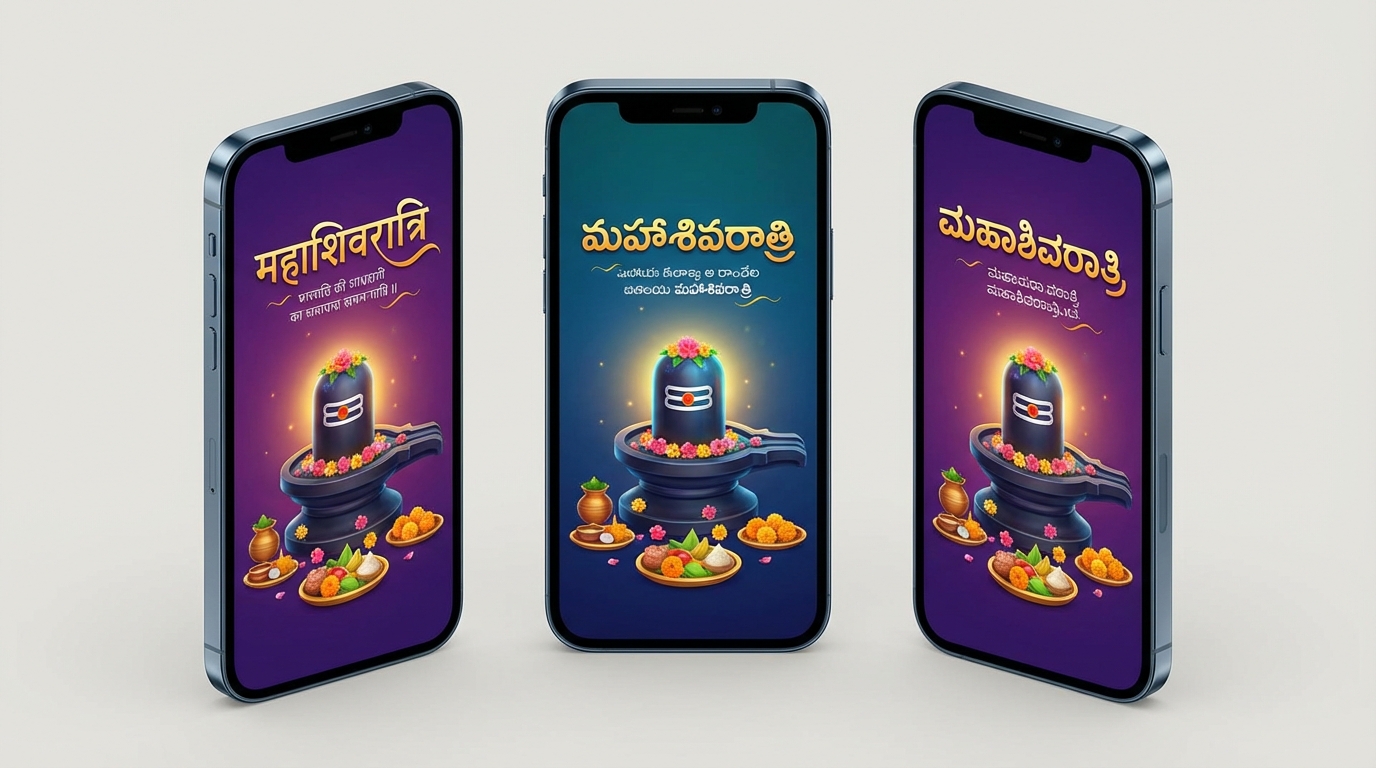
To achieve true scale, brands must deploy video-first assets across Reels, Shorts, and WhatsApp. These assets should feature regional music cues, local scripts, and culturally resonant visual metaphors. The goal is to create a "digital temple" experience that meets the consumer in their preferred dialect—be it Marathi, Telugu, Bengali, or Kannada.
Source: VentureHeap 2026 Social Media Calendar; Aabhishek Festival Calendar India
3. Shivratri devotional video campaigns: Engineering the creative engine
High-impact Shivratri devotional video campaigns require a sophisticated mix of formats tailored to the user's stage in the journey. In 2026, the attention economy demands that brands capture interest within the first three seconds while maintaining the sanctity of the occasion.
For temple tourism offer videos, the creative must move beyond static images of shrines. Instead, use 60-second explainers that showcase darshan schedules, crowd management protocols, and premium "Abhishek" access. These videos serve as "virtual brochures" that reduce friction for pilgrims planning visits to Kashi Vishwanath or Mahakaleshwar.
Similarly, devotional gift personalization videos can transform a simple product like a Rudraksha or a pooja kit into a cherished experience. By using AI to insert the recipient's name and a language-matched blessing into the video, brands can drive a significant uplift in Average Order Value (AOV) and brand loyalty.
TrueFan AI's 175+ language support and Personalised Celebrity Videos allow brands to create these high-fidelity assets without the prohibitive costs of traditional production. This enables a "virtual reshoot" capability where offer lines can be swapped in real-time based on inventory levels or A/B test results.
Source: MeitY Digital Personal Data Protection Rules 2025
4. Religious product marketing automation and spiritual customer journey automation
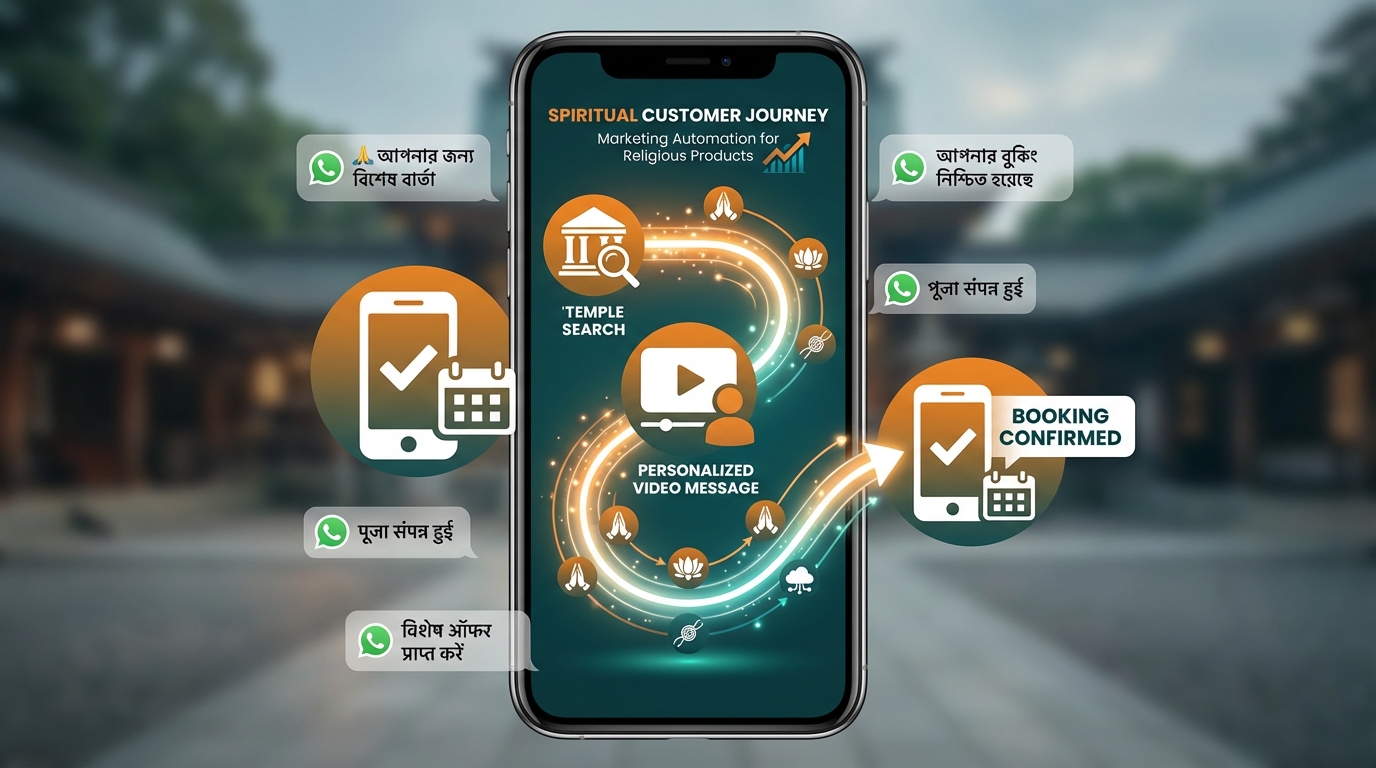
The complexity of managing millions of individual spiritual journeys requires religious product marketing automation. This involves event-driven orchestration where promotions for Shivratri fasting product offers are triggered by specific user signals, such as a countdown to the festival or a previous purchase of vrat-friendly foods.
Spiritual customer journey automation takes this further by creating a multi-step lifecycle across WhatsApp, SMS, and app push. For example, a user who views a "Jyotirlinga" travel page could be entered into a 7-day flow:
- T-7: Educational video on the significance of the specific temple.
- T-5: Personalized video showcasing travel packages with EMI options.
- T-3: Scarcity reminder for VIP darshan slots.
- T-1: Final checklist for the pilgrimage.
Crucially, all automation must adhere to the DPDP Act 2023. This means ensuring explicit consent for PII usage, providing clear opt-out mechanisms, and maintaining data residency within India. Personalization must never feel like surveillance; it must feel like a service.
Solutions like TrueFan AI demonstrate ROI through these automated flows by delivering sub-30s render times for personalized videos, allowing for real-time cart abandonment nudges that feature a personalized message from a brand ambassador or a spiritual guide.
Source: MeitY DPDP Act 2023 Official PDF
5. Spiritual wellness brand engagement: Playbooks for meditation and retail
For wellness and meditation apps, spiritual wellness brand engagement during Maha Shivratri is a prime acquisition period. The "Night of Awakening" provides a natural hook for meditation app acquisition campaigns. Brands should offer "Shivratri Streak Challenges" or exclusive devotional soundscapes to drive trial-to-paid conversions.
In the spiritual retail sector, the focus shifts to Shivratri fasting product offers. D2C brands can use "Product Finder" quizzes on WhatsApp, followed by a personalized video recommendation of a "Pooja Kit" or "Fasting Bundle." This reduces decision fatigue and increases the likelihood of a high-value transaction.
Pilgrimage package marketing Maha Shivratri requires a different approach, focusing on safety, hygiene, and convenience. Travel brands should use temple tourism offer videos that highlight "all-inclusive" features, such as local guides and insurance, to appeal to the premium segment of the market.
Source: IBEF Case Study on Spiritual Tourism
6. Spiritual influencer partnerships 2026: Amplification and Measurement
The final layer of a successful campaign is spiritual influencer partnerships 2026. Rather than generic lifestyle influencers, brands should collaborate with regional bhajan singers, yoga practitioners, and temple vloggers who command high trust within their communities. These creators provide the "social proof" necessary for high-stakes spiritual purchases.
Measurement must be granular. CMOs should track "Hook Retention" (the first 3 seconds of video), "Language-specific CVR," and "Incremental ROAS" from personalized vs. non-personalized segments. By using geo-holdouts, brands can measure the true uplift of their Maha Shivratri marketing campaigns 2026.
The 10-day countdown to February 15 should be a period of intense creative refresh. As the festival nears, the messaging should shift from education to urgency, leveraging real-time dashboards to reallocate budget toward the highest-performing vernacular segments and creative formats.
The 10-Day Maha Shivratri 2026 Execution Roadmap
To maximize ROI for the February 15 festival, follow this structured countdown:
T-10 to T-7: The Awareness Phase
- Launch teaser videos and waitlists for exclusive kits or packages.
- Seed content with spiritual influencers to build anticipation.
- Begin vernacular devotional content marketing focused on the significance of the 2026 date.
T-6 to T-3: The Education & Consideration Phase
- Deploy temple tourism offer videos with detailed itineraries.
- Send personalized WhatsApp messages with Shivratri fasting product offers.
- Run live Q&A sessions with experts on "How to prepare for the Night of Shiva."
T-2 to T-Day: The Conversion Phase
- Trigger scarcity-based automation for last-minute bookings or purchases.
- Use devotional gift personalization videos to drive final gift sales.
- Launch "Live Darshan" tie-ins or sponsorships to maintain top-of-mind awareness.
T+1 to T+3: The Retention Phase
- Send automated "Gratitude" videos to all customers.
- Encourage User-Generated Content (UGC) by offering rewards for sharing "Shivratri Moments."
- Transition users into post-festival wellness or meditation journeys.
By integrating advanced AI capabilities with a deep respect for cultural traditions, brands can transform Maha Shivratri marketing campaigns 2026 from simple seasonal promotions into enduring engines of growth and customer loyalty.
Source: Refresh Ideas eCommerce Calendar; VentureHeap Social Media Guide
Frequently Asked Questions
1. What is the most effective channel for Maha Shivratri marketing campaigns 2026?
WhatsApp Business API combined with vertical video (Reels/Shorts) is the most effective channel. It allows for direct, personalized communication in the user's preferred language, which is critical for the Tier-2 and Tier-3 markets.
2. How can brands ensure DPDP compliance while personalizing spiritual content?
Brands must implement explicit consent-capture mechanisms at the point of data entry. Under the DPDP Act 2023, you must provide clear notices in regional languages and ensure that PII is only used for the specific purpose for which it was collected.
3. What kind of offers work best for spiritual commerce personalization India?
Bundled offers, such as "Complete Pooja Kits" or "7-Day Fasting Packs," perform well. Adding a layer of personalization, such as a customized blessing video or a name-engraved product, significantly increases conversion rates.
4. How does TrueFan AI help in religious product marketing automation?
TrueFan AI integrates with your CRM to trigger hyper-personalized videos at scale. For example, if a user abandons a pilgrimage booking, the system can automatically send a WhatsApp video in their native language addressing their specific concerns or offering a limited-time incentive.
5. Why is vernacular devotional content marketing important for 2026?
With the majority of India's new internet users coming from non-metro areas, English-only campaigns miss over 80% of the potential audience. Vernacular content builds immediate cultural resonance and trust, which are the foundations of spiritual commerce.