Voice Commerce Vernacular India: An Enterprise Playbook for Tier-2/3 Conversational Shopping
Estimated reading time: ~11 minutes
Key Takeaways
- Voice commerce is essential to engage Tier-2/3 India, where code-mixed vernacular and trust-led journeys dominate.
- Adopt a Hinglish-first language strategy with dialect prioritization and transcreation over translation.
- Build an India-first ASR/NLU/TTS stack with code-mix awareness and robust noise handling.
- Scale content using a multilingual AI video generator and AI voice cloning for local authenticity.
- Use guided conversational shopping and smart speaker routines to drive conversions and LTV.
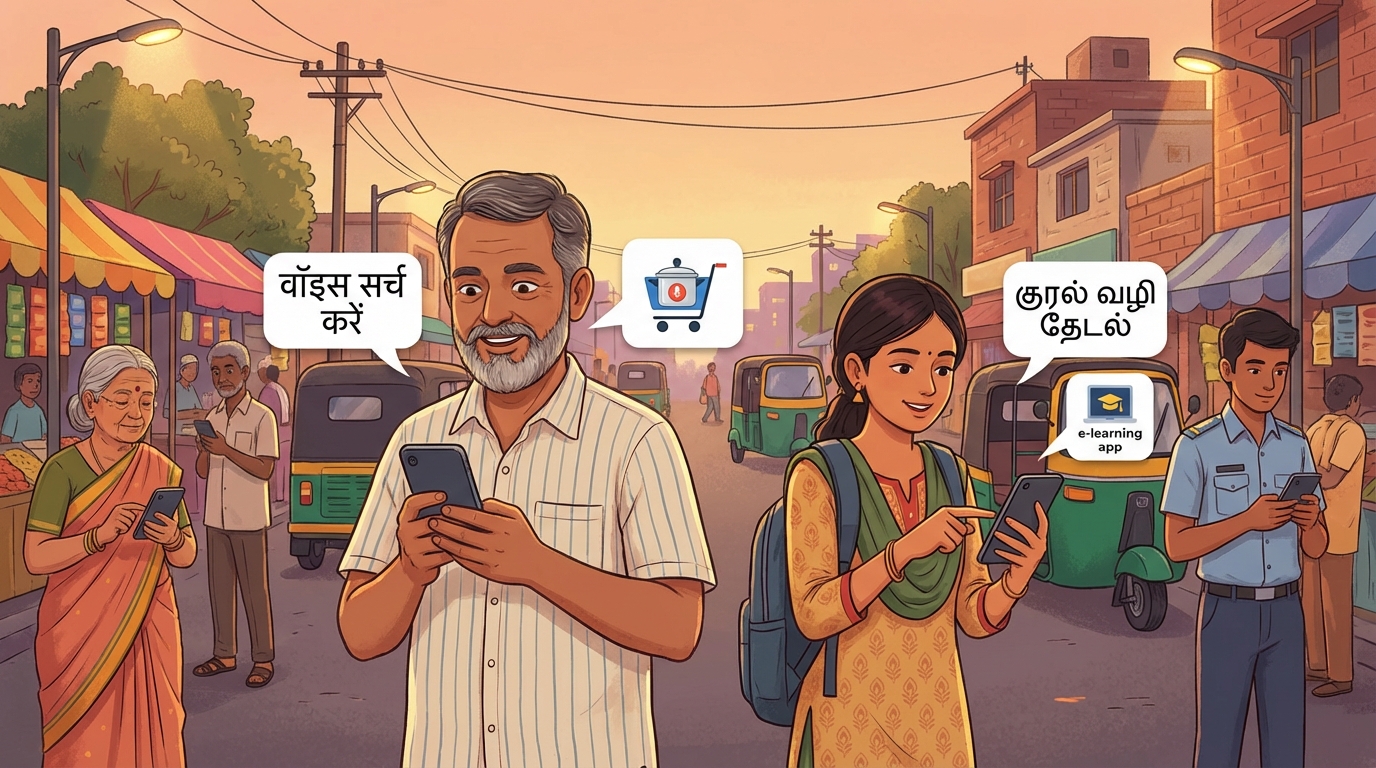
The rapid evolution of voice commerce vernacular India is no longer a peripheral experiment but a central pillar for any enterprise aiming to capture the “Bharat” market. As we approach 2026, the digital landscape is shifting from text-heavy interfaces to intuitive, spoken-word interactions that mirror natural human conversation. This transition toward natural language commerce India is essential for engaging the next 500 million shoppers who reside primarily in Tier-2 and Tier-3 cities, where English proficiency is limited and trust is built through regional familiarity.
Platforms like TrueFan AI enable enterprises to bridge this linguistic and technological gap by providing the infrastructure needed for high-fidelity, multilingual engagement. By 2026, India’s e-commerce market is projected to reach approximately $200 billion, with voice search acting as the primary catalyst for product discovery and transaction completion. For digital transformation leaders, the challenge lies in moving beyond simple translation to a comprehensive strategy that encompasses code-mixed speech, regional dialects, and personalized video-led guidance.
Sources:
The Bharat Reality: Tier-2/3 Adoption, Channels, and Trust
The demographic profile of the Indian online shopper has undergone a radical transformation, with 7 out of 10 new shoppers now emerging from Tier-2+ cities. These users are characterized by high price sensitivity, a heavy reliance on community influence, and a distinct preference for visual and auditory content over text. To succeed in these markets, enterprises must deploy tier-2 voice adoption strategies that prioritize low-friction entry points like WhatsApp voice notes and simplified IVR systems.
Trust is the most significant barrier to conversion in Bharat; users often hesitate to complete transactions if the interface feels “foreign” or overly complex. By integrating regional dialect shopping videos into the purchase journey, brands can provide the reassurance of a human-like presence that speaks the user's specific tongue. This localized approach reduces cognitive load and mirrors the traditional offline shopping experience where a shopkeeper guides the customer through the selection process.
Furthermore, the hardware ecosystem in these regions is dominated by mid-range Android devices, often operating on inconsistent bandwidth. Consequently, any voice-led strategy must be optimized for low-latency performance and include fallbacks for when data speeds drop. The goal is to create a seamless natural language commerce India experience that feels as natural as a conversation with a neighbor, leveraging familiar accents and culturally relevant idioms to build lasting brand equity.
Sources:
Language Strategy for Scale: From Hinglish to Dialects
A successful vernacular strategy recognizes that “pure” regional languages are rarely spoken in isolation; instead, “Hinglish” and other code-mixed variants are the default modes of communication. Implementing Hinglish AI video creation allows brands to resonate with users who naturally switch between Hindi and English terms during a single sentence. This linguistic fluidity is critical for capturing intent accurately, as users might use English nouns for products while using regional verbs for actions.
Prioritizing which dialects to support requires a data-driven model that ranks regions by Total Addressable Market (TAM), shopper density, and average order value (AOV). Enterprises should begin with a core set of languages—typically Hinglish, Tamil, Bengali, and Marathi—before expanding into more niche dialects. The editorial process must involve “transcreation” rather than literal translation, ensuring that scripts use local idioms and culturally relevant analogies that make the product feel like a part of the user's daily life.
To maintain clarity, scripts for regional dialect shopping videos should utilize short, action-oriented clauses and include bilingual scaffolding for technical terms. For instance, a prompt might say, “Cashback milega—You’ll get instant cashback,” ensuring the user understands both the benefit and the terminology. This approach not only improves comprehension but also trains the user on how to interact with the platform, gradually increasing their digital literacy and long-term loyalty.
Sources:
- TrueFan AI: Vernacular Voice Shopping Campaigns
- CreatorSpace India: Voice Search Trends and SEO 2026
Tech Stack Blueprint: India-First ASR, NLU, and TTS
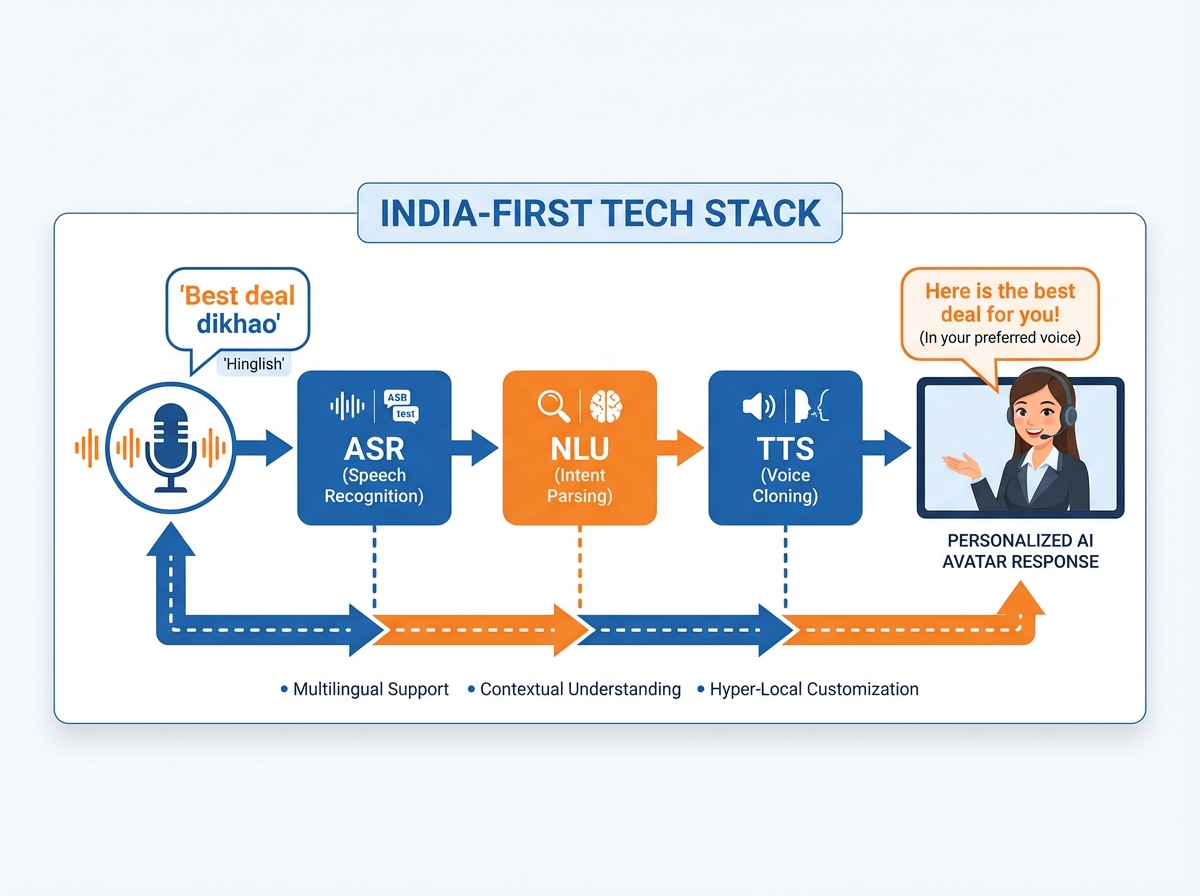
The technical architecture for natural language commerce India must be built to handle the unique complexities of Indian phonetics and environmental noise. Automatic Speech Recognition (ASR) and Natural Language Understanding (NLU) pipelines need to be “code-mix aware,” capable of parsing sentences that blend multiple languages without losing the core intent. This requires training models on diverse datasets that include various regional accents and common slang terms used in commerce contexts.
A critical component of this stack is AI voice cloning Indian accents, which allows a brand to maintain a consistent persona across all touchpoints while sounding like a local. By using cloned voices that reflect the intonation and pronunciation of specific regions, enterprises can significantly enhance the trust and comfort level of the user. This technology ensures that even automated interactions, such as order status updates or payment confirmations, feel personalized and authentic to the listener.
Beyond the app interface, smart speaker commerce integration is becoming a vital channel for routine tasks like grocery reordering and bill payments. While still in the early stages of adoption in Tier-2 cities, smart speakers offer a hands-free convenience that appeals to busy households. Integrating these devices into the commerce ecosystem requires secure account linking and alternative verification methods, such as OTP-less authentication, to ensure a frictionless user experience that encourages repeat usage.
Sources:
The Content Engine: Multilingual AI Video Generator in Action
To scale personalized engagement across millions of SKUs, enterprises require a multilingual AI video generator that can produce high-quality content at a fraction of the cost of traditional production. These videos serve as micro-explainers, how-to guides, and trust-building messages that guide the user through the entire funnel. By automating the localization process, brands can ensure that every product description is available in the user's preferred dialect with perfect lip-sync and audio clarity.
TrueFan AI's 175+ language support and Personalised Celebrity Videos provide the necessary scale for these massive content requirements. The platform allows for the creation of dynamic video templates where product data, pricing, and regional offers are injected in real-time. This ensures that the content is always relevant and up-to-date, which is particularly important for flash sales or inventory-clearing events where speed to market is a competitive advantage.
Distribution of these regional dialect shopping videos should be omnichannel, appearing on Product Detail Pages (PDPs), within WhatsApp deep links, and even as part of IVR callbacks. For users in Tier-2/3 cities, a 30-second video explainer in their native tongue is often more effective than a long text description. By providing visual and auditory redundancy, enterprises can cater to varying levels of literacy and ensure that their value proposition is understood by every segment of the population.
Sources:
Personalization That Converts: Conversational Shopping AI
The final layer of a successful voice strategy is conversational shopping AI personalization, which uses real-time signals to tailor the experience to each individual user. Signals such as geographic location, past purchase history, and even the specific dialect detected during a voice query can be used to adjust the tone and content of the interaction. This level of granularity ensures that a user in Madurai receives a different experience than one in Ludhiana, even if they are searching for the same product.
Tactics like “guided selling via voice” can significantly reduce the time-to-purchase by asking simple, clarifying questions like, “Aapko 1kg ya 500g chahiye?” (Do you want 1kg or 500g?). These nudges help the user navigate complex catalogs without feeling overwhelmed. Furthermore, voice-triggered offers can be surfaced based on the user's affordability profile, such as offering a Cash-on-Delivery (COD) reassurance in their local dialect to mitigate payment anxiety.
Implementing smart speaker commerce integration also allows for proactive reordering routines, where the AI can remind a user to replenish staples based on their previous consumption patterns. By combining these personalized nudges with a trusted brand voice, enterprises can drive higher conversion rates and increase the lifetime value of their Bharat customers. The key is to make the AI feel like a helpful assistant rather than a persistent salesperson, focusing on utility and ease of use.
Sources:
Tier-2 Voice Adoption Strategies: 90/180-Day Playbook
For enterprises ready to commit to this transformation, a phased rollout is the most effective way to manage technical risk and measure ROI. The first 90 days should focus on a pilot program targeting Hinglish and two major regional languages in high-density markets. This phase involves deploying an app-based microphone for search and add-to-cart flows, alongside a library of localized micro-explainer videos. Success metrics at this stage include ASR accuracy, add-to-cart rates, and the reduction in average handling time for voice-led queries.
In the 180-day scale-up phase, the strategy expands to 6–8 dialects and deepens the integration across more complex channels like smart speaker commerce integration and automated WhatsApp Q&A. This is the time to iterate on NLU models based on real-world usage data and to A/B test different cloned voice variants to see which resonates best with specific demographics. Governance becomes critical here, ensuring that all voice data is captured with explicit consent and that PII is strictly protected.
Ultimately, the goal of these tier-2 voice adoption strategies is to create a self-reinforcing ecosystem where voice interaction becomes the preferred method of shopping for the Bharat user. By continuously refining the tech stack and content engine, enterprises can stay ahead of the curve and capture a significant share of the burgeoning vernacular e-commerce market. The transition to a voice-first world is inevitable; the only question is which brands will lead the charge.
Sources:
Enterprise Implementation with TrueFan AI
Executing a large-scale vernacular strategy requires a partner that understands both the technical and cultural nuances of the Indian market. TrueFan AI provides a comprehensive suite of tools designed for enterprise-grade deployment, including a multilingual AI video generator and sophisticated Studio workflows. These capabilities allow brands to mass-produce Hinglish AI video creation and regional dialect shopping videos that are perfectly synced and brand-consistent.
Solutions like TrueFan AI demonstrate ROI through significant uplifts in conversion rates and customer engagement metrics. With the ability to render and deliver personalized videos in sub-30 seconds, the platform is ideal for triggered events like abandoned cart reminders or price drop alerts. Furthermore, the inclusion of AI voice cloning Indian accents ensures that every interaction sounds authentic, helping to build the trust necessary for long-term success in Tier-2 and Tier-3 cities.
Security and compliance are at the heart of the TrueFan AI offering, with ISO 27001 and SOC 2-grade protections ensuring that enterprise data is always secure. The platform also features built-in moderation tools and a consent-first approach to celebrity usage, protecting the brand from reputational risk. By leveraging a 175 language video platform, enterprises can confidently scale their vernacular commerce operations across the entire Indian subcontinent and beyond.
Sources:
Conclusion: Leading the Voice Revolution in Bharat
The rise of voice commerce vernacular India represents one of the most significant shifts in the history of Indian retail. As the digital divide closes, the brands that succeed will be those that speak the language of their customers—literally and figuratively. By adopting a comprehensive playbook that includes natural language commerce India principles, sophisticated AI tech stacks, and scalable video content engines, enterprises can unlock the immense potential of the Tier-2 and Tier-3 markets.
The journey toward a voice-first future requires a strategic commitment to localization, personalization, and technological excellence. With the right tools and a phased approach, any enterprise can transform its commerce experience into a conversational journey that resonates with the heart of Bharat. Now is the time to invest in the infrastructure and expertise needed to lead this revolution and secure a dominant position in the $200 billion e-commerce landscape of 2026.
Frequently Asked Questions
What is natural language commerce India?
Natural language commerce enables users to interact with e-commerce platforms using everyday spoken language, including code-mixed dialects like Hinglish. It spans voice search, voice-led navigation, and conversational AI that interprets intent across regional accents.
How can brands implement smart speaker commerce integration for Tier-2/3?
Create custom skills or actions linked to the shopper’s account, localize for regional languages, and simplify authentication using methods like voice biometrics or secure mobile-linked confirmations to deliver a frictionless, trusted experience.
What are the best Tier-2 voice adoption strategies for eCommerce?
Start with a phased rollout focused on high-impact languages and simple use cases such as search and reordering. Pair voice with visual aids like regional dialect shopping videos to build trust and comprehension.
How do you create regional dialect shopping videos at scale?
Use platforms like TrueFan AI with automated templates and AI-driven localization to generate thousands of variants—combining Hinglish AI video creation, lip-sync, and voice cloning—so each video feels native to the user’s dialect.
Why is AI voice cloning Indian accents important for trust?
Accents vary widely across India, and generic voices can feel impersonal. AI voice cloning Indian accents creates familiar, human-like interactions that reduce friction and improve confidence in automated shopping.