
Voice commerce vernacular India 2026: Enterprise blueprint for Hindi, Tamil, Bengali shopping at Tier-2/3 scale
Estimated reading time: ~13 minutes
Key Takeaways
- 2026 is the tipping point as Hindi, Tamil, and Bengali voice assistants mature and Tier-2/3 users adopt voice-first shopping.
- Unified architecture across ASR, NLU, media rendering, and real-time catalog/offers is essential for low-latency, high-trust commerce.
- Cultural transcreation beats translation—campaigns must reflect local idioms, hyperlocal availability, and replenishment behaviors.
- Voice-triggered offers and frictionless, voice-activated redemption drive conversion, especially with hyperlocal and fee-waiver triggers.
- ROI proof requires funnel analytics, retention plays, language-level A/B tests, and a 90–180 day rollout to scale in Tier-2/3.
Voice commerce vernacular India is entering its 2026 tipping point. As Hindi, Tamil, and Bengali voice assistants mature, enterprises can unlock Tier-2/3 monetization at scale through a structured voice commerce vernacular India 2026 strategy. For digital innovation leaders, the shift from text-based search to conversational commerce represents a fundamental realignment of the customer journey, moving beyond simple utility toward high-trust, high-engagement shopping experiences.
| Key 2026 Driver | Impact Metric | Strategic Implication |
|---|---|---|
| Voice Assistant Penetration | 50%+ of all internet users | Shift to voice-first discovery and purchase |
| Regional Engagement | 1.5–2x higher vs. English | Mandatory vernacular-first content strategy |
| Voice Search Growth | ~200% for Hindi/Telugu | Prioritize catalog optimization for voice |
| Market Demographics | 7 in 10 shoppers in Tier-2+ | Hyperlocal inventory and payment flows |
| Market Valuation | ~$1.82B Voice AI India market | Sustained investment in conversational tech |
The convergence of 5G ubiquity, advanced Large Language Models (LLMs) capable of handling code-mixed dialects, and a massive influx of new-to-internet shoppers from Bharat has created a perfect storm. Enterprises that fail to integrate regional language voice shopping into their core martech stack risk obsolescence in the fastest-growing consumer segments. This blueprint provides the technical and strategic framework to lead this transition.
1. Why 2026 is the tipping point for vernacular voice shopping
The year 2026 marks the definitive transition of voice from a novelty to a primary transaction interface. This “tipping point” is driven by the maturation of tier-2 voice commerce adoption, where users in cities like Coimbatore, Patna, and Siliguri are bypassing traditional UI/UX hurdles in favor of intuitive voice interactions. The digital literacy gap is being bridged not by education, but by technology that adapts to human speech.
Data from recent industry analyses indicates that over 50% of India's internet users are expected to use voice assistants by 2026. With over 8.4 billion voice assistant devices globally, the behavioral shift in India is mirroring global trends but with a distinct linguistic twist. Regional language content already delivers 1.5–2x higher engagement compared to Hindi or English, directly boosting conversion odds for vernacular commerce.
The purchase intent among vernacular users is exceptionally high. Hindi and Telugu voice searches have surged by approximately 200%, with e-commerce emerging as the top use case. This is not merely about asking for the weather; it is about regional language voice shopping where users ask for specific SKUs, compare prices, and check delivery timelines in their native tongue.
Furthermore, the demographic shift is undeniable. Seven out of ten online shoppers now reside in Tier-2+ cities. These users demand “voice commerce vernacular India” solutions that respect their cultural nuances and linguistic preferences. Brands that “speak local” win attention, as evidenced by the dominance of vernacular memes and formats in digital feeds. The reduction of literacy and UI barriers is the primary catalyst for Bharat’s next digital wave.
Sources:
- Exchange4Media: Voice Search Adoption in India
- NURDD: Vernacular Dialect Influencer Marketing
- Cloud9Digital: AI Marketing Stats 2026
- Bain & Company: How India Shops Online
- Manifest Media: Vernacular Memes Dominance
- IndiaMart: Voice and Vernacular Powering Bharat
2. Enterprise reference architecture for conversational shopping AI personalization
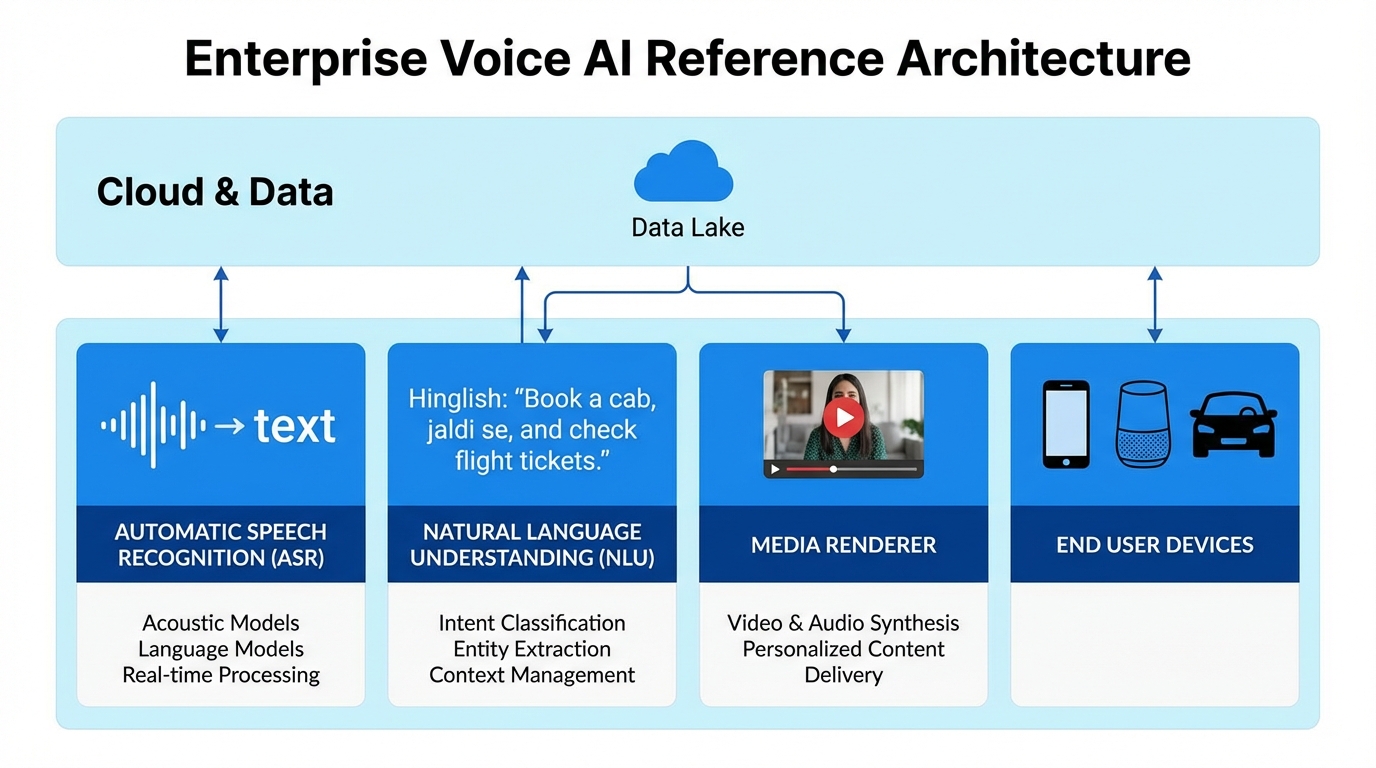
To capture this market, enterprises require a robust architecture for conversational shopping AI personalization. Explore conversational shopping AI for Hindi. This involves the real-time tailoring of conversation flows—prompts, product matches, and media assets—using deep user context across Hindi, Tamil, and Bengali interfaces. A fragmented approach will lead to high latency and low trust; a unified stack is essential.
The core of this architecture is the Automatic Speech Recognition (ASR) layer. For 2026, models must target a Word Error Rate (WER) of ≤ 12% in quiet environments and ≤ 18% in noisy Tier-2 environments (like busy markets or transit). These models must include phoneme dictionaries for common brand names and SKUs to ensure that “Maggi” or “Surf Excel” are recognized accurately across different accents.
Natural Language Understanding (NLU) must handle “code-mixing”—the ubiquitous use of Hinglish, Tanglish, and Benglish. The system should define intents such as ‘browse’, ‘reorder’, and ‘payment help’, while extracting entities like pack size and flavor. If the NLU confidence falls below a 0.6 threshold, the system must gracefully escalate to a human agent or a simplified confirmation flow.
A critical component often missed by competitors is the Media Renderer. When a user asks “dikhaiye” (show me) or “video dikhao,” the system should serve voice search product discovery videos. These are 15–45 second vernacular explainers delivered via smart displays or WhatsApp links. This visual reinforcement is vital for high-consideration categories like electronics or personal care.
Finally, the architecture must integrate with the Catalog and Offer Engine in real-time. This ensures that voice-triggered personalized offers are based on hyperlocal availability and current inventory. Payments should be handled via UPI voice consent flows, utilizing voice PIN or OTP capture, with a failover to WhatsApp deep links for completion.
Sources:
3. Campaign blueprints: vernacular voice shopping campaigns for Hindi, Tamil, Bengali
Executing vernacular voice shopping campaigns requires more than just translation; it requires cultural transcreation. Enterprises must design scripts that use local idioms and address specific regional needs. These campaigns should be categorized by intent: festival-led, hyperlocal availability, and replenishment.
For a festival-led campaign in Hindi during Diwali, the script might look like this: “Namaste! Diwali ke liye LED bulbs par 20% chhoot. Aapke pincode 5600XX mein kal tak delivery possible. Kya aap order karna chahenge?” In Tamil for Onam or Pongal, the tone shifts to reflect local traditions, ensuring the brand feels like a neighbor rather than a distant corporation.
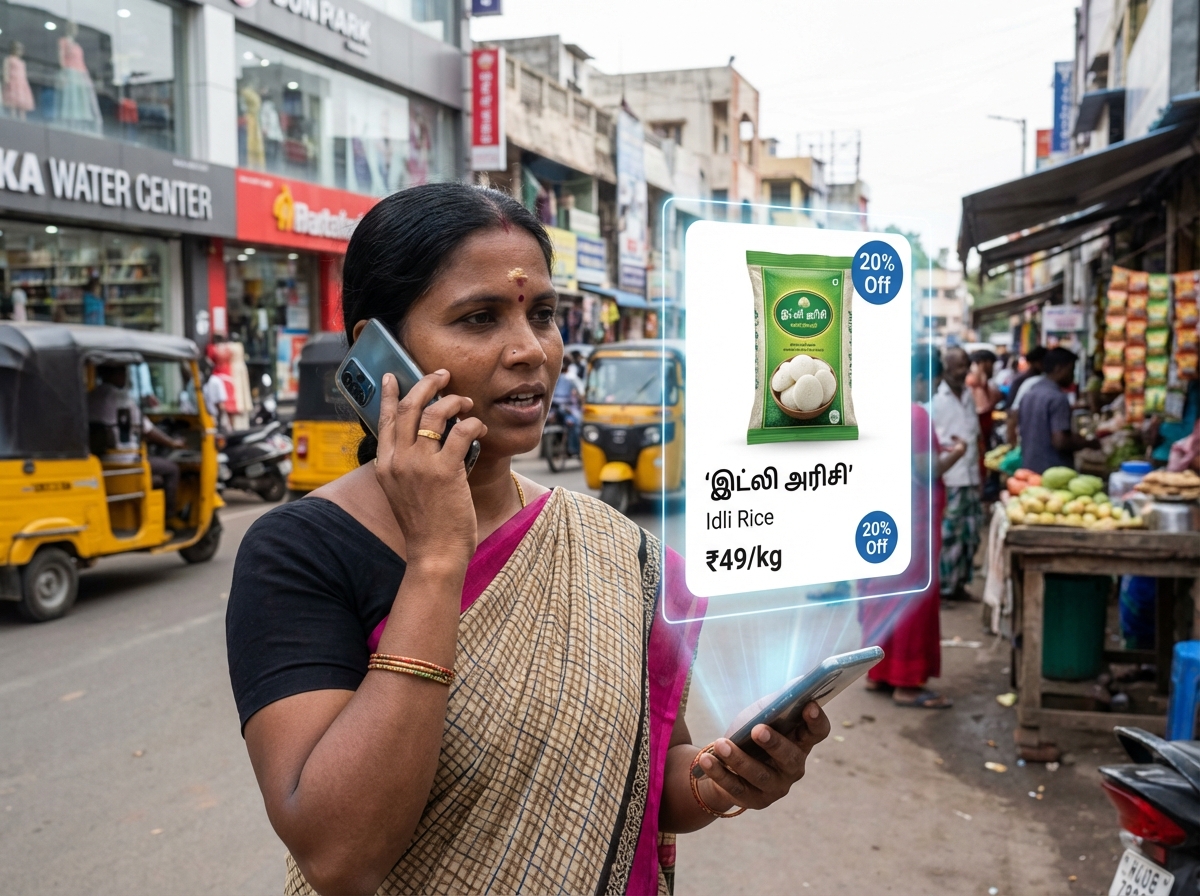
Hyperlocal availability is a massive driver for tier-2 voice commerce adoption. A campaign in Tamil could target users in Coimbatore: “Aaj Coimbatore RS Puram store mein 1kg idli rice Rs 79. Lena chahenge?” By mentioning the specific neighborhood and a localized price point, the enterprise builds immediate relevance and urgency.
Replenishment campaigns leverage purchase history for high-frequency items. A Bengali script for a parent might be: “Namaskar! Pichhli baar aapne 30 din pehle baby diapers liye the. Abhi reorder karna chahenge? 10% off coupon hai.” This proactive approach reduces the cognitive load on the shopper and cements the brand as a helpful assistant.
To accelerate these campaigns, enterprises should use regional celebrity-led voice search product discovery videos. Seeing and hearing a trusted figure explain a product in one's own language significantly lowers the barrier to the first purchase. These videos should be distributed via WhatsApp deep links immediately following a voice interaction to maintain momentum.
Sources:
4. Offer science: voice-triggered personalized offers and voice-activated offer redemption
Offer science in the context of voice commerce vernacular India 2026 involves using real-time signals to trigger individualized incentives. These voice-triggered personalized offers are based on Recency-Frequency-Monetary (RFM) data, geolocation, and even the time of day. For instance, a user browsing for groceries at 8:00 AM might be offered a “breakfast combo” discount.
The redemption process must be frictionless. Voice-activated offer redemption allows a user to claim a discount simply by speaking a code or confirming an OTP via voice. The system should read out the OTP slowly and capture the user's response using ASR. To prevent abuse, enterprises should implement device binding and cap redemptions per user, while providing audio captchas if bot activity is suspected.
Platforms like TrueFan AI enable enterprises to bridge the gap between static catalogs and dynamic, voice-driven engagement. By integrating personalized media into the offer flow, brands can create a sense of exclusivity. For example, a voice-triggered offer could be accompanied by a personalized video message from a regional celebrity, explaining the benefits of the offer in the user's native tongue.
Contextual triggers are particularly effective in Tier-3 cities where delivery fees can be a barrier. A trigger could be: “Tier-3 delivery fee waiver for this weekend only. Order now via voice.” This addresses a specific pain point identified through data, increasing the likelihood of conversion. The integration of these offers into the voice flow ensures that the shopping experience feels seamless and rewarding.
Sources:
5. Channels and integrations: smart speaker commerce integration + marketing automation
The success of voice commerce depends on its availability across multiple touchpoints. Smart speaker commerce integration is the most obvious channel, allowing users to browse, add to cart, and check order status via Alexa or Google Assistant. However, the real power lies in integrating these voice capabilities into the brand's own mobile app and marketing automation workflows.
Multilingual voice marketing automation allows brands to schedule pre-purchase education, first-order nudges, and post-purchase care flows. For example, after a user interacts with a voice assistant but doesn't complete the purchase, an automated WhatsApp message can be sent. This message could include a cart summary, a unique offer code, and a vernacular product video to encourage completion.
TrueFan AI's 175+ language support and Personalised Celebrity Videos provide the creative firepower needed to scale these campaigns across diverse linguistic cohorts. By automating the production of these videos, enterprises can ensure that every voice interaction is followed by a high-quality, personalized visual touchpoint. This creates a multi-modal experience that is far more effective than voice alone.
Technical integration requires low-latency targets: less than 1.2 seconds for Speech-to-Text (STT) and less than 200ms for Text-to-Speech (TTS). State persistence is also crucial; if a user adds an item to their cart via a smart speaker, it must immediately appear in their mobile app. This seamless transition between channels is what defines a mature enterprise voice strategy in 2026.
Sources:
6. Growth, loyalty, and voice commerce ROI measurement
To justify the investment in voice, enterprises must implement a rigorous voice commerce ROI measurement framework. This framework should capture the entire funnel, from awareness (skill invocations) to consideration (product requests) and conversion (voice-to-order rate). Attribution is key; enterprises must track how voice interactions influence purchases across other channels.
Conversational AI retention strategies are essential for driving long-term value in Bharat. These strategies include new-to-category education via micro-lessons and churn interception flows. If a user experiences a delivery delay, a voice-triggered apology with a 15% discount for the next order can significantly reduce churn. These interactions should always be in the user's preferred regional language to build trust.
Solutions like TrueFan AI demonstrate ROI through significantly higher engagement rates and lower customer acquisition costs in regional markets. By using data-driven insights to refine the voice and video content, enterprises can continuously optimize their campaigns. For instance, language-level A/B testing can reveal whether a Hinglish script performs better than a pure Hindi script for a specific demographic.
The 90–180 day implementation roadmap for Tier-2/3 monetization begins with language prioritization and KPI baselining. By day 60, enterprises should have launched high-impact intents like ‘browse’ and ‘reorder’ in Hindi. By day 120, Tamil and Bengali should be integrated, along with automated WhatsApp follow-ups. The final phase involves running incrementality tests to prove the total ROI of the voice commerce vernacular India 2026 initiative.
Sources:
Implementation Roadmap: 90–180 Days to Tier-2/3 Monetization
Phase 1: Discovery & Design (Days 0–30)
- Prioritize languages (Hindi, Tamil, Bengali) based on current customer data.
- Define core intents (Browse, Reorder, Track) and map them to your catalog.
- Establish KPI baselines for current conversion rates in target regions.
Phase 2: POC & Pilot (Days 31–60)
- Launch a Hindi voice pilot for high-frequency SKUs.
- Integrate UPI deep links for seamless voice-to-payment transitions.
- Deploy two vernacular explainer videos per hero SKU to test the media renderer.
Phase 3: Scale & Automation (Days 61–120)
- Expand to Tamil and Bengali language support.
- Enable voice-triggered personalized offers based on RFM segments.
- Automate the delivery of personalized videos via WhatsApp after every voice interaction.
Phase 4: Optimization & ROI Proof (Days 121–180)
- Conduct incrementality tests across Tier-2 and Tier-3 city cohorts.
- Optimize voice prompts based on ASR confidence scores and abandonment data.
- Publish an internal ROI case study to secure long-term investment for the voice-first strategy.
By following this blueprint, enterprises can move beyond the “experimental” phase of voice and build a scalable, high-ROI commerce engine that speaks the language of the next billion shoppers. The future of e-commerce in India isn't just digital; it's vocal, vernacular, and deeply personalized.
Recommended Internal Links
- Voice Commerce Vernacular India 2026: Growth Playbook
- Regional Language Voice Shopping: 2026 Growth Guide
- Conversational shopping AI Hindi: 2026 voice commerce India
- Answer Engine Optimization Video 2026: Winning Strategies
- Voice Commerce Personalization India 2026: Growth Playbook
- Multilingual voice marketing automation: tactics for 2026
- Master voice SEO regional languages for commerce success
- Voice commerce India 2026: Strategies for regional growth
Frequently Asked Questions
How to implement conversational shopping AI personalization in Hindi?
Implementation begins with selecting an ASR model optimized for Hindi dialects and code-mixing. You must define specific intents related to your product catalog and integrate a real-time recommendation engine. Utilizing platforms like TrueFan AI can help by providing personalized vernacular video content that complements the voice interaction, ensuring a holistic personalized experience.
What is voice commerce ROI measurement for Tier-2/3 cities?
It is a multi-touch attribution framework that tracks metrics like voice-to-order conversion, offer redemption rates, and the incremental lift in Customer Lifetime Value (CLTV) for regional language users. It also measures the cost efficiency of voice automation compared to traditional customer service or manual sales calls.
How to run vernacular voice shopping campaigns for festivals?
Festival campaigns should use culturally resonant scripts and local idioms. They should be timed with regional holidays (e.g., Durga Puja for Bengali, Pongal for Tamil) and offer specific festival bundles. Integrating regional celebrity voices or videos can significantly enhance the trust and engagement of these campaigns.
What is smart speaker commerce integration for Indian retailers?
This involves developing custom “skills” or “actions” for devices like Alexa and Google Home that allow users to interact with your store. It includes features like voice-based product search, adding items to a persistent cart, and checking order status, all while supporting major Indian languages.
How does voice-activated offer redemption work?
The user is presented with an offer during a voice session. To redeem it, they simply say “Yes” or provide a voice-captured OTP. The system validates the intent and applies the discount to the cart in real-time, often sending a confirmation via WhatsApp to ensure the user has a record of the transaction.
Why are voice search product discovery videos important?
In Tier-2 and Tier-3 markets, visual confirmation is a major trust factor. When a user finds a product via voice, showing them a short, vernacular video explaining the product's features helps overcome the “touch and feel” barrier of online shopping, leading to higher conversion rates and fewer returns.



