
AI Product Video Google Shopping India 2026: The Enterprise Playbook to Automate Marketplace and Comparison Shopping Videos at Scale
Estimated reading time: ~12 minutes
Key Takeaways
- Video is now non-negotiable on Google Shopping and Indian marketplaces, driving higher CTR and lower returns.
- Automation turns structured product feeds into thousands of compliant SKU videos at scale.
- Follow strict specs and safe-spec guardrails for Google Merchant Center, IndiaMART, and aggregators.
- Use localization and comparison videos to remove choice paralysis and boost conversions.
- Run continuous A/B tests on hooks, durations, presenters, and CTAs to increase ROAS.
In India 2026, the digital shelf is no longer a static gallery of images; it is a living, breathing stream of shoppable media. As “agentic commerce” matures—where AI agents assist consumers in discovering, comparing, and purchasing products—the demand for high-quality, platform-compliant video content has reached an inflection point. Today, video assets are the primary drivers of discovery across Google Search, YouTube, and the Shopping tab. With YouTube’s AI systems now identifying the optimal moments products are mentioned to surface real-time shopping tags, the barrier between “watching” and “buying” has effectively vanished.
For enterprise product managers and marketplace sellers, the challenge is no longer if you should use video, but how to generate thousands of SKU-specific videos that meet the rigorous Google Shopping video specifications without manual bottlenecks. Platforms like Studio by TrueFan AI enable brands to bridge this gap, transforming structured product feeds into high-converting video assets in seconds. This playbook outlines the strategic framework for mastering AI product video Google Shopping India 2026, ensuring your catalog wins the battle for attention on Google, IndiaMART, and beyond.
1. The 2026 Shift: Why Video is Non-Negotiable for Indian Marketplaces
The Indian e-commerce landscape in 2026 is defined by three seismic shifts: the rise of creator-led commerce, the integration of AI virtual try-ons, and the emergence of agentic shopping flows. According to recent 2026 industry reports, video-enabled listings in India now see a 42% higher click-through rate (CTR) compared to static imagery, with a 28% reduction in return rates due to better consumer expectations.
The YouTube & Google Ecosystem
YouTube has expanded its AI shopping tools in India, allowing creators and brands to tag products mid-video with pinpoint accuracy. This alignment of audience attention with purchase intent means that your shopping feed video content India must be ready to serve as both an ad and a product demonstration. Furthermore, Google’s AI-powered virtual try-on for apparel has set a new standard; consumers now expect to see how a fabric drapes or how a gadget functions in a real-world environment before clicking “buy.”
Agentic Commerce and Aggregators
We have entered the era of agentic commerce, where AI agents perform the heavy lifting of price comparison and feature analysis. These agents prioritize structured data and rich media. If your product listing lacks a compliant video, it may be deprioritized by the very algorithms designed to help users shop. Whether you are listing on IndiaMART or vertical price aggregators, the “video-first” mandate is clear.
Sources:
- Google Blog India: YouTube AI & Creator Commerce
- Times of India: AI Virtual Try-On Launch
- Google Cloud: The Era of Agentic Commerce
2. Platform-Specific Requirements and Safe-Spec Guardrails
Navigating the fragmented requirements of different marketplaces is the leading cause of asset disapproval. To maintain a “clean” feed in Google Merchant Center or IndiaMART, you must adhere to specific technical and creative guardrails.
Google Merchant Center & Google Shopping
Google has centralized its media management through the Merchant Center Video assets page. In 2026, the integration between Google Ads and Merchant Center is seamless, but the specs remain strict.
- File Format: MP4 (H.264/AAC).
- Resolution: 1080p is the baseline; 4K is recommended for premium PMax (Performance Max) placements.
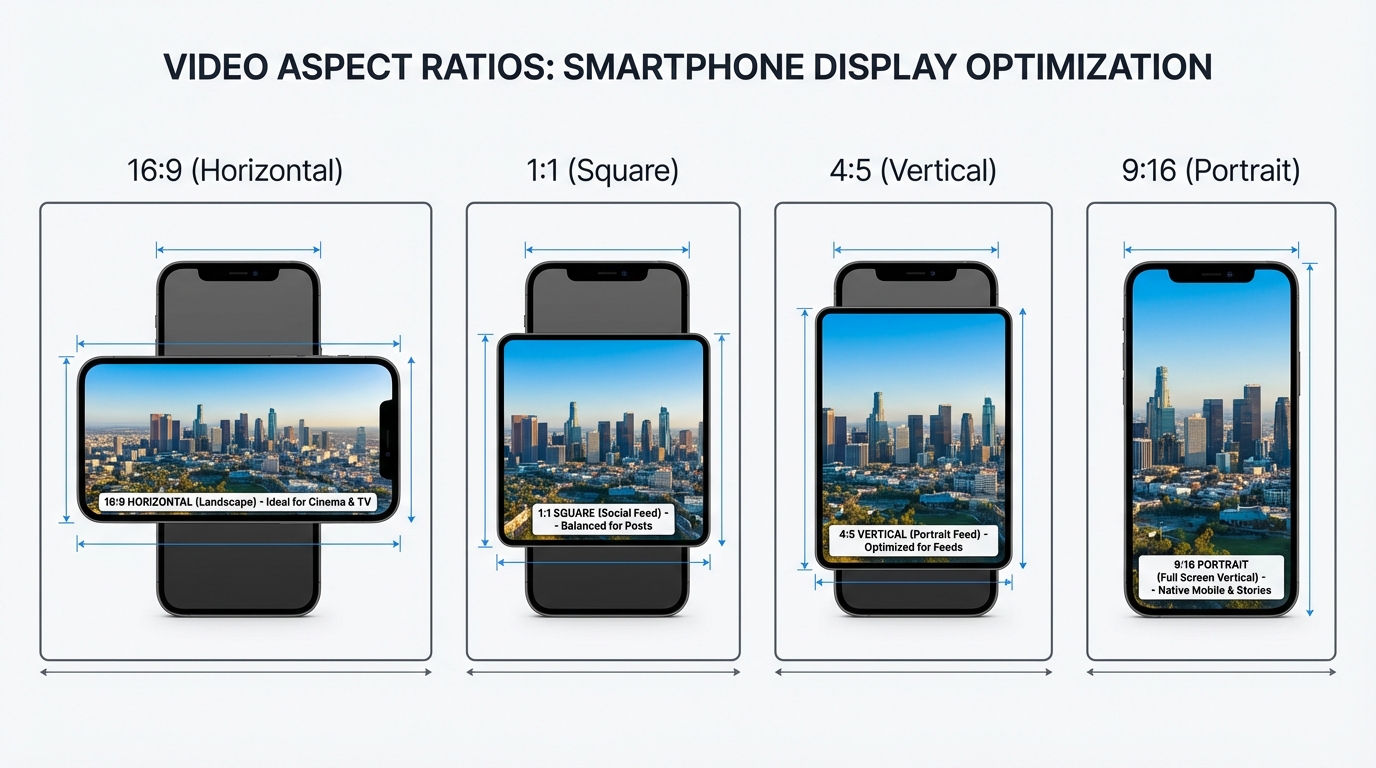
- Aspect Ratios: You must export in 16:9 (Horizontal), 1:1 (Square), 4:5 (Vertical Feed), and 9:16 (Shorts/Portrait). See YouTube Shorts Automation AI.
- Duration: 6–10 seconds for “hooks,” 15 seconds for standard ads, and 30 seconds for deep-dive demos.
- Captions: Mandatory burned-in subtitles. 2026 data shows that 84% of Indian mobile users watch shopping videos with sound off in public spaces.
IndiaMART (B2B Marketplace)
For B2B sellers, the IndiaMART product video creator AI strategy focuses on utility over flash. IndiaMART’s buyer base prioritizes technical specifications, certifications (ISO/ISI), and bulk pricing.
- B2B Content: Videos should highlight Minimum Order Quantities (MOQ), lead times, and after-sales support.
- Localization: Multi-language captions (English, Hindi, and regional languages like Tamil or Marathi) are essential for reaching India's diverse industrial hubs.
- Integration: Since IndiaMART often relies on YouTube embeds, ensure your YouTube metadata is optimized with the same keywords used in your IndiaMART catalog.
Price Comparison & Aggregator Engines
Aggregators often have the most restrictive “lowest common denominator” requirements. To avoid rejection, use a 1:1 ratio with a persistent logo and a clear price callout that matches your feed's GTIN data.
Sources:
3. Enterprise Workflow: Automating Marketplace Product Demos
Scaling video production from 10 SKUs to 10,000 requires a shift from “creative editing” to “data-driven automation.” This is where marketplace product demo automation becomes a competitive advantage.
Step 1: Feed Ingestion and Attribute Mapping
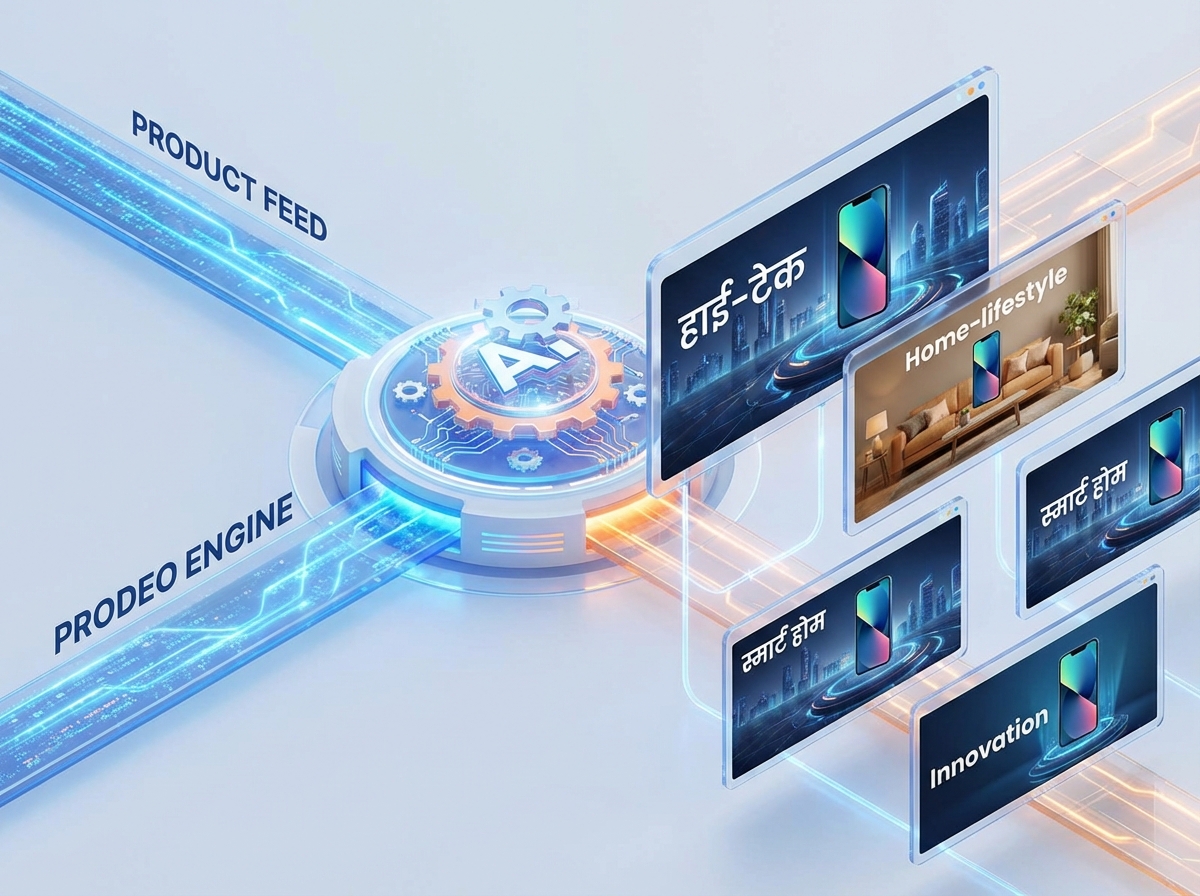
The process begins by connecting your PIM (Product Information Management) or Google Merchant Center feed to an AI video engine. Every attribute—title, price, discount percentage, star rating, and material—is mapped to a specific scene in a video template. Learn more in multi-location video automation tools.
Step 2: Scene Logic and Dynamic Templating
Modern automation uses “if-then” logic to customize content:
- Category Logic: If the product is “Electronics,” use a sleek, high-tech background. If it’s “Home Decor,” use a warm, lifestyle setting.
- Variant Logic: Automatically swap colors and labels based on the SKU (e.g., showing a “Midnight Black” phone vs. a “Stellar Silver” one).
- Promo Logic: If a “Limited Time Offer” is active in the feed, the AI automatically overlays a countdown timer or a “Save 20%” badge.
Step 3: Localization and Voiceover
Studio by TrueFan AI’s 175+ language support and AI avatars allow brands to localize content for every corner of India. A single English product description can be transformed into a Hindi voiceover with a professional tone, ensuring the message resonates with local buyers in Tier 2 and Tier 3 cities. See Translate YouTube Videos to English with AI (2025 Guide).
Step 4: Governance and QA
Before any video hits the feed, it must pass a governance check. This includes:
- Brand Safety: Ensuring logos are in the safe zone and fonts match brand guidelines.
- Compliance: Verifying that no prohibited claims are made (especially in healthcare or finance). Reference Faceless YouTube Copyright Safety.
- Checksum Integrity: Ensuring the video rendered correctly without artifacts.
4. Product Comparison Video Strategy for 2026
In a crowded marketplace, consumers often suffer from “choice paralysis.” A product comparison video AI generator solves this by creating side-by-side visual breakdowns of your product versus a competitor or an older model.
Use Cases for Comparison Videos
- Good-Better-Best: Show three variants of a laptop, highlighting the RAM and battery life differences.
- The “Switch” Campaign: Compare your product’s Total Cost of Ownership (TCO) or energy efficiency against the market average.
- Feature Deep-Dives: Use universal icons (green checks/red Xs) to show why your SKU wins on specific metrics like “Water Resistance” or “Warranty Period.”
Creative Guidelines for Comparison
- Verifiable Claims: Always cite the source of your specs on-screen to maintain E-E-A-T (Experience, Expertise, Authoritativeness, and Trustworthiness).
- Visual Balance: Ensure both products get equal screen real estate to avoid looking like a “cheap” attack ad.
- Clear CTA: The video should end with a clear reason to choose your product, such as “Best Value for Small Businesses.”
5. Implementation with Studio by TrueFan AI
For enterprises looking to dominate comparison platform video marketing, the tech stack must be robust, secure, and integrated. Studio by TrueFan AI serves as the engine for this high-velocity content production.
API-Driven Scaling
By utilizing API and webhooks, enterprises can trigger video generation the moment a new product is added to their ERP. This ensures that your AI video for aggregator platforms is always up-to-date. If the price changes in your Merchant Center feed, the video is automatically re-rendered and updated across all surfaces. Explore Zepto Blinkit video automation.
Personalization at Scale
Beyond just product specs, the platform allows for “explainer” overlays. You can use an AI avatar to act as a virtual sales assistant, explaining complex features of industrial machinery or the benefits of a specific skincare ingredient. Solutions like Studio by TrueFan AI demonstrate ROI through significantly lower production costs—often reducing the cost-per-video by over 90% compared to traditional agencies—while simultaneously increasing the volume of assets available for testing.
Security and Compliance
In the enterprise space, data security is paramount. Studio by TrueFan AI provides:
- ISO 27001 & SOC 2 Certification: Ensuring your product data and intellectual property are protected.
- Real-time Moderation: Filters that prevent the generation of non-compliant or “hallucinated” content.
- Direct Publishing: Integrations with WhatsApp API and social channels to push videos directly to consumers. See Cart Recovery Video Automation.
6. Performance Optimization and The Testing Plan
The final step in the playbook is the optimization loop. Product listing video optimization AI isn't just about making the video; it's about making it perform.
The A/B Testing Framework
In 2026, top-tier sellers run continuous tests on the following variables:
- The Hook: Does a “Problem/Solution” start perform better than a “Feature First” start?
- The Presenter: Does an AI avatar increase trust and CVR (Conversion Rate) on high-ticket items?
- Duration: Do 6-second “Bumper” videos drive more assisted conversions than 15-second demos?
- CTA Style: Testing “Shop Now” versus “Get 10% Off Today.”
See also AI YouTube thumbnail creator (Hindi).
2026 ROI Metrics
Internal benchmarks for 2026 indicate that brands using automated video feeds see a 15-20% improvement in ROAS (Return on Ad Spend) within the first 90 days. By automating the replacement of underperforming assets, the “winner's pack” is always the one being served to the consumer.
Spec Snapshot: 2026 Compliance Checklist
| Feature | Requirement |
|---|---|
| Codec | MP4, H.264 / AAC |
| Resolution | 1080p (1920x1080) minimum; 4K for Enterprise |
| Aspect Ratios | 16:9, 1:1, 4:5, 9:16 |
| Captions | Burned-in, high-contrast, safe-zone aligned |
| Branding | Persistent logo (top right/left), URL in end-card |
| Metadata | Must match Merchant Center GTIN/Price/Availability |
Conclusion: The Path to Video Dominance
The transition to AI product video Google Shopping India 2026 is not merely a technical upgrade; it is a strategic necessity. As the Indian consumer becomes more sophisticated and AI agents take over the discovery process, the brands that provide the most helpful, visual, and compliant information will win.
By implementing a marketplace product demo automation workflow, enterprises can eliminate the creative bottleneck, reduce costs, and ensure their entire catalog is “video-ready” for every platform from Google to IndiaMART. The future of shopping is moving, and with the right AI partner, your brand can move with it.
Ready to scale your video presence? Book an enterprise demo today to see how you can automate your Google Merchant Center and marketplace video strategy for 2026.
Data & Research Sources:
- YouTube AI Shopping Trends 2026: The Indian Express - YouTube AI Tools
- Virtual Try-On Impact: Apparel Resources - Google VTO India
- Google Ads Creative AI: Google Ads & Commerce Blog
- B2B Media Guidelines: IndiaMART Help Center - Catalog Management
- Agentic Commerce Framework: Google Cloud Blog - Retail AI
Recommended Internal Links
- YouTube Shorts Automation AI
- Multi-location video automation tools for franchise growth
- Zepto Blinkit video automation for quick commerce growth
- Cart Recovery Video Automation: AI Tactics for D2C India
- Translate YouTube Videos to English with AI (2025 Guide)
- Faceless YouTube Copyright Safety: AI Checks for 2026
- InVideo vs Pictory for YouTube: Pricing, Features 2026
Frequently Asked Questions
What are the specific Google Shopping video specifications for 2026?
Google requires MP4 files using H.264/AAC across multiple aspect ratios (16:9, 1:1, 9:16, and often 4:5). Videos should run between 6 and 30 seconds, include burned-in captions for silent viewing, and avoid prohibited content or misleading claims. All claims, price, and availability data must match your Merchant Center feed to maintain policy compliance.
How do I automate product videos for IndiaMART?
Use an IndiaMART product video creator AI workflow that ingests your B2B catalog and maps attributes to scenes. Emphasize technical specs, MOQs, certifications, and lead times. Because IndiaMART often uses YouTube links, automation should upload renders to your YouTube channel and sync those URLs back to IndiaMART for seamless embedding and discovery.
Can AI videos handle multi-language requirements for the Indian market?
Yes. Studio by TrueFan AI supports 175+ languages and AI avatars, enabling rapid localization into Hindi, Bengali, Telugu, Tamil, Marathi, and more. This ensures your product messaging reaches buyers in their preferred language without manual re-editing.
Will using AI-generated videos lead to account suspension on Google?
No—provided your videos meet Google’s quality and policy guidelines. Automation helps enforce safe-spec guardrails, keeps claims consistent with Merchant Center data, and reduces manual errors. This typically results in higher compliance and fewer disapprovals.
How does video impact “Agentic Commerce”?
AI shopping agents parse video metadata and transcripts to understand context, features, and benefits. Clear, well-captioned demos supply rich signals those agents use to recommend your product over static listings—improving visibility in comparison and aggregator flows.



