Gen Z creator automation 2026: Orchestrating UGC on Reels & Shorts in India for ROI
Estimated reading time: 6 minutes
Key Takeaways
- Gen Z creator automation is the primary driver of brand resonance in 2026, managing the 83% of Indian youth who identify as creators.
- UGC campaign orchestration enables enterprise brands to scale content to 500+ assets per quarter across regional Indian languages.
- Hyper-personalization through AI workflows allows for native language engagement and automated social commerce conversion.
- Micro-creator outreach must be programmatic to handle discovery, vetting, and UPI-based payouts at scale.
The digital landscape in India is undergoing a seismic shift as we approach the mid-point of the decade. By 2026, the traditional influencer model has evolved into a sophisticated ecosystem where Gen Z creator automation 2026 is the primary driver of brand resonance and market share. This paradigm shift is fueled by a startling reality: 83% of Gen Z Indians now identify as content creators, a movement increasingly led by women in Tier-2 and Tier-3 cities.

For enterprise marketing heads and brand managers, the challenge is no longer about finding a single celebrity face, but about managing the democratization of influence. Gen Z creator automation 2026 represents the enterprise practice of using AI-powered workflows to discover, brief, produce, personalize, and measure creator-led short videos at an unprecedented scale. By automating the orchestration of Instagram Reels and YouTube Shorts, brands can finally bridge the gap between authentic youth content marketing and measurable social commerce ROI.
This comprehensive guide outlines the strategic blueprint for implementing UGC campaign orchestration India, focusing on micro-creator automated outreach, hyper-personalization, and the technical infrastructure required to dominate the 2026 social economy. We will explore how to transform thousands of individual creator narratives into a cohesive, high-performance marketing engine that drives both retention and conversion.
1. UGC Campaign Orchestration India: Moving Beyond Traditional Advertising
In 2026, the efficacy of polished, high-production-value advertisements has plummeted among youth demographics. Gen Z consumers in India are increasingly gravitating toward "affordable aspiration," a trend where they demand relatable, value-forward messaging over unattainable luxury. This shift necessitates a move toward UGC campaign orchestration India, which we define as the end-to-end programmatic management of creator-generated assets across diverse regional markets.
Authenticity is the new currency, and it is minted through peer-led content and regional voices. Orchestrating hundreds of micro-moments across various Indian languages allows a brand to permeate local subcultures more effectively than a single "hero" film ever could. Enterprise teams must now aim for content volumes exceeding 500 assets per quarter to maintain visibility in algorithmically-driven feeds.
The 2026 market demands that brands act as community facilitators rather than mere broadcasters. By leveraging social media video automation, companies can ensure that their messaging remains consistent yet localized. This approach aligns with the broader trend of AI-first brands driving demand among Bharat consumers, where on-platform conversion and community engagement are the primary KPIs.
Source: Gen Z’s Demand for Affordable Aspiration - Economic Times
Source: Digital Marketing Trends 2026 - Royalways
Source: Social Media Trends Redefining 2026 - RepIndia
2. Micro-Creator Automated Outreach: The 2026 Operational Blueprint
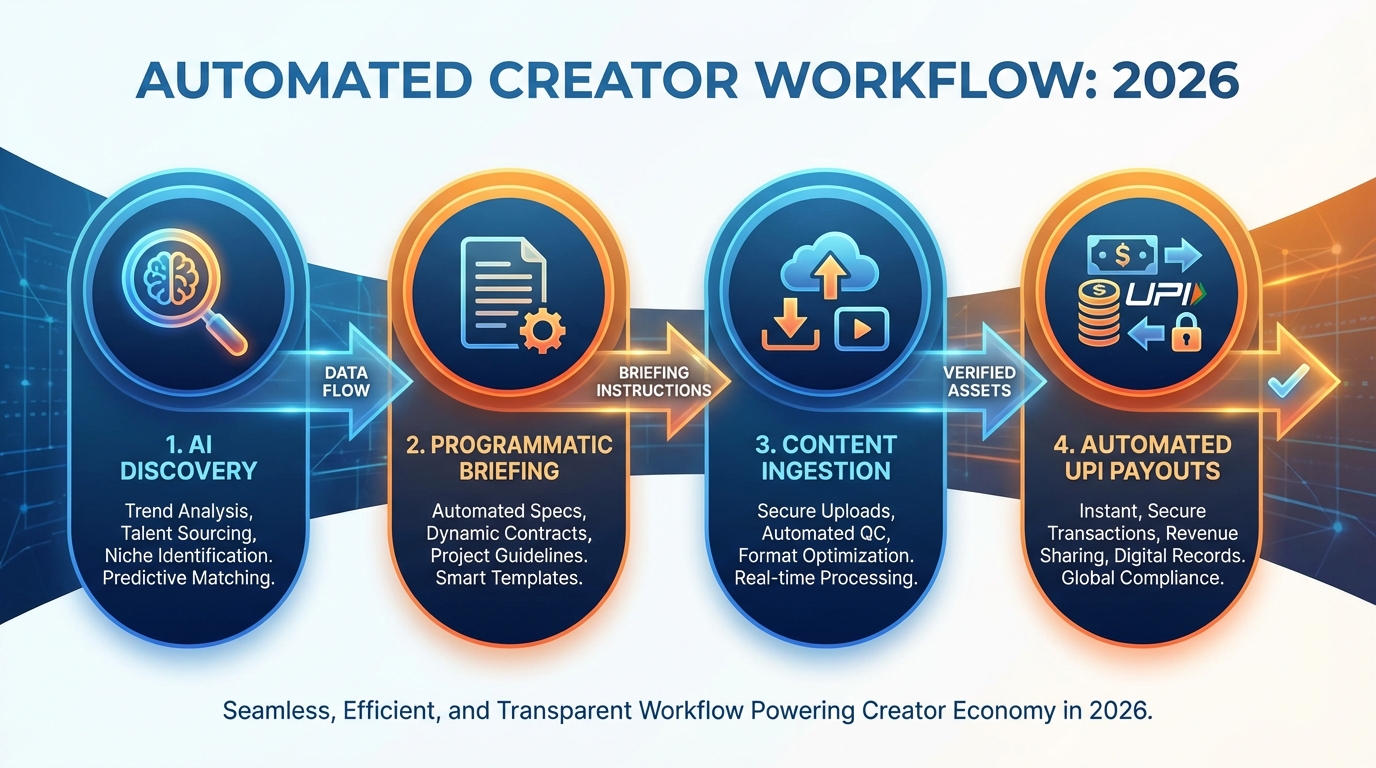
The sheer volume of creators in India—fueled by the growth of side-hustles as a primary income stream—makes manual influencer management obsolete. Micro-creator automated outreach is the solution, utilizing CRM-like pipelines to handle discovery, vetting, and contracting for thousands of creators simultaneously. This programmatic approach ensures that creator economy scalability is no longer a bottleneck for enterprise growth.
A robust outreach blueprint begins with rigorous selection criteria. Beyond mere follower counts, brands in 2026 prioritize regional/language fit, niche relevance, and historical performance signals such as save rates and comment quality. Automated workflows then take over, delivering dynamic briefs and managing the ingestion of consented assets through centralized portals.
Standardization is critical for maintaining youth retention strategies at scale. Automated systems handle the complexities of UPI-based payouts and affiliate link generation, ensuring that creators are compensated promptly and accurately. This level of operational excellence not only improves brand-creator relationships but also provides the data necessary for advanced creator performance analytics.
Source: Gen Z Side-Hustles and UGC Supply - GripInvest
Source: Brands 3.0 and AI-First Growth - Entrepreneur India
3. Platform Playbooks: Instagram Reels and YouTube Shorts for Enterprise
Navigating the nuances of Instagram Reels brand partnerships and YouTube Shorts influencer marketing requires a platform-specific creative and compliance strategy. For Reels, the 2026 playbook emphasizes a "hook-first" mentality, where the first 2-3 seconds must utilize native sounds and localized text-on-screen to prevent scrolling. Enterprise teams must leverage the Instagram Creator Marketplace to ensure transparency and adhere to paid partnership labeling requirements.
YouTube Shorts, conversely, has become a powerhouse for social commerce creator videos. With the arrival of the YouTube Shopping affiliate program in India, creators can now tag products directly within their short-form content. This integration provides a seamless path from discovery to purchase, making influencer ROI measurement India more accurate than ever before.
To maximize impact, brands should utilize YouTube BrandConnect for streamlined briefing and approval flows. A successful cross-platform strategy involves syndicating content while respecting the unique sonic branding and remix cultures of each app. By automating these distributions, enterprises can maintain a constant presence across the digital touchpoints most frequented by Gen Z.
Source: Instagram Creator Marketplace India - Medianama
Source: Instagram Branded Content Policies - Instagram Help
Source: YouTube Shopping Affiliate Program India - Google Blog
Source: YouTube BrandConnect Overview - YouTube Ads
4. Social Commerce and Creator-Led Product Launches
The traditional product launch has been replaced by creator-led product launches, which unfold in orchestrated phases across social platforms. This process begins with automated "tease" campaigns where UGC hints at upcoming releases, followed by "reveal" phases featuring unboxings and demos. The final "convert" phase utilizes shoppable CTAs and affiliate links to drive immediate sales.
In 2026, social commerce creator videos are the primary engine of growth for D2C and FMCG brands. These videos bypass the friction of external websites by utilizing on-platform checkout and UPI-first payment rails. The focus has shifted from one-off viral hits to serial storytelling, where creators build long-term narratives around a brand to drive youth retention strategies.
Measuring the success of these launches requires a sophisticated influencer ROI measurement India framework. Brands must track not just views, but view-to-click ratios, cohort reorder rates, and the "retail media halo" effect. By integrating social commerce data with CRM systems, enterprises can identify which creator segments are delivering the highest lifetime value (LTV).
Source: Social Media Trends Redefining 2026 - WHY TAP
Source: Digital Marketing Trends 2026 - RepIndia
5. Gen Z Engagement Personalization: Leveraging the Viral Campaign Automation Platform
Hyper-personalization has emerged as the ultimate competitive differentiator in 2026. Gen Z engagement personalization involves tailoring content not just by name, but by language, subculture, and lifecycle stage. Platforms like TrueFan AI enable enterprises to generate thousands of personalized video variants in seconds, ensuring that every consumer feels a direct, individual connection to the brand.
TrueFan AI's 175+ language support and Personalised Celebrity Videos allow brands to speak to the "Bharat" consumer in their native tongue, whether it be Hindi, Tamil, Bengali, or a regional dialect. This level of localization is essential for meeting the "affordable aspiration" demand of Gen Z. By using AI-driven voice cloning and dynamic visual insertion, brands can create episodic series and surprise-and-delight videos that significantly boost watch-through rates.
The technical backbone of this effort is the viral campaign automation platform. This enterprise-grade system covers everything from workflow orchestration to rights management and compliance. For instance, a brand can trigger a personalized video via the WhatsApp Business API the moment a customer abandons a cart, using a creator's voice to offer a tailored discount.
Case Study: Personalization at Scale
- Hero MotoCorp Festive Campaign: By generating 2.4 million personalized greetings, Hero MotoCorp drove significant footfall to their store service camps. This demonstrates the power of social media video automation in achieving Online-to-Offline (O2O) attribution.
- Zomato Mother’s Day: Zomato utilized personalization to render 354,000 videos in a single day, resulting in a massive spike in engagement and order volume.
Source: Top Business Trends 2026 - PaceRecruit
Source: Gen Z’s Demand for Affordable Aspiration - Economic Times
6. Creator Performance Analytics and the 2026 Outlook
To sustain growth, enterprise brands must move beyond vanity metrics and embrace deep creator performance analytics. This involves analyzing the "hook retention" of the first three seconds of a Reel, average watch durations, and the efficacy of specific music trends. By segmenting performance by creator cohort and regional language, brands can optimize their spend in real-time.
Solutions like TrueFan AI demonstrate ROI through integrated dashboards that track conversion lifts and engagement metrics across thousands of personalized assets. This data-driven approach allows marketing heads to make informed decisions on which creators to scale and which creative scripts to refresh. In the fast-paced Gen Z market, a creative refresh is typically required every 10–14 days to avoid content fatigue.
Looking toward the end of 2026, the convergence of Gen Z, AI-first brands, and Bharat consumers will continue to redefine the market. Winning brands will be those that invest in creator economy scalability and standardized governance. The future belongs to those who can orchestrate a thousand voices with the precision of a single conductor, turning social media into a high-conversion sales floor.
Source: Digital Marketing Trends 2026 - Royalways
Source: Brands 3.0 and Bharat Consumers - Entrepreneur India
The era of Gen Z creator automation 2026 is not just a trend; it is the new operational standard for enterprise marketing in India. By embracing UGC campaign orchestration India and leveraging advanced tools for micro-creator automated outreach, brands can achieve a level of authenticity and scale that was previously unimaginable. The integration of social media video automation and hyper-personalization ensures that every interaction with a Gen Z consumer is relevant, relatable, and high-converting.
As we navigate this landscape, the focus must remain on building long-term youth retention strategies through serial storytelling and community engagement. By mastering creator performance analytics and maintaining a rigorous focus on influencer ROI measurement India, enterprise leaders can future-proof their brands against the shifting tides of the creator economy. The tools for this transformation are available today; the brands that deploy them with speed and strategic depth will be the ones that define the market in 2026 and beyond.
Frequently Asked Questions
How do we ensure compliance with Indian advertising regulations in automated campaigns?
Automated platforms now include built-in compliance gates that mandate the "Paid Partnership" label and #ad disclosures. By using the Instagram Creator Marketplace and YouTube BrandConnect, brands can ensure that all Instagram Reels brand partnerships meet legal standards while maintaining an audit trail of creator consents.
What is the primary benefit of using a viral campaign automation platform?
The main advantage is creator economy scalability. It allows a small brand team to manage thousands of creators, ensuring consistent quality, rights management, and automated payouts, which would be impossible to handle manually.
How does personalization impact influencer ROI measurement India?
Personalization allows for more granular tracking. By using unique UTMs or coupon codes within personalized videos, brands can attribute sales to specific personalization elements, such as language or creator voice, providing a clearer picture of ROI.
Can TrueFan AI help with regional language marketing in India?
Yes, TrueFan AI is specifically designed for the Indian market, offering support for over 175 languages and regional accents. This allows brands to execute Gen Z engagement personalization that resonates deeply with diverse linguistic groups across the country.
What are the key metrics for creator performance analytics in 2026?
Beyond views, brands should focus on hook retention (first 3s), completion rates, save rates, and direct conversion metrics from shopping tags. These indicators provide a more accurate reflection of how content is actually influencing consumer behavior.



