Dynamic Pricing Video Communication 2026: Transparent AI Video Playbooks for Revenue Teams
Key Takeaways
- Transparent video narratives humanize dynamic pricing, improving acceptance and trust during demand spikes.
- A four-layer automation architecture connects pricing signals to personalized video generation and feedback loops.
- Psychological framing (anchoring, fairness, and choice architecture) reduces perceived price pain and churn.
- C2PA-authenticated, multilingual videos and ethical governance frameworks address regulatory and deepfake risks.
- A focused 90-day roadmap proves ROI with higher price acceptance, lower support tickets, and measurable elasticity lift.
Meta Title: Dynamic Pricing Video Communication 2026: Transparent AI Video Playbooks for Revenue Teams
Meta Description: A 2026 playbook for revenue optimization teams to pair dynamic pricing with AI pricing explanation campaigns and price optimization transparency videos—improving value perception, acceptance, and ROI with C2PA-authenticated, multilingual personalization.
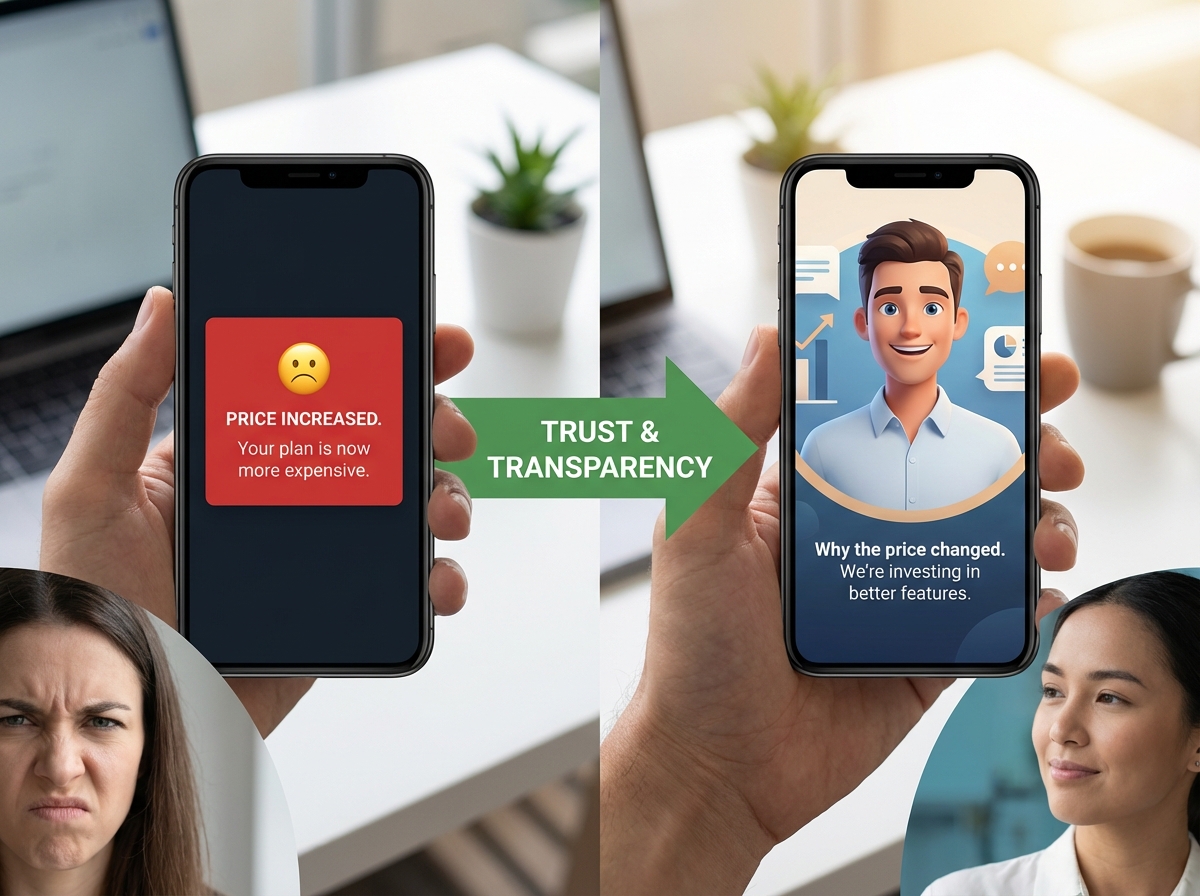
Dynamic pricing video communication 2026 has emerged as the definitive frontier for enterprise revenue management, transforming how volatile market signals are translated into consumer-facing narratives. In an era defined by rapid inflation cycles, supply chain unpredictability, and sophisticated AI-led pricing engines, the traditional “black box” approach to variable pricing is no longer sustainable. While algorithms can optimize for margin in milliseconds, they often fail to account for the human element of fairness, leading to “algorithmic fatigue” and brand erosion. Transparent video narratives serve as the critical bridge, humanizing the “why” behind price fluctuations and providing customers with actionable context to navigate demand peaks.
By 2026, market data suggests that over 82% of consumers report significant frustration with opaque pricing models, yet 68% express a willingness to accept higher costs if the rationale is communicated clearly and personally. This shift has necessitated a move toward price optimization transparency videos that do more than just state a number; they explain the value exchange in real-time. This comprehensive guide outlines the strategic framework for integrating revenue management video automation into your growth stack, covering system architecture, psychological foundations, ethical governance, and a 90-day implementation roadmap designed for the modern CFO.
The urgency for this transition is particularly acute in high-velocity markets like India. The Competition Commission of India (CCI) has intensified its scrutiny of algorithmic transparency, specifically within the cab aggregator and airline sectors. Regulators are no longer satisfied with hidden formulas; they demand clarity on surge triggers and consumer rights. As enterprises navigate these regulatory waters, the ability to deploy authenticated, personalized video explanations becomes a competitive necessity for maintaining trust and ensuring long-term customer lifetime value (LTV).
Source: CCI Market Study on Cab Aggregators
Source: DGCA Tariff Monitoring Unit Transparency
1. Pricing Psychology Marketing: Foundations of Value Perception Management
To master dynamic pricing video communication 2026, revenue leaders must first master pricing psychology marketing. This discipline applies cognitive biases and behavioral economics to influence how customers perceive and respond to price changes. At its core is value perception management—the systematic framing of a price relative to its benefits, available alternatives, and historical reference points. When a price changes dynamically, the consumer’s primary reaction is often rooted in “loss aversion,” the psychological pain of paying more than expected.
Effective price optimization transparency videos mitigate this pain by employing specific psychological levers:
- Price Fairness and Rationale: Consumers are remarkably resilient to price hikes if they perceive the cause as “just.” By using video to communicate transparent rationales—such as “peak demand in your area is currently 3x higher than average” or “these funds directly incentivize more drivers to join the network”—brands transform an arbitrary cost into a logical necessity.
- Price Anchoring Video Strategies: Anchoring is a cognitive bias where the first piece of information offered (the “anchor”) sets the tone for all subsequent evaluations. A video might show an anchored reference price (e.g., “Typical fare for this route is ₹450”) before revealing the current fare (e.g., “Due to the festival rush, the fare is now ₹620”). By explicitly showing the delta and explaining the added value—such as guaranteed priority allocation or a “safety-first” driver match—the higher price feels earned rather than exploitative.
- Framing and Choice Architecture: The narrative structure of the video should follow a “What you gain” vs. “How to save” logic. For instance, a mobility app might frame a surge price not as a penalty, but as a “Reliability Premium” that ensures a 3-minute pickup during a monsoon downpour. Simultaneously, providing a “savings tip” (e.g., “Wait 15 minutes to save 20%”) empowers the user, reducing the feeling of being trapped by the algorithm.
In the Indian context, public scrutiny around surge pricing in rides and airfares has reached a tipping point. The Supreme Court has recently sought responses from the DGCA regarding arbitrary ticket pricing, highlighting a national demand for transparency. Enterprises that proactively adopt these psychological framing techniques via video are better positioned to defend their pricing models to both consumers and regulators.
Source: Supreme Court/DGCA Response on Fare Hikes
Source: India Cab Aggregator Market Study
2. Revenue Management Video Automation: Architecture and Integration
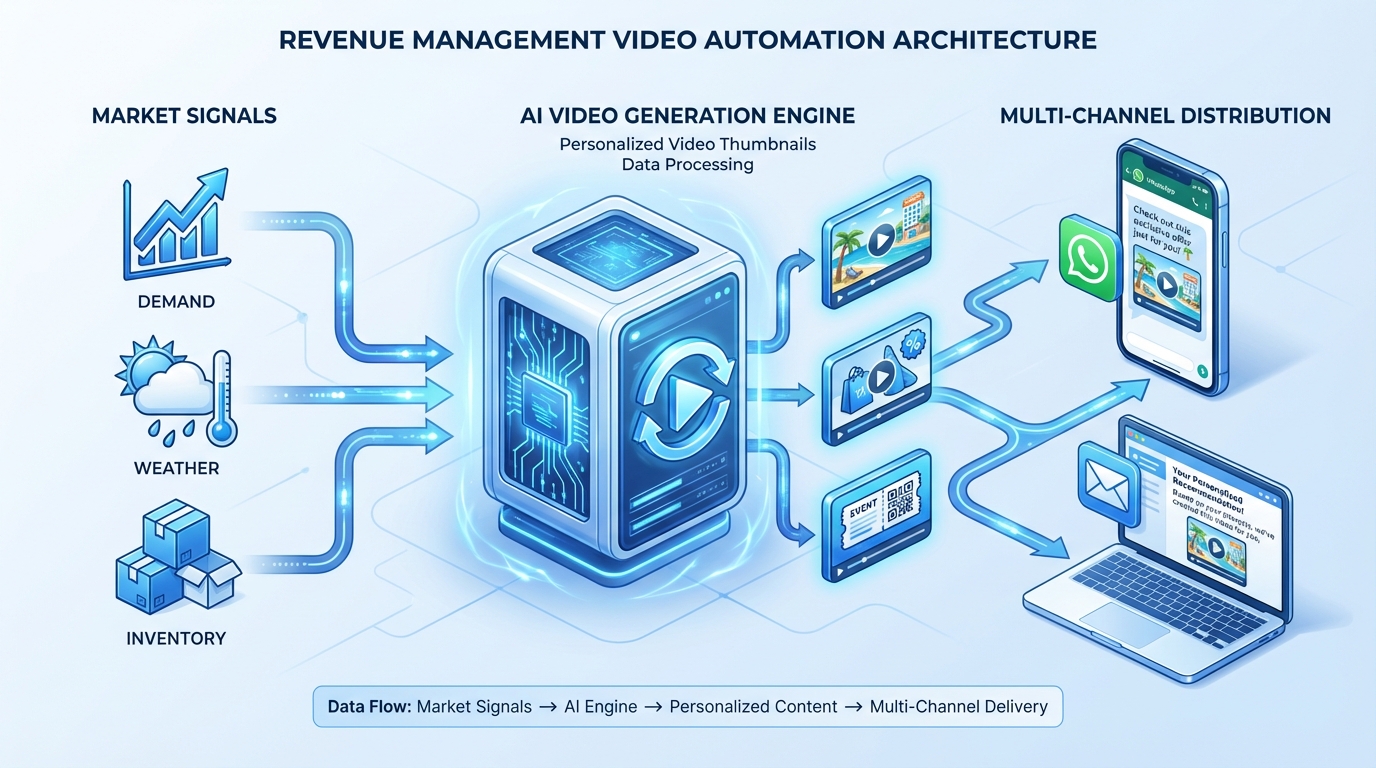
The technical execution of dynamic pricing video communication 2026 requires a seamless integration between real-time pricing engines and revenue management video automation platforms. This architecture must handle massive data throughput, rendering personalized assets in seconds to meet the consumer at the “moment of truth”—the checkout screen.
The system architecture typically consists of four primary layers:
- The Signal Layer (Inputs): This layer ingests demand signals (searches per minute, seat load factors), inventory levels, competitor pricing feeds, and individual user data (loyalty tier, historical price elasticity).
- The Trigger Logic Layer: Here, the system determines when a price event warrants a video intervention. For example, if the surge factor exceeds 1.5x or if a subscription renewal price increases by more than 10%, a trigger is sent to the video generation engine.
- The Generation Layer (TrueFan AI Integration): This is where the raw data is transformed into a narrative. Platforms like TrueFan AI enable enterprises to pass variables—such as user name, route, base price, and specific reason codes—via API or CSV into pre-approved video templates. These templates can swap text, background imagery, and even lip-sync brand ambassadors in real-time.
- The Delivery and Feedback Layer: The rendered video is delivered via in-app modals, WhatsApp Business, or email. Crucially, the system tracks engagement metrics (watch-through rates, click-through rates) and feeds them back into the pricing engine to refine future offers and communication strategies.
By 2026, the standard for these videos includes C2PA (Coalition for Content Provenance and Authenticity) watermarking—see the content credentials in video marketing guide. This ensures that the AI-generated content is authenticated, protecting the brand from deepfake concerns and providing a “content credential” that consumers can verify. This level of transparency is vital for maintaining SOC 2 and ISO 27001 compliance in enterprise workflows.
Source: TrueFan AI Personalized Video Software Guide
Source: Batch Video Creation Automation
Source: Content Credentials in Video Marketing
3. Scenario Playbooks: AI Pricing Explanation Campaigns in Action
To maximize the impact of dynamic pricing video communication 2026, revenue teams should deploy specific playbooks tailored to high-friction pricing scenarios. Each playbook must balance data-driven precision with empathetic storytelling.
Surge Pricing Justification Videos (Mobility & Food Delivery)
When demand spikes, a 15-second video can prevent a session abandonment. The script should greet the user by name, explain the specific cause of the surge (e.g., “It’s raining in Bandra, and driver demand is 4x higher than usual”), and highlight the benefit of the higher price (e.g., “This ensures a driver reaches you in under 5 minutes”). TrueFan AI’s 175+ language support (see the voice sync accuracy comparison guide) and Personalised Celebrity Videos can be leveraged here to deliver these messages in the user’s native tongue, significantly increasing the “trust factor” in regional markets.
Fare Transparency Video Campaigns (Airlines & Intercity Travel)
Airlines often face backlash for “arbitrary” fare hikes during holiday seasons. A fare transparency video can show a price anchoring comparison—showing the “Saver” fare versus the current “Flexi” fare—while explaining the load factor. It can also offer dynamic alternatives, such as “Fly on Tuesday to save ₹2,000,” effectively using video as a tool for demand shifting.
Subscription Pricing Optimization Videos (SaaS & OTT)
For renewal cycles involving a price increase, the video must focus on “Value Realization.” Instead of just announcing a new price, the video should highlight personalized usage stats (e.g., “You saved 40 hours this month using our AI tools”) and explain how the new pricing supports upcoming feature releases. This reduces churn by shifting the focus from “cost” to “ROI.”
Competitive Pricing Communication Automation (Retail & E-commerce)
In price-sensitive markets, if a competitor undercuts your price, an automated video can trigger a “Price Match + Value” message. The video might say, “We see you’re looking at this laptop. While others might be cheaper, our price includes a 3-year extended warranty and 24-hour support, giving you a total value of ₹5,000 more.”
Source: Alliance Air Fixed-Fare Context
Source: TrueFan AI ROI Metrics
4. Price Elasticity Testing Videos: Experimentation and Measurement
A critical coverage gap in many revenue strategies is the failure to measure how different communication formats affect price elasticity. Price elasticity of demand measures how sensitive consumers are to price changes. In 2026, leading enterprises use price elasticity testing videos to calibrate their pricing engines with unprecedented precision.
By running A/B/C tests on video narratives, brands can determine which psychological frame yields the highest acceptance rate. For example:
- Variant A: Benefit-first narrative (“Get there faster with priority booking”).
- Variant B: Transparency-first narrative (“Surge is active due to 200+ riders in your zone”).
- Variant C: Savings-first narrative (“Book now to avoid the 20% increase expected in 10 minutes”).
The data gathered from these tests allows for personalized discount allocation. If the system identifies a “price-sensitive” segment that consistently abandons at a 1.5x surge, it can automatically trigger a dynamic offer personalization—perhaps a 10% discount code delivered via a personalized video—to secure the conversion without eroding the margin of “price-insensitive” segments.
CFOs are increasingly looking for these “elasticity lift” metrics. By plotting demand curves with and without video interventions, revenue teams can prove that price optimization transparency videos don’t just improve CSAT; they directly expand the efficient frontier of the pricing model, allowing for higher margins with lower churn.
Source: TrueFan AI Video Production Infrastructure
Source: EY India on Identifying AI Content
5. Price Discrimination Marketing Ethics and Governance
As dynamic pricing video communication 2026 becomes ubiquitous, the conversation around price discrimination marketing ethics has moved from the fringe to the boardroom. Ethical pricing requires more than just legal compliance; it requires a commitment to non-exploitative targeting and radical transparency.
Key pillars of ethical AI pricing explanation campaigns include:
- Non-Discriminatory Triggers: Ensuring that pricing algorithms do not use protected attributes (race, gender, religion) as proxies for willingness to pay.
- The Right to Explanation: Providing every customer with a clear, video-based rationale for their specific price, as recommended by recent NeGD/CERT-In advisories on algorithmic accountability in India.
- Content Authenticity: Using C2PA standards—see content credentials in video marketing—to watermark every AI-generated video. This prevents the “trust deficit” that occurs when consumers cannot distinguish between a legitimate brand communication and a malicious deepfake.
In India, the legal landscape is evolving rapidly. The NeGD (National e-Governance Division) has released a practical playbook for enforcement against deceptive AI, emphasizing the role of watermarking and provenance. Enterprises must implement role-based controls and moderation APIs to ensure that no unapproved or “hallucinated” pricing claims ever reach a customer. This governance framework is not just a defensive measure; it is a brand-building asset that signals to the market that your enterprise values integrity as much as profit.
Source: NeGD Deepfake Enforcement Playbook
Source: C2PA in India 2025/26 Legal Implications
Source: AI Video Moderation Tools Guide
6. ROI Modeling and the 90-Day Implementation Roadmap
To justify the investment in dynamic pricing video communication 2026, revenue leaders must build a causal chain that links video engagement to bottom-line growth. Solutions like TrueFan AI demonstrate ROI through a combination of increased conversion rates and reduced operational costs.
The ROI Causal Chain:
- Video Exposure: User sees a personalized explanation for a price change.
- Comprehension & Fairness: The user understands the “why,” reducing cognitive dissonance.
- Acceptance: The user proceeds with the transaction despite the higher price.
- Revenue Lift: Incremental margin is captured that would have otherwise been lost to abandonment.
- Complaint Reduction: CX teams see a 15–30% drop in pricing-related tickets, lowering overhead.
90-Day Implementation Roadmap
- Days 0–30 (Foundations): Identify high-friction pricing touchpoints. Map data fields (Name, Price, Reason) to video templates. Set up C2PA authentication—see the content credentials guide—and moderation workflows.
- Days 31–60 (Pilot): Launch surge pricing justification videos for a specific region or segment. Conduct A/B testing on “Anchoring” vs. “Benefit” scripts. Measure the delta in acceptance rates.
- Days 61–90 (Scale): Roll out competitive pricing communication automation and subscription optimization videos globally. Integrate the CFO dashboard to track real-time revenue lift and elasticity shifts.
By the end of this 90-day cycle, the enterprise moves from a reactive pricing posture to a proactive, narrative-driven strategy that treats price as a conversation rather than a confrontation.
Source: TrueFan AI ROI Analytics
Source: DGCA Tariff Monitoring Unit
Conclusion
The transition to dynamic pricing video communication 2026 represents a fundamental shift in the relationship between brands and consumers. By moving away from “black box” algorithms and toward transparent, AI-powered narratives, enterprises can navigate market volatility without sacrificing customer trust. Whether it is justifying a surge in ride-hailing, explaining fare classes in aviation, or optimizing subscription renewals in SaaS, the combination of pricing psychology and video automation is the key to unlocking sustainable revenue growth. The future of pricing is not just a number—it is a story. Launch your first AI pricing explanation campaigns today and transform your revenue management into a powerful engine for value perception and loyalty.
Frequently Asked Questions
How does dynamic pricing video communication 2026 differ from traditional price alerts?
Traditional alerts are static and often trigger “sticker shock.” Dynamic video communication uses personalized narratives, price anchoring, and real-time data to explain the value behind the price, significantly increasing user acceptance and reducing complaints.
Is AI-generated video safe for sensitive pricing communications?
Yes, provided the enterprise uses platforms that support C2PA content credentials and robust moderation APIs. These tools ensure that every video is authenticated, traceable, and compliant with regional regulations like India’s MeitY advisories.
Can these videos be localized for regional Indian markets?
Absolutely. Modern revenue management video automation allows for 175+ language support. This means a user in Tamil Nadu can receive a surge pricing explanation in Tamil, while a user in Punjab receives it in Punjabi, dramatically improving comprehension and trust.
What is the typical ROI for price optimization transparency videos?
Enterprises typically see a 5–20% lift in price acceptance rates and a 10–30% reduction in pricing-related customer support queries. Additionally, discount efficiency improves as brands can use personalized incentives rather than blanket markdowns.
How does TrueFan AI help in this process?
TrueFan AI provides the enterprise-grade infrastructure needed to render thousands of personalized videos in real-time. By connecting your pricing engine to TrueFan AI’s API, you can automate the creation of authenticated, multilingual videos that explain complex pricing logic to every customer individually.
Does dynamic pricing violate consumer rights in India?
Dynamic pricing is legal, but “dark patterns” and opaque algorithms are under increasing scrutiny by the CCI. Implementing transparent, video-based explanations is considered a best practice for meeting regulatory demands for algorithmic accountability and fairness.