BS7 Emission Norms Marketing 2026: Enterprise Playbook for BS6 Sell-Through and EV Adoption
Estimated reading time: 11 minutes
Key Takeaways
- Adopt a dual-track strategy: transparent BS6 sell-through alongside accelerated EV adoption.
- Use data-driven personalization (video, OBM/BS7 explainers, real-time calculators) to reduce consumer anxiety and build trust.
- Localize offers and incentives by state/city and keep assets API-updatable for regulatory changes.
- Enable dealers with digital transformation: CRM-integrated, multilingual personalized video and strict governance (Content Credentials).
- Measure beyond clicks: track inventory velocity, green financing uptake, and TCO calculator completion to optimize ROI.
The Indian automotive landscape in 2026 stands at a critical regulatory crossroads, necessitating a sophisticated dual-mandate marketing strategy. As the Ministry of Road Transport and Highways (MoRTH) moves toward the implementation of BS7 emission norms marketing 2026, original equipment manufacturers (OEMs) must navigate the complex transition of clearing BS6 Phase 2 inventory while simultaneously accelerating the adoption of electric vehicles (EVs). This transition is not merely a compliance hurdle but a strategic opportunity to leverage data-driven, personalized campaigns that address consumer anxiety and financial considerations through advanced digital transformation.
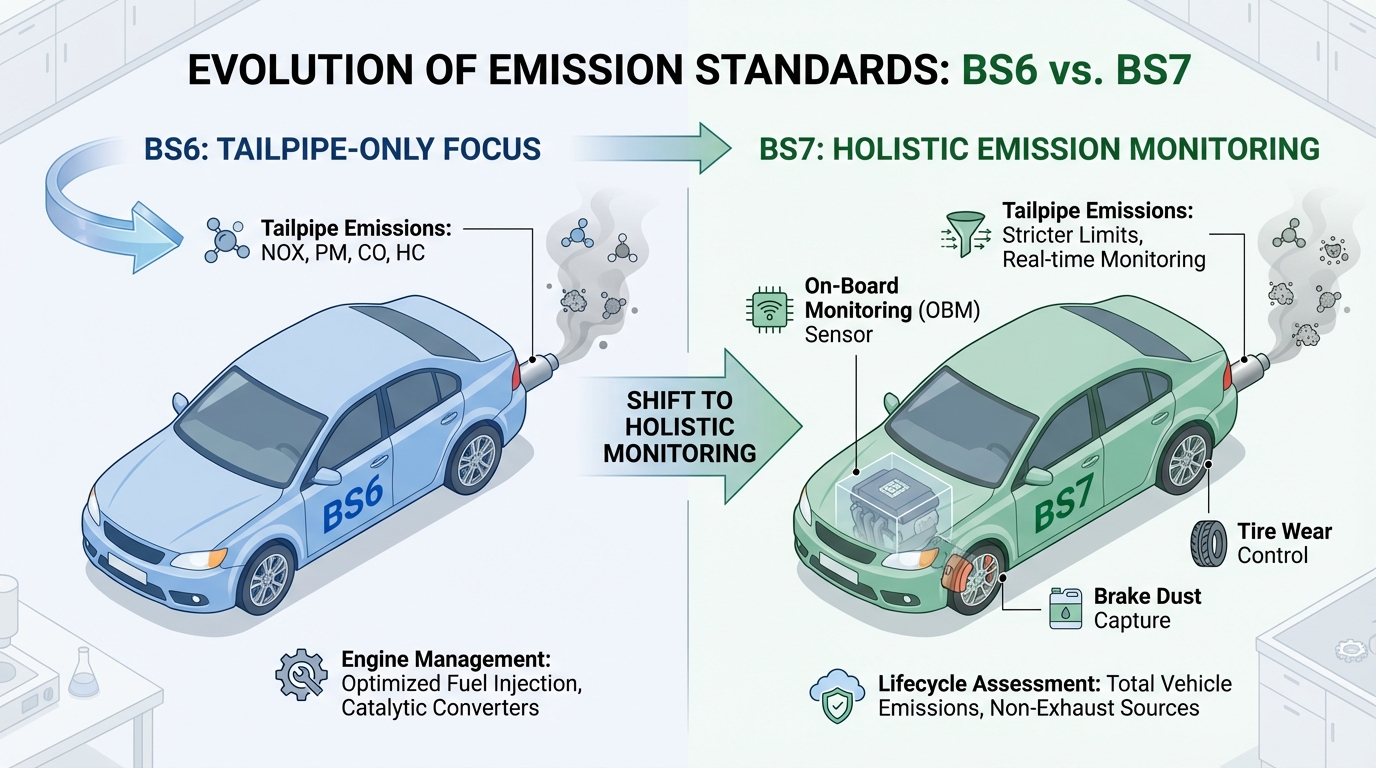
The BS7 standards, largely mirrored after Euro 7 principles, introduce unprecedented technical requirements such as On-Board Monitoring (OBM) and non-tailpipe emission controls for brake and tire wear. For enterprise marketing teams, this requires a shift from generic “clearance sales” to highly specific, automotive regulatory transition campaigns that utilize emission compliance explanation videos to build trust. By integrating real-time calculators and personalized video assets, brands can effectively communicate the value proposition of current BS6 models—which remain highly efficient—while positioning EVs as the ultimate future-proof investment.
1. Regulatory Clarity: Navigating the BS7 Transition and Technical Shifts
Understanding the technical nuances of BS7 is foundational for any 2026 marketing strategy. Unlike previous transitions that focused primarily on tailpipe NOx and particulate matter, BS7 introduces a holistic view of vehicle emissions. This includes stricter Real-world Driving Emissions (RDE) testing and the introduction of OBM, which ensures that vehicles remain compliant throughout their entire lifecycle, not just at the point of sale.
The inclusion of non-tailpipe emissions, specifically brake dust and tire micro-particles, represents a significant messaging shift. Marketers must now educate consumers on the “total environmental footprint” of their vehicles. This provides a unique opening for EV marketing, as electric vehicles, despite their weight, offer regenerative braking systems that significantly reduce brake wear emissions compared to traditional internal combustion engine (ICE) vehicles.
Furthermore, the 2026-27 timeline for BS7 implementation remains subject to phased rollouts based on vehicle category and fuel type. Current industry projections suggest that while new model approvals may require BS7 compliance by late 2026, existing model sell-through windows may extend into 2027. This regulatory volatility demands a “scenario-based” creative approach, where digital assets can be updated instantly via API as official notifications are released.
Source: Spinny: BS7 Norms Complete Details
Source: Down To Earth: Centre to Roll Out BS-VII
Source: MECA: Evaporative and Refueling Emissions in India
2. BS6 Inventory Liquidation: The “Transparency-First” Campaign Blueprint
As the BS7 deadline approaches, the primary objective for dealer networks is the responsible liquidation of BS6 Phase 2 stock. Generic discounting often leads to brand erosion; instead, enterprise marketers should deploy BS6 inventory liquidation campaigns that focus on “The Upgrade Math.” This involves showing the consumer exactly why a BS6 vehicle purchased in 2026 remains a high-value, compliant asset for the next decade.
Platforms like TrueFan AI (see personalised video + celebrity endorsement SaaS) enable automotive brands to generate millions of hyper-personalized pre-BS7 clearance sale videos that address customers by name and reference their specific city's registration rules. These videos should feature a three-act structure: a transparency hook explaining the regulatory shift, a personalized financial breakdown including exchange bonuses, and a direct call-to-action (CTA) to book a final-lot test drive.
The “Offer Stack Logic” for 2026 must be more granular than ever. Marketers should combine base discounts with automotive exchange bonus campaigns and green vehicle financing offers. For instance, a personalized video could show a customer in Pune that by trading in their 7-year-old diesel SUV now, they can secure a ₹1.5 lakh exchange bonus and a 7.25% interest rate on a BS6 petrol model, effectively lowering their monthly EMI by 15% compared to waiting for more expensive BS7 models.
Source: MotorBeam: BS7 Impact on Diesel Cars
Source: CARS24: Bharat Stage 7 Explained
Source: ET Auto: SIAM BS7 Committee on Ethanol Challenges
3. Accelerating EV Adoption: Data-Driven Incentives and TCO Calculators
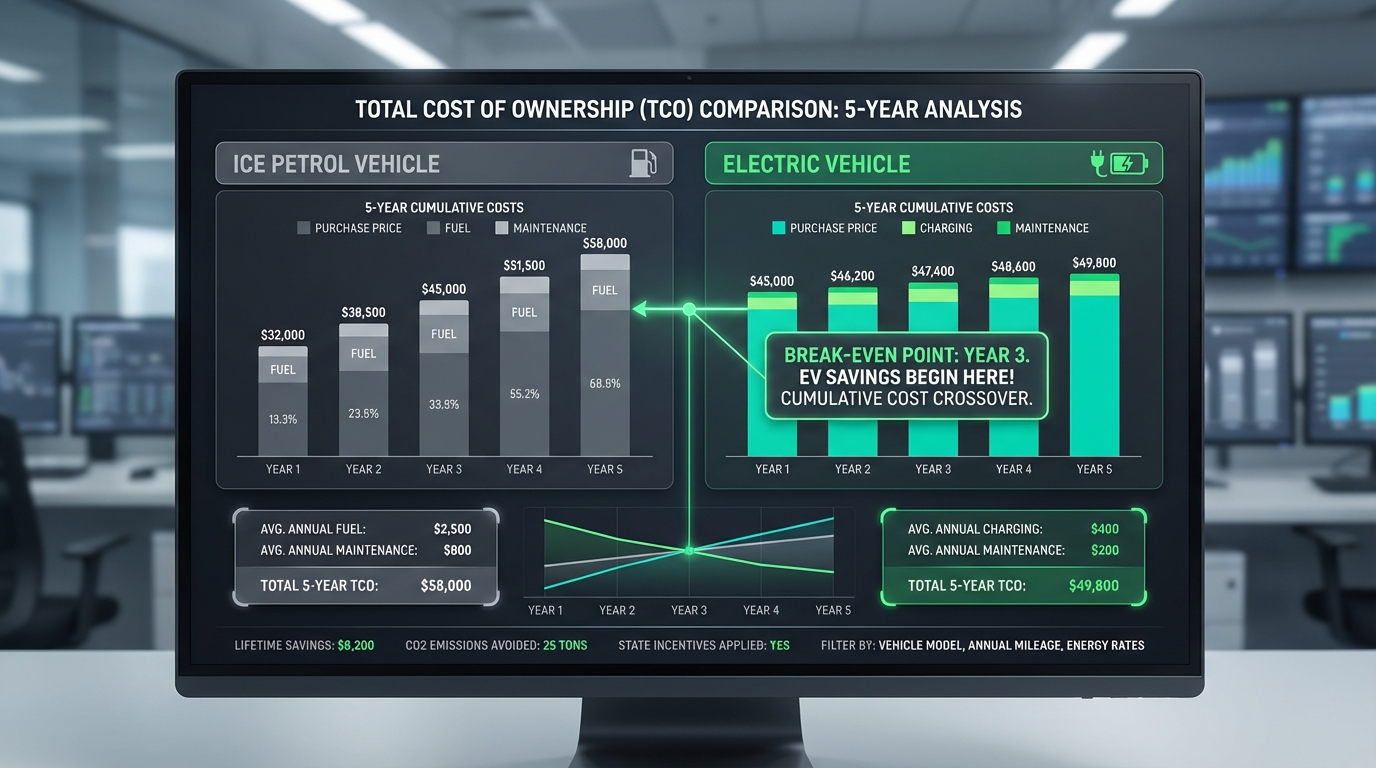
The transition to BS7 inevitably increases the cost of ICE vehicles due to complex after-treatment systems like advanced Selective Catalytic Reduction (SCR) and OBM hardware. This price hike narrows the gap between ICE and EV parity. To capitalize on this, marketers must deploy sophisticated electric vehicle adoption incentives and EV comparison calculator videos that demystify the Total Cost of Ownership (TCO).
A high-impact EV campaign in 2026 should utilize environmental benefit calculators that translate CO2 savings into relatable metrics, such as “trees planted” or “liters of fuel saved per year.” These assets must be localized, as state-level incentives vary significantly across India. For example, a buyer in Maharashtra might benefit from different road tax waivers than a buyer in Delhi, necessitating government subsidy navigation videos that provide a step-by-step checklist based on the user's pincode.
TrueFan AI's 175+ language support and Personalised Celebrity Videos allow OEMs to deliver these complex TCO breakdowns in the customer's native tongue, featuring a brand ambassador who explains the long-term savings of switching to electric. By inputting daily mileage and local electricity tariffs into an interactive video overlay, the customer receives a personalized “break-even” analysis, showing exactly when their EV investment will start paying for itself.
Source: CEEW: Cost of Ownership for Road Transport Sector
Source: CarDekho: Top EV-Friendly States in India
Source: IBEF: Electric Vehicle Industry in India
4. Content Strategy: Deploying Emission Compliance Explanation Videos
In a market saturated with misinformation, “Expertise” and “Trustworthiness” (key pillars of E-E-A-T) are the most valuable currencies. OEMs must produce high-fidelity emission compliance explanation videos that simplify BS7 for the average consumer. These videos should not just list technical specs but explain why the changes matter—such as improved air quality in urban centers and the long-term durability of the engine.
The script architecture for these videos must be meticulously balanced. They should acknowledge the upcoming BS7 norms while reassuring current BS6 owners that their vehicles will remain legal and serviceable for the duration of their registration. This “future-proofing” narrative is essential for maintaining residual values in the used car market, which in turn supports new car sales through better exchange valuations.
Visual storytelling is paramount here. Use 3D animations to show how OBM sensors monitor exhaust in real-time or how E20 ethanol-blended fuels are managed within the new fuel systems. These educational assets serve as the “top-of-funnel” content that drives users toward more transactional assets like vehicle upgrade incentive videos. By providing value first, brands establish the authority needed to guide the customer through the final purchase decision.
Source: Autocar Professional: India Must Tackle Evaporative Emissions
Source: CarDekho: Everything You Need to Know About BS7
5. Dealer Network Transition Support and Digital Transformation
The success of any national regulatory transition hinges on the execution at the dealership level. Dealer principals often struggle with consistent messaging during periods of rapid change. To solve this, enterprise marketing teams must provide a comprehensive dealer network transition support kit. This kit should include localized video templates, offer matrices, and API-driven data feeds that allow sales consultants to generate personalized content on the fly.
Automotive digital transformation marketing in 2026 involves the seamless integration of CRM data with generative AI video platforms. When a lead is captured at a dealership, the system should automatically trigger a personalized video from the brand ambassador, thanking the customer by name and summarizing the specific BS6 clearance or EV offer discussed. This level of follow-up significantly increases “show-room to sale” conversion rates.
Solutions like TrueFan AI demonstrate ROI through increased engagement metrics, such as the 17% higher read rates observed in travel sectors, which can be replicated in the automotive space. By providing dealers with the tools to speak the “language of the customer” across 175+ dialects, OEMs ensure that the national BS7 strategy is executed with local precision. This digital-first approach also allows for real-time inventory tracking, ensuring that “last lot” messaging is always accurate and compliant.
Source: McKinsey: Unlocking the Next Frontier of Personalized Marketing
Source: Demand Local: ROI Metrics in Automotive Campaigns
6. Risk Management, Governance, and ROI Measurement
Operating in a highly regulated environment like the 2026 Indian auto market requires rigorous risk management. All marketing assets, especially those involving AI-generated content, must adhere to strict governance protocols. This includes the use of Content Credentials watermarking to ensure transparency and the inclusion of prominent disclaimers regarding the pending official BS7 notifications.
Measurement of these campaigns should go beyond simple click-through rates. Key Performance Indicators (KPIs) must include inventory velocity by model and city, the uptake of specific green vehicle financing offers, and the completion rates of EV TCO calculators. By A/B testing different script variants—such as “Last Chance” vs. “Transparent Savings”—marketing teams can optimize their creative spend in real-time.
Data security is equally critical. Enterprise solutions must be ISO 27001 and SOC 2 certified to handle sensitive customer PII (Personally Identifiable Information). As brands move toward more sustainable transportation marketing, the ability to prove the accuracy of environmental claims through verified data sources will be the differentiator between market leaders and those facing “greenwashing” accusations.
Source: GoMechanic: Bharat Stage 7 Overview
Source: MotorOctane: BS7 Norms in 2026 - End of Fortuner?
Conclusion: The 2026 Strategic Imperative
The transition to BS7 is more than a technical upgrade; it is a fundamental shift in how automotive brands must communicate value to a more conscious and cautious consumer base. Success in 2026 requires a dual-track strategy: a transparent, data-driven liquidation of BS6 inventory and a high-velocity, education-led acceleration of EV adoption. By leveraging advanced personalization, real-time TCO calculators, and localized video content, enterprise marketers can turn regulatory volatility into a competitive advantage.
The integration of AI-driven personalization ensures that every customer feels seen and understood, whether they are looking for a final-lot BS6 bargain or navigating the complexities of EV subsidies. As we move closer to the BS7 era, the brands that prioritize transparency, education, and digital-first dealer support will be the ones that not only survive the transition but emerge as leaders in India's sustainable transportation future.
Final Campaign Checklist for 2026:
- Deploy emission compliance explanation videos to build top-of-funnel trust.
- Launch BS6 inventory liquidation campaigns with personalized “Upgrade Math.”
- Integrate EV comparison calculator videos into all digital touchpoints.
- Provide dealer network transition support with localized, API-driven video templates.
- Ensure all AI content uses Content Credentials and meets ISO/SOC 2 security standards. Learn more
Frequently Asked Questions
When will BS7 emission norms be officially implemented in India?
While the government has signaled a rollout around 2026-27, the final MoRTH notification is still pending. Most manufacturers are planning for new model compliance by late 2026, with a full transition for all sales by April 2027.
Will my BS6 car become illegal once BS7 is introduced?
No, BS6 vehicles will remain legal for the duration of their 15-year (petrol) or 10-year (diesel in NCR) registration periods. BS7 only applies to the sale of new vehicles after the implementation date.
What are the main technical differences between BS6 and BS7?
BS7 introduces On-Board Monitoring (OBM) for real-time emissions tracking, stricter Real-world Driving Emissions (RDE) limits, and new regulations for non-tailpipe emissions like brake and tire wear particles.
Are there specific incentives for switching to an EV before the BS7 deadline?
Yes, various state-level policies and central programs offer subsidies, road tax waivers, and registration fee exemptions. These can be assessed using localized EV comparison tools and TCO calculators.
How can TrueFan AI help automotive dealers during this transition?
TrueFan AI enables dealers to create hyper-personalized, celebrity-led videos that explain complex regulatory changes and personalized financing offers in over 175 languages, significantly boosting customer trust and conversion rates. See the personalised video + celebrity endorsement SaaS overview.