
Dynamic Subscription Bundling 2026: AI‑Powered Bundle Personalization for Year‑Round Retention
Estimated reading time: ~12 minutes
Key Takeaways
- Dynamic bundling replaces static promos with real-time, AI-driven multi-service packages to maximize retention and ARPU.
- Subscription optimization AI blends behavioral, economic, and consented data to power bundle recommendations and discount selection.
- Cross-platform orchestration (app, web, CTV, WhatsApp) and creator-led content discovery reduce decision fatigue and boost conversion.
- Governance and privacy with DPDP-compliant consent, auditability, and fairness guardrails ensure ethical, sustainable growth.
- Enterprise roadmap delivers phased rollout, elasticity testing, and ecosystem partnerships for year-round engagement.
The streaming and digital services landscape has reached a critical inflection point where rising content costs and fragmented service offerings have triggered unprecedented levels of consumer fatigue. Dynamic subscription bundling 2026 has emerged as the definitive solution to this volatility, moving beyond static seasonal promotions to offer real-time, AI-driven value optimization. By leveraging AI-powered bundle personalization and cross-platform subscription offers, enterprises are now able to read individual usage signals to maximize year-round engagement. This strategic shift promises measurable retention through bundling, utilizing usage-based bundle recommendations and multi-service discount optimization to stabilize Average Revenue Per User (ARPU). As we navigate this new era of entertainment ecosystem marketing, the ability to end subscription fatigue through intelligent, automated consolidation has become the primary differentiator for market leaders.
1. The Strategic Scope of Dynamic Subscription Bundling 2026
In the current market, dynamic subscription bundling 2026 represents the always-on assembly and pricing of multi-service plans—such as OTT, sports, music, gaming, and news—that re-optimizes for every household in real time. Unlike the rigid, "one-size-fits-all" bundles of the past, these modern configurations adapt based on consumption patterns, engagement propensity, and individual willingness-to-pay. This evolution is particularly critical in high-growth markets like India, where digital is becoming the largest media segment. According to EY India’s 2025 M&E report, bundling will play a significant role in growing subscriptions as the market seeks pricing parity and scale.
The core pillars of this strategy involve data-driven personalization of the content mix, ad tiering, and billing cadence. Enterprises are no longer just selling a package; they are managing a continuous eligibility and price-testing engine to maximize net value. This approach addresses the massive revenue leakage caused by piracy, which EY-IAMAI reports costs the Indian industry INR 224 billion annually. By providing platform consolidation offers that simplify access and improve affordability, companies can effectively reduce the friction that often drives users toward illegal alternatives.
Furthermore, the integration of subscription optimization AI allows for cross-platform execution across apps, web, CTV, and messaging channels like WhatsApp. This ensures that the bundle discovery process is seamless and contextually relevant. As the SVoD market in India is projected to grow by approximately 30% by 2027, driven largely by OTT bundling, the transition to dynamic models is no longer optional for those seeking long-term retention through bundling.
Sources:
2. Technical Architecture for Subscription Optimization AI
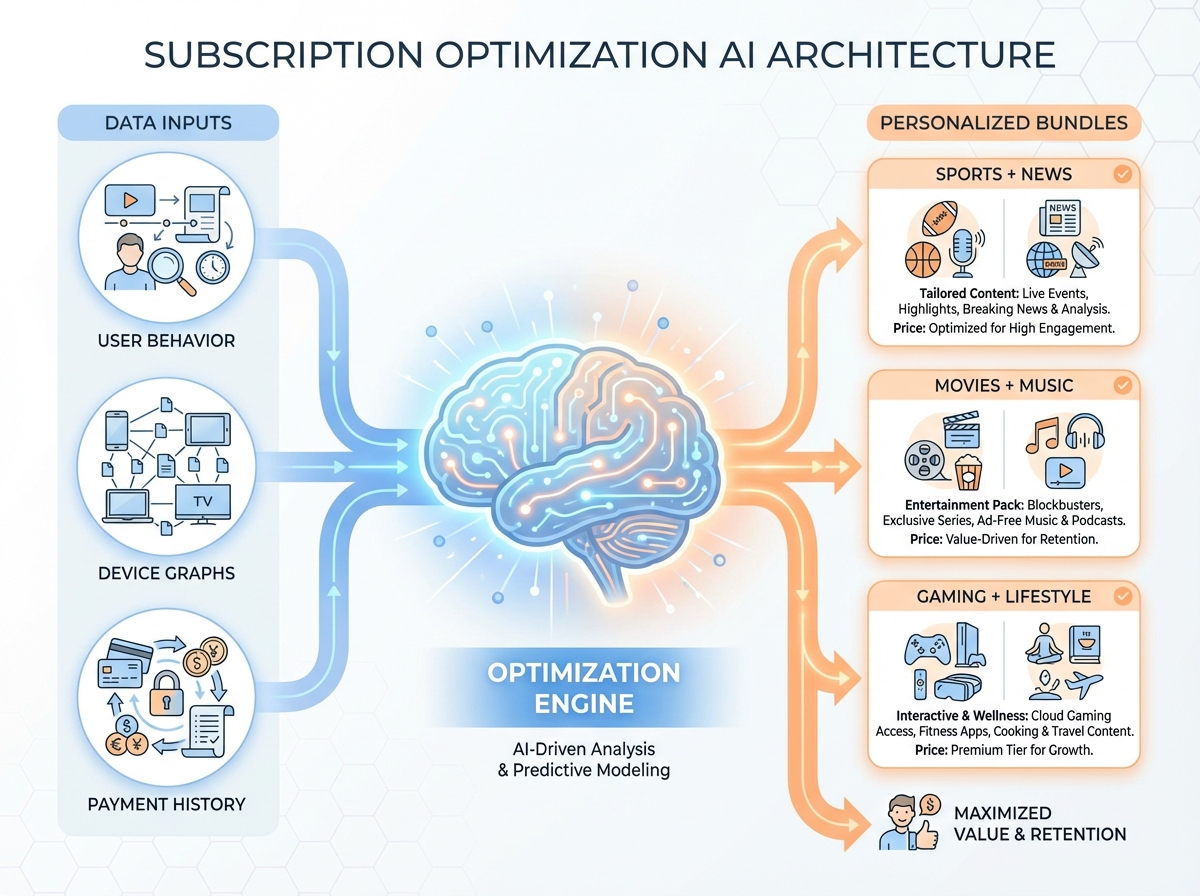
Building a robust subscription optimization AI requires a sophisticated data graph that captures multi-dimensional features across the entire user lifecycle. At the household level, the system must track profile counts, concurrency, and device graphs while maintaining strict compliance with DPDP (Digital Personal Data Protection) norms, as outlined in DPDP-compliant personalization strategies. Behavioral signals—such as watch-time by genre, completion percentages, and search trails—are combined with economic data like historical ARPU and discount sensitivity to create a comprehensive user profile.
The engine relies on several core models to drive decision-making. Usage-based bundle recommendations utilize sequence models to rank candidate bundles that maximize expected utility for the user. This is calculated by weighing the probability of viewing specific content against the bundle price and the perceived savings. Simultaneously, multi-service discount optimization models learn price elasticity to choose the optimal discount that maximizes marginal Lifetime Value (LTV) without cannibalizing standalone margins or violating partner floor prices.
Churn uplift modeling is another critical component, estimating the Conditional Average Treatment Effect (CATE) to identify which segments will benefit most from a bundle offer versus a control group. This allows for highly targeted retention through bundling efforts, focusing resources on high-risk, high-value users. To ensure these offers reach the user effectively, eligibility propensity models classify the likelihood of conversion across different cross-platform subscription offers, whether delivered in-app, via CTV, or through WhatsApp.
Finally, the architecture must include a real-time policy engine with strict guardrails. This engine manages frequency caps, ensures fairness by preventing systematic denial of value to specific cohorts, and adheres to partner economics. "Cool-off" timers are implemented to prevent subscription fatigue solutions from becoming nuisances, with automated error fallbacks to static best-value bundles if the AI-driven recommendation fails to meet confidence thresholds.
3. Hyper-Personalized UX and Personalized Bundle Discovery
The user experience of dynamic subscription bundling 2026 is defined by frictionless, personalized bundle discovery. In-app interfaces now feature dynamic cards and sticky bottom-sheets that surface 2–3 tailored bundle options, highlighting the specific titles or services unlocked for that user’s profile. To combat decision fatigue, many platforms are introducing "creator-led picks" carousels, where trusted influencers curate bundles based on current trends and niche interests.
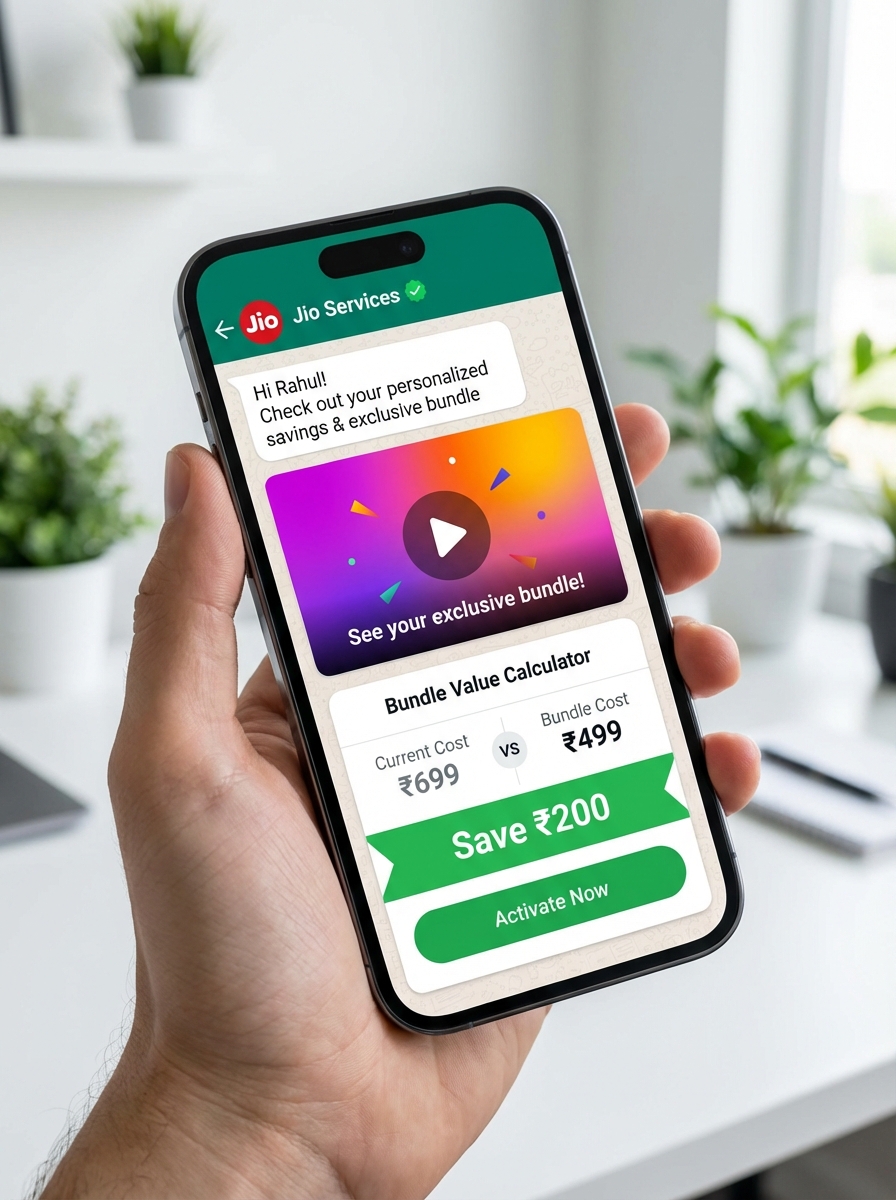
Off-platform engagement is equally vital, with deep links in WhatsApp catalog video marketing, email, or SMS landing users on personalized microsites. These sites often feature a bundle value calculator, an interactive tool that allows users to input their current standalone services and see the direct monthly savings and projected engagement hours offered by the bundle. This transparency builds trust and clearly demonstrates the value proposition of loyalty tier bundle upgrades.
A breakthrough in this space is the use of family plan personalization videos. These are dynamic, role-aware videos sent to each household member, explaining why a proposed family bundle suits their specific needs—such as news for parents and anime for teens. Platforms like TrueFan AI enable this level of hyper-personalization by rendering these videos in real-time, ensuring that every family member feels seen and valued by the service provider.
These videos are often delivered via WhatsApp Business commerce automation (2026), incorporating the user’s name, city, and preferred language to create a VIP experience. For example, a script might say, "Hi Arjun from Delhi, here is your weekend cricket commerce in India and kids pack at ₹499—saving you ₹200 per month compared to individual apps." This level of direct, personalized communication significantly outperforms generic marketing, driving higher click-through rates and faster conversion to bundled plans.
4. Strategic Offer Design and Subscription Stacking Strategies
Effective subscription stacking strategies in 2026 involve the strategic rotation of services to stabilize engagement throughout the year. For instance, an OTT provider might bundle a seasonal sports add-on with a documentary or creator-led pack during the off-season. This ensures that the user always has a reason to stay subscribed, even when their primary interest is not in its peak season. Telcos and DTH aggregators are also adding data top-ups or hardware perks to these stacks to increase the "stickiness" of the offer.
Platform consolidation offers are becoming the standard for reducing "app sprawl." By aggregating long-tail applications under a single sign-on and a unified bill, aggregators like Tata Play Binge simplify the user experience. Research from MPA/Deloitte highlights that DTH and aggregators benefit significantly from these consolidated services, which offer a diversified content library that appeals to broad household demographics. This consolidation is a key pillar in addressing subscription fatigue solutions for the modern consumer.
Pricing mechanics have also become more sophisticated through multi-service discount optimization. Enterprises typically employ a tiered approach: 5–12% discounts for low-elasticity segments, and up to 35% for high-elasticity users, while always protecting partner revenue floors. Micro-commitments, such as quarterly lock-ins with proration, provide a middle ground between monthly flexibility and annual commitment, helping to smooth out churn cycles.
Family plan economics are being re-engineered to account for per-profile marginal costs versus total household ARPU lift. By capping shadow-sharing through strict device policies while simultaneously offering perks for adding verified profiles, platforms can convert "leaked" viewers into legitimate, paying users. This balance of enforcement and incentive is crucial for maintaining the health of the subscription ecosystem in a highly competitive market.
Sources:
5. Ecosystem Marketing and Cross-Platform Orchestration
The success of dynamic subscription bundling 2026 depends on seamless entertainment ecosystem marketing across a complex matrix of channels. This involves co-marketing bundles with telcos, banks, and retailers, allowing users to accrue loyalty points or receive cashbacks for on-time bundle payments. Orchestrating these cross-platform subscription offers requires a unified backend that can trigger nudges and reactivations across app, web, CTV, and retail partner portals.
TrueFan AI's 175+ language support and Personalised Celebrity Videos provide the necessary scale for this orchestration. By using API-triggered videos for cart abandonment or tenure milestones, enterprises can deliver high-impact messages that resonate across diverse linguistic demographics. The platform’s ability to render these videos in under 30 seconds ensures that the marketing remains timely and relevant to the user’s current journey.
Compliance-by-design is a non-negotiable aspect of this orchestration. With the implementation of DPDP norms, systems must handle consent flags in every payload and maintain a per-channel consent registry. TrueFan AI’s ISO 27001 and SOC 2 certifications provide the security posture required for enterprise-grade deployments, ensuring that user data is protected while delivering hyper-personalized content.
Furthermore, built-in moderation workflows are essential to protect brand and talent integrity. These systems automatically block unapproved creative text or sensitive content, allowing marketing teams to scale their efforts without the risk of manual errors. This combination of speed, scale, and security allows for a truly global reach with local relevance, which is the hallmark of successful ecosystem marketing in 2026.
6. Governance, Privacy, and the ROI of Retention
As enterprises deploy subscription optimization AI, governance and privacy must remain at the forefront. Purpose limitation and the ability for users to easily revoke consent via interactive video data capture are fundamental requirements under modern data protection laws. Audit logs of every model decision and a documented rationale for offers ensure transparency, while human review processes for edge cohorts prevent the AI from making biased or unfair pricing decisions.
The ROI of retention through bundling is measured through a rigorous KPI framework. Primary metrics include absolute and relative churn reduction, ARPU uplift, and the attach rate of bundles. Solutions like TrueFan AI demonstrate ROI through significant lifts in engagement and conversion; for example, Goibibo saw a 17% higher read rate on WhatsApp when using personalized video nudges. The ROI formula for these initiatives typically accounts for the change in LTV minus the costs of the bundle, partner fees, and incremental support.
Incrementality testing with holdout groups is the gold standard for measuring the true impact of these strategies. By tracking the LTV lift over a 3–6 month period, enterprises can justify the investment in complex AI models and personalized creative assets. The target payback period for high-velocity OTT services is often under six months, while partner-heavy stacks may aim for a nine-month window.
Safety and fairness are also key components of the ROI equation. By implementing cooldowns and spend caps, companies protect vulnerable segments like students and seniors from over-extending their digital budgets. This ethical approach to subscription fatigue solutions not only ensures regulatory compliance but also builds long-term brand equity and customer trust, which are the ultimate drivers of sustainable revenue growth.
7. Enterprise Roadmap and Implementation for 2026
The implementation of dynamic subscription bundling 2026 follows a structured enterprise-grade roadmap. The first 90 days are focused on a pilot phase, integrating data from CDPs and CRMs while setting up 1–2 initial bundles. Success gates at this stage typically require a minimum 15% churn delta in high-risk cohorts. This is also the time to establish TrueFan AI templates and webhook triggers for automated video delivery.
Between 90 and 180 days, the strategy scales to include CTV, web, and email channels. Retraining cadences for the AI models are established, and more complex elasticity-driven pricing tests are introduced. This phase also sees the introduction of loyalty tier bundle upgrades, rewarding long-term subscribers with exclusive content or reduced pricing on premium stacks.
In the 6–12 month window, the focus shifts to the broader ecosystem. This involves finalizing partner contracts for platform consolidation offers and implementing unified billing systems. At this stage, the system is fully localized for the Indian market, leveraging the surge in digital consumption noted in EY’s 2024-2026 outlook. The goal is a seamless, automated engine that manages millions of subscriptions with minimal manual intervention.
Ultimately, the transition to dynamic bundling is a journey from reactive promotions to proactive, AI-driven relationship management. By following this roadmap, enterprises can effectively end subscription fatigue and build a resilient, high-ARPU business model that thrives in the fragmented media landscape of 2026.
Sources:
Frequently Asked Questions
How is dynamic subscription bundling 2026 different from seasonal promo bundles?
Traditional seasonal bundles are static, one-size-fits-all offers launched during holidays or major events. In contrast, dynamic subscription bundling 2026 uses AI to assemble and price bundles in real time for individual households based on their specific usage patterns, engagement history, and price sensitivity.
What data is needed to power subscription optimization AI under DPDP?
To function effectively while remaining compliant with DPDP, the AI requires pseudonymized behavioral data (watch-time, genre affinity), economic data (tenure, payment history), and explicit consent flags. It avoids PII unless necessary for delivery, ensuring purpose limitation and data minimization.
How do we set multi-service discount optimization without cannibalizing revenue?
Multi-service discount optimization uses price elasticity models to identify the sweet spot where the discount is deep enough to prevent churn but high enough to protect margins. It also incorporates partner floor prices and clawback rules into the decision engine to ensure every bundle remains profitable.
What are best-practice subscription stacking strategies in India?
In India, successful strategies involve co-opetition where OTT players bundle with telcos (like Jio or Airtel) and DTH aggregators (like Tata Play). Best practices include rotating seasonal content (like IPL cricket) with evergreen libraries to maintain year-round engagement and reducing app sprawl through platform consolidation.
How to measure retention through bundling with clean incrementality?
Measure using randomized control trials (RCTs) or matched-market holdouts. Compare churn and ARPU for a group offered a dynamic bundle against a control group with standard pricing to isolate uplift and calculate ROI.
How does TrueFan AI help in reducing subscription fatigue?
TrueFan AI reduces subscription fatigue by creating personalized, celebrity-led videos that explain bundle value in a user’s native language. These role-aware videos increase clarity, trust, and engagement—driving higher click-through and faster conversion to bundled plans.



