Wedding Planning Advance Booking 2026: The Early-Bird Playbook for Vendors, Venues, and Planners
Estimated reading time: ~12 minutes
Key Takeaways
- The November–December 2026 shaadi season will be dominated by dense Shubh Vivah Muhurat clusters, making early booking a must.
- Winning vendors deploy category-specific early-bird offers that prioritize value-density over generic discounts.
- AI-powered personalization—especially save-the-date video creation—drives higher RSVPs and faster decisions.
- An integrated CRM + WhatsApp automation stack reduces friction from tour-to-hold with secure payment links.
- Ethics, consent, and compliance (ISO 27001/SOC 2) are non-negotiable for enterprise-grade execution and trust.
Wedding planning advance booking 2026 is no longer a luxury for the Indian wedding industry; it is a strategic necessity driven by a hyper-competitive landscape and a highly concentrated lunar calendar. As we look toward the final quarter of 2026, the industry is bracing for a monumental surge in demand during the November and December windows.
For vendors, venues, and planners, securing these high-value dates requires a shift from reactive booking to proactive, tech-led acquisition strategies. This playbook outlines the exact frameworks needed to lock in 2026 clients today, leveraging personalization, data-driven marketing, and early-bird incentives.
The November–December 2026 window is characterized by dense Shubh Vivah Muhurat clusters, where prime Saturday and Sunday slots are expected to be fully committed 12 to 14 months in advance. Platforms like TrueFan AI enable vendors to bridge the gap between generic outreach and high-conversion storytelling, ensuring that their brand remains the first choice for couples navigating the 2026 season.
1. The Strategic Necessity of Shaadi Season Preparation Marketing
Shaadi season preparation marketing for 2026 is defined as a coordinated, calendar-based series of campaigns tailored to auspicious date clusters and peak travel windows. These campaigns are designed to drive high-intent inquiries and paid date holds at least 8–12 months before the event window. In the context of 2026, the supply-demand imbalance is projected to be more acute than in previous years due to a rise in multi-day, intentional celebrations.
The 2026 Hindu marriage calendar reveals significant pressure points in November and December. According to industry data, the concentration of auspicious dates—particularly those falling on weekends—will lead to a "first-come, first-served" frenzy. Vendors who do not publish their 2026 availability calendars by late 2025 risk losing their most profitable slots to competitors who utilize scarcity-driven marketing.
Modern Indian couples in 2026 are leaning into expressive, destination-led experiences. This trend toward "intentional luxury" means that the planning cycle has elongated. A destination wedding in Udaipur or a beach ceremony in Goa now requires a minimum 12-month lead time for logistics, guest concierge services, and venue buyouts. To capture this market, vendors must offer limited-time early-bird pricing and value-add bundles before annual rate revisions take effect in early 2026.
Implementing a "last 5 prime dates" urgency trigger in digital communications can significantly increase the velocity of inquiries. By anchoring marketing efforts to the specific Muhurat dates of November and December 2026, vendors can position themselves as organized, authoritative partners who understand the cultural and logistical gravity of the season.
Sources:
2. Category-Specific Bridal Package Early Bird Offers
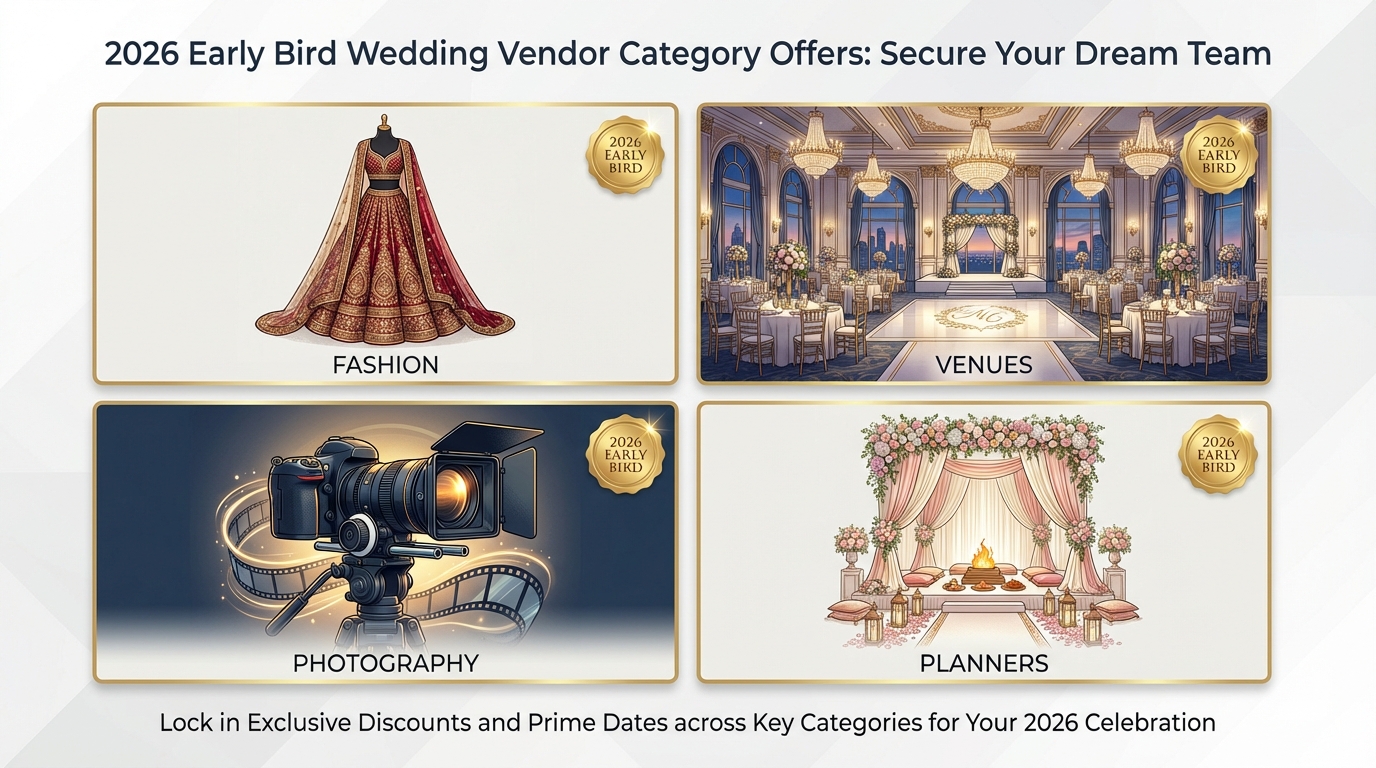
To maximize wedding planning advance booking 2026, offers must be tailored to the specific pain points of each vendor category. A generic discount is rarely enough to move the needle for a high-net-worth 2026 couple; instead, value-density and exclusivity should be the primary drivers of the early-bird framework.
Bridal and Fashion Houses
Designer outfit pre-booking campaigns are essential for 2026, as couture production timelines are expected to stretch to 9 months due to global supply chain shifts in premium textiles. Fashion houses should offer fixed-price bundles—such as a lehenga, sangeet outfit, and coordinated groomswear—with a complimentary trousseau styling session for bookings made 10 months in advance. Measurement of success here is the average order value (AOV) uplift compared to single-piece purchases.
Venues and Hotels
Venue reservation personalization is the key to converting site visits into holds. Hotels should propose "weekday luxury" upgrades for the few non-Muhurat dates in late 2026, offering mandap décor tier bumps or family suite upgrades. Personalizing the walkthrough experience by sending follow-up videos in the family’s native language (Hindi, Marathi, Tamil, etc.) referencing the specific date and guest count can increase tour-to-hold conversion rates by an estimated 20%.
Wedding Planners
Wedding planner consultation offers should focus on reducing the initial friction of the planning process. Offering a free 30-minute planning audit and a custom vendor matrix buildout for couples who book a full-service package within 14 days of their first inquiry creates immediate value. Planners should also implement a "date exclusivity hold," guaranteeing that they will not take another wedding for that specific 2026 weekend while the contract is being finalized.
Photographers and Videographers
In 2026, the trend is moving toward documentary-style storytelling. Wedding photography portfolio videos should be segmented by theme—palace, beach, or intimate—to match the couple's specific vision. An early-booking bundle that includes pre-wedding coverage and a next-day teaser delivery is highly attractive to the "instant gratification" generation of 2026.
Caterers and Hospitality
Catering tasting event invitations serve as the ultimate mid-funnel conversion tool. By hosting exclusive "tasting soirées" where couples can experience a live mocktail bar or a signature dessert counter, caterers can secure bookings on the spot. Measurement should focus on the tasting-to-book conversion percentage and the per-head revenue uplift from premium add-ons.
Fintech and Wedding Loans
A subtopic often missed by competitors is wedding loan personalization. As 2026 wedding budgets increase, offering pre-approved credit limits and EMI illustrations directly within the vendor proposal can facilitate faster decision-making. Providing regional-language explainers for financial products ensures that the decision-makers—often the elders in the family—feel secure and informed.
Sources:
3. Creative Personalization and Save-the-Date Video Creation Services
The creative landscape for 2026 is dominated by hyper-personalization. Save-the-date video creation services have evolved from simple graphic templates to dynamic, AI-driven assets that speak directly to the recipient. These services allow couples and vendors to generate thousands of personalized invites that mention the guest's name, the specific venue in 2026, and even localized travel tips.
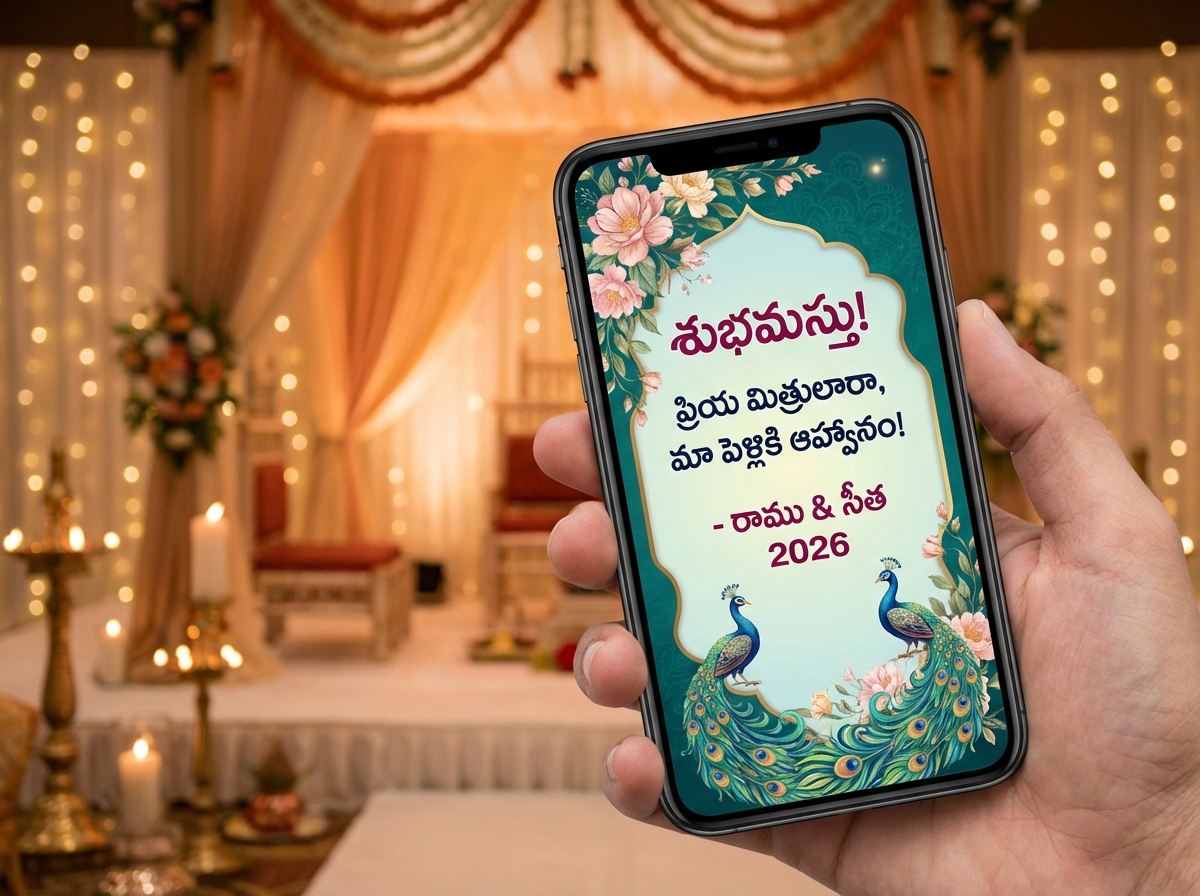
TrueFan AI's 175+ language support and Personalised Celebrity Videos allow for a level of elder-focused engagement previously impossible at scale. For a 2026 wedding, a couple might send a sophisticated English invite to their friends while simultaneously sending a traditional, regional-language video invite to their extended family. This dual-track approach ensures cultural resonance across all guest segments.
Content hubs focusing on pre-wedding shoot locations are another critical asset. By providing city-wise guides—such as Mumbai’s Marine Drive or Jaipur’s Amer Fort—vendors can position themselves as experts in the 2026 aesthetic. These guides should include time-of-day lighting tips and permit requirements, serving as a high-value lead magnet for photography and planning services.
The photography showreels of 2026 must be vertical, high-energy, and optimized for mobile consumption. Adding captions with venue tags and specific Muhurat-friendly offers ensures that the content is not just beautiful, but also conversion-oriented. When these reels are personalized with the couple's names or wedding dates, the engagement rate typically triples compared to generic portfolio displays. This level of personalization is particularly effective for broadcast list personalization strategies, ensuring the campaigns scale efficiently across WhatsApp.
Sources:
- WeddingSutra: 2026 Trends Forecast
- Internal Data: TrueFan AI Enterprise Benchmarks (Goibibo 17% read rate lift).
4. The 2026 Wedding Technology Solutions Stack
To manage the complexities of wedding planning advance booking 2026, an integrated wedding technology solutions stack is mandatory. This stack must bridge the gap between initial discovery on social media and the final payment for a venue hold.
The core of this stack is a robust CRM/CDP (Customer Data Platform) that captures not just the lead source, but also family decision-makers, language preferences, and budget tiers. In the Indian context, the "decision-maker" is often a multi-generational unit. Therefore, the technology must support multi-contact journeys where the groom receives a technical proposal while the parents receive a personalized video greeting.
Automation should be used to trigger WhatsApp follow-ups immediately after a venue tour or a catering tasting. These messages should include secure payment links for date holds, reducing the friction of manual bank transfers. Furthermore, scheduling tools that allow for one-click consultation slots or tasting RSVPs are essential for maintaining momentum in the sales cycle.
Analytics play a crucial role in optimizing the 2026 campaign. By using UTM-based attribution, vendors can see which portfolio video or early-bird offer is driving the most high-value inquiries. Monitoring the "cycle time to contract" allows planners and venues to identify bottlenecks in their sales process and adjust their personalization strategy accordingly.
Security and privacy are paramount in 2026. Any technology solution used must adhere to ISO 27001 and SOC 2-grade processes, as outlined in our Digital India consent-first compliance guide, especially when handling sensitive family data and financial information. Consent-first personalization ensures that the couple’s likeness and data are used ethically throughout the planning journey.
5. Campaign Calendar and Vendor Collaboration Packages
A successful 2026 strategy requires a phased execution that aligns with the natural planning cycle of Indian couples. Vendor collaboration packages are the "secret sauce" for 2026, allowing multiple service providers to pool their resources and offer a seamless, "one-stop" booking experience.
Q1 2026: Awareness and List Building
The first quarter should focus on publishing Muhurat-aligned availability calendars. This is the time to run "lock 2026 rates" notices to capture couples who have just finalized their dates. Teaser portfolio reels and destination explainers should be the primary content drivers. Hosting "taste before you book" pop-ups can help caterers and planners build a warm lead list early in the year.
Q2 2026: Offer Deployment and Mid-Funnel
By the second quarter, the focus shifts to active conversion. Launch designer outfit pre-booking campaigns and summer trunk shows. This is the ideal window to roll out Save-the-date video creation services as a value-add for early bookings. WhatsApp-based RSVP management for tasting events should be in full swing during these months.
Q3 2026: Decision and Contracting
As the November 2026 window approaches, the marketing must become more aggressive. Use venue reservation personalization to close remaining prime dates, perhaps adding weekday upgrade perks for the few remaining slots. Destination wedding packages should emphasize "last few weekends" availability, coupled with rooming list checklists to help couples manage their guest logistics.
Q4 2026: Finalization and Upsell
In the final months leading up to the peak season, the focus is on execution and upselling. Finalize guest communications with our sentiment-driven crisis prevention framework and push pre-wedding shoot locations content for late add-ons. Cross-sell collaboration packages for décor, sangeet choreography, and after-party services to maximize the revenue from each secured booking.
Sources:
6. ROI, Ethics, and Enterprise Standards in 2026
The ultimate measure of success for wedding planning advance booking 2026 is the return on investment (ROI). Solutions like TrueFan AI demonstrate ROI through measurable lifts in RSVP rates and reduced customer acquisition costs (CAC). By automating the personalization of thousands of videos, vendors can achieve a scale of outreach that was previously cost-prohibitive.
Data from 2026 indicates that personalized video nudges see significantly higher read rates than static text. For instance, internal benchmarks show that when an invite or a proposal is accompanied by a personalized video, the participation or response rate can increase by over 3x. This is particularly effective in the Indian wedding market, where the "personal touch" is highly valued.
Ethics and compliance are the foundation of enterprise-grade wedding technology. In 2026, obtaining explicit consent for voice and likeness is non-negotiable. Vendors must ensure that their personalization tools use brand-safe language and respect the cultural nuances of different Indian regions. Moderation filters that block offensive or inappropriate content are essential for maintaining the sanctity of the wedding celebration.
TrueFan AI’s platform provides these safeguards, offering consent-first celebrity use and secure, low-latency rendering. This ensures that every personalized video—whether it’s a save-the-date or a thank-you note—is delivered with the highest standards of quality and data protection.
Recommended Internal Links
- WhatsApp catalog video strategies to power RSVP and offer flows for wedding vendors
- Step-by-step automation guide for WhatsApp-based RSVP and showcase videos
- Playbook for WhatsApp follow-ups, UPI links, and chat-to-booking funnels
- DPDP/consent-first compliance with ISO 27001/SOC 2-aligned communications
- Proactive guest communication and issue-prevention using empathy-led video
Frequently Asked Questions
Why is advance booking so critical for the 2026 shaadi season?
The 2026 season has a high concentration of auspicious dates (Muhurats) falling on weekends in November and December. This creates a supply-demand gap where top-tier venues and vendors are expected to be booked out over a year in advance.
How do save-the-date video creation services improve guest attendance?
Personalized videos address the guest by name and provide specific details in their preferred language. This level of attention makes guests feel more valued, leading to higher RSVP rates and better attendance for destination weddings.
What are the benefits of vendor collaboration packages?
These packages offer a triad of essential services (e.g., Venue + Planner + Photographer) at a bundled price. For the couple, it simplifies the booking process; for the vendors, it reduces marketing costs and ensures a coordinated team on the wedding day.
Can wedding technology solutions help with budget management?
Yes, modern stacks include tools for real-time budget tracking, EMI illustrations for wedding loans, and automated payment reminders, helping couples and planners stay within their financial limits.
How does TrueFan AI ensure the privacy of our wedding data?
TrueFan AI employs enterprise-grade security, including ISO 27001 compliance and strict data moderation filters. All personalized content is generated through consented workflows, ensuring that family photos and details are handled with the utmost care and safety.