B2B fiscal year-end procurement 2026: Video personalization to accelerate Q4 deals and unlock expiring budgets
Estimated reading time: ~10 minutes
Key Takeaways
- Activate personalized video across CFO, CTO, CMO, Procurement, and Legal to drive committee-wide consensus before March 31.
- Use compliance-first videos to preempt DPDP, ISO 27001, and SOC 2 concerns and shorten security reviews.
- Launch budget-expiry urgency campaigns with dynamic tokens and ROI projections to unlock “use-it-or-lose-it” funds.
- Win final comparisons with vendor selection personalization and interactive differentiation presentations.
- Reduce slippage via RFP video automation and clause-specific contract negotiation support.
The landscape of B2B fiscal year-end procurement 2026 is defined by a singular, high-stakes deadline: March 31. For enterprise sales teams operating within the Indian market, this date represents the final threshold for budget utilization, vendor onboarding, and the conversion of “use-it-or-lose-it” allocations into strategic assets.
As the 2026 fiscal cycle draws to a close, the pressure on procurement departments reaches a fever pitch. Decision-makers are no longer just looking for value; they are looking for speed, compliance, and consensus. In this environment, traditional static collateral often fails to bridge the gap between technical requirements and executive approval. Platforms like TrueFan AI enable sales organizations to bypass these bottlenecks by deploying hyper-personalized video content that speaks directly to the unique anxieties of the C-suite and procurement committees.
The following playbook outlines how to leverage video personalization to navigate the complexities of the March 31 deadline, ensuring your deals are not just considered, but prioritized and signed.
1. Multi-stakeholder urgency mapping and decision-maker consensus building
In the current enterprise landscape, the typical buying committee has expanded to include upwards of 10 distinct stakeholders. Achieving decision-maker consensus building is the most significant hurdle to closing high-value contracts before the fiscal deadline. Each stakeholder—from the CFO to the Head of Legal—approaches the purchase through a different lens of risk and reward.
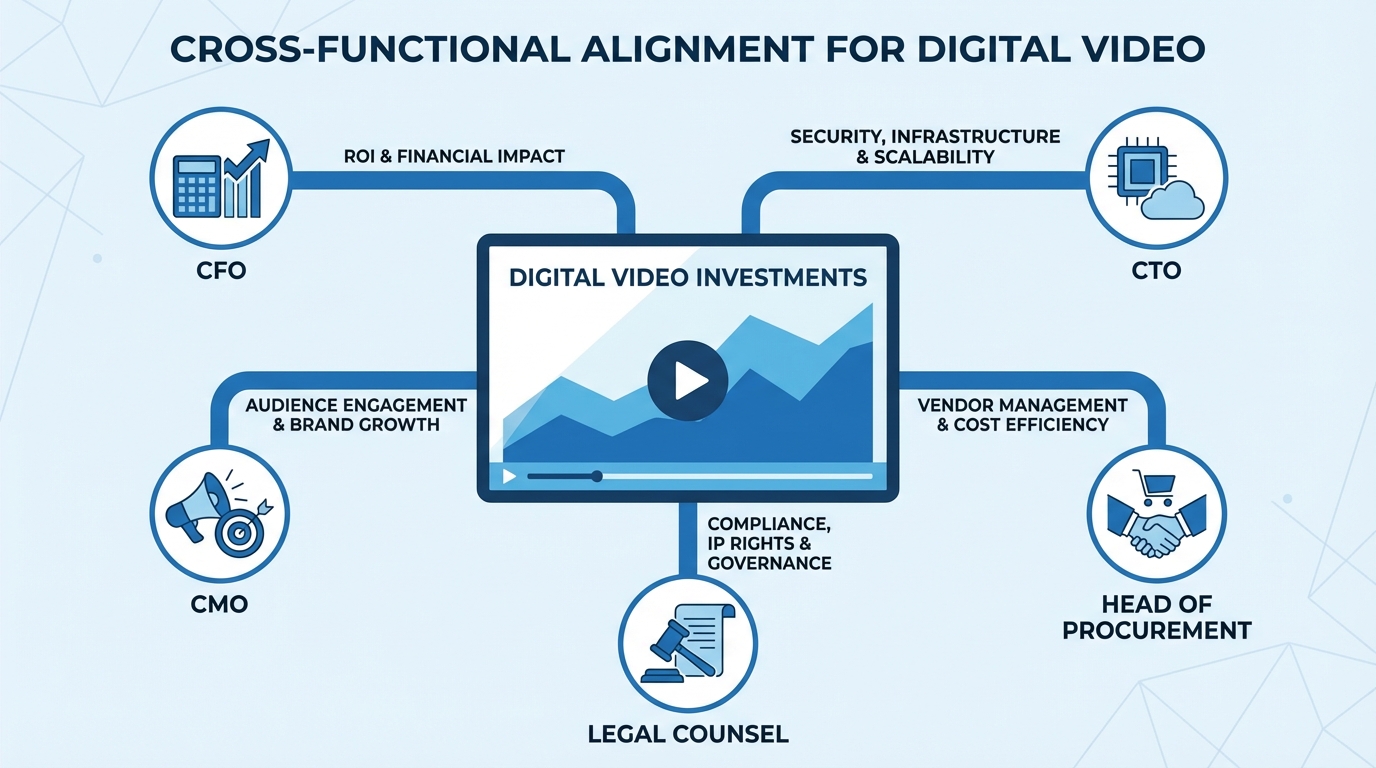
Multi-stakeholder urgency mapping is the strategic process of identifying these individual roles and delivering tailored video artifacts that address their specific “win” for the quarter. By 2026, data suggests that 82% of B2B buyers prefer short-form video over whitepapers when evaluating complex software solutions. To win, your messaging must be aligned across the following five core personas:
- The CFO (Economic Buyer): Focuses on CapEx to OpEx transitions and risk-adjusted ROI. Your video should highlight how the 2026 budget can be absorbed to improve EBITDA impact in the following year.
- The CTO (Technical Buyer): Concerned with security posture, including ISO 27001 and SOC 2 compliance. They require visual proof of data residency and DPDP Act alignment.
- The CMO (Growth Driver): Looks for pipeline velocity and ACV lift. They need to see peer benchmarks and evidence of content repurposability to justify the spend.
- Head of Procurement: Prioritizes supplier risk scoring and SLA transparency. A 60-second video summarizing your policy alignment can save weeks of back-and-forth.
- Legal/Compliance: Focuses on the Digital Personal Data Protection (DPDP) Act 2023. They need clarity on data processing terms and sub-processor management.
By deploying CFO CTO CMO aligned messaging, you ensure that the “Why Now” narrative is consistent across the organization. A single committee-level “Why Us” video that stitches together these metrics can reduce internal friction by providing a unified source of truth for the entire board.
Sources:
2. Procurement committee video engagement and compliance enablement
The final weeks of the fiscal year are often bogged down by the “Procurement Black Hole.” Procurement committee video engagement is a proactive strategy designed to illuminate this process. By delivering procurement compliance videos early in the Q4 cycle, you address the rigorous standards of the Indian regulatory environment before they become deal-breakers.
With the full implementation of the DPDP Act 2023 in 2026, Indian enterprises face unprecedented scrutiny regarding data consent and cross-border transfers. Non-compliance is no longer an option, and procurement teams are tasked with vetting every vendor's data handling practices.
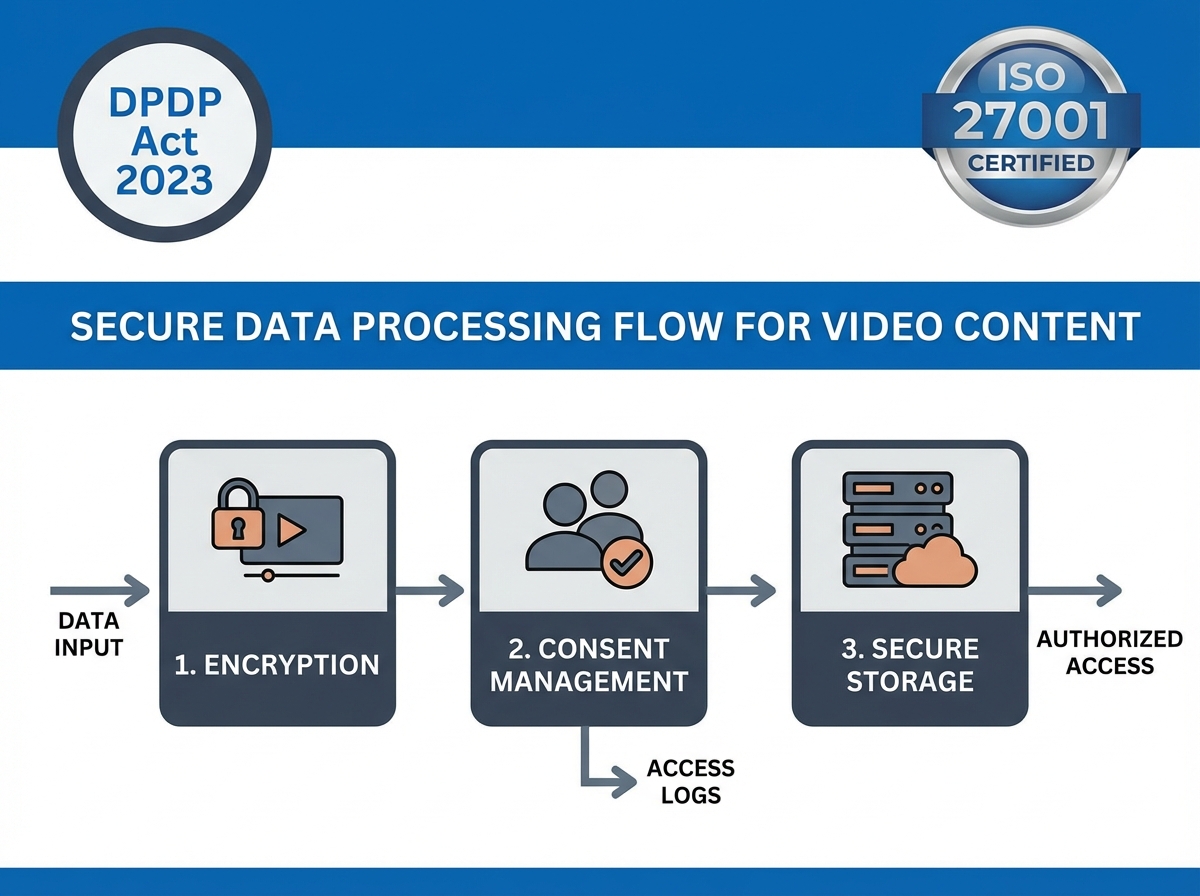
A standardized, compliance-first video series can serve as a “Security TL;DR,” providing the following:
- Compliance Overview (90s): A visual summary of your ISO 27001/SOC 2 certifications and DPDP treatment.
- Data Flow Deep Dive (2-3m): An animated walkthrough of encryption at-rest and in-transit, showing exactly how data is stored and protected.
- Legal Accelerator (60s): A video explaining your standard clauses, negotiable ranges, and redline response SLAs.
These videos should explicitly state your adherence to lawful purpose and consent records. Providing clear opt-out mechanics within the video interface demonstrates a level of transparency that static PDFs cannot match. This approach not only builds trust but also positions your firm as a low-risk partner during the high-stress fiscal deadline marketing B2B window.
Sources:
3. Budget activation: Enterprise budget utilization videos and urgency campaigns
The “use-it-or-lose-it” phenomenon is a powerful driver in B2B fiscal year-end procurement 2026. Many departments find themselves with surplus funds that must be committed by March 31 to avoid budget cuts in the next fiscal year. Enterprise budget utilization videos are designed to tap into this specific urgency.
These videos use dynamic data overlays to call out specific department or regional unused budgets. For example, a video might state: “We’ve identified a ₹50 Lakh surplus in your Q4 marketing budget that could be deployed into our AI-driven personalization suite to hit your 2027 lead targets early.” Solutions like TrueFan AI demonstrate ROI through these highly targeted, data-driven prompts that map directly to procurement codes and category spending.
To execute successful budget expiry urgency campaigns, sales teams should follow a structured personalization schema:
- Dynamic Tokens: Include the company name, business unit, and estimated unused budget range.
- ROI Projections: Show visual graphs of how spending the budget now will impact KPIs like CSAT or lead volume by Q2 of the next year.
- Procurement-Ready Bundles: Offer pre-approved “spending packages” that fit within standard procurement thresholds to bypass lengthy RFP processes.
By combining these videos with a multi-channel approach—Email, WhatsApp Business, and ABM microsites—you create a “fiscal clock” visual that reinforces the March 31 deadline. This strategy effectively transforms a passive vendor into a proactive partner helping the client manage their internal financial obligations.
Sources:
4. Vendor selection personalization and competitive differentiation presentations
As the deadline approaches, the evaluation phase shifts from “What do we need?” to “Who is the safest bet?” Vendor selection personalization is the key to winning this final comparison. Most competitors will send generic slide decks; you can win by delivering competitive differentiation presentations that are tailored to the buyer’s explicit RFP criteria.
A high-impact differentiation video should be structured into four distinct chapters:
- Criteria Recap: Reiterate the buyer’s top requirements and show exactly how your solution scores against them.
- Compliance Delta: Explicitly highlight your DPDP readiness compared to competitors who may still be lagging in Indian data residency requirements.
- Implementation Speed: Provide a visual 30-60-90 day value plan, emphasizing that onboarding can begin immediately upon the March 31 signature.
- Localized Proof: Feature case studies from India-relevant brands to demonstrate market-specific expertise.
By 2026, interactive video will be a standard expectation for enterprise buyers. Allowing committee members to “build their own comparison” within the video player provides you with invaluable analytics. If a CTO spends three minutes watching the security section but skips the ROI chapter, you know exactly where the remaining friction lies. This data-driven approach ensures that your Q4 deal acceleration strategies are based on actual stakeholder behavior rather than guesswork. See the interactive video data capture guide.
5. Automation to remove friction: RFP response video automation and contract negotiation support
The administrative burden of RFPs and contract redlines is the primary reason deals slip past the March 31 deadline. RFP response video automation solves this by generating a 2-3 minute “Watch First” summary of your proposal. Instead of forcing a busy executive to read a 50-page document, you provide a dynamic video with chapters aligned to the RFP index.
This automation process involves:
- Intake: Feeding the RFP requirements into a curated knowledge base.
- Drafting: Automatically generating scripts that address specific stakeholder names and criteria.
- Rendering: Creating high-quality video summaries at scale for every account in your pipeline.
Furthermore, contract negotiation support videos can be used to explain complex legal redlines. If the Legal team is stuck on a liability cap or a DPDP data deletion clause, a 60-second explainer video from your General Counsel can clarify the rationale and offer a path forward. This humanizes the legal process and reduces the back-and-forth emails that often stall procurement.
By automating these touchpoints, you remove the manual friction that typically slows down the final stages of the sales cycle. This ensures that your team is spending their time on high-value negotiation rather than administrative follow-ups, directly supporting your Q4 deal acceleration strategies.
6. The 2026 Q4 deal acceleration strategies cadence (30-Day Playbook)
To successfully navigate the B2B fiscal year-end procurement 2026, your team needs a sequenced cadence that builds momentum toward the March 31 deadline. This playbook ensures that every stakeholder is engaged at the right time with the right message.
30 Days to Deadline (March 1):
- Launch multi-stakeholder urgency mapping videos to all known committee members.
- Distribute the “Why Now” committee TL;DR.
- Confirm all DPDP and security prerequisites are met to avoid last-minute legal blocks.
14 Days to Deadline (March 17):
- Deploy enterprise budget utilization videos to department heads with specific ROI projections.
- Initiate procurement committee video engagement to clear any remaining policy hurdles.
- Schedule deep-dive calls for CTOs and Legal teams using video explainers as the pre-read.
7 Days to Deadline (March 24):
- Send competitive differentiation presentations tailored to the final selection criteria.
- Use RFP response video automation for any final clarifications or “last-mile” questions.
3 Days to Deadline (March 28):
- Deliver contract negotiation support videos for final redline clusters.
- Send a “CFO Value Recap” highlighting the immediate tax and budget benefits of signing before March 31.
1 Day to Deadline (March 30):
- Send a final countdown micro-video with clear signature steps and PO details.
- Confirm the SLA activation timeline to show the client that you are ready to hit the ground running on April 1.
By measuring watch-time by persona and reply rates across this cadence, you can identify which accounts are at risk and deploy “patch” videos to address specific objections in real-time.
7. Implementation, Governance, and FAQ
Executing a video-led procurement strategy requires a robust governance framework, especially under the 2026 DPDP guidelines. Sales teams must ensure that all data used for personalization is handled with strict adherence to consent and purpose limitation.
DPDP Compliance Checklist:
- Lawful Basis: Ensure every stakeholder has opted into receiving personalized communications.
- Transparency: Include a clear privacy notice and opt-out link in every video landing page.
- Data Minimization: Only use the tokens necessary for the personalization (e.g., name, company, budget range).
- Retention: Establish clear policies for when these personalized videos and associated data will be deleted post-deadline.
TrueFan AI's 175+ language support and Personalised Celebrity Videos allow for a level of localization that resonates deeply with regional procurement heads across India, while maintaining the highest standards of security and moderation.
Conclusion
The March 31 deadline is an immovable force in the Indian business landscape. To succeed in B2B fiscal year-end procurement 2026, sales organizations must evolve beyond the static proposal. By implementing multi-stakeholder urgency mapping, procurement compliance videos, and RFP response video automation, you can provide the clarity and confidence required to close complex deals in record time.
Final Action Plan:
- Audit your Q4 pipeline: Identify the top 10 accounts at risk of slipping past March 31.
- Map the stakeholders: Use the CFO CTO CMO aligned messaging framework to identify the specific anxieties of each buyer.
- Deploy the playbook: Start your 30-day cadence today to ensure your solution is the one that gets the final signature.
Sources:
Frequently Asked Questions
How does video personalization impact the speed of B2B fiscal year-end procurement 2026?
Video personalization reduces the “information gap” between stakeholders. By delivering tailored messages to the CFO, CTO, and Procurement, you eliminate the need for multiple discovery calls, often compressing the decision-making cycle by 20-30%.
Is RFP response video automation compliant with the DPDP Act?
Yes, provided the automation platform follows “Privacy by Design” principles. RFP response video automation should only use data provided within the RFP process and must include clear opt-out mechanisms for the recipients.
Can we use video for contract negotiation support?
Absolutely. Short, clause-specific videos can explain the rationale behind legal positions, making it easier for the buyer's legal team to approve redlines without extensive meetings.
What are the primary enterprise buying urgency triggers in Q4?
The primary triggers are budget expiry (“use-it-or-lose-it”), the need to show ROI before the new fiscal year, and the desire to secure 2026 pricing before annual increases in April.
How does TrueFan AI ensure the security of personalized procurement videos?
TrueFan AI utilizes an ISO 27001 and SOC 2 compliant infrastructure. The platform includes built-in moderation to ensure only approved legal and brand language is used, and it supports DPDP-aware data practices, including localized data residency for Indian enterprises.
What metrics should we track for Q4 deal acceleration strategies?
Key metrics include stakeholder coverage (what % of the committee watched the video), watch-through rates for the CFO/CTO, and the reduction in “days-to-signature” compared to non-video deals.