The Enterprise Guide to a URL to video AI generator
Estimated reading time: ~13 minutes
Key Takeaways
- A URL to video AI generator converts live webpages into channel-ready videos, eliminating traditional production bottlenecks.
- Enterprise-grade APIs enable batch rendering, webhooks, and governance to scale across massive catalogs.
- E-commerce workflows turn PDPs into marketplace-compliant videos for Amazon, Shopify, and more—often in under 30 seconds.
- Compliance and brand safety are enforced via metadata parsing, policy checks, and RBAC-backed audit trails.
- TrueFan AI demonstrates measurable ROI with hyper-personalization, multilingual TTS, and dynamic “virtual reshoots.”
The modern digital landscape demands a shift toward a URL to video AI generator to maintain competitive visibility across fragmented consumer touchpoints. As enterprises grapple with the sheer volume of product updates and landing page iterations, web content video automation has emerged as the definitive solution for scaling creative output. By leveraging automated video creation from URL technology, brands can now bypass traditional production bottlenecks and transform static web assets into high-conversion motion content in real-time.
This guide provides a comprehensive blueprint for digital marketers, e-commerce leads, and content operations teams seeking to implement a website to video automation tool. We will explore the technical architecture of a URL-to-video REST API, the nuances of e-commerce product videos, and the specific requirements for 30-second video rendering SLAs. By the end of this analysis, you will understand how AI content transformation is redefining the ROI of digital storefronts and landing pages.
Defining the URL to Video AI Generator in the Modern Enterprise
A URL to video AI generator is a sophisticated enterprise system designed to ingest a public webpage URL and synthesize it into a professional video asset. Unlike basic template tools, this technology fetches deep metadata, including HTML, JSON-LD, and Open Graph tags, to understand the semantic context of a page. It extracts on-page text, high-resolution images, pricing data, and inventory status to fuel an AI content transformation engine.
The core of this system lies in its ability to execute script synthesis and scene planning without human intervention. Once the URL is provided, the engine runs an LLM-based analysis to determine the most persuasive narrative flow, mapping headlines to specific visual proof points. This results in a rendered video—typically between 15 and 60 seconds—that is perfectly aligned with the brand’s visual identity and the target channel’s specifications.
Within the enterprise stack, these tools function as both a no-code website to video automation tool for marketing teams and a robust URL-to-video REST API for developers. This dual-access model allows for manual creation of high-impact landing page videos while simultaneously enabling batch workflows for massive product catalogs. The output is not just a single file, but a suite of channel-specific variants, including 9:16 Reels, 1:1 social feeds, and 16:9 product detail page (PDP) embeds.
Sources:
Market Dynamics: Why Web Content Video Automation is Essential in 2026
The acceleration of generative video in 2026 has fundamentally altered marketing workflows, particularly within the Indian enterprise sector. Market validation is evident in the rapid uptake of automated video creation from URL tools that integrate directly into existing non-linear editing (NLE) environments. This trend signals a move toward hybrid editing workflows where AI-generated drafts serve as the foundation for rapid creative iteration.
Recent industry shifts highlight a massive consolidation in the creative and ad-tech space, emphasizing the need for centralized content orchestration. Major platforms are acquiring specialized AI video firms to bolster their creative pipelines, making URL-driven automation a standard requirement for enterprise-grade content transformation. This consolidation ensures that multi-scene, brand-safe outputs are no longer a luxury but a baseline expectation for global brands.
In India, the push for realism and granular control in AI video has led to the development of localized models that outperform generic global alternatives. These advancements allow a URL to video AI generator to produce content that respects regional aesthetics and linguistic nuances (vernacular video automation in India). As enterprises look to 2026, the ability to take a live URL and output a ready-to-publish asset in under 30 seconds is becoming the primary differentiator in speed-to-market.
Sources:
- Adobe adds OpenAI’s Sora, RunwayML, and Pika to Premiere Pro
- Canva acquires Cavalry & MangoAI to boost creative ad-tech stack
- Bengaluru startup competing with OpenAI Sora heads-on
The Operational Blueprint: How Automated Video Creation from URL Functions
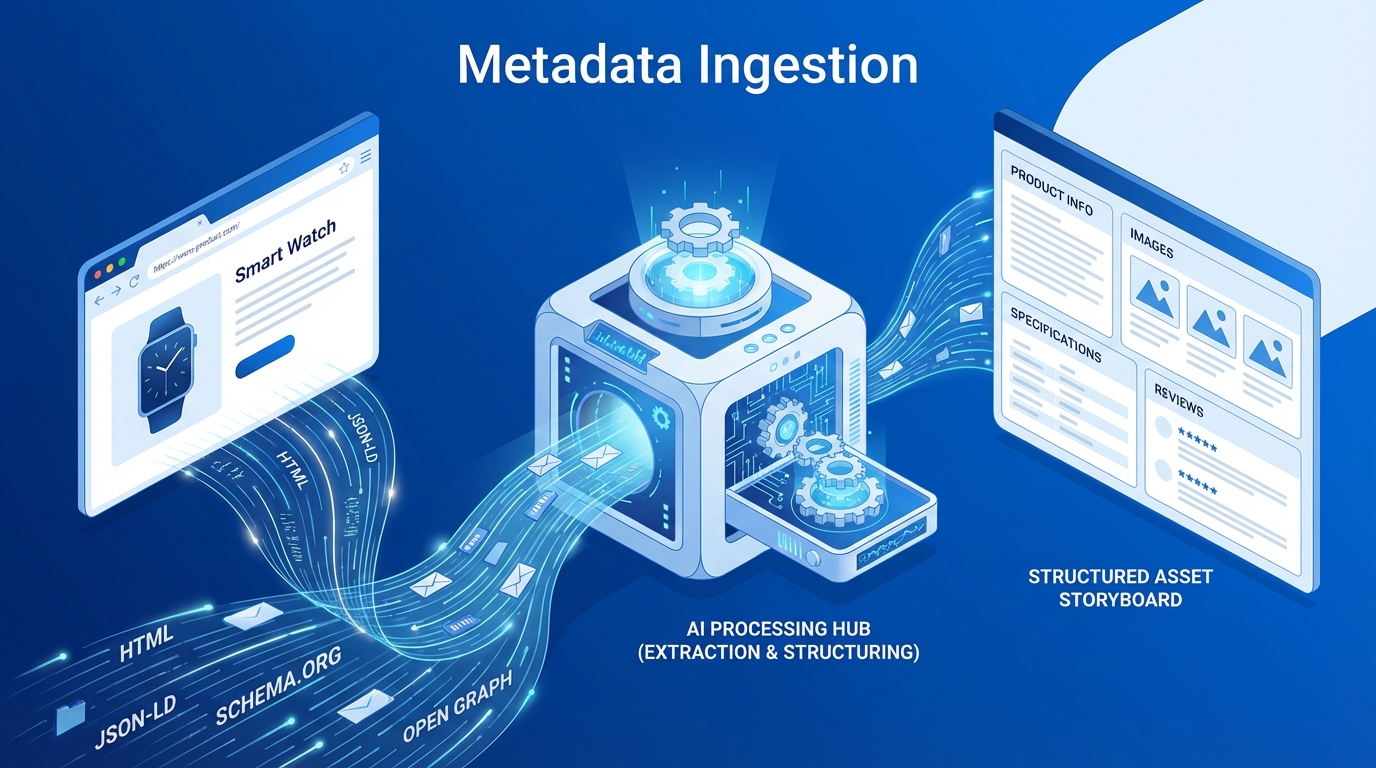
The end-to-end flow of web content video automation begins with a sophisticated URL fetch and compliance phase. The system must respect robots.txt protocols and meta tags while parsing complex HTML structures to extract the “source of truth” for the content. By targeting schema.org/Product or Article metadata, the generator identifies the most critical information, such as price, availability, and customer ratings, ensuring the video is data-accurate.
Once the data is ingested, the asset collection phase initiates quality gates to validate image resolutions and remove backgrounds where necessary. This stage also includes legal and brand safety checks, filtering for prohibited claims or non-compliant language. Platforms like TrueFan AI enable enterprises to maintain these strict governance standards while processing thousands of URLs simultaneously, ensuring that every generated asset remains within brand guidelines (DPDP-compliant personalization strategies).
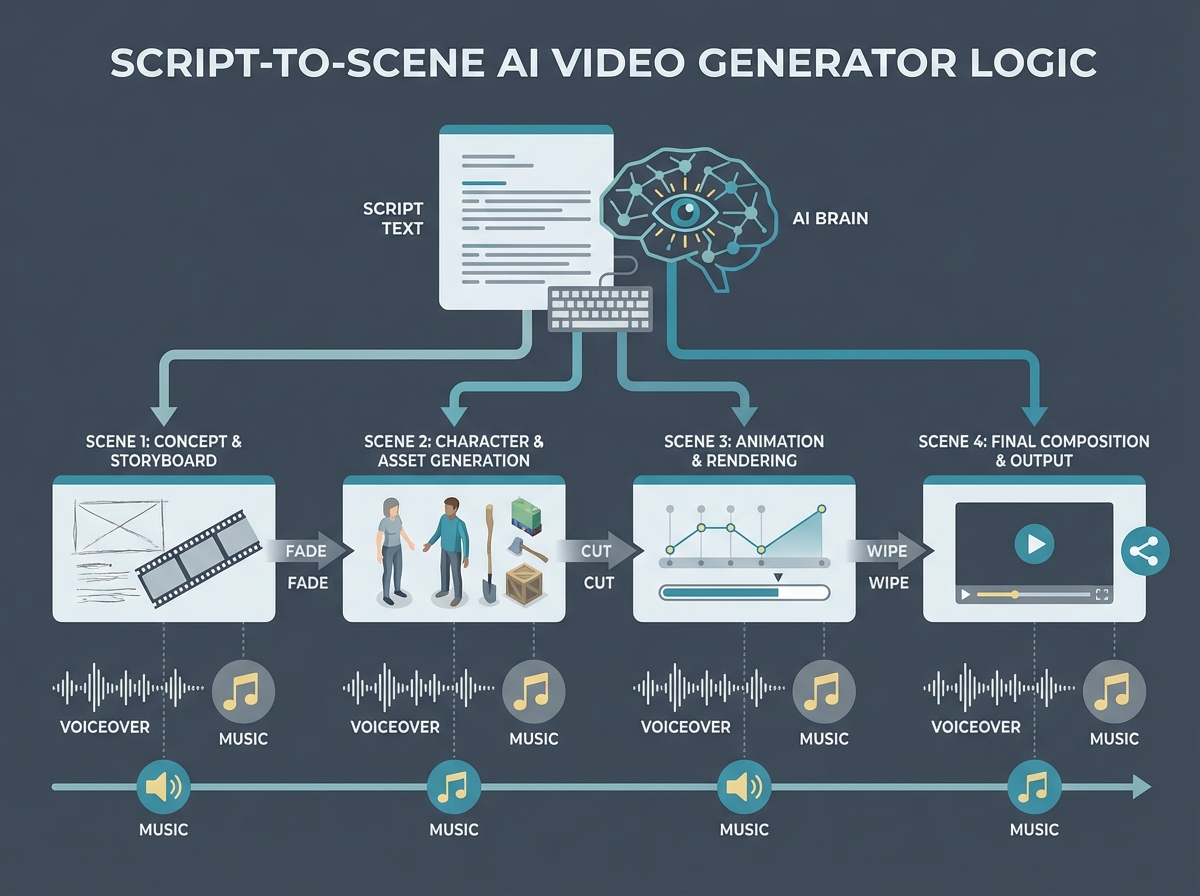
The AI content transformation stage is where the script-to-scene logic takes over. The system condenses product features into a tight narrative, typically 4 to 7 lines, and assigns them to specific scenes with automated transitions. Voiceover and audio are then layered in, utilizing brand-specific voices or localized multilingual text-to-speech. This process concludes with a 30-second video rendering SLA, delivering high-quality MP4 or WebM files ready for immediate distribution.
Sources:
E-commerce Excellence: Transforming Product Pages with a URL to Video AI Generator
For e-commerce brands, the product page to video converter is the most impactful application of this technology. This specialized pipeline transforms a SKU’s product detail page (PDP) into a series of e-commerce product videos tailored for marketplaces like Amazon and Shopify. By automating this process, brands can ensure that every item in their catalog has a high-quality video without the prohibitive costs of traditional filming.
SKU-to-video workflows allow for massive catalog ingestion via CSV or API, applying per-SKU templating that includes dynamic price overlays and colorway variants. This is particularly critical for Amazon listing videos in the Indian market, where marketplace policies recommend at least one video alongside six images for optimal ranking. Ensuring that these assets follow community guidelines and avoid restricted claims is a built-in feature of enterprise-grade URL to video AI generators.
Shopify video integration further streamlines this process by using webhooks to trigger video generation the moment a new product is created or updated. The generated video is automatically uploaded to Shopify Files and embedded into the relevant Online Store 2.0 sections. This seamless loop between the web content and the video asset ensures that the customer experience is always consistent, regardless of how frequently product details change.
Sources:
- Amazon Seller Central India: Video review and community guidelines
- Amazon India: Product image and video recommendations
Developer Integration: Architecting the URL-to-video REST API
For technical teams, the power of a website to video automation tool is unlocked through a robust URL-to-video REST API. This architecture allows for programmatic video generation, enabling developers to build custom workflows that trigger renders based on internal database changes or user actions. A typical API request includes the target URL, a template ID, desired aspect ratios, and locale settings for multilingual support.
The API is designed for high-volume batch operations, supporting rate limits that accommodate enterprise-level scaling. Developers can monitor job status through polling or, more efficiently, via webhooks that notify the system once the 30-second video rendering is complete. This infrastructure is often backed by a cloud-agnostic GPU farm, ensuring that even during peak traffic—such as major sales events—the time-to-first-video remains consistent.
Security and compliance are paramount in the developer-ready stack. Enterprise solutions provide ISO 27001 and SOC 2 certified environments, ensuring that all data processed through the URL to video AI generator is encrypted and handled with PII minimization. Role-based access control (RBAC) and audit logs provide the necessary oversight for large organizations to manage their content pipelines with total transparency and security (interactive video data capture, interactive video data capture guide).
Strategic ROI: Why TrueFan AI Leads the Enterprise Content Revolution
TrueFan AI's 175+ language support and Personalised Celebrity Videos represent the pinnacle of hyper-personalization at scale. By integrating these capabilities with a URL to video AI generator, enterprises can create one-to-one videos that include the customer's name, city, and specific purchase history. This level of dynamic content video generator capability ensures that the video is not just a generic product summary, but a personalized message that drives significantly higher engagement.
Solutions like TrueFan AI demonstrate ROI through massive efficiency gains and measurable performance lifts. For instance, major brands have achieved milestones such as 354,000 personalized videos in a single day during peak festival seasons. This scale is impossible with manual production, saving thousands of creative production hours while simultaneously increasing watch-through rates and conversion metrics on product pages.
Beyond speed, the ability to perform virtual reshoots and AI-driven editing allows brands to swap lines or offers in existing footage without re-filming. This agility is crucial for A/B testing creative hooks and CTAs in real-time. By leveraging the TrueFan URL converter, businesses can move from a static web presence to a dynamic, video-first strategy that adapts to market changes in seconds, ensuring a future-proof content ecosystem.
Recommended Internal Links
- URL to Video AI Generator: Turn Any Webpage Into Videos
- Vernacular Video Automation India: Scale Multilingual Reach
- Interactive Video Data Capture: DPDP-Compliant 2026
- Interactive Video Data Capture: DPDP-Compliant Guide 2026
- DPDP Compliant Personalization: Privacy-First Marketing
Frequently Asked Questions
What is a URL to video AI generator?
A URL to video AI generator is an enterprise-grade system that converts a webpage URL into a professional video. It uses AI content transformation to parse HTML, extract product data, and generate scripts, voiceovers, and scenes automatically. This technology allows brands to scale video production without the need for manual filming or editing.
How do I convert a product page to a video?
To convert a product page, you simply input the PDP URL into a product page to video converter. The system analyzes the title, images, and features to create e-commerce product videos in various aspect ratios. Platforms like TrueFan AI automate this entire process, ensuring the output is brand-compliant and ready for marketplace upload.
What are the benefits of a URL-to-video REST API?
A URL-to-video REST API allows developers to automate video creation at scale. It supports batch processing of thousands of URLs, provides webhooks for real-time status updates, and integrates directly into CMS or PIM systems. This is essential for enterprises managing large catalogs that require frequent updates.
How fast is 30-second video rendering?
In an enterprise environment, 30-second video rendering refers to the time it takes for the AI to process a URL and deliver a completed video asset. High-performance systems use GPU autoscaling to maintain this speed even during high-concurrency periods. This rapid turnaround is critical for real-time marketing and dynamic ad campaigns.
Does web content video automation work with Shopify and Amazon?
Yes, web content video automation is designed for seamless Shopify video integration and Amazon listing videos. The system ensures that all generated assets meet the specific technical and community guidelines of these platforms. This allows for automated syncing of videos to product listings, improving SEO and customer trust.
Can I personalize videos for individual customers?
Absolutely. By using a dynamic content video generator, you can insert personalized elements like names, locations, or purchase history into the video at the time of rendering. This hyper-personalization is a core feature of advanced platforms, enabling one-to-one communication at the scale of millions of users.