
Pre-monsoon healthcare marketing 2026: India’s enterprise playbook for seasonal illness prevention and hyper-personalized ROI
Estimated reading time: ~12 minutes
Key Takeaways
- March–April is the prevention window for India—activate localized campaigns before monsoon-borne risks surge.
- Hyper-personalized WhatsApp videos convert anxiety into action with region, language, and household-level relevance.
- Data-driven triggers (vector indices, water alerts, climate bands) power timely offers without fear-mongering.
- Commerce meets care via tailored insurance riders, purifier AMCs, and wellness subscriptions tied to real risks.
- Measure preventive care ROI with test/control rollouts and conversion KPIs like bookings, policy leads, and subscriptions.
The March–April window in India represents a critical inflection point for the healthcare and consumer wellness sectors. As the subcontinent transitions from the peak of summer into the early pre-monsoon phase, shifting humidity levels and rising temperatures create a fertile environment for vector-borne and water-borne pathogens. For marketing leaders, this period is the decisive moment for pre-monsoon healthcare marketing 2026, where the objective shifts from general brand awareness to high-stakes seasonal illness prevention.
In 2026, the convergence of erratic weather patterns and heightened digital health literacy demands a more sophisticated approach than generic mass-media campaigns. Success now hinges on turning seasonal health anxiety into timely, localized actions through preventive wellness campaigns India can trust. By leveraging regionally relevant, family-centric messaging delivered via short, personalized videos on WhatsApp, enterprises can bridge the gap between awareness and conversion.
The ultimate goal of this playbook is to demonstrate how a data-driven personalization model can drive measurable preventive care ROI. Whether you are managing a hospital network, a diagnostic chain, or a consumer health brand, the ability to deliver family health protection videos that resonate at a household level is the key to securing higher booking rates and long-term customer loyalty.
Why March–April is India’s prevention window (Monsoon disease awareness)
The late summer to early pre-monsoon period (March–April) is scientifically recognized as the primary window for vector breeding stabilization. As temperatures rise and humidity begins to climb, the vector indices for Aedes aegypti (dengue) and Anopheles (malaria) show early spikes, particularly in urban micro-climates. Early intervention during this window is not merely a marketing opportunity; it is a public health necessity that reduces the overall morbidity and system load on India’s healthcare infrastructure.
According to the NCVBDC National Strategic Plan for Malaria Elimination 2023–27, surveillance and vector seasonality are the cornerstones of the elimination roadmap. In 2026, erratic weather patterns have driven earlier campaign starts, as brands move away from reactive marketing to proactive inventory and message management. This shift is essential for maintaining a competitive edge in a landscape where consumer attention is increasingly fragmented.
Early signals for dengue malaria prevention
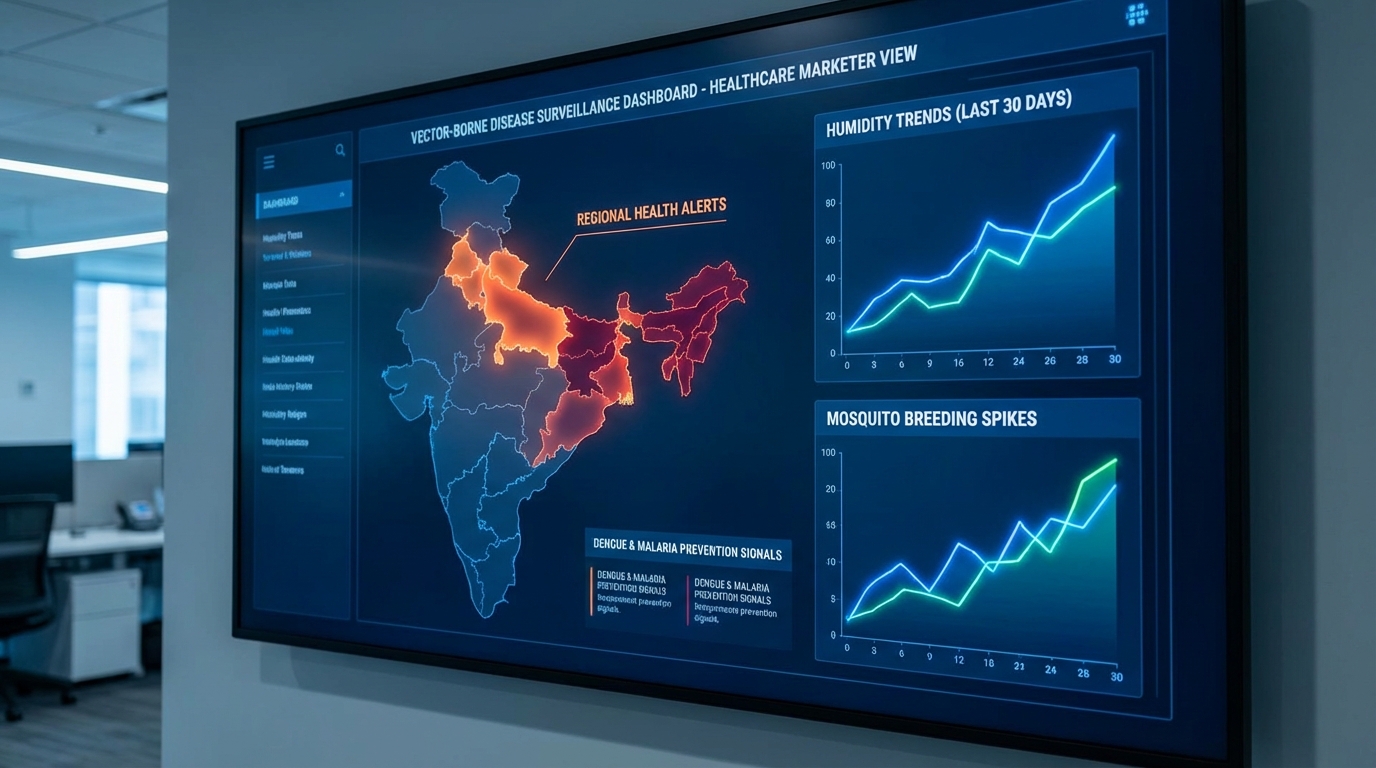
Enterprises must define “regional health alerts” as micro-geography triggers derived from district-level public health bulletins and vector indices. By monitoring these signals, marketers can time their creative assets to hit exactly when the local risk is escalating. This precision ensures that dengue malaria prevention messages are perceived as helpful advisories rather than intrusive advertisements.
The messaging pillars for this sub-segment should focus on household protection—such as the use of bed nets and repellents—and source reduction, specifically targeting stagnant water in coolers and flowerpots. Early symptom recognition is another critical pillar; educating the public on when to test and when to consult a professional can significantly improve patient outcomes and drive traffic to diagnostic partners.
Water-borne and respiratory risks that rise before the rains
While vector-borne diseases dominate the headlines, the “first flush” of the monsoon often leads to significant water contamination risks. Even before the heavy rains, the shift from dry heat to humidity can aggravate respiratory symptoms and gastroenteric illnesses. This makes the pre-monsoon window the ideal time for water purifier campaigns and hygiene-focused messaging.
Brands should emphasize safe storage, the necessity of boiling water or using RO systems, and the importance of filter replacement cycles. Messaging that highlights hand hygiene and surface disinfection in kitchens provides a holistic view of seasonal illness prevention. By addressing these often-overlooked risks, healthcare marketers can position themselves as comprehensive wellness partners for the Indian household.
Sources:
- NCVBDC National Strategic Plan for Malaria Elimination 2023–27 (PDF)
- Exchange4Media: Monsoon marketing behavior of Indian brands
- Exchange4Media: Erratic 2026 weather drives earlier campaign starts
Personalization that turns anxiety into action (Preventive wellness campaigns India)
In the 2026 landscape, generic health tips are no longer sufficient to drive enterprise-level growth. The modern Indian consumer expects a personalization model that accounts for their specific identity, location, and risk profile. Effective preventive wellness campaigns India must integrate multiple data layers—including name, age band, family composition, and even the nearest available clinic or pharmacy—to create a seamless user journey.
Platforms like TrueFan AI enable brands to synthesize these data points into hyper-personalized content that speaks directly to the individual's needs. By matching regional health alerts to specific pincodes, enterprises can deliver messages that feel like a personal consultation. This level of relevance is what transforms a passive viewer into an active participant in their own preventive care.
Immunity booster personalization that respects science
Tailoring supplement education and offers by age and life-stage is a critical component of immunity booster personalization. Marketers must move beyond “one-size-fits-all” vitamins and instead provide evidence-based guidance that respects scientific rigor. For instance, a campaign might target elderly residents with Vitamin D and B12 education, while focusing on zinc and ORS backups for families with young children.
Offer design should include time-bound preventive kits and caregiver bundles that simplify the purchasing process. To drive conversions, brands can utilize vitamin supplement urgency cues, such as limited-time offers or location-aware stock status updates. However, it is paramount to always include a “consult your doctor” disclaimer to maintain trust and clinical integrity.
Medical checkup reminders that actually get booked
The traditional “reminder” email is often ignored. To achieve a high booking rate, medical checkup reminders must follow a strategic sequence: educate the user on why the March–April window matters, present a personalized bundle (e.g., CBC, platelets, LFT/RFT), and offer immediate slots at the nearest partner lab. This journey should culminate in a one-tap WhatsApp quick-reply booking.
Friction-killers are essential here. Auto-filling user details, providing a map pin for the nearest lab, and offering a “reschedule” option directly within the chat interface can significantly reduce drop-offs. By making the process as easy as possible, healthcare providers can ensure that their preventive care services are utilized before the seasonal peak hits.
Family health protection videos that build trust on WhatsApp
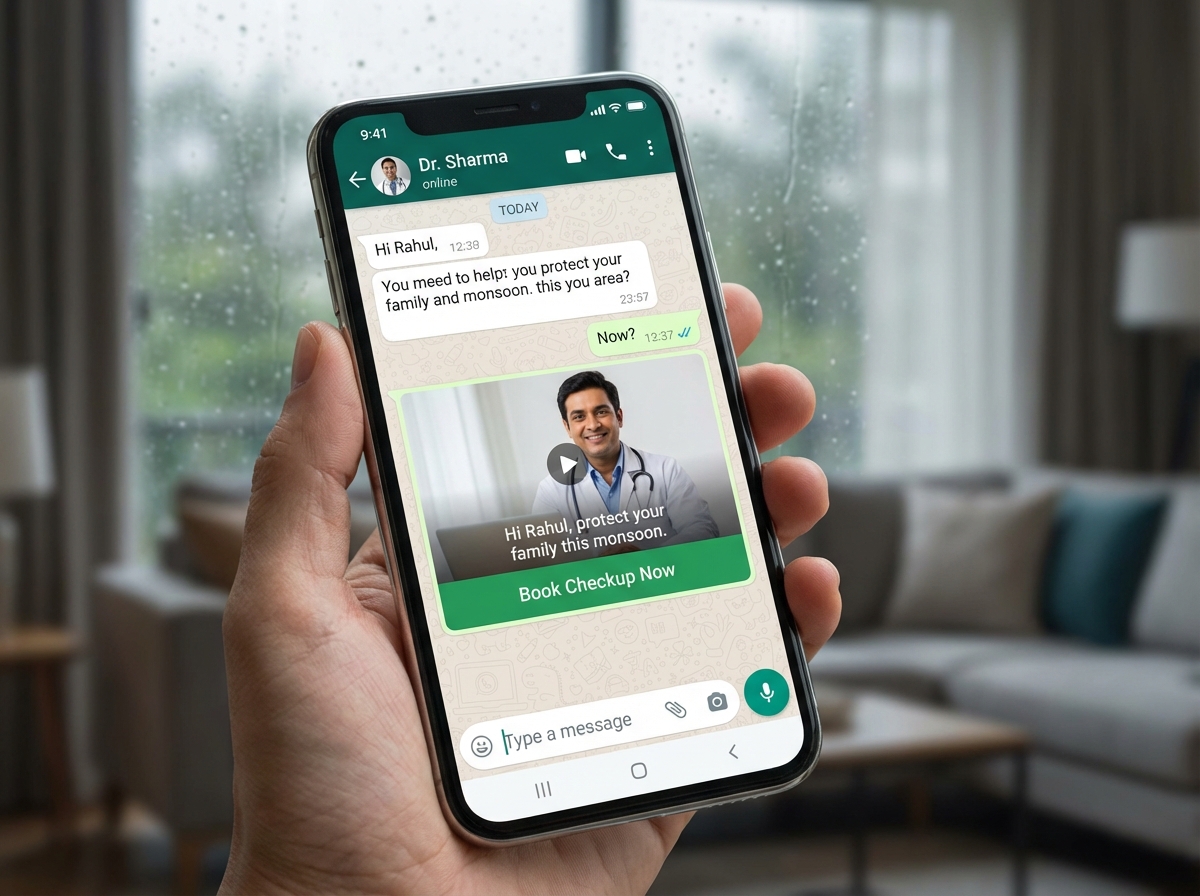
Mobile-first, personalized videos are the gold standard for building trust in 2026. These family health protection videos, typically 20–40 seconds in length, should feature the recipient's name, their preferred regional language, and mentions of their specific locality. Using a regional celebrity or a trusted doctor as a Key Opinion Leader (KOL) adds an extra layer of credibility.
The delivery mechanism is just as important as the content. WhatsApp remains the primary channel for engagement in India, with SMS and email serving as fallbacks. A video that provides two or three concrete household actions—such as checking for stagnant water or scheduling a service—paired with a clear CTA, is far more effective than a static image or a long-form article.
Sources:
- afaqs!: Five healthcare marketing trends for 2026 in India
- TrueFan AI Enterprise Personalization Overview
Commerce meets care—seasonal offers without fear-mongering (Health insurance seasonal offers)
The challenge for healthcare marketers is to drive commerce without resorting to fear-mongering. In 2026, the most successful campaigns are those that position products and services as essential tools for family empowerment. This is particularly true for health insurance seasonal offers, where the focus should be on regional riders that provide tangible benefits, such as cash benefits for vector-borne diseases or OPD coverage for seasonal flu.
Insurance providers must ensure that all claims and disclaimers are strictly compliant with the IRDAI Insurance Advertisements and Disclosure Regulations 2021. By tailoring premiums and illustrations based on the user's age, city, and claims history, insurers can present a value proposition that is both relevant and transparent. This approach builds long-term preventive care ROI by fostering a sense of security rather than anxiety.
Water purifier campaigns tied to municipal water alerts
Water purifier brands can achieve significant lift by tying their marketing efforts to municipal water quality alerts. When a city issues a notice regarding TDS levels or contamination, it creates a natural trigger for water purifier campaigns. These campaigns should push RO/UV value propositions, filter change reminders, and AMC (Annual Maintenance Contract) offers directly to the affected residents.
The creative assets should be highly specific, showing the user’s “last service date” and recommending a filter set based on their local water profile. Embedding a booking CTA for a service technician or a demo of a new model ensures that the brand is present at the exact moment the consumer is considering their water safety.
Mosquito repellent marketing synced to vector indices
Similar to water alerts, mosquito repellent marketing should be synced to NCVBDC vector index movements. When a case uptick is detected in a specific region, brands can launch educational content on correct usage and frequency. Bundling family packs and offering “subscribe-and-save” models helps ensure that households are never caught without protection.
Creative assets for these campaigns should be practical. For example, a video could show the “recommended pack size” based on a household's square footage or provide safety tips for using repellents around children. This level of detail positions the brand as a helpful advisor in the fight against dengue and malaria.
Wellness subscription India bundles for households
The rise of the wellness subscription India model allows households to access a tiered plan that includes diagnostic credits, teleconsults, and regular refills of essentials like repellents and filters. Quarterly billing cycles synced to the seasons ensure that families are prepared for the specific risks of each quarter.
Upselling opportunities within these subscriptions can include adding family dependents, chronic-condition add-ons, or access to an emergency doctor-on-call service. By bundling these services, enterprises can create a steady stream of revenue while providing comprehensive care that scales with the family's needs.
Sources:
- IRDAI Insurance Advertisements and Disclosure Regulations 2021
- IRDAI Guidance on Health Insurance Disclosures
Journey orchestration and measurement for preventive care ROI
Orchestrating a pre-monsoon campaign at scale requires a robust segmentation and trigger logic. Marketers must move beyond broad demographics to a grid that includes IMD climate bands, pincode-level risk, family composition, and language preference. This granular approach ensures that the right message reaches the right person at the most impactful time.
Measuring the success of these campaigns requires a sophisticated KPI architecture. While awareness metrics like video view-through rate (VTR) are important, the true measure of preventive care ROI lies in conversion metrics: checkups booked, qualified policy leads, and completed sales of wellness subscriptions. Attribution models should account for the educational nature of these flows, often using an assisted attribution window to capture the full impact of the campaign.
Segments, triggers, channels, and language strategy
The segmentation grid should be dynamic, allowing for real-time adjustments based on regional health alerts. For example, a “high-risk” segment in a specific pincode might receive a WhatsApp video about dengue prevention, while a “low-risk” segment in a different climate band receives a message about immunity boosters.
Triggers can include everything from weather anomalies and municipal water alerts to internal data like cart abandonment or a policy's claim anniversary. WhatsApp-first delivery is essential for engagement, but SMS and email remain vital for reaching segments with lower digital adoption or for providing richer, long-form content.
KPI architecture and attribution for preventive care ROI
To accurately calculate ROI, enterprises should implement a region-level test/control design with staggered rollouts. This allows marketers to compute the incremental lift against a March–June baseline. Key funnel KPIs include:
- Awareness: VTR and CTR from monsoon disease awareness assets.
- Consideration: Checkup form starts, policy quote views, and plan comparisons.
- Conversion: Completed bookings, sales, and subscription sign-ups.
Reporting should be conducted on a daily basis for operational adjustments, with weekly learning agendas to refine creative and targeting. A post-monsoon Quarterly Business Review (QBR) is essential for capturing learnings that will inform the 2027 strategy.
How TrueFan AI powers enterprise-grade pre-monsoon activation (Family health protection videos)
TrueFan AI's 175+ language support and Personalised Celebrity Videos provide the technological backbone for population-scale pre-monsoon activation. By automating the creation of hyper-personalized content, the platform allows enterprises to reach millions of households with messages that feel uniquely tailored. This capability is particularly powerful for family health protection videos, where the emotional connection to a trusted figure can drive significant behavioral change.
Solutions like TrueFan AI demonstrate ROI through higher engagement rates and lower cost-per-action compared to traditional digital advertising. The platform’s ability to render personalized videos in under 30 seconds and deliver them via WhatsApp ensures that brands can respond instantly to emerging health risks.
Hyper-personalized, multilingual videos at population scale
The ability to generate content in 175+ languages is a game-changer for the Indian market, where linguistic diversity is a major barrier to effective communication. TrueFan AI’s platform ensures perfect lip-sync and voice modulation, making the personalized videos indistinguishable from a direct message. This “consent-first” approach, backed by ISO 27001 and SOC 2 certifications, ensures that data privacy is never compromised.
Data merge fields for pincode, language, and risk alerts
The power of the platform lies in its data merge capabilities. By injecting fields such as {first_name}, {pincode}, {nearest_lab}, and {risk_alert_text} directly into the video, brands can create a highly relevant experience. This level of detail has been shown to result in significantly higher CTRs and booking completions compared to generic creatives.
Templates for dengue malaria prevention and water purifier campaigns
TrueFan AI provides specialized template packs for various pre-monsoon use cases:
- “Vector Shield”: Focuses on dengue malaria prevention with repellent bundles and checkup CTAs.
- “Immunity Ready”: Combines immunity booster personalization with vitamin supplement urgency and refill reminders.
- “Safe Water Start”: Drives water purifier campaigns with AMC reminders and installation bookings.
Sources:
30-day launch plan for March–April (Seasonal illness prevention)
Executing a successful pre-monsoon campaign requires a disciplined 30-day operational calendar. This plan ensures that all data, creative, and compliance hurdles are cleared before the peak risk window begins.
Week 1: Readiness and Data Audit
The first week is dedicated to data audits and consent checks. Marketers must ensure that their CDP/CRM fields are populated with the necessary merge data, such as pincodes and language preferences. This is also the time to finalize IRDAI disclosure templates for insurance offers and load initial risk-alert copy variants. Creative teams should shoot the base footage with brand ambassadors or KOLs, which can then be used for virtual reshoots.
Week 2: Pilot and Learn
A soft launch in 3–5 cities across different climate bands allows for A/B testing of CTAs and entry points. Marketers should monitor early KPI gates, such as VTR and booking rates, to refine the approach. Testing whether a name mention in the first 5 seconds of a video improves retention is a critical learning for this phase.
Week 3: Scale-up and Commerce Tie-ins
With the pilot data in hand, the campaign scales to a national level. This week focuses on rolling out vector and water-triggered campaigns, enabling repellent/purifier bundles, and launching wellness subscription India offers. Insurance providers should spin up their rider explainer flows to coincide with the rising awareness of seasonal risks.
Week 4: Optimize and Expand
The final week is about refinement. Brands should add pediatric and elderly variants to their messaging and expand their reach into Tier-2 and Tier-3 cities using local languages. Publishing doctor-led Q&A snippets can help address common concerns and further build trust as the monsoon season officially begins.
Playbook: “Pincode-to-CTA” decision tree
- Scenario A: If vector index ↑ and recent rain detected: Trigger dengue malaria prevention explainer → offer repellent bundle → provide checkup slot CTA.
- Scenario B: If municipal water alert issued: Trigger “Safe Water Start” flow → offer purifier AMC/filters → provide demo/installation booking CTA.
- Scenario C: If no immediate alerts (low risk): Trigger “Immunity Ready” flow → highlight vitamin supplement urgency → offer wellness subscription India upsell.
Script blueprint for a 30s family health protection video
- Hook (0–3s): “Hi {first_name} from {locality}…” delivered in {language}.
- Risk (3–10s): “{risk_alert_text} has been noted in your area—here’s how to protect your family.”
- Action (10–22s): Provide two concrete tips, such as checking for stagnant water or using specific repellents.
- CTA (22–30s): “Book your pre-monsoon checkup at {nearest_lab} | Claim your {policy_rider_name} | Schedule your purifier service.”
Compliance checklist (India)
- Insurance: Add IRDAI-compliant disclaimers; avoid benefit guarantees; display T&Cs clearly.
- Health Tips: Align language with MOHFW/NCVBDC guidelines; avoid “cure” claims; always include “consult your doctor.”
- Data Privacy: Ensure consent-based personalization; provide clear opt-out options; encrypt all PII (Personally Identifiable Information).
Frequently Asked Questions
When is the best time to start pre-monsoon healthcare marketing in India?
The ideal window is March–April. This period allows brands to reach consumers before the peak of the monsoon, focusing on seasonal illness prevention and preparing households for rising vector and water-borne risks.
How does personalization improve the ROI of preventive care campaigns?
Personalization—using a recipient's name, location, language, and local regional health alerts—boosts engagement and trust. TrueFan AI’s 175+ language support and Personalised Celebrity Videos help increase bookings and qualified insurance leads.
What are the key compliance requirements for health insurance offers in India?
All health insurance advertisements must comply with IRDAI regulations—use clear disclaimers, avoid guaranteed benefit claims, and ensure accurate product and rider naming across creatives.
Can personalized videos be used for water purifier and mosquito repellent marketing?
Yes. Personalized videos can be triggered by municipal water alerts or vector index spikes, prompting actions like booking a filter service or purchasing a repellent bundle tailored to household size.
How do you measure the success of a pre-monsoon wellness campaign?
Track engagement (VTR, CTR) and conversion metrics (checkups booked, policy leads, subscription sign-ups). Use region-level test/control designs to calculate incremental lift versus a March–June baseline.



