
IPL 2026 real-time marketing: The enterprise playbook for AI-personalized cricket videos at scale
Estimated reading time: ~10 minutes
Key Takeaways
- Winning IPL 2026 requires sub-30-second signal-to-video workflows that trigger on live match events
- Localization at scale (175+ languages, Hinglish, vernacular) drives authenticity and higher engagement
- WhatsApp-first automation for offers, fantasy triggers, and match moments lifts CTRs and retention
- DPDP-aligned consent, disclosures, and sentiment-aware fallbacks protect brand safety
- ROI intelligence ties sponsorship moments to installs, redemptions, and incremental revenue
IPL 2026 real-time marketing represents the pinnacle of digital fan engagement, defined as AI-triggered, hyper-personalized video content that launches within 30 seconds of live match events. Whether it is a crucial wicket, a blistering 50, or a high-stakes super over, these videos are delivered across WhatsApp, mobile apps, and CTV to lift conversions, retention, and sponsorship ROI. With the 2026 season spanning an 84-match window from March 26 to May 31, the execution urgency for brands, OTT platforms, and fantasy apps has never been higher.
The Indian market in 2026 demands more than just static ads; it requires a sophisticated IPL 2026 marketing strategy that prioritizes second-screen integrations and real-time responsiveness. As digital and CTV consumption continues to dominate, enterprises must pivot toward “owning the moment” through automated creative workflows. This playbook outlines how to navigate the shifting landscape, where real-money gaming (RMG) gaps are being filled by diversified categories like fintech and FMCG, all while maintaining resilient advertising rates during the playoffs.
Platforms like TrueFan AI enable this level of sophisticated orchestration, allowing brands to bridge the gap between live sports action and personalized consumer experiences. By leveraging sub-30-second rendering and massive scale, enterprises can ensure their message is not just seen, but felt by millions of fans simultaneously.
1. The Strategic Landscape of IPL 2026 Marketing Strategy (IPL 2026 marketing strategy guide)
The 2026 season is characterized by a significant expansion in match volume and a shift in the advertiser mix. With 84 matches scheduled, the window for engagement is broader, but the competition for attention is fiercer. Brands can no longer rely on pre-produced television commercials alone; they must adopt viewer retention strategies IPL fans actually respond to—specifically, content that mirrors the live intensity of the game.
Market trends indicate that while RMG platforms have historically dominated the ad space, 2026 sees a surge in fintech, automobile, and FMCG sectors stepping in to fill the void. These categories are prioritizing CTV and OTT platforms, where data-driven targeting allows for more granular engagement. The goal is to move beyond simple reach and focus on incremental revenue through contextual relevance.
Timing is the most critical factor in this strategy. The execution clock begins well before the first ball is bowled, with T-3 to T-1 weeks (March 1–25) dedicated to finalizing templates, triggers, and language matrices. Once the season goes live on March 26, the focus shifts to real-time pivots that capitalize on cultural tentpoles and match-day momentum.
Sources:
- The Media Ant: IPL 2026 Advertising Guide
- BestMediaInfo: Who fills IPL’s real-money gaming gap in 2026?
- SmartAds: IPL 2026 Advertising - Why Brands Can’t Miss
2. Architecture for Real-Time Match Personalization
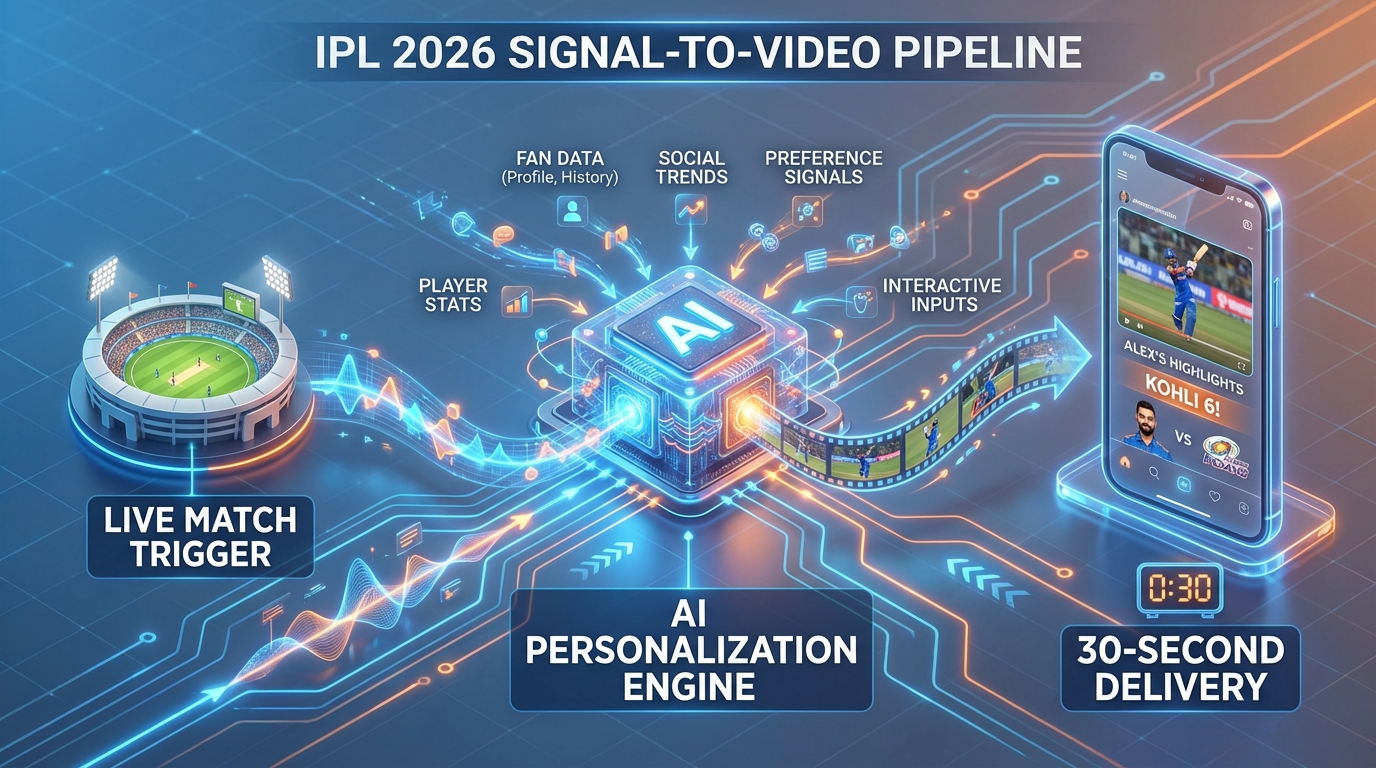
To achieve real-time match personalization, enterprises must build a “signal-to-video” pipeline that operates with zero human intervention during the match. This architecture begins with a live match feed that monitors specific triggers: overs, wickets, milestones, and sentiment shifts. When a trigger occurs, the system must instantly route that signal to a pre-approved video template.
The orchestration logic then merges fan-specific data—such as their name, favorite team, and recent purchase history—with the live match event. This process must happen in under 30 seconds to maintain the “live” feel. For instance, if Virat Kohli hits a winning six, a fan named Rahul in Bangalore should receive a video within half a minute featuring a celebrity or brand ambassador congratulating him personally and offering a “winning discount.”
This level of AI video sports marketing India requires robust governance. DPDP-aligned workflows are essential for managing user consent and ensuring that all AI-generated content includes necessary disclosures and watermarks. Furthermore, the system must include fallback creatives to handle potential latency issues or negative sentiment shifts, such as a major player injury, where a celebratory video would be inappropriate.
Sources:
3. Scaling Regional Language Cricket Videos and Creative Systems
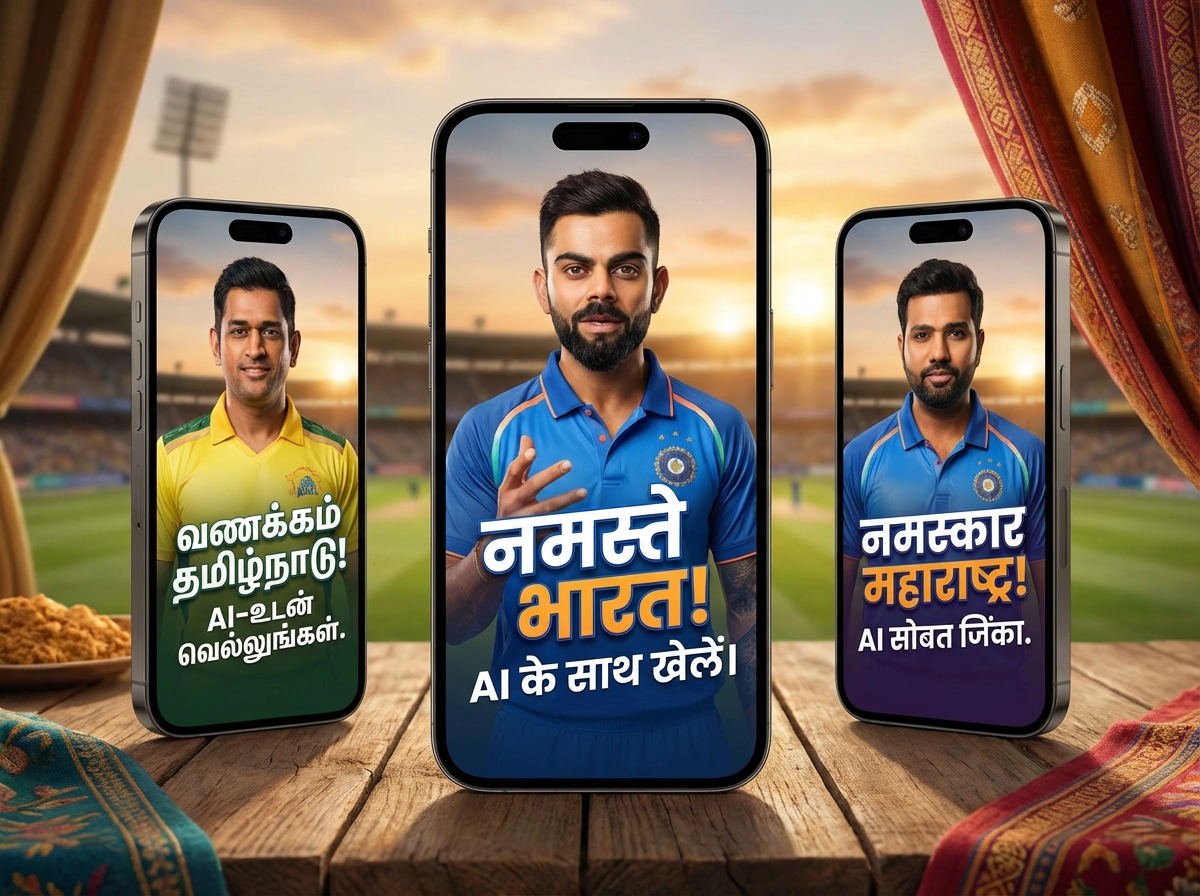
In a diverse market like India, localization is the key to high engagement. Regional language cricket videos are no longer a “nice-to-have” but a core requirement for any enterprise-scale campaign. By localizing content into 175+ languages and dialects, brands can speak to fans in their mother tongue, incorporating vernacular slang and “Hinglish” to build authenticity and trust.
TrueFan AI's 175+ language support and Personalised Celebrity Videos allow for this level of deep localization without the need for expensive and time-consuming reshoots. Virtual reshoots and AI editing enable brands to swap scripts, offers, and languages instantly. This ensures that a fan in Chennai receives a message in Tamil that feels just as personal as a Marathi message sent to a fan in Mumbai.
Script Skeleton: Player Milestone Celebration
- 0-3s: “Hey [Fan Name]! Did you see that? [Player Name] just smashed a massive 50!”
- 4-10s: “The [Team Name] are on fire tonight in [City Name]. This is the energy we love!”
- 11-15s: “To celebrate, here is a special [Brand Name] treat just for you. Use code SIXER now!”
- 16-20s: [CTA Button: Redeem on App]
Script Skeleton: Cricket Fan Engagement Videos
- 0-3s: “Rahul, the match is at a turning point! [Team A] needs 20 runs in 12 balls.”
- 4-10s: “Who are you rooting for? My money is on the captain to finish this in style.”
- 11-15s: “Join the live fan league now and double your points for the next two overs!”
- 16-20s: [CTA Button: Join League]
Sources:
4. Automation Blueprints for WhatsApp Cricket Video Campaigns
WhatsApp has emerged as the primary channel for high-intent fan engagement in 2026. WhatsApp cricket video campaigns achieve significantly higher click-through rates (CTRs)—averaging around 14.2%—compared to traditional SMS or email. The journey typically begins with a Click-to-WhatsApp ad or an in-app prompt that captures consent, followed by the delivery of personalized video content at key match moments.
For fantasy sports platforms, fantasy cricket marketing automation is a game-changer. Triggers can be set for squad lock reminders, injury alerts, or captaincy trends. If 70% of the top-performing users have chosen a specific player as captain, the system can send a personalized video nudge to other users, encouraging them to update their team before the toss. This not only increases app sessions but also improves user success rates and retention.
Match-day offer triggers are equally effective for e-commerce and food delivery brands. By releasing dynamic coupons during wickets or super overs, brands can exploit the natural urgency of the game. These offers should be designed to expire within 10–15 minutes, creating a “flash sale” environment that mirrors the fast-paced nature of T20 cricket.
Sources:
5. Stadium-to-Digital Fan Experience and Loyalty Automation
The boundary between the physical stadium and the digital world is blurring. A stadium-to-digital fan experience allows brands to engage fans sitting in the stands through QR code activations. When a fan scans a code on their seat or the big screen, they can instantly receive a personalized video recap of the match so far, or a geo-fenced offer valid only at the stadium's food stalls or merchandise hubs.
Post-match, the focus shifts to team loyalty program automation. Instead of a generic “thanks for watching” email, fans receive a personalized video summarizing their engagement during the game—how many points they earned, their current loyalty tier, and a challenge for the next match. This creates a continuous loop of engagement that extends far beyond the final ball.
Cricket merchandise personalization also benefits from this AI-driven approach. Brands can send video previews showing a fan's name and favorite number on a virtual jersey. With a one-click “add-to-cart” button, the friction between seeing a product and owning it is virtually eliminated. This level of personalization is a key differentiator in the 2026 retail landscape.
Sources:
6. Measuring Sports Sponsorship ROI Measurement and Intelligence
In 2026, “reach” is no longer a sufficient metric for success. Sports sponsorship ROI measurement must be granular, tying brand moments to attributable digital actions. Enterprises now use dashboards that segment performance by team, language, persona, and match context. This allows sponsors to see exactly which “presented by” moments led to app installs, coupon redemptions, or incremental revenue.
A critical component of this intelligence is cricket sentiment analysis marketing. By continuously monitoring social media and live fan sentiment, brands can adjust the tone of their videos in real-time. If a team is facing a controversial loss, the system can automatically suppress celebratory content and switch to a “better luck next time” message, or pause campaigns entirely to protect brand reputation.
Solutions like TrueFan AI demonstrate ROI through these integrated dashboards, providing a clear view of how real-time personalization outperforms generic advertising. By tracking the “velocity of redemption” and “cohort stickiness,” marketing directors can justify their IPL spend with hard data, ensuring that every rupee invested contributes to the bottom line.
Sources:
Conclusion: The 2026 Execution Checklist
As we look toward the March 26 kickoff, the window for strategic planning is closing. Success in IPL 2026 requires a shift from “broadcasting” to “orchestrating.” By integrating real-time match signals with AI-driven personalization, enterprises can create a fan experience that is as dynamic as the game itself.
Pre-Season Checklist (March 1–25):
- Finalize persona mapping by team and city.
- Capture base shoots for AI spokespeople.
- Connect live match feeds to your CRM and WhatsApp BSP.
- Define “safe-mode” creatives for sensitive match incidents.
In-Season Checklist (March 26–May 31):
- Monitor real-time triggers for wickets and milestones.
- Execute daily WhatsApp and fantasy automation journeys.
- Review weekly ROI dashboards to optimize language and offer variants.
- Deploy on-ground QR activations during high-stakes playoff matches.
The brands that win in 2026 will be those that respect the fan's time, speak their language, and deliver value in the exact moment it matters most. With the right architecture and a commitment to real-time engagement, the IPL is not just a sporting event—it is the ultimate engine for enterprise growth.
Frequently Asked Questions
What is the typical latency for real-time video delivery during IPL 2026?
For a campaign to be effective, the “signal-to-video” latency must be under 30 seconds. This includes the time taken to receive the match trigger, select the template, merge personalized data, render the video, and deliver it via WhatsApp or app push notification.
How does DPDP compliance affect AI-personalized video marketing?
The Digital Personal Data Protection (DPDP) Act requires explicit consent for data usage. In the context of IPL marketing, this means brands must have a clear opt-in flow (often via WhatsApp or app settings) and must include watermarks or disclosures indicating that the content is AI-generated.
What kind of CTR can enterprises expect from WhatsApp cricket video campaigns?
Based on 2026 benchmarks, personalized video campaigns on WhatsApp see an average CTR of 14.2%. This is significantly higher than static images or text-based messages, as the video format captures attention more effectively during the high-emotion moments of a match.
Can TrueFan AI support regional languages for all 84 IPL matches?
Yes, TrueFan AI's 175+ language support and Personalised Celebrity Videos are designed to scale across the entire 84-match season, providing consistent localization and celebrity voice retention for every game, from the opener to the final.
How is sponsorship ROI measured for real-time activations?
ROI is measured by linking specific match-day triggers (like a logo appearing on screen or a commentator mention) to direct digital actions. Dashboards track clicks, scans, and conversions in real-time, allowing brands to see the incremental revenue generated by each specific sponsorship moment.



