RWA partnership marketing India 2026: The enterprise playbook for trusted society-level group buying on WhatsApp
Estimated reading time: ~15 minutes
Key Takeaways
- Winning in 2026 requires consent-first RWA partnerships with formal MoUs, privacy safeguards, and clear community benefits.
- AI-personalized WhatsApp videos drive society-level relevance, lifting conversion versus generic ads.
- Building-level targeting and community leader advocacy amplify trust and participation in group buys.
- Micro-community commerce automation scales localized campaigns to 50,000+ RWAs without losing personalization.
- Success metrics evolve to Society LTV, consent ledger compliance, and creative A/B testing with sentiment feedback loops.
The landscape of Indian retail is undergoing a seismic shift toward hyper-localized, trust-based ecosystems. As we look toward the horizon, RWA partnership marketing India 2026 has emerged as the definitive frontier for enterprise brands seeking to penetrate the high-intent segments of urban India. By 2026, the traditional “spray and pray” digital advertising model has been replaced by society-level commerce personalization, where brands no longer just target demographics, but specific gated communities through formal alliances with Resident Welfare Associations (RWAs).
An RWA is an elected body within an apartment complex or residential colony responsible for managing common infrastructure, security, and community communication. In the context of RWA partnership marketing India 2026, these bodies act as the ultimate trust gatekeepers. For an enterprise to succeed, it must move beyond simple flyer distribution and embrace a consent-first, video-led strategy that integrates seamlessly into the daily digital lives of residents.
The 2026 opportunity is defined by a transition where short-form, AI-personalized WhatsApp videos serve as the primary engine for both acquisition and retention. Success requires a sophisticated orchestration of formal RWA MoUs, building-level targeting, and community-aligned incentives. Platforms like TrueFan AI enable enterprises to generate these personalized assets at a scale previously thought impossible, ensuring every resident feels a direct, localized connection to the brand.
1. The 2026 RWA landscape: Governance, consent, and RWA endorsement campaigns
The governance of Indian residential societies has become increasingly formalized by 2026. The RWA board—comprising the President, Secretary, and Treasurer—now operates with the digital maturity of a small enterprise. To execute RWA endorsement campaigns, brands must navigate a structured approval process that prioritizes resident privacy and community benefit over mere commercial gain.
The consent protocol for 2026 is rigorous. It begins with a formal brand proposal detailing campaign objectives, the specific channels to be used (such as official WhatsApp groups or lobby screens), and a clear community benefit, such as a contribution to the society maintenance fund. Once the RWA board vets the proposal, a written MoU is established, defining the timelines and the scope of data collection. This ensures that every piece of apartment complex marketing is compliant with the Indian Digital Personal Data Protection (DPDP) Act of 2023.
In this ecosystem, the channels are diverse. While official WhatsApp groups remain the most potent, the integration of society management apps like ADDA and MyGate provides a multi-layered touchpoint strategy. ADDA, for instance, has positioned itself as a compliance-focused, ad-free platform that allows for structured RWA-approved vendor activations. By aligning with these platforms, brands can ensure their residential society personalization efforts are viewed as a value-add service rather than an intrusion.
Sources:
2. Strategic execution of society-level commerce personalization
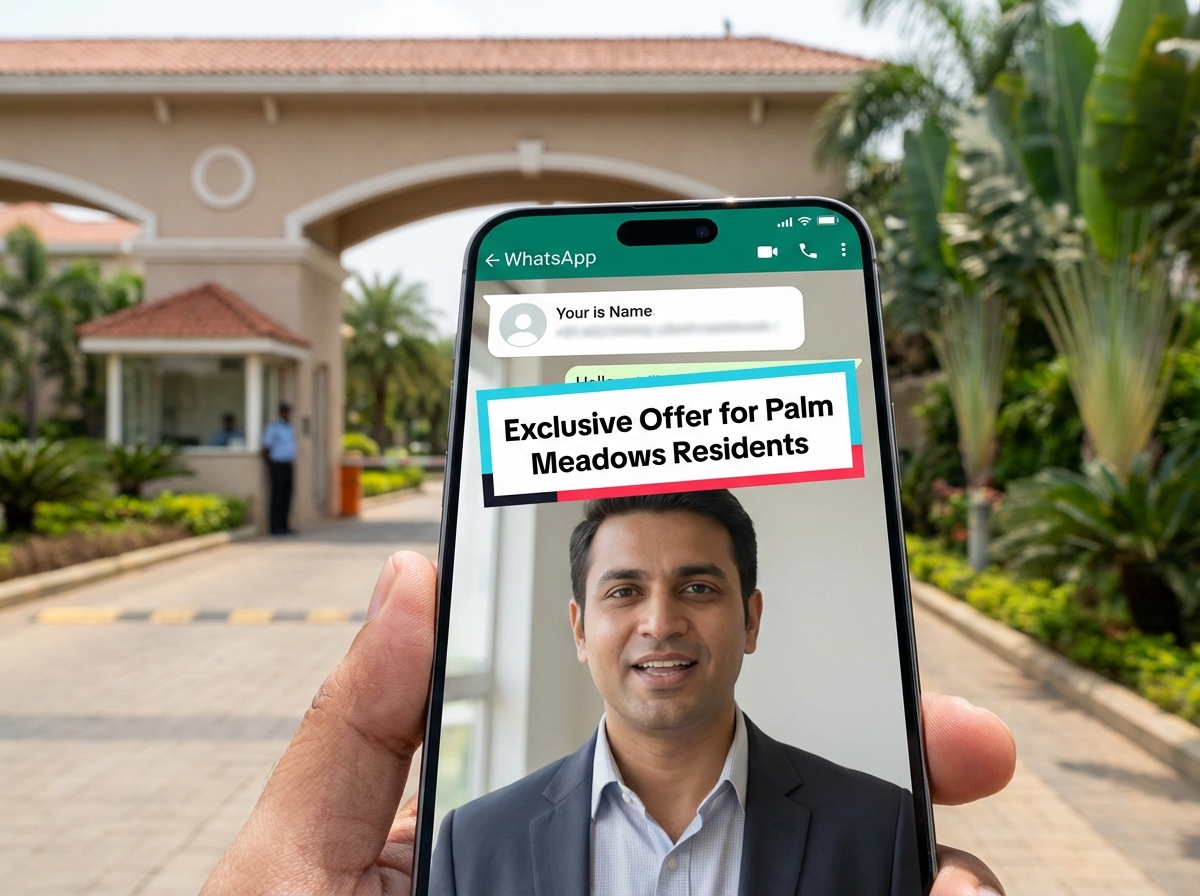
At the heart of a successful 2026 campaign is society-level commerce personalization. This involves creating AI-driven video content that is dynamically tailored to the specific context of a residential complex. A video is no longer just a generic advertisement; it is a localized message that mentions the society name, references a nearby landmark, and offers a deal exclusive to that specific pin code.
Effective building-level targeting strategies segment residents not just by location, but by tower, wing, and even family profile. For example, a brand might deploy a “back-to-school” bulk buy offer specifically to towers known to have a high density of young families. By using colony-specific offer videos, brands can achieve a level of relevance that traditional social media ads cannot match. These videos typically feature a 20–35 second vertical format, optimized for WhatsApp, with a hook that calls out the society or wing name within the first three seconds.
The multi-touch plan for apartment complex marketing involves a sequence of digital and physical interactions. It starts with a WhatsApp poll to gauge interest, followed by lobby screen teasers and clubhouse QR standees. The final nudge often comes via a door-hanger QR code that leads back to a personalized WhatsApp video. This holistic approach ensures that the brand remains top-of-mind throughout the resident’s daily journey within the gated community.
Sources:
3. Trust mechanics and neighborhood trust building automation
Trust is the currency of the RWA ecosystem. To build this at scale, enterprises are turning to neighborhood trust building automation. This involves using AI to monitor community sentiment and optimize creative assets in real-time. If a particular video script isn’t resonating with a specific society’s demographic, the system can automatically trigger a “virtual reshoot,” altering the tone or the offer without requiring a new production cycle.
A critical component of this trust is community leader influence marketing. In every society, there are “super-users”—wing admins or floor representatives who hold significant sway over resident opinions. By equipping these leaders with concise, shareable video content and unique attribution links, brands can leverage existing social capital. When a trusted neighbor forwards a video about a group buy, the conversion probability increases by an estimated 40% compared to a direct brand message.
Furthermore, formal RWA endorsement campaigns often include a “seal of approval” within the video creative. Phrases like “Officially approved by the Palm Meadows RWA” provide an immediate layer of credibility. To sustain this trust, brands must provide post-campaign reporting to the RWA, showing the aggregate benefits to the community, such as the total savings achieved by residents or the specific contribution made to the society’s development fund.
Sources:
4. Driving demand with hyperlocal group buying videos and WhatsApp formats
The most effective way to drive immediate ROI in 2026 is through hyperlocal group buying videos. These campaigns are designed around the “power of the collective.” By setting minimum order thresholds for a specific tower or society, brands can offer deep discounts that are only unlocked when the community comes together. This creates a natural “FOMO” (fear of missing out) effect, where residents encourage their neighbors to participate to hit the discount tier.
Gated community video campaigns typically follow a three-stage journey. First, a pre-event teaser video announces the upcoming exclusive offer. Second, during the “live” window, residents receive personalized videos with real-time updates on how close the society is to unlocking the next discount tier. Finally, a post-event recap video thanks the residents and introduces a loyalty nudge for the next cycle. This cycle is often integrated with society event sponsorship videos, where brands sponsor local festivals like Diwali or Holi, using the event as a launchpad for their digital campaigns.
The technical execution of these campaigns relies on a “UPI-first” checkout experience. By embedding direct payment links within the WhatsApp interface, brands eliminate friction in the purchase journey. In 2026, data shows that gated communities in Tier 1 cities exhibit an Average Order Value (AOV) that is 2.5x higher than the general market, making the precision of hyperlocal group buying videos an essential tool for high-growth enterprises.
Sources:
5. Scaling to 50,000+ RWAs with micro-community commerce automation
Scaling a hyperlocal strategy from a few pilot societies to a national footprint of 50,000+ RWAs requires micro-community commerce automation. This involves an API-driven architecture where the brand’s CRM or CDP triggers the generation of personalized videos based on real-time data. Whether it’s a “welcome” video for a new resident or a festival-led offer, the system must be capable of rendering and delivering thousands of unique variants in under 30 seconds.
TrueFan AI’s 175+ language support and Personalised Celebrity Videos allow enterprises to bridge the cultural and linguistic diversity of India’s urban landscape. A brand can deploy a campaign across Mumbai, Bangalore, and Delhi simultaneously, with each video featuring the local dialect and referencing specific neighborhood nuances. This level of micro-community commerce automation ensures that the brand’s message remains personal, even at a massive scale.
To further amplify these efforts, brands are engaging in hyperlocal influencer partnerships. These are not the typical social media influencers with millions of followers, but rather “nano-influencers” within the society—the heads of local hobby groups or active members of the RWA. By providing these individuals with creative kits and UTM-tracked links, brands can create a decentralized distribution network that bypasses the noise of traditional digital channels while maintaining strict compliance with RWA guidelines.
Sources:
6. Measurement, compliance, and building-level targeting strategies
The success of RWA partnership marketing India 2026 is measured through a comprehensive KPI tree that goes beyond simple clicks. Enterprises now track “Society LTV” (Lifetime Value), which measures the long-term profitability of an entire residential complex. Key metrics include the list growth rate of opted-in residents, video watch-through rates (specifically the 0–5s hook retention), and the conversion lift generated by building-level targeting strategies.
Compliance remains the bedrock of these operations. With the DPDP Act in full effect, brands must maintain a transparent “consent ledger.” This involves documenting every opt-in and ensuring that an easy “one-tap opt-out” mechanism is present in every WhatsApp communication. Solutions like TrueFan AI demonstrate ROI through high engagement rates while maintaining enterprise-grade security standards, including ISO 27001 and SOC 2 compliance, ensuring that resident data is handled with the utmost integrity.
Finally, the 2026 enterprise playbook includes a robust experimentation cadence. Brands regularly run A/B tests on script hooks, celebrity vs. local faces, and offer structures. By analyzing sentiment signals from these tests, the neighborhood trust building automation systems can pivot strategies mid-campaign. This iterative approach, combined with detailed post-campaign reporting to the RWA boards, ensures a sustainable and mutually beneficial relationship between brands and the communities they serve.
Sources:
Conclusion: The Future of Hyperlocal Enterprise Growth
The evolution of RWA partnership marketing India 2026 represents the ultimate maturation of the Indian retail ecosystem. By combining the trust of local governance with the power of AI-driven society-level commerce personalization, brands can unlock a level of engagement that was previously unreachable. The shift toward neighborhood loyalty programs and micro-community commerce automation is not just a trend; it is a fundamental requirement for any enterprise looking to lead in the next decade.
Success in this new era requires a delicate balance of technology, compliance, and community empathy. By leveraging building-level targeting strategies and high-fidelity video content, brands can transform from intrusive advertisers into valued community partners. As we move toward 50,000+ digitally integrated RWAs, the playbook is clear: lead with trust, personalize with precision, and scale with automation.
For enterprises ready to pioneer this frontier, the journey begins with a pilot. By selecting 3–10 high-intent RWAs and deploying a consent-first, video-led strategy, brands can establish the proof points needed for a national rollout. The future of commerce is not just digital; it is hyperlocal, trusted, and personalized.
Frequently Asked Questions
How do you ensure that gated community video campaigns don’t spam residents?
The frequency of communication is governed by the formal MoU signed with the RWA and an explicit opt-in model where residents choose to receive society-specific offers. High-value, relevant content—such as exclusive group buy discounts—keeps messages welcome rather than intrusive. TrueFan AI supports this by ensuring every video is personalized and contextually relevant.
Is it legal to target residents at the building level under the DPDP Act?
Yes—provided consent, purpose limitation, and data minimization principles are followed. Brands must obtain explicit consent via RWA-approved channels and use data solely to deliver society-level offers. Data should be encrypted and stored per Indian statutory requirements.
What is the typical ROI for hyperlocal group buying videos?
Enterprises report conversion rates of 8–12% in gated communities, significantly above standard e-commerce benchmarks. Average Order Value is typically 2.5x higher due to bulk-buy dynamics and affluent Tier 1 resident profiles.
How do RWAs benefit from these partnership marketing programs?
RWAs gain through resident savings and direct fund contributions. Brands often share 1–3% of group-buy proceeds with the society’s maintenance or development fund, while residents receive exclusive pricing not available in open markets.
Can micro-community commerce automation work for small businesses?
Yes. While full automation stacks suit enterprises, local merchants can apply these principles in a lightweight form to dominate a 2–3 km radius, building loyalty across neighboring societies before expanding.