Connected TV Advertising India 2026: How Enterprise Brands Win IPL With AI‑Personalized CTV Video Variants
Estimated reading time: ~13 minutes
Key Takeaways
- CTV has moved to the core of the enterprise media mix, with IPL 2026 as the catalyst for premium reach and precision
- Closing the personalization gap requires vernacular, city, and team-specific creative—not generic national spots
- An AI-driven variant factory can generate thousands of high-fidelity, VAST-compliant CTV video variants in seconds
- Activate first-party data programmatically and measure via VTR, QR scan-through, geo-lift, and MMM
- Governance and security (consent, ISO/SOC) enable always-on personalized CTV at enterprise scale
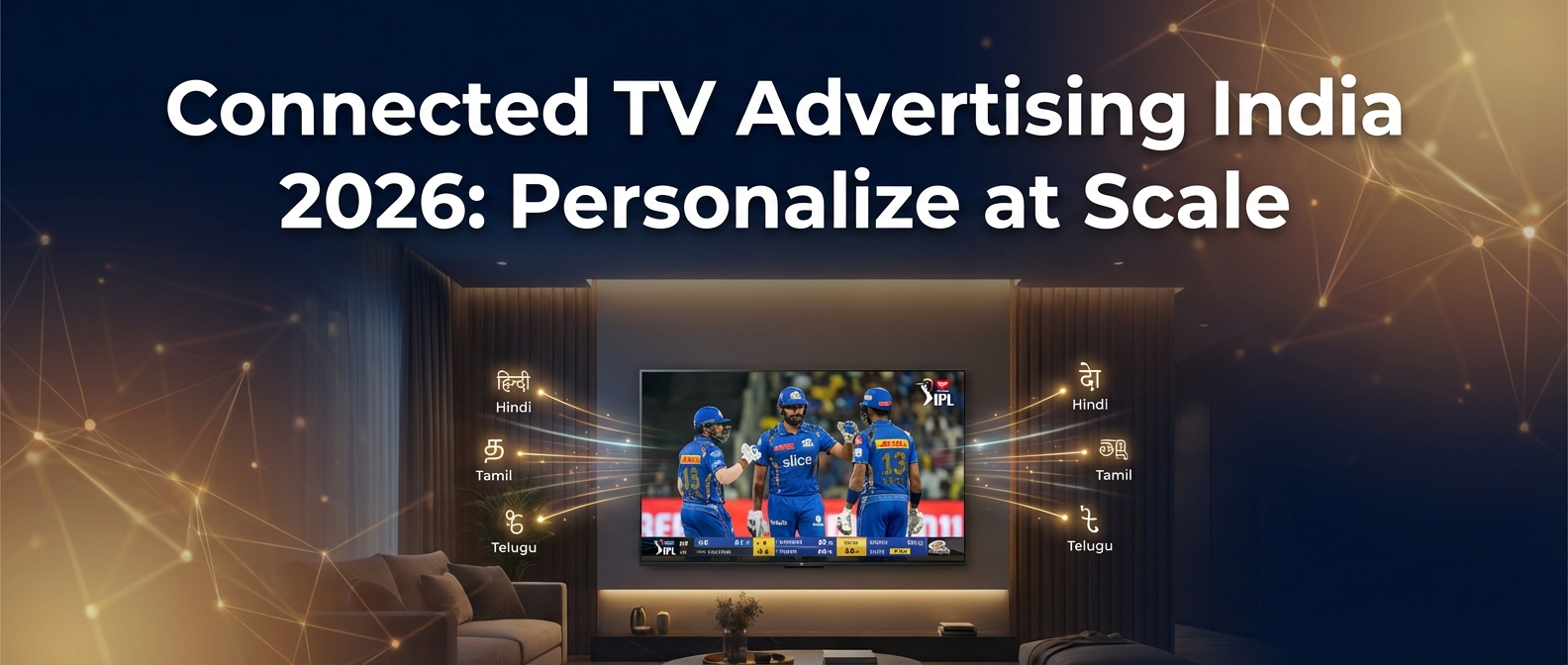
The landscape of connected TV advertising India 2026 has reached a definitive tipping point, evolving from a secondary experimental channel into the primary battleground for enterprise attention. As digital advertising is projected to command a dominant 64% share of the total Indian AdEx this year, the Indian Premier League (IPL) serves as the ultimate catalyst for this transition. For enterprise brands, the challenge is no longer just securing reach on the big screen; it is about solving the “relevance at scale” problem through AI-driven personalization.
Winning in 2026 requires a departure from the “one-size-fits-all” creative strategy that defined previous decades of television. With over 60 million addressable CTV households across the country, the ability to deploy thousands of hyper-localized, language-perfect video variants is the new benchmark for success. This guide outlines the strategic framework for mastering the connected TV advertising India 2026 ecosystem, leveraging programmatic precision and AI-powered creative factories to maximize impact during the high-stakes summer streaming season.
1. Enterprise CTV Ad Strategy India: The 2026 IPL Reset
The 2026 media landscape is defined by a structural shift where Connected TV (CTV) has officially moved from the periphery to the core of the enterprise media mix. Industry data indicates that India’s digital video market is on a trajectory to reach $9.17 billion by 2030, with 2026 serving as the critical inflection point for CTV spend, estimated to hover between ₹2,300 and ₹2,500 Crore.
For enterprise leaders, the JioCinema CTV advertising strategy for IPL 2026 represents the most significant opportunity for premium, scalable reach. Unlike mobile streaming, which often suffers from “scroll fatigue” and fragmented attention, CTV offers a co-viewing environment that mirrors the high-impact nature of linear TV but with the deterministic targeting of digital. Reports suggest that base CTV CPMs for 10-second spots are hovering near ₹600, while bundled deals for marquee matches are reaching approximately ₹21 lakh per 10-second spot. This premium pricing is justified by the 25% hike in CTV rates observed as brands pivot toward the higher completion rates and brand safety inherent in the big-screen experience.
An effective enterprise CTV ad strategy India must balance direct sponsorship with programmatic flexibility. While direct deals secure “in-match” inventory and premium placements like powerplay slots, programmatic pipes—utilizing Demand Side Platforms (DSPs) like DV360 or The Trade Desk—allow brands to manage frequency across the entire tournament. This hybrid approach ensures that a brand is present during high-tension match moments while maintaining a “pulse” of personalized reminders to specific audience cohorts during pre-match build-ups and innings breaks.
Sources:
- Exchange4Media: Digital share projected 64% in 2026
- Exchange4Media: 60M CTV HHs by 2026
- BestMediaInfo: JioStar hikes CTV rates for IPL 2026 by 25%
- Exchange4Media: IPL ad rates hold steady; CTV context
2. The Personalization Gap: Why OTT Advertising Personalization India 2026 is Non-Negotiable
Despite the technological sophistication of CTV delivery, a massive “personalization gap” persists. Most brands entering the IPL 2026 season still rely on generic national spots that fail to resonate with the diverse linguistic and cultural nuances of the Indian audience. In a market where India is poised to become the world’s largest SVOD market by 2030, the expectation for premium, relevant content has never been higher.
OTT advertising personalization India 2026 is no longer just about adding a user's name to a text overlay; it requires a deep understanding of regional context. The “Bharat” audience expects more than just dubbed content; they demand “code-mixing” (Hinglish, Tanglish, etc.) with native cues and idioms, and references that feel native to their specific city or team affinity. When a viewer in Chennai sees a generic Hindi ad during a CSK match, the immersion is broken, and the premium CPM paid for that CTV slot is effectively wasted.
3. Solving it with AI: The “Variant Factory” for Personalized CTV Video Ads
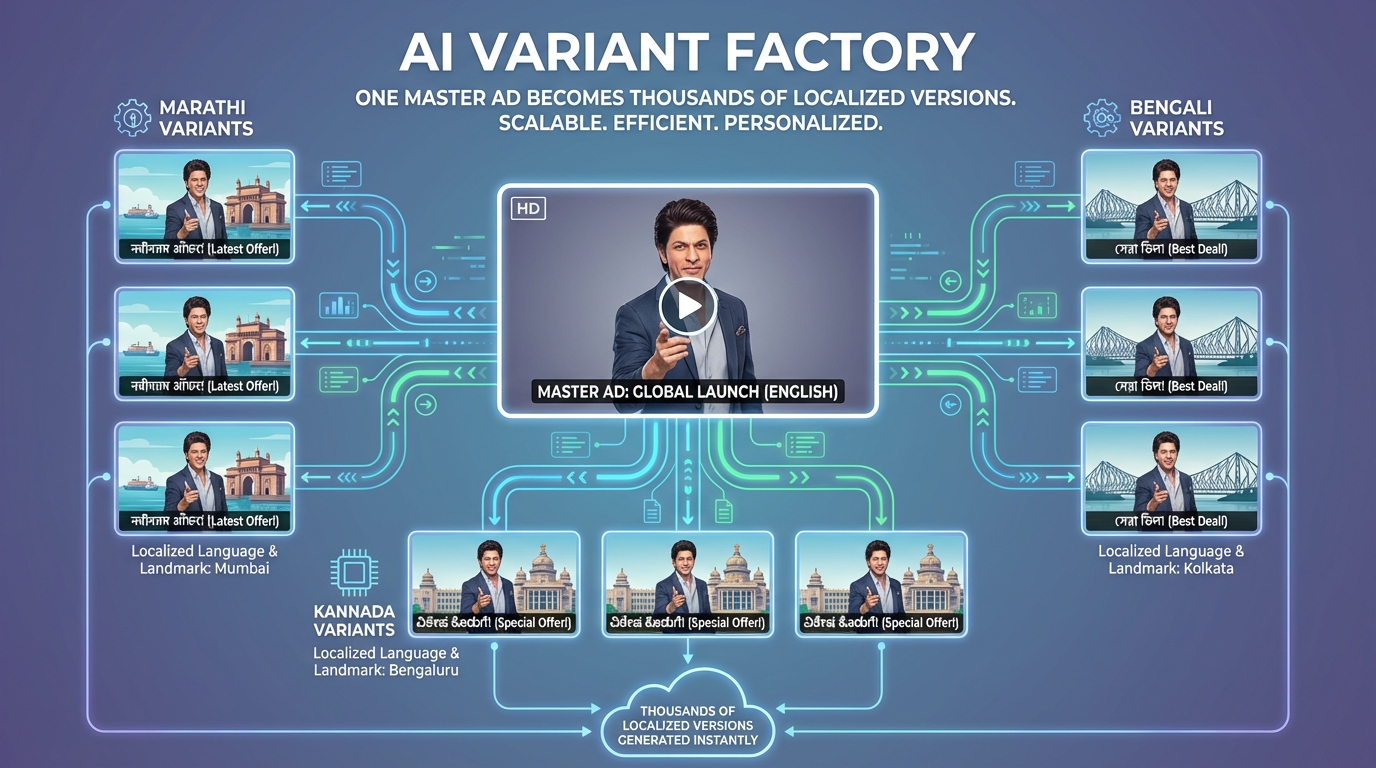
To meet the demands of the 2026 consumer, enterprise brands are turning to automated production pipelines. Platforms like TrueFan AI enable brands to transform a single master creative into hundreds of thousands of personalized CTV video ads, each tailored by language, city, team affinity, and even specific offer tiers. This “variant factory” approach ensures that every impression is optimized for the specific viewer watching the big screen.
TrueFan AI's 175+ language support and Personalised Celebrity Videos allow for a level of localization previously thought impossible. By utilizing advanced lip-sync and voice retention technology, brands can have their celebrity ambassadors speak directly to viewers in their native dialects—whether it’s a specific Marathi idiom for a Mumbai viewer or a Kannada reference for a fan in Bengaluru. This is not mere dubbing; it is a “virtual reshoot” that maintains the high-fidelity 4K standards required for CTV while swapping out lines, offers, and visual cues in under 30 seconds.
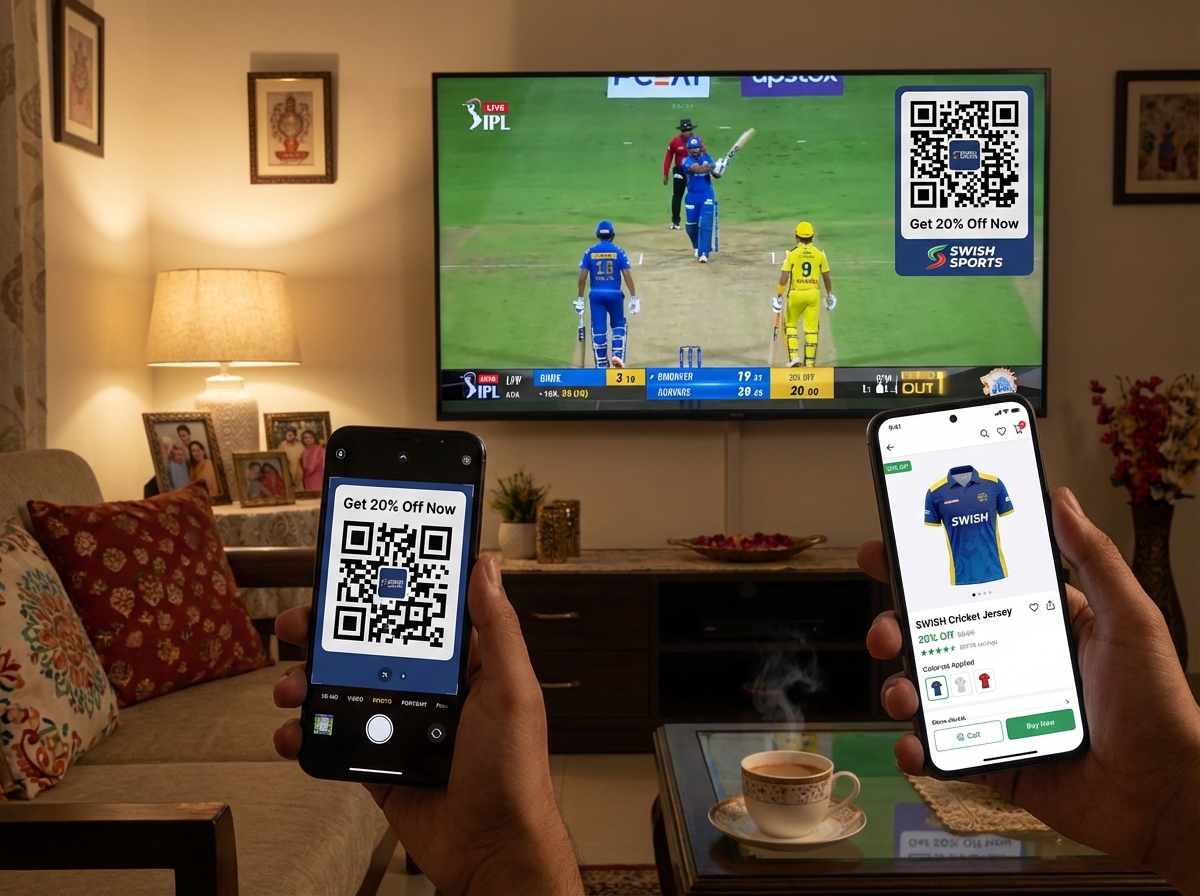
From a technical standpoint, AI video CTV ad format optimization is critical for ensuring these variants perform across the fragmented CTV ecosystem. This involves auto-adapting aspect ratios, bitrates, and codecs to meet the specific VAST 4.x requirements of platforms like JioCinema. Furthermore, the integration of dynamic elements—such as QR code overlays that change based on the viewer’s cohort—allows for a direct scan-to-buy journey. This turns the CTV screen from a passive awareness tool into a high-performance commerce engine, providing the “site-lift” and “sales-lift” metrics that enterprise CMOs demand.
Sources:
- TrueFan AI: Enterprise Capabilities and 175+ Languages
- The Media Ant: CTV Ad Formats in India 2026
- Exchange4Media: CTV essential; scale expectations
4. IPL 2026 Playbooks: CTV Personalized Video Campaigns India by Vertical
Executing CTV personalized video campaigns India during the IPL requires a robust creative matrix. Brands should aim for a structure that multiplies 10–20 master concepts by 8–10 languages, further layered with city/team motifs and 3–4 offer tiers. This results in a library of over 5,000 unique assets, ensuring that no viewer sees the same generic ad twice.
In the BFSI sector, the focus is on high-intent moments. During pre-match hype, brands can deploy city-specific credit card welcome offers featuring the local team's colors. In-match, “innings break” ads can feature “instant approval” CTAs with language-targeted voiceovers, leading to a QR code that deep-links to a pre-filled application. Post-match, the creative can pivot based on the result—offering “celebratory rewards” if the local team wins, or “consolation perks” if they lose, maintaining brand relevance regardless of the scoreboard.
For Automotive and FMCG brands, the playbook shifts toward localized utility and impulse. Auto brands can use CTV to invite viewers to test-drives at the nearest dealership, with the dealer's name dynamically inserted into the video. FMCG brands can capitalize on “match-day snacking” by showing localized multipack offers with instant-redeem codes via QR. These connected TV multilingual ads India ensure that whether a viewer is in a Tier-1 metro or a Tier-3 town, the message feels bespoke, driving significantly higher engagement than traditional national broadcasts.
Sources:
- The Media Ant: IPL 2026 Advertising Guide
- Storyboard18: Digital viewership leap and wider reach
- Exchange4Media: IPL 2026 CTV premium reset
5. Data Activation and Measurement: Programmatic CTV Personalization India
The true power of programmatic CTV personalization India lies in its ability to marry first-party data with big-screen delivery. Enterprise brands are now utilizing “clean rooms” to match their CRM data with streaming platform IDs in a privacy-safe environment. This allows for sophisticated audience architecture, where a brand can target “high-LTV customers who are also RCB fans in Bengaluru” with a completely different creative variant than a “new prospect in Delhi.”
Solutions like TrueFan AI demonstrate ROI through their ability to integrate with these data pipes, triggering the rendering of a personalized video the moment a specific audience segment is identified by the DSP. This real-time activation ensures that the creative is always aligned with the viewer's current stage in the customer journey. Measurement has also evolved beyond simple “impressions.” In 2026, the focus is on CTV video ROI enterprise brands can verify through completion rates (VTR), QR scan-through rates, and incremental reach over linear TV.
To accurately attribute success, brands are moving toward “geo-experiments” and “attention-weighted GRPs.” By comparing sales lift in cities where personalized CTV variants were deployed versus control cities with generic ads, enterprises can see the direct impact of AI-driven relevance. Furthermore, log-level data exports from CTV campaigns are now being fed into Marketing Mix Models (MMM) to understand how CTV's “big-screen attention” contributes to long-term brand equity compared to the “quick-scroll” nature of mobile social media.
Sources:
- Exchange4Media: CTV moving from experiment to essential
- The Media Ant: CTV Ad Formats and Measurement
- Exchange4Media: India’s digital video to $9.17B by 2030
6. Governance and the 2026–2027 Roadmap: Connected TV Marketing India Enterprise
As enterprise brands scale their connected TV marketing India enterprise efforts, governance and compliance become paramount. Managing thousands of AI-generated video variants requires a rigorous framework to ensure brand safety and legal integrity. This includes “consent-first” celebrity usage, where likeness rights are managed through secure, blockchain-verified contracts, and ISO 27001/SOC 2 certified production pipelines to protect sensitive consumer data.
The roadmap for 2026–2027 involves moving from “IPL pilots” to “always-on” personalized CTV strategies. Brands are building internal “variant factories” that operate year-round, refreshing language packs and offer tiers for every major festive season and sporting event. The goal is to reach a state where the creative is as dynamic as the media buying—where a change in inventory levels or a shift in regional weather can automatically trigger a new set of video variants across the CTV network.
Ultimately, the winners of the 2026 season will be those who view CTV not just as a bigger version of a mobile screen, but as a unique medium that demands its own creative logic. By investing in programmatic CTV personalization India and AI-driven production, enterprise brands can finally deliver on the promise of “mass personalization”—reaching millions of viewers with the intimacy of a one-to-one conversation, all on the most influential screen in the household.
Sources:
- TrueFan AI: Governance, Security, and ISO/SOC2 Compliance
- Hindustan Times: Commerce/advertising on CTV set to rise
Implementation Checklist for IPL 2026:
- Secure Inventory: Balance JioCinema direct buys with programmatic DSP pipes for frequency control.
- Build the Matrix: Define your 10–20 master narratives and map out the language/city/team variables.
- Integrate Data: Wire your CDP or CRM to your variant factory via API for real-time personalization.
- Set Telemetry: Ensure VAST 4.x beacons are active for quartile tracking and QR UTMs are cohort-specific.
- Audit Governance: Verify all celebrity consent flows and brand-safety filters are in place before launch.
Recommended Internal Links
- Programmatic CTV Video Personalization in India 2026
- Vernacular Video Automation India: Scale Multilingual Ads
- Vernacular OTT Retention Marketing 2026: Playbook for Growth
- IPL 2026 Season Campaigns: Strategies from T20 to IPL
- IPL 2026 Marketing Strategy: Data-Driven Playbook for ROI
- IPL micro-moments marketing 2026: Real-time video triggers
- AI Celebrity Video Marketing India: Scalable, Personalized Endorsements
- Voice sync accuracy comparison: India’s best AI tools 2025
- IPL 2026 Live Commerce India: Real-Time Cricket Shopping
- Enterprise AI Video Platform: Secure, Scalable Solutions
- Community Viewing Experience Campaigns: IPL Success Playbook
Frequently Asked Questions
How many personalized CTV video variants are “enough” for an IPL campaign?
For an enterprise brand, a robust starting point is 10–20 master concepts. When multiplied by 8–10 regional languages and 20–30 city or team-specific overlays, this creates a matrix of 4,800 to 24,000 variants. For brands with deep CRM segments, this can scale into the hundreds of thousands using name-level personalization for high-value cohorts.
What are the safe guardrails for connected TV multilingual ads in India?
Governance is key. Brands should use pre-approved vernacular glossaries and native voiceovers for each region to avoid the pitfalls of literal translation. Enforce strict QC for lip-sync accuracy and ensure all legal disclaimers are correctly localized and legible on a TV screen as part of the production pipeline.
How do we attribute CTV video ROI beyond simple QR code scans?
While QR scans provide immediate engagement data, true ROI is measured through a combination of clean-room sales matchbacks, geo-fenced lift studies, and post-exposure brand panels. Integrate CTV data into your MMM with attention-weighted metrics to quantify how big-screen exposure drives long-term conversion.
How does AI video CTV ad format optimization work technically?
The process involves automatically generating VAST-compliant 4K masters optimized for Indian streamers. This includes loudness normalization for TV speakers, safe-title area conformance across screens, and subtitle tracks for accessibility, ensuring smooth delivery and high completion rates.
Can TrueFan AI handle the scale required for a full IPL season?
Yes. TrueFan AI is built for enterprise scale with sub-30-second rendering latencies and the ability to produce millions of personalized videos. ISO 27001 and SOC 2 certifications ensure large campaigns are executed with maximum security and brand safety.